
Do you believe in karma, the law of cause and effect? Rain falls outside today, a light drizzle alternating with heavy showers. I sat by the door and watched for a long time. Reflecting on recent events, I feel little joy. Most emotions welling up from deep within involve blaming others, feeling their harshness, and enduring the frustration of lacking help to resolve my own problems. I realize I should let go of everything; it must be my fault. Perhaps I owed someone something in a past life and must repay that debt now. Looking inward, my recent emotional turmoil mirrors this rain, shifting from heavy to light. Fortunately, rain always clears, and the sun shines again, as will I.
An ancient tragedy leads to an unusual inheritance
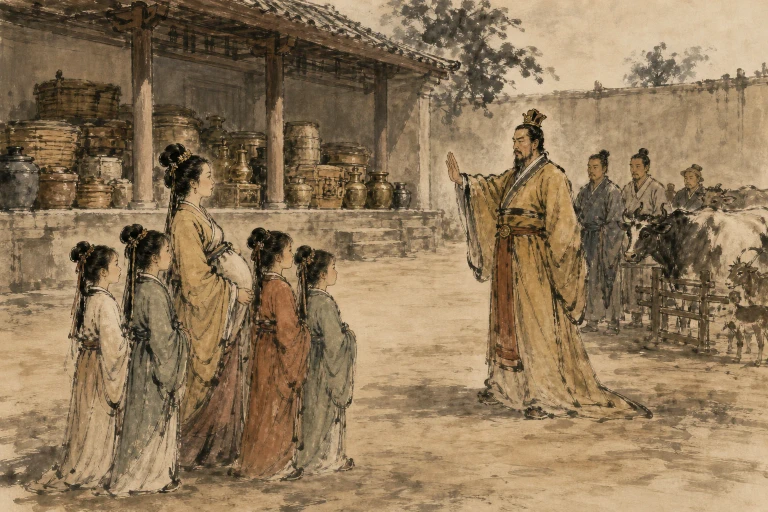
Legend says that when Shakyamuni Buddha preached at Jetavana Monastery in Shravasti, a wealthy elder lived in the country. He possessed immeasurable wealth, including gold, silver, precious gems, livestock, servants, and warehouses brimming with every imaginable commodity. However, he had five beautiful, intelligent daughters and no sons. When the elder passed away, his wife was pregnant. Under local law, families without male heirs forfeited all property to the state. The daughters pleaded with King Pasenadi: “Our mother is pregnant; please wait until the child is born before deciding. If it is a girl, confiscate the property then; if a boy, he should inherit the family estate.” The king agreed.
A newborn boy inherits immense wealth despite severe disabilities
Soon after, their mother gave birth to a baby boy whose body was a formless mass. He lacked ears and eyes; he had a mouth without a tongue; he lacked arms and legs, possessing only male genitalia. The family named him Mancipili. Because he possessed male genitalia, the king ruled him the legitimate heir, and the vast estate passed to this deformed brother.
Later, after the eldest daughter married, she remained remarkably humble and submissive, serving her husband like a maidservant. An elderly neighbor found this strange and asked why. She replied: “After my father died, although he had five daughters, our property faced confiscation. However, my mother bore a brother without eyes, ears, tongue, hands, or feet—possessing only male genitalia—and he inherited immense wealth. This proves many daughters cannot equal one son.” Astonished, the neighbor joined her to ask the Buddha: “Why was this elder’s son born severely disabled, yet born into wealth and inheriting a fortune?”
Past choices shape future destinies through karma
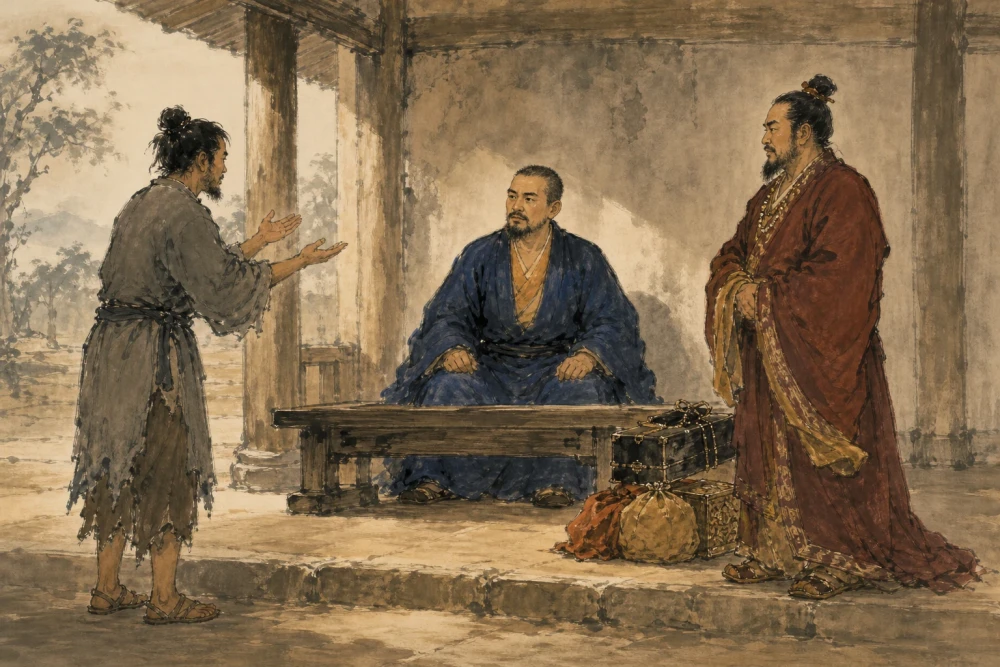
The Buddha explained to the assembly that two brothers lived in a past life. The elder brother, Tan Ruo Shizhi, was honest, kind, and generous, helping the needy and earning kingdom-wide praise. The king appointed him Ping Shi, a fair judge overseeing lawsuits and legal testimony. At that time, laws required no written loan contracts; witnessing before the Ping Shi sufficed.
The younger brother, Śīla Śeṣi, once lent a merchant a large sum for a treasure voyage. Being elderly, he feared his son could not collect the debt after his death. Therefore, he brought his young son to his brother to serve as a witness, asking him to testify on the boy’s behalf later.
Greedy motives lead an honest judge astray
Soon after, the younger brother died. The merchant set sail, met disaster, and returned empty-handed. Seeing the nephew’s poverty, the merchant could not bear to demand repayment.
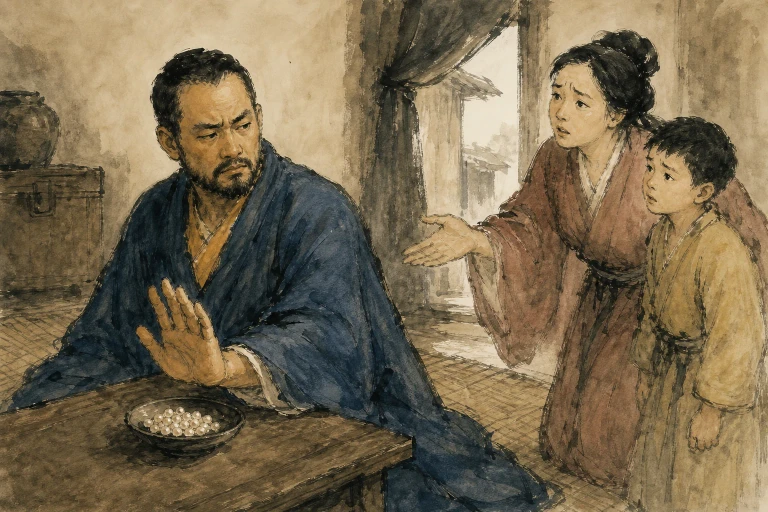
Later, the merchant sailed again, returned laden with treasure, and became extremely wealthy. To escape his debt, he devised a scheme. First, he offered a valuable pearl to the judge’s wife, hoping she would persuade her husband to deny the loan. The judge initially refused, saying: “My integrity earned my position. A single lie will destroy my credibility now and bring immeasurable torment hereafter.” The merchant increased the offer, offering more pearls and promising additional riches upon success. Greed drove the wife to plead relentlessly, but he still refused. Finally, she threatened suicide, declaring she would kill their only son before taking her own life. Torn between love for his son and fear for his lineage, the judge capitulated.
Past misdeeds yield long-lasting suffering across lifetimes
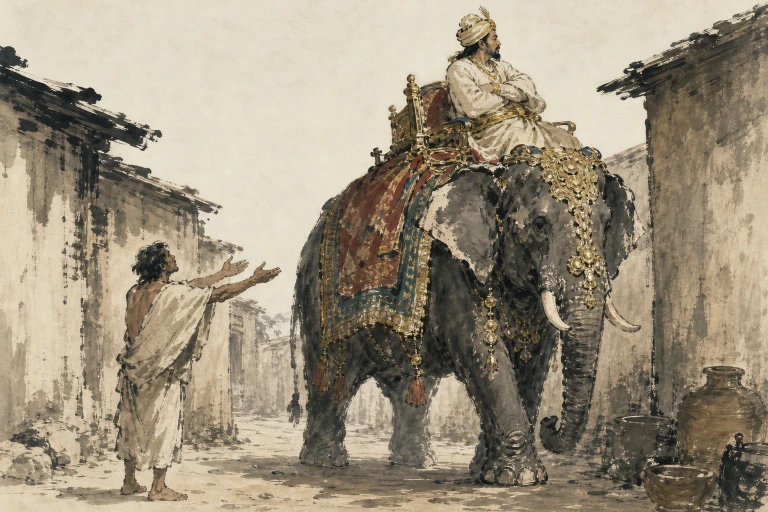
The wealthy merchant paraded through the streets adorned in gold and riding a lavishly decorated elephant. The nephew demanded repayment, but the merchant denied the debt. Both went to the Ping Shi for judgment. The nephew said: “Uncle, you witnessed the loan years ago.” But the judge lied: “I know nothing of this matter.” The nephew replied bitterly: “Uncle, people trust your integrity. If you wrong your own nephew, how much more will you wrong strangers? Truth and falsehood will clearly emerge in future generations.”
The Buddha revealed: “That judge was Man-ts’i-pi-li. For that single lie, he fell into the Great Hell, enduring unspeakable agony. Emerging from hell, he suffered five hundred consecutive lifetimes with a maimed body. Yet because he practiced generosity and helped the poor in past lives, he consistently returned to wealthy families.”
Wise choices create lasting peace and spiritual joy
Finally, the Buddha warned: “Retribution for good and evil never fails. Strive diligently, restrain your body, speech, and mind, and refrain from evil.” After listening to the Dharma, many listeners attained spiritual realization, filled with great joy, and vowed to uphold these teachings.
Translated by Eva and reviewed by Maria
Follow us on X, Facebook, or Pinterest
