
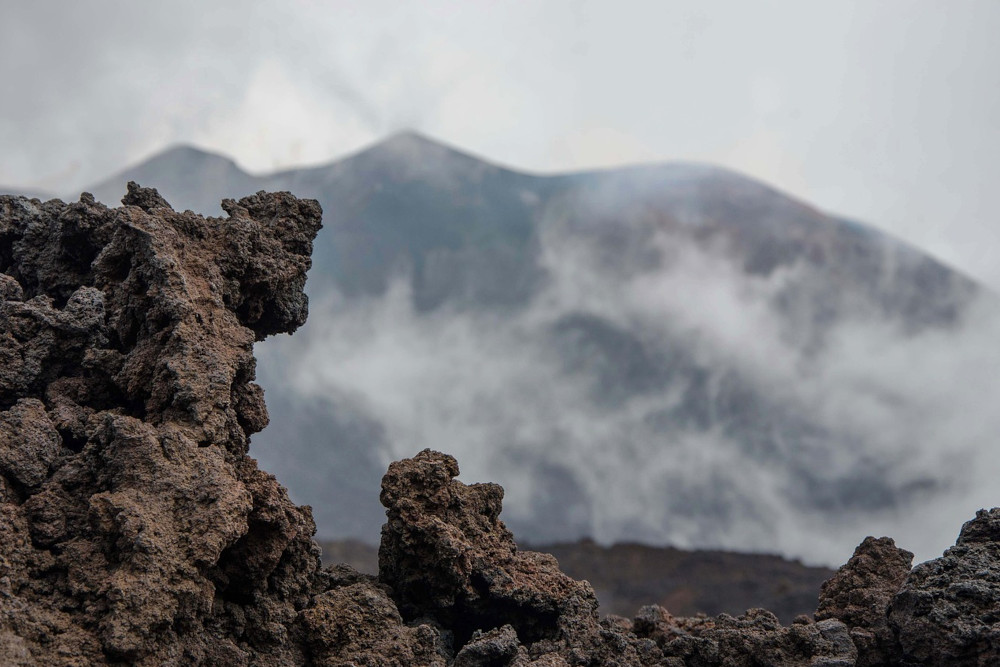
High above the island of Sicily stands Mount Etna — one of the most active volcanoes in the world and a place steeped in stories. For thousands of years, its fiery eruptions have stirred awe, fear, and fascination. To this day, people wonder: Do gods live inside? Are monsters trapped below? Could it be a portal to the underworld?
Even ancient thinkers weren’t immune to the mountain’s mystique. One tale tells of Empedocles, a Greek philosopher who leapt into Etna’s crater to prove his immortality. The only trace left behind was a single bronze sandal, spit out by the lava.
Whether that story is fact or fiction, it speaks to Mount Etna’s grip on the human imagination. In this article, we’ll explore where the volcano is located, why it’s so important, and the rich mythology surrounding it — alongside the science that helps us understand it today.
Where is Mount Etna?
Mount Etna rises from the eastern side of Sicily, Italy’s largest island. It’s located between the cities of Messina and Catania, near the clear blue waters of the Ionian Sea.
Etna sits on the boundary where two tectonic plates — the African Plate and the Eurasian Plate — collide. This geological clash fuels its frequent eruptions, which stretch back over 500,000 years.
Towering more than 10,000 feet (about 3,300 meters), Etna dominates the landscape. Its features include cinder cones, lava flows, summit craters, and the deep Valle del Bove depression.
Why Mount Etna matters
Mount Etna is more than just a volcano — it’s a key part of both Earth’s story and human culture.
A hotbed of volcanic activity
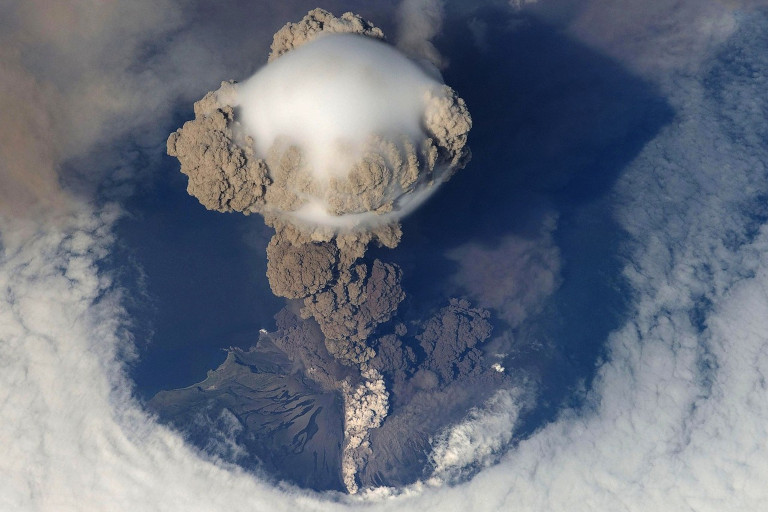
Etna is one of the most active volcanoes on the planet. Written records of its eruptions go back nearly 2,700 years, to around 1500 BC. Some eruptions are mild, while others are powerful enough to reshape entire regions.
A natural lab for scientists
Researchers have long studied Etna to understand how volcanoes work. It offers insights into magma formation, eruption patterns, and volcanic landforms. What scientists learn here helps them predict eruptions elsewhere.
A geological landmark
Etna’s position on a major fault line makes it a prime site for studying how Earth’s crust shifts. Its ongoing activity helps explain how earthquakes, volcanoes, and mountains form.
A cultural icon
Etna has influenced art, religion, and storytelling for centuries. Ancient poets wrote about it. Local communities still share legends passed down through generations. For many, the volcano is more than a geological feature — it’s part of their identity.
The myths and legends of Mount Etna
Long before scientific explanations, people told stories to make sense of Etna’s fury. These myths reveal how deeply the volcano is woven into culture and belief.
Hephaestus’ forge
In Greek mythology, Etna was said to house the forge of Hephaestus, god of fire and blacksmithing. Inside the volcano, he crafted weapons for the gods — thunderbolts for Zeus, armor for heroes. The mountain’s rumblings were thought to be the sound of his hammer at work. The Romans adopted this myth, calling the god Vulcan — giving us the word volcano.
Typhon, the buried giant
Another tale speaks of Typhon, a monstrous being who tried to overthrow Zeus. As punishment, Zeus buried him beneath Mount Etna. His limbs stretched across Sicily, but his head lay beneath the volcano. Every eruption was believed to be Typhon struggling to break free.
A gateway to the underworld
Some myths saw Etna as a portal to Hades, the realm of the dead. Smoke rising from its crater was taken as a sign that another world existed below. During eruptions, some believed spirits crossed into the land of the living.
The love story of Acis and Galatea
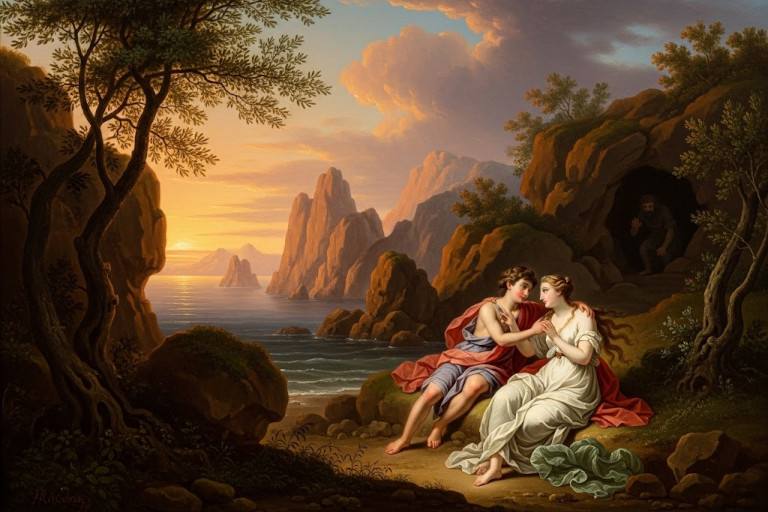
In this tragic legend, the shepherd Acis fell in love with the sea nymph Galatea. But the Cyclops Polyphemus, also in love with Galatea, killed Acis in a jealous rage. Moved by sorrow, the gods transformed Acis’s blood into a river — the River Jaci, which still flows from Mount Etna. Nearby towns still carry his name: Aci Castello, Aci Trezza, and Acireale.
The Pious Brothers
A more recent Sicilian legend tells of two brothers, Anapia and Amphinomos, caught in an eruption with their elderly parents. As the lava closed in, they lifted their parents onto their backs and prayed. Miraculously, the lava split, sparing them. Some say this is why certain towns near Etna remain untouched by eruptions.
Mount Etna in English myths
Even far from Sicily, Etna captured imaginations. In English medieval legends, King Arthur was brought to Mount Etna by Archangel Michael to repair his broken sword. Tired and near death, Arthur chose to stay, and some say he still lives in a cave within the mountain. According to the tale, Etna only erupts when Arthur leaves to bring gifts to the children of Britain.
One bizarre myth even links Queen Elizabeth I to Etna, claiming her soul lies beneath the volcano after a pact with the devil in exchange for power and a long life.
Science vs. story: What’s really happening inside Etna?
While myths give Mount Etna magic, science offers clarity. The volcano erupts because of molten rock (magma) rising from deep underground. Its location on a tectonic fault line fuels its constant activity.
Today, scientists monitor Etna using tools like satellites, drones, and seismometers. This helps predict eruptions and protect nearby communities.
Yet even with all we know, the volcano remains captivating. Whether seen through the lens of science or the eyes of myth, Mount Etna continues to inspire wonder.
Follow us on X, Facebook, or Pinterest
