
During World War II, an unlikely duo formed one of the most effective military partnerships in history. On one side was Claire Lee Chennault, a tactical genius and rugged Texan whose ideas had been sidelined by the U.S. Army. On the other hand was Soong Mei-ling, the American-educated First Lady of China, a woman of immense wealth, elegance, and political savvy.
Together, they navigated a complex web of diplomatic neutrality and global politics to create the American Volunteer Group (AVG) — better known to the world as the Flying Tigers. Their collaboration wasn’t just a military alliance; it was a desperate, high-stakes initiative built on survival, mutual respect, and a shared refusal to accept defeat.
The maverick: Claire Lee Chennault
Claire Lee Chennault was a classic innovator — brilliant, but difficult to manage within a rigid hierarchy. Born in rural Texas and raised a devout Christian, he clawed his way into the U.S. Army Air Service during World War I.
Chennault became a “fighter pilot specialist” who believed that coordinated teams of fast fighters were the future of war. However, the U.S. military leadership at the time prioritized heavy bombers and was skeptical of his theories. Between his independent personality, his unorthodox views, and his deteriorating hearing, the Army forced him into retirement in 1937 at the rank of captain.
At 47, his career seemed over. But Chennault was a tactical thinker looking for a place to prove his theories, and he was about to find it in one of the most volatile regions on earth.
The powerhouse: Soong Mei-ling
While Chennault was facing the end of his career in the U.S., China was fighting for its life. The nation was fractured, divided internally, while facing a brutal, full-scale invasion by the Empire of Japan.
Enter Soong Mei-ling. As the wife of Generalissimo Chiang Kai-shek, leader of the Nationalist government, she was technically the First Lady. But that title understates her influence. Educated at Wellesley College in Massachusetts, she spoke English with a charming Georgia accent and understood the American political landscape better than almost any diplomat of her era.
Appointed secretary-general of the Aviation Commission, she was tasked with saving China’s skies. When she assessed the situation, she found a crisis: on paper, China had 500 planes; in reality, only 91 were combat-ready. She recognized the need for foreign expertise to rebuild the force from the ground up. In early 1937, she invited Chennault to China.
The partnership
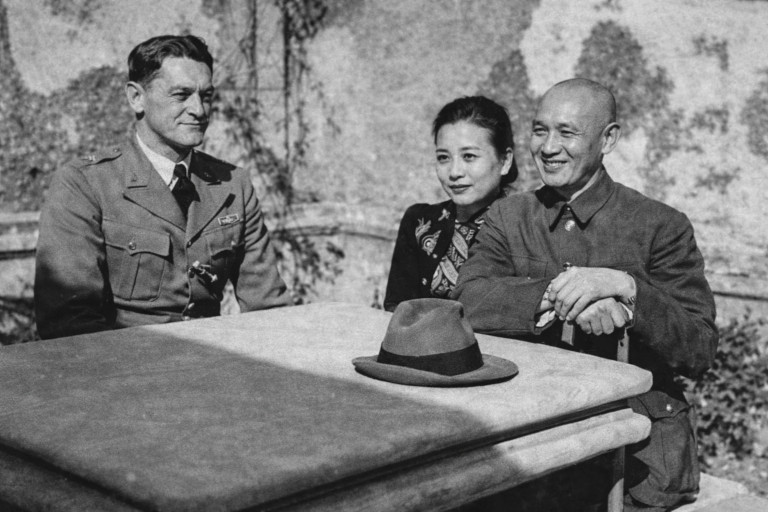
The two met in Shanghai on June 3, 1937. It was a study in contrasts: the gruff, leather-faced airman and the sophisticated, diplomatic strategist. Yet, they bonded immediately over a shared pragmatism.
Soong gave Chennault a clear mandate: build an aviation school in Kunming and prepare the Chinese Air Force for war. Chennault brought American training methods to China, but the reality was grim. Japanese bombers were dominating the skies, and the Chinese pilots, though brave, were undertrained and outmatched. They needed modern aircraft and, more importantly, they needed experienced combat pilots.
The Flying Tigers: A covert solution
By 1940, Japan had blockaded almost all of China’s ports. The only lifeline for bringing supplies into the country was the Burma Road, a treacherous mountain highway. If the Japanese air force cut off this road, China’s resistance could collapse.
Chennault and Soong devised a bold solution. They needed American pilots to protect the road. However, the U.S. was officially neutral and could not openly send troops to fight Japan.
Working through back channels, and with quiet approval from President Roosevelt, they created a unique arrangement. They recruited pilots from the U.S. military to resign their commissions and sign on as “volunteers” for the Chinese government.
These were the original Flying Tigers.
- The arrangement: To maintain U.S. neutrality, their passports listed civilian occupations like banker, student, or musician.
- The incentives: Recognizing the mission’s extreme danger, the contracts offered significantly higher pay than standard military wages — roughly US$600 a month — along with a bonus of US$500 for every Japanese plane confirmed destroyed. This mix of adventure, ideology, and financial reward attracted a unique breed of daring aviators.
The legend of the shark teeth
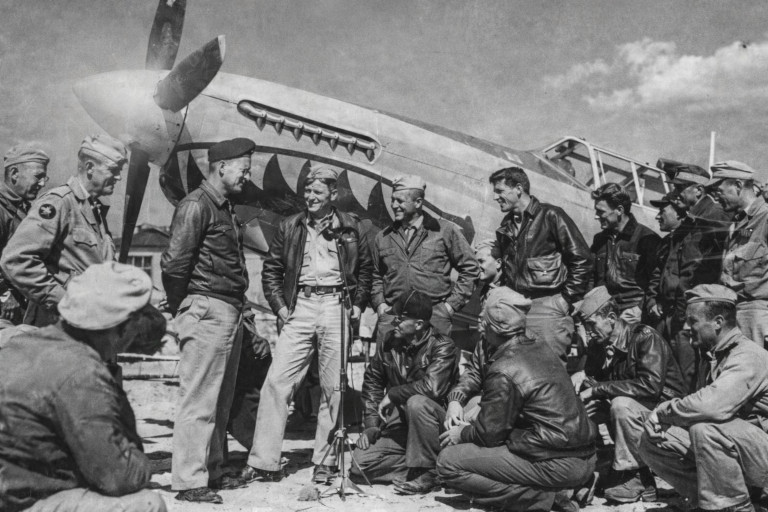
The AVG was formally established on August 1, 1941. Their first combat mission came on December 20, 1941, over the Burma-Yunnan front. Facing ten Japanese bombers, the Tigers shot down nine without losing a single plane.
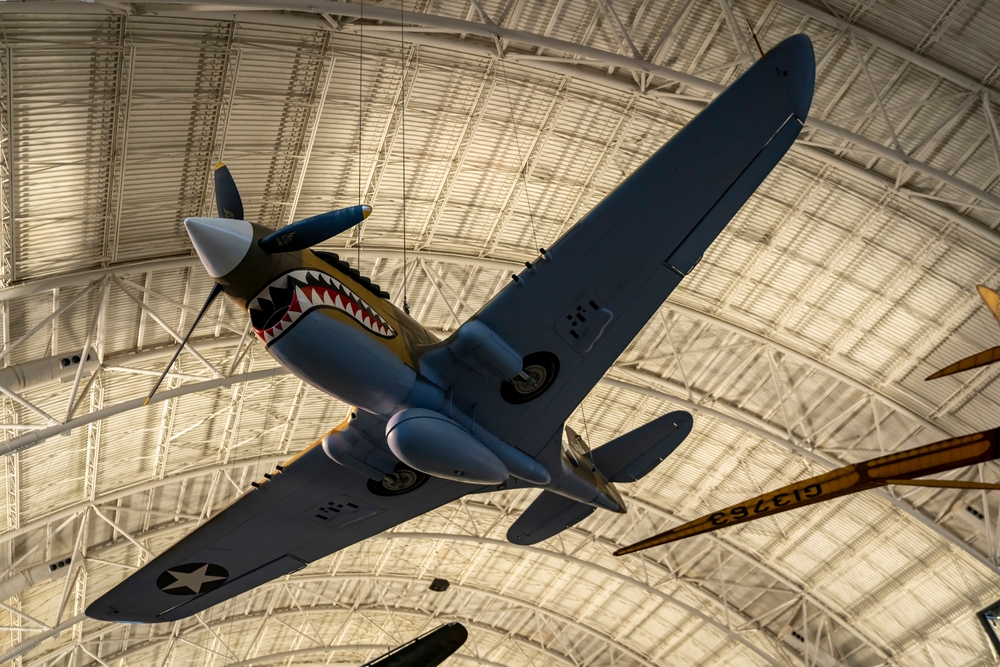
It was a stunning victory that shocked the Japanese air force, which was used to total air superiority. But it was the look of the planes that captured the world’s imagination. The pilots painted aggressive shark mouths on the noses of their P-40 fighters — a design that remains iconic today.
Interestingly, the name “Flying Tigers” was born from a cultural interpretation. While the nose art was clearly a shark, many inland Chinese residents had never seen one. They thought the gaping jaws looked like tigers — a symbol of ferocity and courage in Chinese folklore. The nickname stuck, and Walt Disney himself later designed their official logo: a winged tiger flying out of a V for Victory.
Legacy and impact
The success of the Flying Tigers was the direct result of the Chennault-Soong partnership.
- Chennault provided the tactics, famously teaching his pilots to utilize the “dive and zoom” technique — using the P-40’s heavy armor and diving speed to attack nimble Japanese Zeros and escape before they could counter-attack.
- Soong provided the political cover and the resources. She worked tirelessly to secure the P-40s under the Lend-Lease program (a system that allowed the U.S. to provide military aid to nations vital to its defense), ensuring the pilots had the fuel, parts, and political backing they needed to keep flying.
The group was disbanded on July 4, 1942, after the U.S. formally entered the war, and was absorbed into the U.S. Army as the 23rd Fighter Group.
Though they flew together for less than a year, the Flying Tigers achieved a psychological victory that outweighed their military numbers. At a time when the Allies were struggling on every front, a Texas maverick and a visionary Chinese leader proved that resistance was possible.
Translated by Audrey Wang
Follow us on X, Facebook, or Pinterest
