
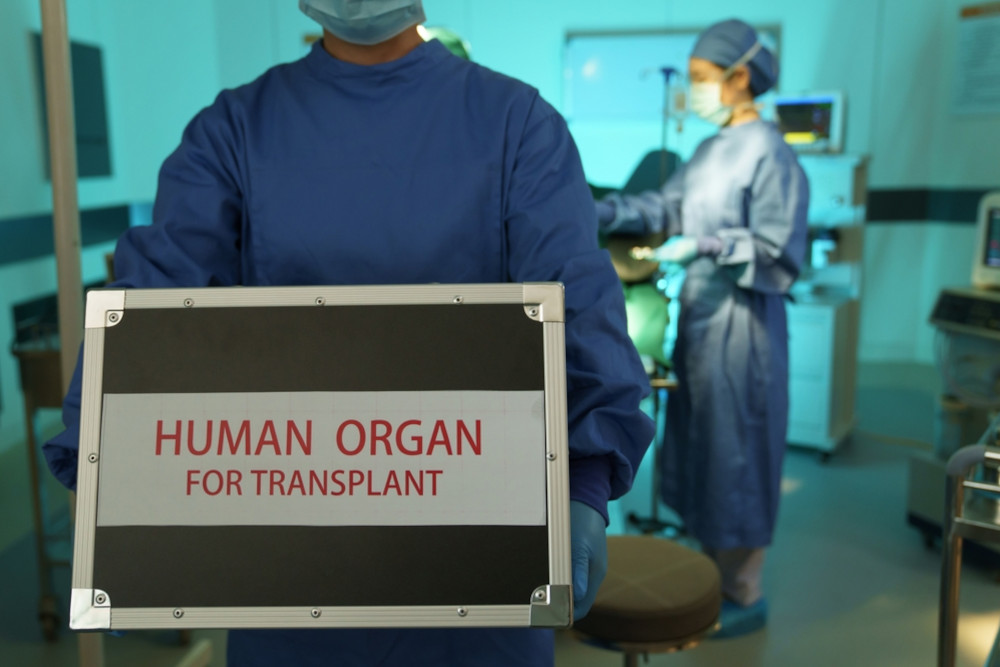
Recently, several questions related to organ transplantation appeared on a third-grade science exam at a primary school in China. After screenshots of the exam began circulating online, many parents and internet users said they were deeply disturbed.
According to the exam paper, four questions on the very first page addressed organ transplantation. Among the fill-in-the-blank questions, two promoted the idea that “organ donation is an act of kindness that helps save lives.” A true-or-false question listed transplantable organs, including the liver, heart, kidneys, and lungs. Another multiple-choice question stated that “China’s organ transplant surgery has reached an internationally leading level.”
Many parents and observers questioned why so many references to organ transplantation appeared in a science exam for children so young. Some argued that if an exam includes such a concentration of related questions, then the topic must already occupy a significant place in the official curriculum.
Online reactions were swift and intense. One commenter wrote: “Where did this exam come from? Just looking at it makes my skin crawl.” Another accused authorities of “poisoning children’s minds,” arguing that encouraging organ donation among minors violates the natural course of life, aging, illness, and death. Others expressed concern that children were being taught to view organ donation as something unquestionable from an early age.
Several parents shared personal experiences. One wrote: “My child came home saying that donating organs is an act of love. After that, I showed him many things that are happening now, so he could understand the issue more fully.”
Some parents say this messaging is not limited to science classes. In recent years, content related to organ transplantation has appeared across multiple subjects, including Chinese-language and English textbooks, as well as supplementary teaching materials.
For example, an article titled “Donating Your Son’s Organs, Continuing the Legend of Life” has been included in a third-grade Chinese language reading textbook. In a revised edition of a high school English textbook published by the Foreign Language Teaching and Research Press, a reading passage states that individuals aged 18 and over may sign organ donation agreements without parental consent.
(Image: Faizal Ramli via Shutterstock)
Promotion of organ donation in schools
In recent years, the Chinese Communist Party has also promoted organ donation on primary and secondary school campuses under the banner of “caring for life.”
In 2018, Zhejiang Province organized a large-scale organ donation awareness event involving students from a key local school, the Hangzhou Anji Road Experimental School. During the event, students posed for a group photograph in front of a red banner bearing the slogan: “Organ donation benefits the country and the people.”
Party-run media outlet Zhejiang Daily reported that the Zhejiang Provincial Human Organ Donation Management Center actively conducts interactive educational activities on organ donation with primary and secondary schools. According to the report, the goal was to “change children’s thinking from the source and plant the seeds of organ donation in their hearts.”
In 2019, the student Communist Party branch at Wenzhou Medical University organized organ donation-themed educational classes in primary and secondary schools in Wenzhou, later expanding the program to other parts of Zhejiang Province.
In November 2020, members of the same student party branch visited Dongyuan Primary School in Jinhua City to promote organ donation under the slogan “Pact for Life, Passing on Great Love.” During the presentation, a speaker described the case of a 16-year-old boy who donated his organs to seven recipients after being declared brain-dead. Students were then encouraged to write down their thoughts on organ donation.
In December 2020, at the inauguration ceremony of the Jiangxi Provincial Memorial Park for Organ and Body Donors — an event guided by the China Organ Donation Management Center — dozens of student representatives, including newly adult students from Nanchang University, took a collective oath pledging to participate in organ donation efforts. The China Organ Donation Management Center oversees nationwide promotion of organ donation and is jointly led by the National Health Commission and the Red Cross Society of China.
In 2021, students in Hangzhou organized a summer outreach campaign promoting “volunteer registration for human organ and body donation.” Students from Hangzhou High School took part, and some reportedly signed donation pledges.
On July 8, 2022, the Han Meilin Art Foundation and the China Organ Transplantation Foundation held a promotional event at the Han Meilin Art Museum in Beijing titled “Life Relay Themed Vanguard Team.” Video footage from the event showed a group of children, led by adults, taking vows to become volunteers and participate in what was described as a “relay for life.”

Growing public unease
These developments have provoked intense reactions online, reflecting deep-seated public anxiety about China’s organ donation and transplantation system.
Some commenters condemned what they described as a deliberate effort to normalize organ donation among minors. One wrote that authorities were “planting the seeds of organ donation in children,” a phrase that, in the Chinese context, conveys fear that young people are being psychologically prepared to accept bodily sacrifice as a civic duty.
Other comments went further, accusing the Chinese Communist Party of turning organ transplantation into an industrialized system. One widely shared remark alleged that young people across the country had effectively become “organ sources,” expressing the belief that organs could be extracted on demand to serve political or financial interests.
Several netizens warned that “there will be more and more cases of brain death.” For many Chinese readers, this phrase does not simply refer to an increase in medical diagnoses. Instead, it reflects a widely held suspicion — shaped by years of living under an opaque and unaccountable system — that the declaration of brain death can be manipulated or hastened in order to facilitate organ procurement.
Within this worldview, “brain death” is not always seen as a neutral medical determination, but as a label that may be applied once a person has been selected as an organ source, particularly when the recipient is politically influential or strategically valuable. These fears are reinforced by the lack of independent oversight, limited transparency in the organ transplantation system, and the state’s history of suppressing scrutiny rather than addressing public concerns.
While such claims remain allegations voiced by netizens rather than officially acknowledged facts, their persistence highlights a profound trust deficit. For many parents, the introduction of organ donation messaging into primary school classrooms is not viewed in isolation, but against a broader backdrop of state power, coercion, and past abuses. From that perspective, what officials describe as “life education” is seen instead as the extension of political messaging into the most intimate realm of bodily autonomy — beginning with children.
Translated by Chua BC
Follow us on X, Facebook, or Pinterest
