
Traditional Chinese culture has taught that “Medicine and food share the same origin.” Based on this knowledge, it could be assumed that the everyday foods we regularly consume may contain many beneficial hidden medicinal properties. In this article, we will explore one common food, considered by older generations to be nature’s most selfless gift, revered among all the other “national herbal treasures.”
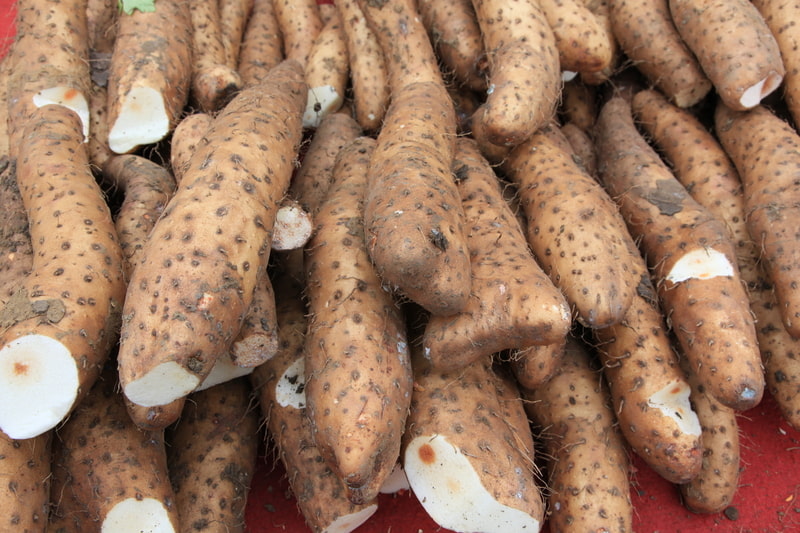
In the vast world of medicinal cuisine, there is one physically unattractive food — long and slender, covered in hairy fuzz with clumps of damp mud. If you’re not careful when peeling it, the sticky sap will make your skin itch. However, this seemingly insignificant “lump” possesses miraculous healing properties. It is the yam (Shuyao), a highly valued herb in traditional Chinese medicine, known for its ability to “balance and nourish the three jiaos.” Jiaos refer to the San Jiao (Triple Burner/Energizer). They represent the body’s digestive, respiratory, and elimination pathways, acting as a “burner” for energy transformation and fluid movement.
Name changes
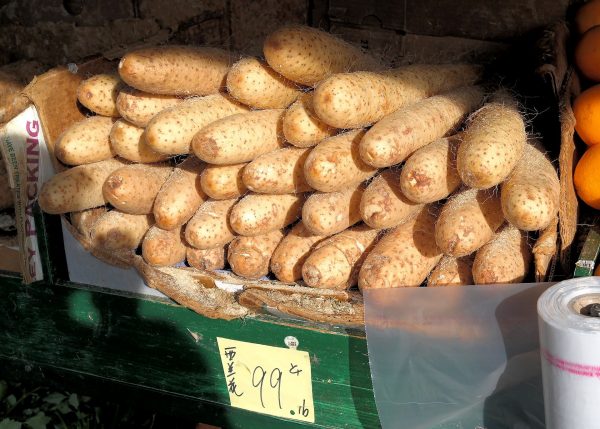
In ancient times, it wasn’t called “yam” but “dioscorea.” The name change occurred because it was simply too good and too famous, to the point that even emperors had to avoid using its name. During the Tang Dynasty (A.D. 618-907), to avoid the taboo of Emperor Daizong Li Yu’s name, it was renamed “Potato medicine.” By the time of the Northern Song Dynasty, to avoid the taboo of Emperor Yingzong Zhao Shu’s name, it was changed again to “yam.”
This threefold renaming reflects its irreplaceable status among the common people. Legend has it that during ancient warfare, when an outnumbered army was trapped in barren mountains with dwindling supplies, soldiers accidentally unearthed its root tubers. After cooking and eating them, not only did their strength return, but most of their physical injuries and illnesses also healed.
The king of balanced tonics
From the perspective of traditional Chinese medicine, mountain herbs are neutral in nature, mild in taste, and enter the spleen, lung, and kidney meridians. Its greatest characteristic lies in its “neutral” nature.
Many tonics have “biased” properties; those that nourish heat can cause internal heat, and those that nourish yin can cause dampness. But mountain herbs such as yams are different. They are warm but not drying, nourishing but not greasy, and are among the very few medicinal materials that can simultaneously regulate the spleen, lungs, and kidneys.
A ‘repair agent’ for the spleen and stomach
Modern people often lead irregular lifestyles, resulting in generally weak spleens and stomachs. Yam contains amylase and polyphenol oxidase, which enhance digestion and absorption. Its sticky juice, composed of mucopolysaccharides and mucoprotein, effectively protects the gastric mucosa. As elders often say: “The spleen and stomach are the foundation of a cultivated constitution.” Dioscorea is used to build this very foundation.
Nourishing elixir for the lungs
Chronic coughing, shortness of breath, and fatigue often stem from a deficiency of lung energy. Yam replenishes lung energy (qi) and nourishes lung deficiency (yin), making it an excellent dietary choice for those with persistent coughs and frequent colds.
A ‘refueling station’ for kidney essence
Mountain yams also benefit the kidneys and replenish essence. Its nourishing effect is exceptionally gentle, like fine rain moisturizing the earth, subtly enhancing physical constitution.

Medicine and food share the same origin
Yam is remarkably versatile — delicious in any preparation and nourishing in every form.
Steamed yam
Wash the iron-rod yams and steam them with the skin intact. Its sweet, earthy aroma directly nourishes the spleen and stomach, making it an excellent remedy for children’s poor appetite and indigestion, as well as spleen deficiency and diarrhea in the elderly.
Ribs and yam soup
Ribs nourish blood, while yams fortify energy. This nourishing soup replenishes both energy and blood, making it ideal for convalescing or physically weakened individuals.
Blueberry yam salad
Yam nourishes the spleen, while blueberries benefit the kidneys and improve vision. This isn’t just a trendy cold dish — it’s the top choice for modern office workers seeking eye protection and spleen health.
Conclusion
With its warm, earthy essence, yam lays a solid foundation for our spleen and stomach, providing the body with its “source of vitality.”
Translated by Audrey Wang and edited by Maria
Follow us on X, Facebook, or Pinterest
