
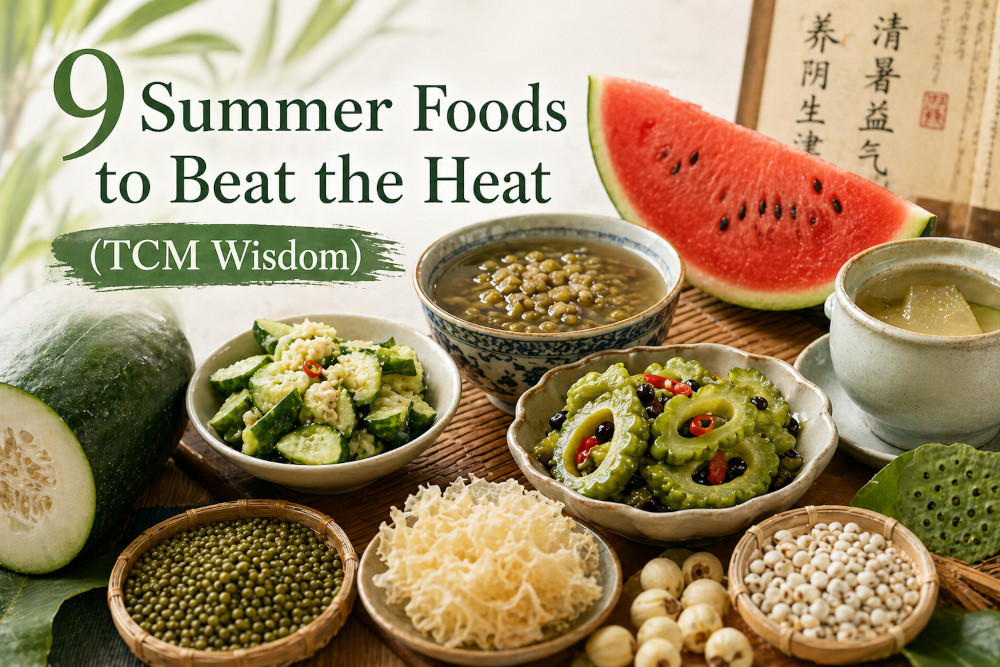
The afternoon was thick with August heat. In a small kitchen in Guangzhou, a grandmother lifted the lid from a clay pot, and the air filled with the green, faintly grassy steam of mung bean soup. She ladled a bowl, slid it across the table, and said only: “Drink slowly.” She had been making this same soup for 60 summers. Her own grandmother had made it before her.
This is how Chinese kitchens have answered the heat for centuries, not with ice cubes or air conditioning, but with food. Summer, in the eyes of traditional Chinese medicine (TCM), is not merely a season to endure. It is the peak of yang, the season of fire, and the time when the body needs the gentlest, most cooling foods to stay in balance. The wisdom is practical, time-tested, and surprisingly aligned with what modern nutrition is now beginning to confirm.
In this guide, we’ll walk through nine cooling summer foods to beat the heat, drawn from the Chinese kitchen, what they are, how they’re traditionally used, and how to fold them into your own table without shocking your digestion. Each is a small, accessible practice in traditional Chinese health practices, the kind of daily wisdom Nspirement was built to share.
How Chinese medicine sees summer heat
In TCM, summer corresponds to the fire element, the heart organ system, and the shen (spirit). As yang energy rises to its peak, the body warms, sweats, and loses fluids. Excessive heat, called shǔ (暑) in classical texts, can disturb the heart, drain the body’s yin, and leave a person tired, irritable, and parched. The classical answer is twofold: Clear the heat from the body, and protect the digestive center, the spleen.
This is where cooling foods come in. Importantly, the word “cooling” here does not mean cold to the touch. It refers to the food’s energetic nature, how it traditionally affects the body’s internal balance. Watermelon and cucumber are cooling, whether eaten chilled or at room temperature. Ginger and lamb are warming, no matter how they’re prepared.
The distinction matters, because TCM also warns against ice. Cold drinks and frozen foods may feel refreshing, but they can shock the spleen and dampen digestion, leading to bloating, fatigue, and poor nutrient absorption. The goal is gentle cooling from within, never an ambush. (For a clinical-side overview, see UCLA Health’s Traditional Chinese Medicine food recommendations.)
9 cooling summer foods from the Chinese kitchen
Each of the foods below has held a place in Chinese summer cooking for centuries. Many are also recognized in modern nutrition for the very qualities TCM has long praised. Together, they form a practical menu for staying balanced through the hottest months.
1. Watermelon (西瓜, xīguā)
The Qing Dynasty (1644-1912) physician Wang Mengying called watermelon “the natural White Tiger Decoction,” a nod to one of TCM’s most powerful heat-clearing herbal formulas. In traditional use, watermelon clears summer heat, generates fluids, and quenches thirst, the ideal prescription for a sweat-soaked afternoon.
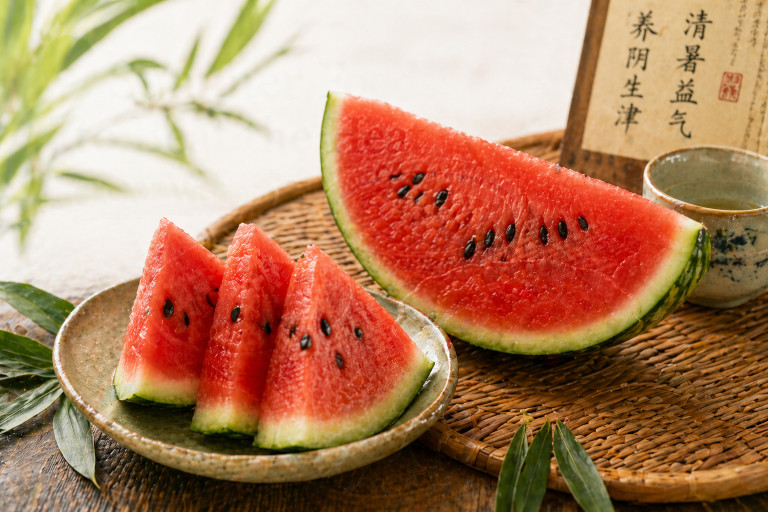
Modern nutrition agrees. About 92% of watermelon is water, and the fruit contains citrulline, an amino acid that nutrition researchers have linked to vasodilation and improved blood flow.
How to eat it: Slice it cold, but not frozen. In Cantonese kitchens, the white rind is sometimes salted and stir-fried, a thrifty way to honor the whole fruit and pull every drop of cooling value from it.
2. Cucumber (黄瓜, huángguā)
Cucumber is a quiet hero of the Chinese summer table. TCM views it as cooling, hydrating, and gently diuretic, helping the body release excess heat and dampness through the urinary system. At roughly 95% water and rich in electrolytes, cucumber is one of the simplest foods for replenishing what sweat removes. It also provides vitamin K, potassium, and small amounts of antioxidants.
How to eat it: Try the classic pāihuáng, smashed cucumber salad with garlic, rice vinegar, sesame oil, and a small pinch of salt. Light, fast, and deeply refreshing. For a fuller meal, add a few cubes of cold tofu and a sprinkle of toasted sesame seeds.
3. Bitter melon (苦瓜, kǔguā)
Few foods divide a dinner table like bitter melon. Yet in TCM, its bitterness is precisely the point. The bitter flavor is said to enter the heart channel, clearing intense heat and damp-heat, the kind of imbalance that produces summer rashes, sticky sweat, and irritability. Modern researchers have isolated compounds called momordicins from bitter melon, and ongoing studies continue to investigate the plant’s traditional links to blood-sugar regulation.
How to eat it: To soften the bite, slice it thinly, salt it for 15 to 20 minutes, then rinse and stir-fry with egg or fermented black beans. The bitterness fades; the cooling remains. Older relatives often say a child’s first bite of bitter melon is a small rite of passage, and a sign of summer’s true beginning.
4. Mung beans (绿豆, lǜdòu)
If there is a single food that captures the spirit of Chinese summer, it is the small green mung bean. Across Cantonese, Hakka, and Northern Chinese cooking, mung bean soup is the everyday remedy for heat, cooling the blood, clearing toxins, and soothing summer rashes and acne. Recent food-science research has identified vitexin and isovitexin in mung beans, polyphenols studied for their anti-inflammatory and antioxidant properties.
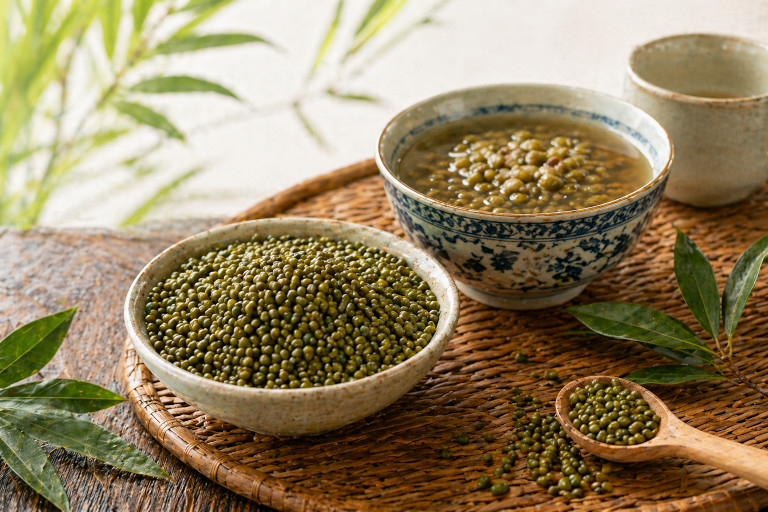
How to eat it: Simmer one cup of mung beans in six cups of water with a small piece of kelp for 45 minutes. Sweeten lightly with rock sugar. Drink warm or at room temperature, never iced. In some Southern households, the soup is kept in a covered clay pot on the counter and ladled out throughout the day.
5. Winter melon (冬瓜, dōngguā)
The name is a translator’s joke. Despite the name “winter,” winter melon is a summer staple, prized in TCM for its ability to clear heat and drain dampness. Its mild flavor lets it absorb whatever broth it’s cooked in, making it a quiet workhorse in family soups. Traditionally, the rind and seeds are also kept and used; nothing about this gourd is wasted.
How to eat it: A simple dōngguā tāng, winter melon soup, pairs the gourd with dried shrimp, ginger, and a few slices of lean pork. Twenty minutes of gentle simmering is all it asks. The result is clear, light, and steadying.
6. Lotus root (莲藕, liánǒu)
The lotus is one of the great symbols of Chinese culture — purity rising from the mud — and its root is a study in balance. Raw, lotus root is cooling and clears heat. Lightly cooked, it becomes neutral and tonifies the spleen and stomach. This shape-shifting quality is exactly why TCM cooks recommend it during hot months: it cools without overcooling.
How to eat it: Slice and blanch briefly, then dress with rice vinegar, sesame oil, and a few goji berries. For a more nourishing dish, simmer with pork ribs and peanuts for an hour. The texture is crisp at first bite, soft just beneath.
7. Mung bean sprouts (绿豆芽, lǜdòuyá)
When mung beans germinate, their cooling nature softens, but remains. Sprouts are crisp, light, and quick to cook, exactly the qualities that suit a hot kitchen. In TCM, they continue the heat-clearing work of the parent bean while being even gentler on digestion. Modern nutrition adds that sprouts are richer in vitamin C than dried beans, with a small but useful amino-acid bump from germination.
How to eat it: Stir-fry with a clove of garlic and a splash of soy sauce for 60 seconds, no longer. The crunch is the medicine.
8. Job’s tears (薏米, yìmǐ)
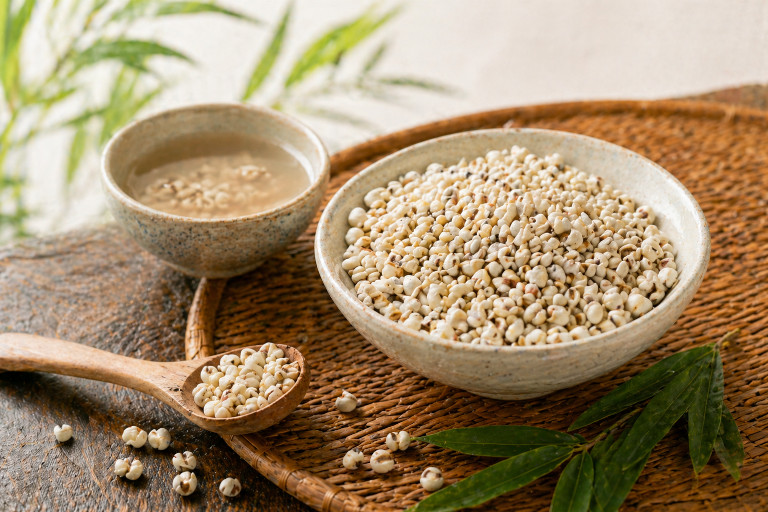
Job’s tears, also called coix seeds, are small pearl-shaped grains long used in TCM to drain dampness, the hidden enemy of summer comfort. Damp-heat, the TCM concept that combines stickiness with warmth, is what makes long humid afternoons feel so heavy. Job’s tears address it from the inside, lightening the body’s load without overcooling it.
(Image: via ChatGPT)
How to eat it: Combine half a cup of Job’s tears with half a cup of mung beans, simmered together in water for an hour. The resulting tea is the classic summer dampness-clearing drink across much of Southern China, sometimes flavored with a strip of dried tangerine peel for fragrance.
9. Chrysanthemum tea (菊花茶, júhuā chá)
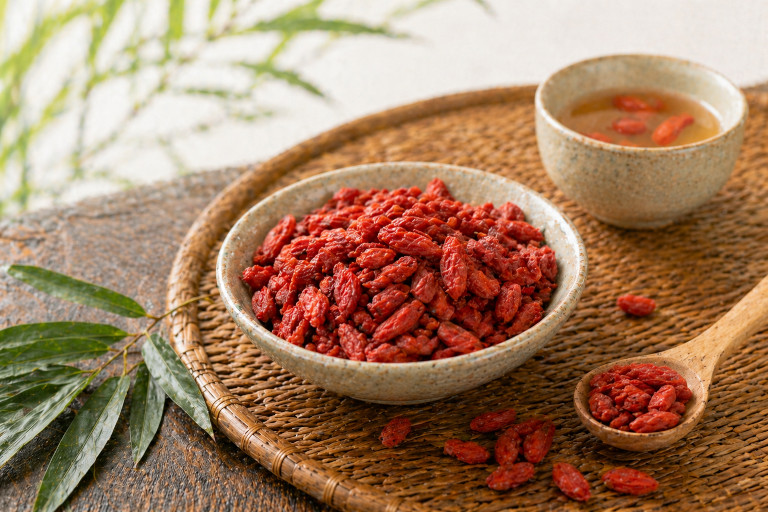
No summer-foods list is complete without chrysanthemum. The tiny dried flowers are steeped to make a tea traditionally used to clear heat from the liver and eyes, calm restlessness, and ease the irritability that comes with long, hot days. It pairs beautifully with goji berries and a little rock sugar, and unlike iced drinks, it is best served warm. The contrast with summer heat is gentle, and the body welcomes it.
For a deeper look at this graceful drink, see the benefits of chrysanthemum tea.
How to eat for summer without hurting your spleen
The fastest way to undo the cooling work of these nine foods is to drown them in ice. Cold drinks and frozen desserts may feel like relief in the moment, but TCM teaches that they can numb the spleen, leading to that heavy, tired, post-iced-coffee slump many people know well. The classical metaphor is of a cooking fire: The spleen is the hearth that transforms food into qi and blood, and ice is a bucket of cold water poured directly on it.
A few practical adjustments make a real difference:
- Cook lightly rather than eating raw. Steaming, blanching, and quick stir-frying preserve a food’s cooling nature while making it gentler on digestion.
- Drink room-temperature water and warm teas. A warm cup of chrysanthemum or barley tea hydrates more deeply than a glass of ice water, and leaves no slump behind.
- Add a single slice of ginger to cold dishes. This Cantonese trick, sometimes called the “warming whisper,” protects the spleen without overpowering the dish.
- Eat at regular times. Skipping meals in summer disturbs the spleen as much as ice does, and irregular eating tends to leave the body craving sweet or salty rescue.
These small adjustments echo the kind of no-cost wellness habits from Chinese tradition that have shaped family kitchens for generations — quiet, daily, and effective.
5 Foods to use sparingly in summer
TCM is also clear about what tilts the body toward heat. The following foods are not forbidden, but they are best in modest amounts during the hottest months:
- Spicy foods, chilies, raw garlic, lamb, and curry stoke internal fire and can intensify summer heat symptoms.
- Deep-fried foods, adding heat to heat. Save them for cooler seasons.
- Alcohol, particularly strong spirits, which the body reads as warming and dehydrating at once.
- Refined sugar and heavy sweet desserts can generate dampness and overburden the spleen.
- Excess coffee, a little is fine, but caffeine is drying. Pair with extra water and cooling foods.
Just as another time-tested Chinese kitchen staple, Chinese goji berries, is celebrated for moderation rather than overuse, summer eating is about the gentle, consistent rhythm of the right foods, not extremes.
A simple summer day on the plate
The traditional Chinese summer day is built around small, light, frequent meals, easy on the spleen and generous to the heart.
- Breakfast: Warm congee with a few slices of cucumber, a drizzle of sesame oil, and a soft-boiled egg.
- Mid-morning: A cup of warm chrysanthemum tea with three goji berries.
- Lunch: Stir-fried mung bean sprouts with garlic, steamed rice, and a small bowl of winter melon soup.
- Afternoon snack: A wedge of cold-but-not-frozen watermelon.
- Dinner: Lightly blanched lotus root with rice vinegar, a thin slice of steamed fish, and a small bowl of mung bean soup.
- Evening: A warm cup of Job’s tears tea before bed.
Nothing on this plate is dramatic. Nothing requires a trip to a specialty store. And that is the quiet brilliance of the tradition: the foods are ordinary, the practice is consistent, and the body slowly rebalances on its own.
A bowl of wisdom for the hottest days
Summer rewards those who stay gentle with themselves. Chinese medicine has spent more than two thousand years observing how the body answers the heat, and its conclusion is unfailingly modest: cool the body, protect the digestion, drink warm tea, eat small bowls of mung bean soup. There is no fad here, no trend, no expensive supplement, only watermelon, cucumber, mung beans, lotus root, and time.
The 9 cooling summer foods in this guide each carry a piece of that wisdom. You don’t need all of them at once. Even one, a small bowl of mung bean soup on a humid evening, sweetened with a little rock sugar, is enough to begin. The body remembers what the kitchen offers it, and in summer the kindest gift is a cool, gentle bowl set down without ceremony.
May your summer be warm in spirit and cool in body. For more recipes from the Chinese kitchen, explore Nspirement’s well-being recipes.
Translated by Cecilia
Follow us on X, Facebook, or Pinterest
