
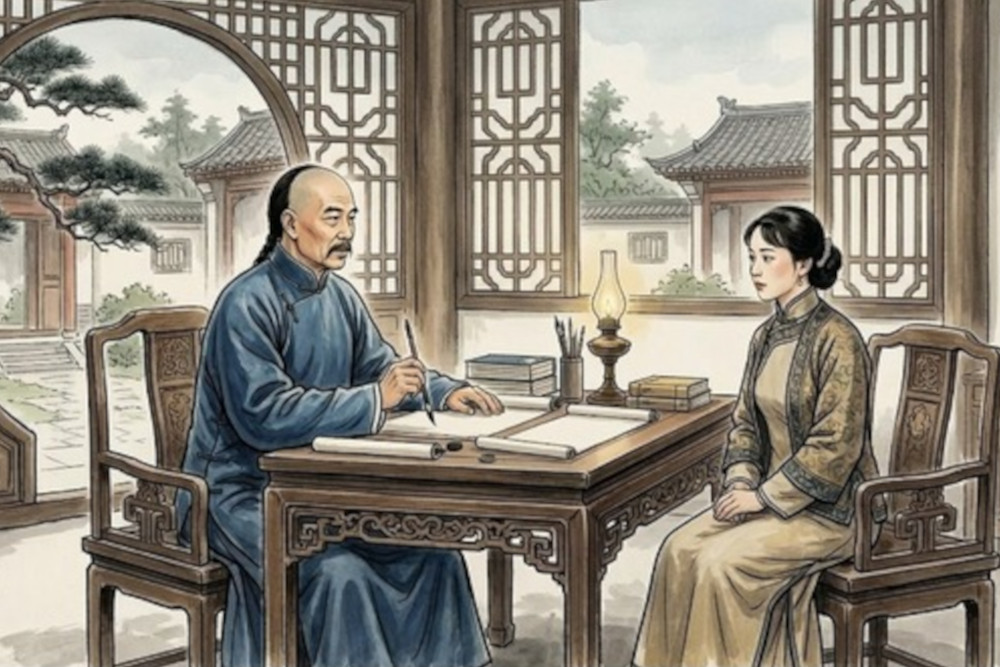
Zeng Guofan is remembered as one of the Qing Dynasty’s most perceptive judges of character. Throughout his life, he promoted some of the most influential figures of his time and was known for reading a person’s nature from their behavior, speech, and bearing.
Yet despite this reputation, he repeatedly failed when choosing husbands for his daughters — a mistake that became one of his deepest regrets.
His confidence in choosing sons-in-law
At the height of his career, Zeng Guofan believed he had a reliable system for selecting suitable matches. He preferred families he knew well, often from his home province of Hunan, and placed great importance on the father’s character, reputation, and relationship with himself.
If the father was upright and accomplished, Zeng Guofan assumed the son would be the same.
This logic seemed sound at the time. But reality proved otherwise.
Four daughters, four difficult marriages
Zeng Guofan’s eldest daughter, Jijing, was married into the Yuan family, whose father was respected for his learning and integrity. However, her husband grew into a man given to drinking, gambling, and mistreating her. After years of distress, she died young, never having children.
His second daughter, Jiyao, married the son of one of Zeng Guofan’s closest friends. But the young man had lost his father early and struggled with illness and financial hardship. Jiyao spent her married life caring for him under difficult conditions, and later died in Paris while accompanying her brother abroad.
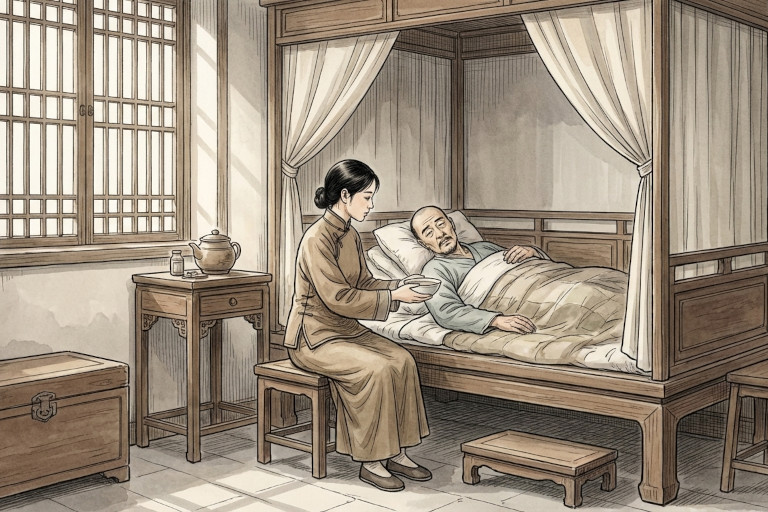
The third daughter, Jichen, married into the family of a trusted general. Her husband had a volatile temper and limited ability, and her mother-in-law was harsh and demanding. After her husband’s death, Jichen lived out the rest of her life in quiet hardship.
The fourth daughter, Jichun, initially seemed to have a better match. Her husband was talented, and their marriage began happily. But his poor health led to an early death, leaving her to raise children alone under difficult family circumstances. She, too, died relatively young.
One by one, the marriages Zeng Guofan had carefully arranged ended in suffering.
What he realized too late
In his later years, Zeng Guofan reflected deeply on these painful outcomes. He concluded that he had made two critical mistakes.
First, he had judged the father instead of the son. He trusted the reputation and character of men he respected, assuming their children would follow the same path. Experience taught him that this is far from guaranteed.
Second, he had judged too early. Many of these matches were arranged when the young men were still boys. Their true character had not yet been tested by life.
These realizations marked a turning point in how he viewed marriage.
Why family character matters more than status
Zeng Guofan came to place greater importance on what he described as a family’s character — the habits, values, and way of life passed down within a household.
He later advised that a marriage should not be based on wealth or status, but on whether the family lived with discipline, humility, and stability.
In his writings, he warned that families accustomed to privilege and display often carried habits that could disrupt a household. What mattered was not outward success, but how people lived day to day.
This idea echoed earlier teachings as well. Historical scholars had long emphasized that character and values, not social standing, form the foundation of a stable marriage.
A different outcome for his youngest daughter
When it came time to arrange a marriage for his youngest daughter, Jifen, Zeng Guofan approached the decision very differently.
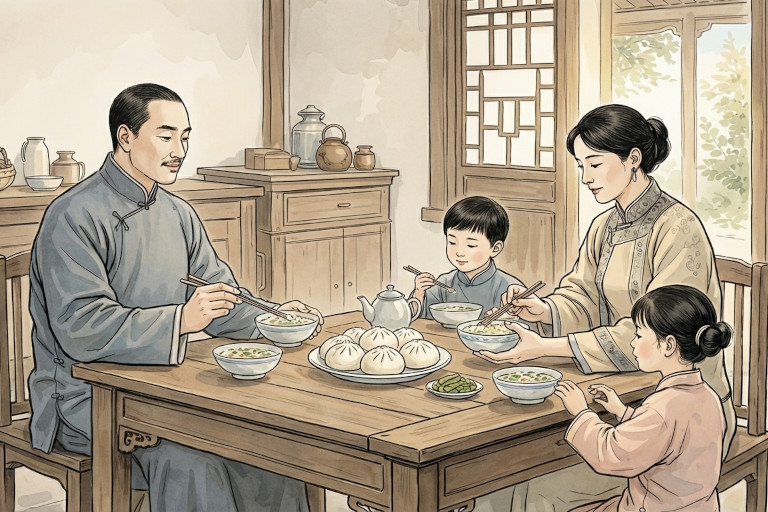
He took time to observe the prospective husband carefully, paying attention to his behavior in ordinary situations — how he spoke, how he treated others, and how he conducted himself at the table. The family he came from was not especially prominent, but it was known for its simplicity and discipline.
This time, the result was different. Jifen’s marriage was stable and respectful, and she lived a long life surrounded by her family.
A lesson that still applies today
Zeng Guofan’s experience highlights a simple but often overlooked point: the success of a marriage depends less on outward qualifications and more on character — both personal and familial.
Even today, people often focus on income, education, or social status when evaluating a partner. Yet differences in values, habits, and family dynamics tend to surface over time, shaping the daily reality of married life.
Zeng Guofan’s hard-earned lesson was that choosing a partner is not just choosing an individual, but choosing the environment and values that come with them.
Translated by Audrey Wang
Follow us on X, Facebook, or Pinterest
