
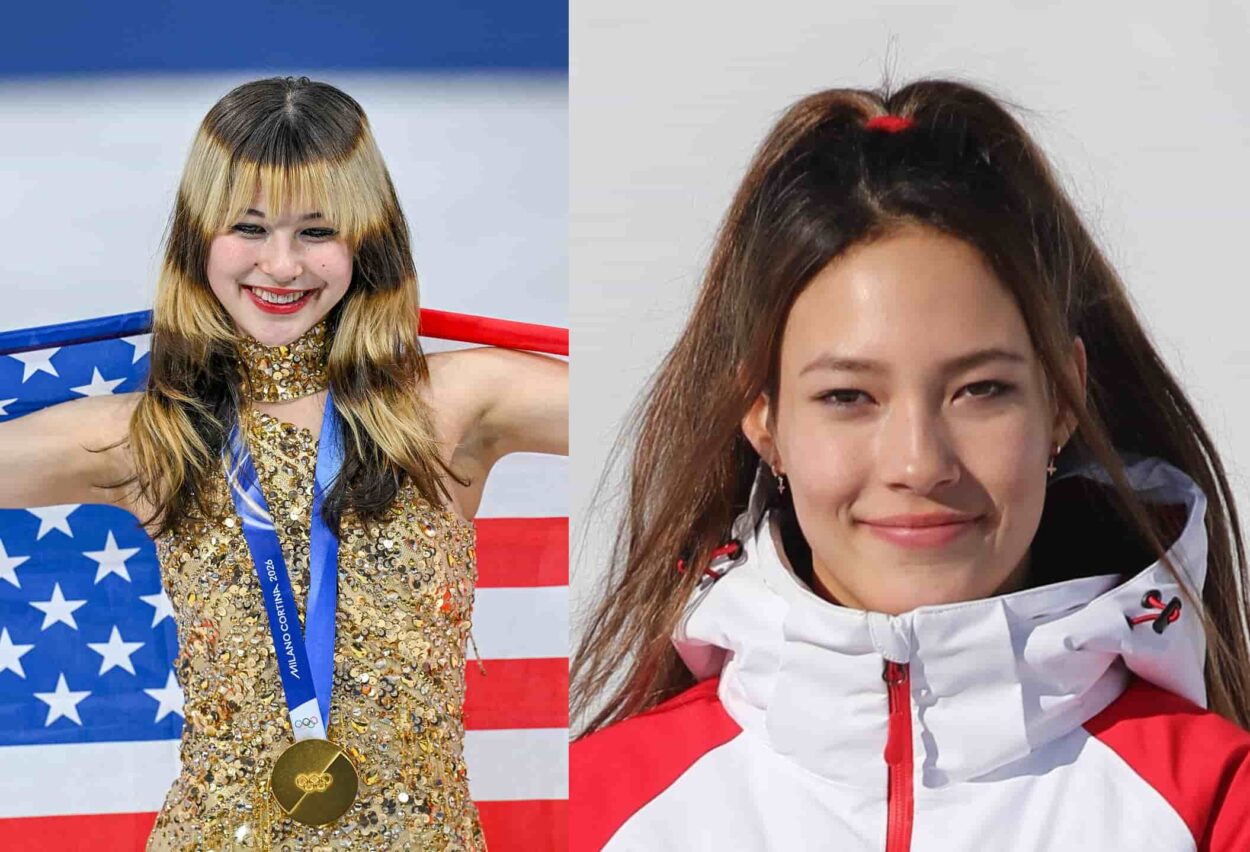
During the 2026 Winter Olympics in Milan, Italy, two American-born Chinese athletes captured the world’s attention. American figure skater Alysa Liu won the gold medal in the women’s singles, the first Olympic gold for the United States in this event in 24 years. Her Instagram following surged to 5.3 million, and her story was hailed by conservatives as a “victory for American loyalty.” In contrast, Eileen Gu, representing China, won one gold and two silver medals, bringing her total Olympic medal count to six. Yet her followers increased to only 3.7 million.
Though both are California-born, single-parent prodigies, their national allegiances led them down very different paths — reflecting a fundamental contrast in parental values: one guided by freedom and loyalty, the other by self-interest and a double life. Guangyu Jiang, a social media influencer, attributes the divergent paths of Liu and Gu to their parents’ drastically different aspirations: one is an opponent of the Chinese Communist Party (CCP), while the other has been accused of being a CCP sympathizer.

Alysa Liu’s American dream and Eileen Gu’s dual life
Alysa Liu began figure skating at the age of five. Her father, Jun Liu, a devoted fan of Michelle Kwan, took her to an ice rink in Auckland to try it out. Unexpectedly, the little girl displayed remarkable talent on the ice. Her coach recommended hiring a professional private coach, and Jun Liu readily agreed. The $120-per-hour fee was a heavy burden for an immigration lawyer just starting out, but he adjusted his lifestyle — waking at 4:30 a.m. to do housework, taking Alysa Liu for two hours of training, sending his other four children to school, and then taking her for further practice after work.
Unable to attend school regularly, Alysa Liu switched to online homeschooling, with her father’s law firm effectively becoming her classroom. Jun Liu estimates that he invested between $500,000 and $1 million in her figure skating career.
Alysa Liu’s skating journey has been a rollercoaster. She mastered difficult moves by age 10, won the U.S. Figure Skating Championships at 13 — becoming the youngest national champion in U.S. history — and competed in the 2022 Beijing Winter Olympics at 16, finishing sixth in the women’s singles and earning a bronze medal in the team event before announcing her retirement.
Jun Liu respected his daughter’s decision without argument. Alysa Liu then attended UCLA to study psychology, traveled extensively, climbed to Everest Base Camp, and experienced ordinary life. Two years later, her love for skating, music, and performance returned. In March 2024, she made her own comeback, choosing her coach, music, costumes, training schedule, and even driving herself to the rink. “She had a lot of fun skating this time, and I’m really happy for her,” Jun Liu said. “I hope she’s happy.”
On February 19, Alysa Liu was the last of the three remaining skaters to perform in the women’s singles final. Facing tremendous pressure, she glided onto the ice in a gold dress, with matching highlights in her hair, calm and fully focused on her performance. Liu scored 152.20 points in the free skate, overcoming odds to win the gold medal, becoming the first American woman in 24 years to claim Olympic figure skating gold.
After the competition, she said: “What I really need isn’t medals… No matter what happens in life, I have a beautiful life story. I can truly feel that I am loved.” This composed, sunny, genuine, and unpretentious image of a young woman has touched countless people.
Eileen Gu, by contrast, began skiing at the age of three, when her mother introduced her to the sport. She invested heavily in her training — driving eight hours each way for weekend sessions and sending her back to Beijing during summers to study Chinese and attend tutoring classes. From a young age, Eileen Gu was raised for what her family described as “transnational growth.”
At 15, Eileen Gu chose to represent China, leaving behind her red, white, and blue competition uniform for the Chinese team colors. British journalist Ben Hedges remarked: “She was born and raised in the United States, enjoying American resources, yet she chose to represent China and earn hundreds of millions in endorsement fees, with annual earnings exceeding $100 million. However, China does not allow dual citizenship, and this kind of attempt to have it both ways is seen as a betrayal by Americans.”

Who’s the real winner?
Social media amplified the contrast between the two athletes. After Liu won gold, Americans hailed her as a hero. Eileen Gu, however, faced scrutiny from the American public. Her success was criticized as “patriotism being a business,” while Alysa Liu’s sincerity resonated with people’s hearts.
Citing Eileen Liu as an example, Chinese education experts abroad analyzed common misconceptions in raising overseas Chinese children: first, imposing one’s unfulfilled dreams on children; second, overprotecting them and depriving them of the experience of failure; and third, overlooking challenges related to cultural identity.
Jun Liu, while investing heavily in Alysa Liu’s career, separated investment from control — providing resources, but leaving decisions to his child. Alysa Liu regularly sees a psychologist and prioritizes her mental health. Her two years of retirement allowed her to experience failure and reflect, resulting in a stronger, freer comeback. She recognizes that her father “gave up everything to provide me with this opportunity,” and her way of expressing gratitude is to live her own life — not to be controlled.
On the podium, Liu said: “I am loved.” This sense of fulfillment comes from her father’s letting go. He allowed her to embrace both Chinese and American cultures: she speaks Mandarin, honors the upright traditions of old China, and, at the same time, carries the confidence, humor, and genuine love for America that shape who she is as an athlete and as a person.
Guangyu Jiang concludes: “Parents’ values determine their children’s destiny. Eileen Gu’s mother, Yan Gu, is sophisticated and self-interested, raising a sophisticated and self-interested daughter. Jun Liu upholds freedom and justice, raising a pure and kind-hearted ice queen. Alysa Liu’s story highlights the importance of upholding ideals, and she will win the world’s respect. Who is the true American? Liu, who won gold for America while draped in the American flag!”
This Winter Olympics showdown between two American-born Chinese girls transcends sport itself. It has shown the world that a parent’s decisions can shape not only an athlete, but also two completely different attitudes toward life: one a beacon of freedom, the other a careful balancing act of self-interest. Who is the true pride of Chinese Americans? Perhaps the answer already lies in everyone’s heart.
Translated by Patty Zhang and edited by Tatiana Denning
Follow us on X, Facebook, or Pinterest
