
Reincarnation — the belief that life continues in another form after death — has captivated cultures and religions for millennia. In Eastern traditions, where it has long been a belief, reincarnation is considered deeply connected to the moral consequences of one’s past actions and the spiritual development of one’s soul.
Buddhism, for instance, describes samsara, the continuous cycle of birth, death, and rebirth, emphasizing that one’s deeds — both good and bad — determine the circumstances of one’s future lives. Taoism similarly stresses harmony with the natural rhythms of the universe, portraying life as a continuous flow rather than a fixed beginning or end, with consciousness and energy persisting through cycles of transformation. Together, these traditions provide a rich cultural and spiritual framework for understanding the enduring concept of reincarnation.
Far from being purely theoretical, these frameworks show that reincarnation has been observed, contemplated, and integrated into human life across the ages. Connecting these ancient beliefs with modern psychiatric research allows us to appreciate how the concept continues to inform our understanding of consciousness, moral responsibility, and the continuity of life across cultures.
Documented cases around the world
Reincarnation is not merely a theoretical concept — documented cases worldwide highlight the phenomenon, with United Press International reporting that at least 80 individuals have reported vivid memories of past lives.
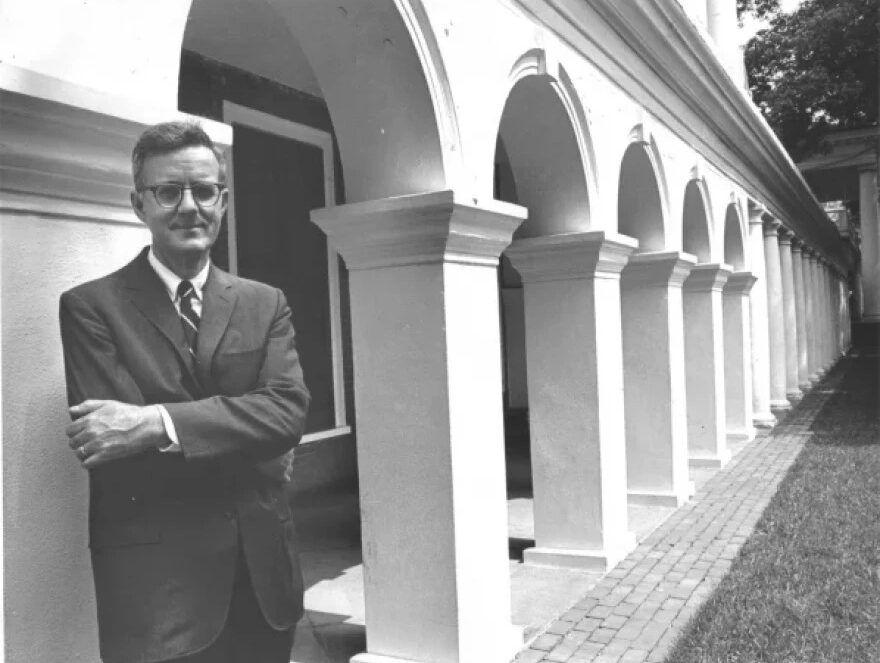
The late Dr. Ian Stevenson, former director of the Department of Neurology and Psychiatry at the University of Virginia, devoted much of his career to studying reincarnation, traveling extensively to investigate cases where children recalled past lives. Much of his fieldwork took him to India, where cultural acceptance of the concept provided a unique opportunity to document extraordinary cases.
As he observed, many Indians believe the human body represents a highly developed form of life, shaped by a long cycle of rebirth. “The theory of rebirth, as described in Indian religions, is indeed substantial.” He stated that these religions hold that a person’s existence results from 8.4 million cycles of life and death in various forms, and that the form one is born into is determined by the good and evil deeds of past lives.
One reincarnation story investigated by Dr. Stevenson comes from Masora, India, where a 3-year-old girl recalled the names of her parents and siblings from a past life. She could also speak English and read and write in Hindi at an unusually early age. Another case involved Swarnlata, a girl who remembered the life of a woman named Biya Pathak.
From a young age, Swarnlata could describe Biya’s family members, personal habits, and events leading up to Biya’s death — details later verified by the family that she could not have known otherwise. A third case involved a boy in India who recalled detailed memories of a previous life in another village, including the names of family members and specific events, which were later corroborated by the deceased’s family.
Dr. Stevenson studied cases of reincarnation for more than a decade, emphasizing that the patterns he documented provide evidence for the reality of past-life memories.
Evidence from hypnosis to historical records
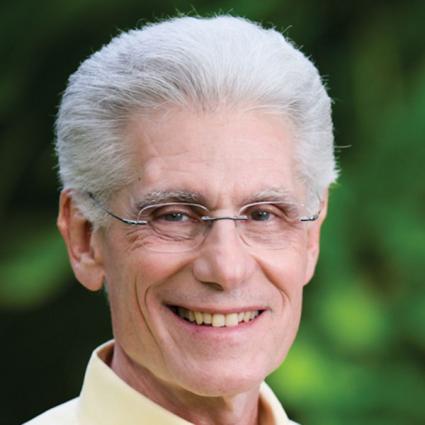
Dr. Brian L. Weiss, a Yale-trained psychiatrist, explored reincarnation through the use of hypnosis while treating a patient for anxiety and phobias. During hypnotic regression sessions, the patient unexpectedly began recalling vivid memories spanning thousands of years — from ancient civilizations to more recent historical periods. Over multiple sessions, she described more than ten distinct lifetimes, each with detailed personal experiences. These extraordinary recollections became the foundation of Dr. Weiss’s groundbreaking book, Many Lives, Many Masters, which went on to become a widely recognized New York Times bestseller and introduced millions of readers to the phenomenon of past-life memory.
The depth and consistency of these memories led Dr. Weiss to investigate whether reincarnation had historical and religious foundations beyond individual experience. Revisiting an old religion textbook, he discovered that reincarnation was indeed referenced in early Biblical texts and acknowledged by prominent Christian thinkers. Over time, however, some of these passages were removed or declared heretical by church councils seeking to consolidate doctrinal authority.
“During the week, I had reviewed my textbook from a comparative religions course taken during my freshman year at Columbia. There were indeed references to reincarnation in the Old and the New Testaments. In A.D. 325, the Roman emperor Constantine the Great, along with his mother, Helena, deleted references to reincarnation from the New Testament. The Second Council of Constantinople, meeting in A.D. 553, confirmed this action and declared the concept of reincarnation a heresy.”
In fact, early Christian leaders and Gnostic thinkers openly acknowledged reincarnation. As Weiss notes, “Early Christian Gnostics in the second century, such as Clement of Alexandria, Origen, Saint Jerome, and many others, believed they had past lives and would have future lives.” By connecting his patients’ vivid recollections with historical sources, Dr. Weiss argued that evidence for reincarnation is not limited to anecdotal memory but resonates across centuries, cultures, and spiritual traditions.
An enduring journey
Reincarnation encourages us to broaden our understanding of human existence, prompting reflection on the continuity of consciousness and the far-reaching consequences of our choices across lifetimes. Whether approached through science, spirituality, or personal contemplation, the concept reveals a larger, interconnected reality — one in which life is not a singular event, but part of an ongoing continuum.
As a Chinese proverb reminds us: “Live a good life in this life, accumulate virtue, and ensure a good reincarnation in the next.” Such wisdom underscores a profound truth: our actions ripple beyond the present moment, and our existence may extend far beyond the narrow fragment we can perceive.
Translated by Joseph Wu and edited by Tatiana Denning
Follow us on X, Facebook, or Pinterest
