

The family is arguably the longest-lasting environment in which a child grows up, making parents a child’s first teachers. Whether a child will be successful in the future largely depends on the family. Children who go on to achieve success in later years are often said to come from the following types of families:
A loving family
In a loving family, there is affection among spouses, parents, children, and siblings. In such an environment, a child’s upbringing is naturally rooted in warmth and emotional security. Thich Nhat Hanh once said, “We need to learn the art of creating happiness.” When children grow up observing their parents’ ability to create a harmonious and joyful home, they are more likely to carry that ability into their own lives.
Love is one of the most important forms of nourishment for children. Those raised in loving families tend to develop a natural capacity to care for others and understand what it means to love.
A family that prioritizes spousal interaction
In many families, once a child is born, the child naturally becomes the center of attention in the household. Over time, however, this can lead couples to gradually neglect their relationship with one another.
An ideal family dynamic is one in which spouses continue to respect and care for each other as partners. When children observe this kind of relationship firsthand, they naturally internalize and replicate it in their understanding of family life. In this sense, a loving and stable partnership between parents often serves as an unspoken model for children — one that shapes how they perceive relationships and family in the future.

A family that practices respect
Respect is built on trust. Everyone’s life holds countless possibilities, and the power to make choices lies in their own hands. Parents should trust their children and believe in their ability to navigate their own path in life. At the same time, parents should act as guides during their children’s growth rather than making decisions on their behalf. Allowing children to learn through their own choices and to accept the consequences that follow is often more meaningful than pre-determining their life plans and enforcing them.
When parents understand how to respect their children, they are better able to see things from their perspective, understand their emotions, and respect their privacy, feelings, and self-esteem — all of which are essential aspects of responsible parenting. In addition, parents should lead by example, as actions often speak louder than words. By demonstrating respect in their daily interactions, they help create an environment in which children naturally learn to treat others with the same level of respect.
A family that cultivates a positive mindset
Optimistic parents can significantly enhance a family’s overall sense of happiness. The emotional atmosphere within the home has a profound influence on a child’s character and long-term development.
Children raised in environments marked by frequent complaints may struggle with problem-solving and develop a tendency toward negativity, often focusing on the unfavorable aspects of situations. Similarly, children growing up in persistently hostile households may be shaped in different but equally limiting ways. Some may become overly timid and hesitant to express their opinions, while others may become irritable and resort to aggression to resolve conflicts.
For this reason, parents are encouraged to cultivate a positive mindset within the family by using constructive, encouraging language in front of their children, so their children can learn to view the world through a more harmonious and optimistic lens.
Take-away
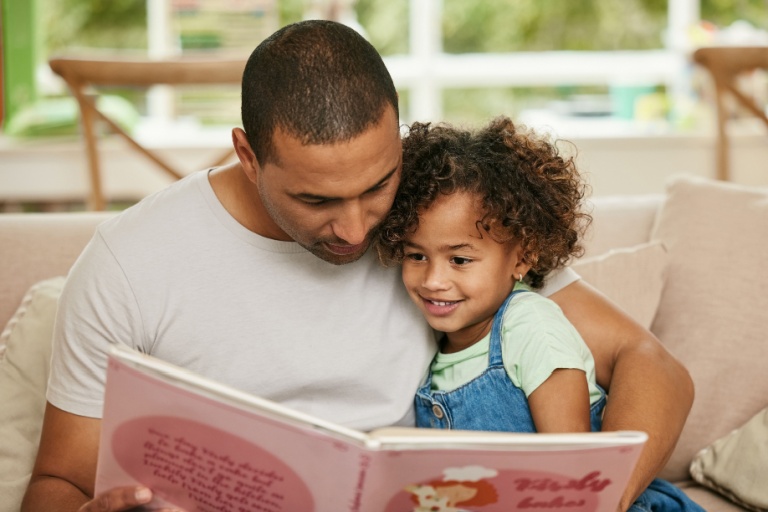
In family dynamics, every word, action, and even emotional response from parents can leave a lasting impression on a child. While a child’s development is influenced by many factors, such as education, peers, and society, the family environment remains the earliest and most foundational influence on character, mindset, and long-term behavior, shaping them in subtle but enduring ways.
A home is not only a place of daily living but also the first classroom where children learn to love, communicate, resolve conflict, and understand themselves and others. The tone set within the household often becomes the internal voice a child carries into adulthood.
For this reason, consciously cultivating a positive, respectful, and supportive family atmosphere is essential. When parents lead with stability, encouragement, and mutual respect, they create an environment where children feel secure enough to grow, explore, and build confidence. In doing so, parents do not simply raise children; they actively shape the emotional and psychological foundation that supports them throughout life.
Translated by Eva
Follow us on X, Facebook, or Pinterest
