

Chinese people often say: “The deeper the love, the stricter the discipline.” When they see their children make mistakes, they can’t help but criticize and correct them immediately. But in reality, timing is more important for effective results in educating right from wrong. Criticism delivered at the wrong time won’t correct the behavior; instead, it will leave the child with lasting psychological scars. These seven things not to blame a child for are passed down by our ancestors, and contain the simplest yet most heartfelt parenting wisdom. Today, let’s explore this together.
7 things not to blame children for
1. Do not scold a child when they’re sick
When a child is ill, set aside all criticism and focus on caring for their physical well-being. Wait until the child has fully recovered and their mental state has stabilized before calmly discussing areas where their habits need adjustment; the child will naturally be more receptive then.
2. Avoid discipline during meal times
There is an old saying: “Do not speak while eating or sleeping.” In fact, the dining table is a no-go zone for family discipline. Traditional Chinese medicine has long held that “the spleen and stomach are the foundation of postnatal health.” Only when a person eats in a relaxed state can they effectively digest and absorb nutrients. Yet many parents insist on turning the dining table into a courtroom. The moment they sit down, they start nagging — “Why did your grades drop again on this test?” or “Look at how picky you are with your food; you’re not being well-behaved at all” — spending the entire meal pointing out the child’s shortcomings.
Eating in such an atmosphere over the long term keeps children in a state of constant tension and oppression. Over time, this not only damages the spleen and stomach, leading to digestive issues, but also causes children to develop a deep-seated fear of eating, viewing mealtime as a burden.
In fact, instead of lecturing at the dinner table, it’s better to set aside your anxiety about your child and chat about lighthearted, enjoyable topics — such as funny things that happened at school today or where they’d like to go to enjoy the upcoming weekend. Letting your child eat in a calm and joyful environment is far more nourishing than a hundred lectures.

3. Avoid lecturing your child before bed
At night, when it’s time to sleep, a child’s brain gradually relaxes, and their sense of psychological security is at its most fragile. Yet many parents insist on using those last moments before bed to “review the day,” dredging up past mistakes — from oversleeping in the morning to making errors on homework in the afternoon — and lecturing endlessly on moral lessons.
What many parents don’t realize is that the harm caused by lecturing before bed is far greater than they might imagine. When children go to sleep feeling wronged and fearful, they may experience insomnia and vivid dreams, or simply not sleep soundly. Over time, this can lead to negative emotions building up within them, making them increasingly timid and hesitant to speak up or ask for help when faced with problems.
Instead of dredging up past mistakes and lecturing before bedtime, offer your child a gentle reminder, tell a heartwarming little story, or give them a hug while saying: “Mom and Dad love you.” Letting your child fall asleep with a deep sense of security is the best way to protect them.
4. Avoid public reprimands
Many people adhere to the outdated notion of “disciplining children in public,” believing that criticizing a child in front of others is the only way to make them remember their lesson. In reality, this is one of the biggest parenting misconceptions.
Even very young children possess a strong sense of self-respect. Whether at family gatherings, in the presence of strangers, or among classmates, harshly scolding them or publicly exposing their shortcomings can deeply damage their self-esteem and sense of worth. Children who are constantly criticized in public often develop one of two extremes. They either become deeply insecure and overly sensitive, withdrawing from challenges and fearing speaking up, or they grow resentful, leading them to rebel against their parents.
Truly wise parenting follows the principle of preserving a child’s dignity in public while correcting mistakes in private. Give your child the respect and dignity they deserve in front of others, then, when you’re alone together, calmly and patiently discuss the issue and help them understand their mistake. This approach is far more effective than embarrassing them or humiliating them in public.
5. Avoid criticizing children during special occasions
Whether it’s a family reunion during holidays, a child’s birthday, or the joy of receiving good grades, these are moments when a child’s happiness is at its peak. If you suddenly focus on a minor mistake and begin criticizing them, their excitement can vanish in an instant, leaving them feeling hurt, disappointed, and discouraged.
In fact, these joyful moments are prime opportunities to strengthen parent-child bonds and help children build a sense of happiness. There is no need to dwell on minor flaws and spoil a family’s joyful moment. Instead, set aside your fixation on small mistakes and enjoy the moment with your child. Once the excitement has passed and emotions have settled, gently discuss areas for improvement. In that setting, your child will be far more receptive to your guidance and correction.
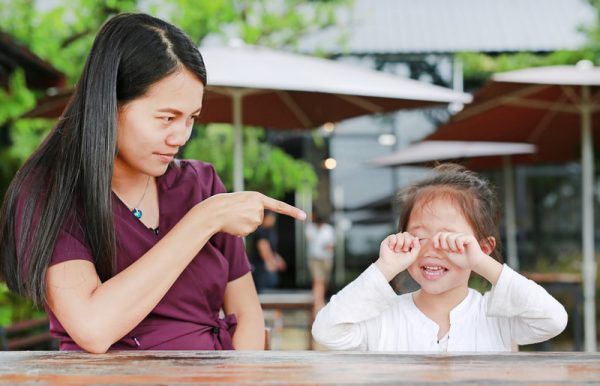
6. Empathize, don’t blame
When a child accidentally causes trouble or faces a setback, there is a good chance they are filled with a sense of fear and anxiety, panicking inside. At this moment, many parents immediately launch into a stern scolding, only adding to the child’s distress and making an already difficult situation even harder.
When a child is overwhelmed by fear, what they need most is not criticism, but empathy and reassurance from their parents: first acknowledge their fear, help them steady their emotions, and let them know: “It’s okay to make mistakes; let’s solve it together.” Once the child has calmed down, you can start looking at the problem together and teach them how to correct it and avoid making the same mistake again. This is the only way to help children learn to face their mistakes head-on, rather than simply fearing and avoiding them—or even hiding them to avoid criticism.
7. Don’t blame them when they feel regret
Many children, after making a mistake, are already filled with guilt and deep regret, and may even come to their parents on their own to admit their fault and apologize. Yet some parents refuse to let it go, repeatedly dwelling on the child’s mistake and blowing a minor error out of proportion in the name of making them “learn a lesson.”
In reality, a child’s remorse indicates that they understand right from wrong and have begun to reflect on their actions. At this point, excessive criticism can gradually erode the child’s sense of responsibility, eventually driving them to adopt a “what’s the point?” attitude: “I’ve already admitted my mistake, yet you still scold me — so I might as well give up.” By offering children more tolerance and leaving room for growth, they are more likely to truly internalize the lesson and correct their behavior on their own.
The best education is love with boundaries and tolerance with limits
Many people think that “not reprimanding” means letting children get away with mistakes, but that is not the case at all. These recommendations have never meant that we should not discipline children; rather, they teach that criticism must have limits and that discipline must be applied at the right time.
The essence of education has never been to nitpick a child’s mistakes at every turn, but rather to know how to protect them when they are vulnerable, share in their joy when they are happy, and offer ample forgiveness when they make mistakes. By adhering to these seven principles — refraining from harsh reprimands and offering gentle guidance instead — we can raise children who are warm-hearted, grateful, and have solid values.
Translated by Eva and edited by Jessica
Follow us on X, Facebook, or Pinterest
