
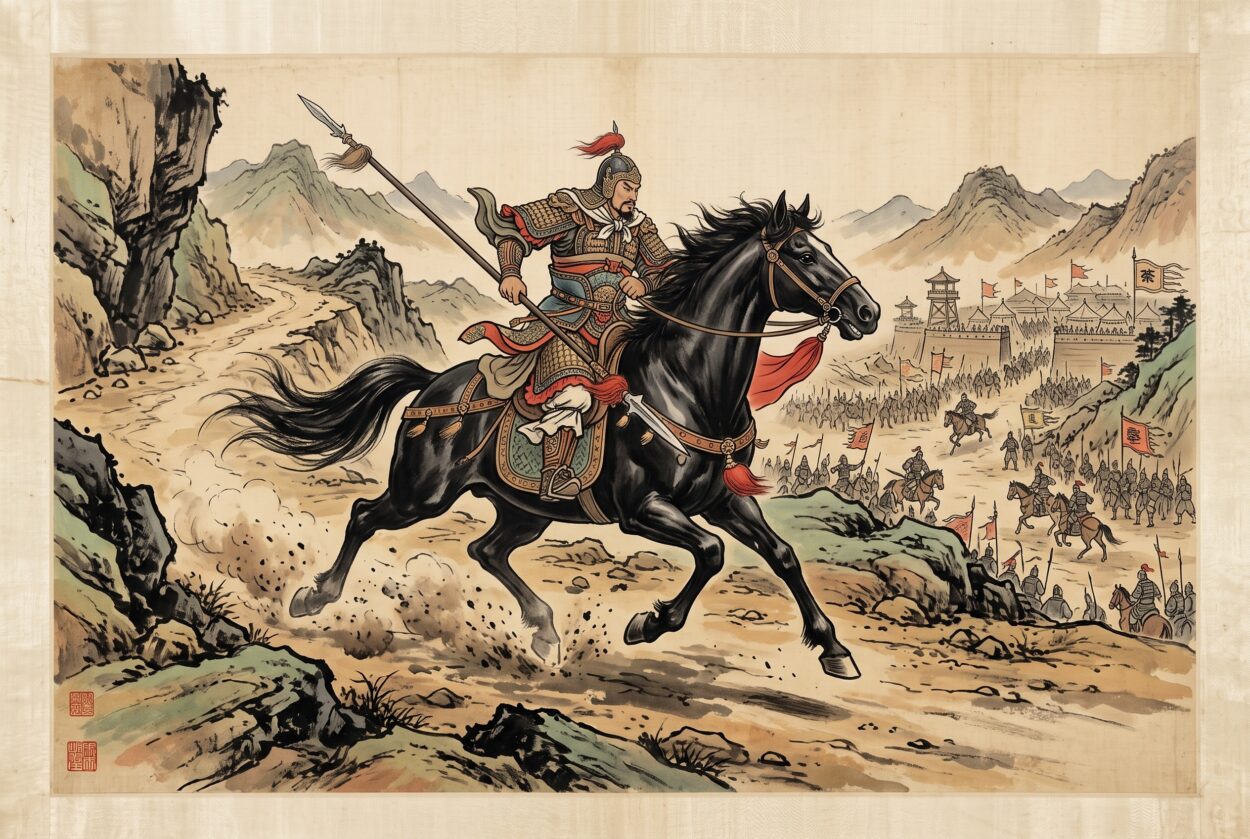
Ancient strategists and traditional scholars have long asserted that archers naturally cherish fine bows, just as great military commanders inherently cherish fine horses. Yue Fei (1103-1142 A.D.), the legendary national hero of China’s Southern Song Dynasty, exemplified this profound relationship between a leader and his steed throughout his entire military career. Renowned across historical chronicles as a leader who was exceptionally valiant in battle, unyielding in his enforcement of military discipline, and deeply compassionate toward his individual soldiers, Yue Fei was particularly fond of horses and possessed an unusually nuanced understanding of their true nature. In the classic historical text Jin Tuo Classified Compilation, specifically in Volume 7, his personal remarks on the fundamental characteristics of horses reveal timeless philosophical insights that remain strikingly profound, regardless of the era in which they are read and analyzed.
Yue Fei begins his insightful treatise on equine behavior
In his primary philosophical assertion on the subject, Yue Fei writes: “A fine horse is not judged by its strength, but by its virtue.” Through this single statement, he invites the reader to look far beyond superficial traits and recognize that one should never evaluate a horse, or indeed a human being, solely by immediate outward appearance, impressive physical power, or surface-level talents. Instead, true capability must always be measured by an underlying inner character, discipline, and emotional stability. This keen observation goes to the heart of personal assessment, drawing a compelling analogy between human morality and animal behavior. Just as remarkable people possess deep moral virtues that govern their actions, exceptional horses likewise exhibit distinct virtues that determine how they respond under pressure.
To ground his grand philosophical premise in practical reality, Yue Fei offers a direct comparison drawn from the various mounts he rode during his extensive military campaigns against invading forces. By contrasting the finest chargers he commanded in his early years with the distinctly inferior horses he acquired later, he presents a vivid illustration of both positive and negative behavioral traits. His first detailed example focuses entirely on the superior animal, highlighting how a truly remarkable steed behaves before a long journey. The finest horses Yue Fei rode in his youth were extraordinarily particular about the quality of their daily feed and water, demonstrating an innate sense of standard and refusal to settle for poor conditions. He observed that unless the fodder and water provided were of the absolute finest and purest quality, the steed would literally rather starve than accept anything compromised or unclean.
A superior steed demonstrates quiet restraint before a campaign
When setting out on an actual military campaign, such a high-caliber horse appeared entirely ordinary and unpretentious on the surface, exhibiting not the slightest display of arrogance, restlessness, or nervous energy. At first, it did not seem particularly swift or eager to show off its capabilities, refusing to rush ahead of the unit or waste precious breath on meaningless displays of speed. However, after traveling a distance of approximately one hundred li — roughly equivalent to thirty kilometers — the noble animal would shake its mane, let out a resounding neigh, and begin galloping with tremendous, rhythmic speed. It was only after this initial warm-up that the horse revealed the true, overwhelming power of an elite racehorse. It could run continuously from high noon until late evening without food or water, easily covering another two hundred li across difficult terrain. Upon finally reaching its destination, once the heavy iron armor and leather saddle were stripped away, the horse neither panted heavily nor sweated profusely, standing as calmly as if nothing challenging had happened at all.
Praising this noble steed, Yue Fei summarized its unique qualities with profound admiration: “This is a horse that, though capable of great feats, does not take what it is not meant to; though full of strength, does not seek to show off — it is truly a horse fit for long journeys.” The general noted that while the animal ate heartily, it was never indiscriminate or greedy in its consumption, refusing impure nourishment even under extreme duress. Furthermore, despite possessing boundless physical stamina, it never sought to flaunt its superior power unnecessarily or demand attention from those around it. Tragically, despite its extraordinary virtues and incredible service on the battlefield, this exceptional fine horse eventually met an early death, leaving Yue Fei to later observe how rare such noble creatures truly are in the world.
An inferior horse displays a greedy appetite and acts
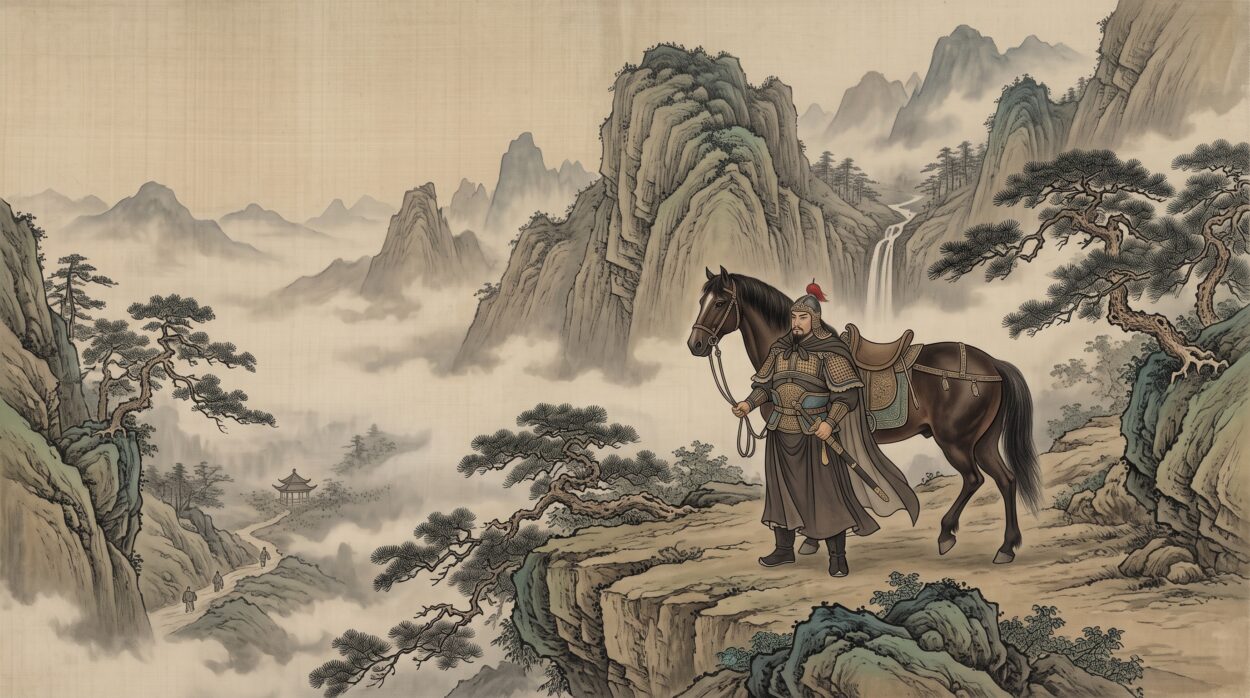
In sharp contrast to his ideal charger, the next mount Yue Fei acquired and rode throughout his campaigns proved to be of decidedly poor quality. This inferior horse demonstrated a completely undisciplined nature, as it would eagerly consume any low-grade grain and drink from any murky spring it encountered along the trail, acting out of immediate greed and a total lack of discrimination. When preparing for a mission, before the reins were even properly secured by the groom, the undisciplined animal would leap, buck, and gallop recklessly forward. Even while the heavy saddle was not yet properly positioned or strapped in place, the horse would bolt ahead of the ranks, foolishly putting on an artificial display of vigor as though total victory were already assured through its energetic start.
Despite its initial burst of speed, the poor horse could not maintain its pace over any significant distance before its physical reserves were completely spent. After only a short stretch of road, the animal would begin sweating profusely, panting uncontrollably, and stumbling along the path on the absolute verge of physical collapse. Yue Fei’s ultimate assessment of this undisciplined steed was characteristically sharp and uncompromising: “This horse is easily sated with little food, quick to show off but just as quick to exhaust itself — a dull and slow-witted creature.” Because it lacked the internal discipline to take in only pure nourishment and build true stamina, it grew foolishly complacent with the slightest temporary gain. It craved public display but utterly lacked endurance, proving that a creature driven by superficial impulse will always remain unremarkable when faced with genuine hardship.
The general transforms simple observations of equine behavior
Through these detailed analyses of the eating habits, temperaments, and running styles of different horses, Yue Fei deftly bridged the gap between everyday military observations and profound rules for human life. His insights are exceptionally logical, visually vivid, and deeply thought-provoking for anyone striving toward personal mastery. The lessons he derived from his steeds offer a timeless framework for evaluating personal character, professional conduct, and moral integrity. Rather than remaining a mere treatise on animal husbandry, his words mirror human ambition, cautioning against the pitfalls of vanity while celebrating the quiet dignity of true capability.
Whether one is actively pursuing higher knowledge, mastering a complex craft, or building a long-term career, one must prioritize laying a solid foundation and cultivating deep inner virtue above all else. A person must refrain from chasing superficial, outward appearances or seeking instant applause from the crowd; instead, the primary focus must always remain on steady moral cultivation and skill development. Only when an individual nourishes their mind and spirit with pure, high-quality principles can they withstand life’s inevitable pressures and achieve lasting, meaningful success. Just as the fine horse refused low-quality feed to maintain its health, a wise person guards their mind against cheap shortcuts and corrupting influences.
Sustainable progress demands a steady pace
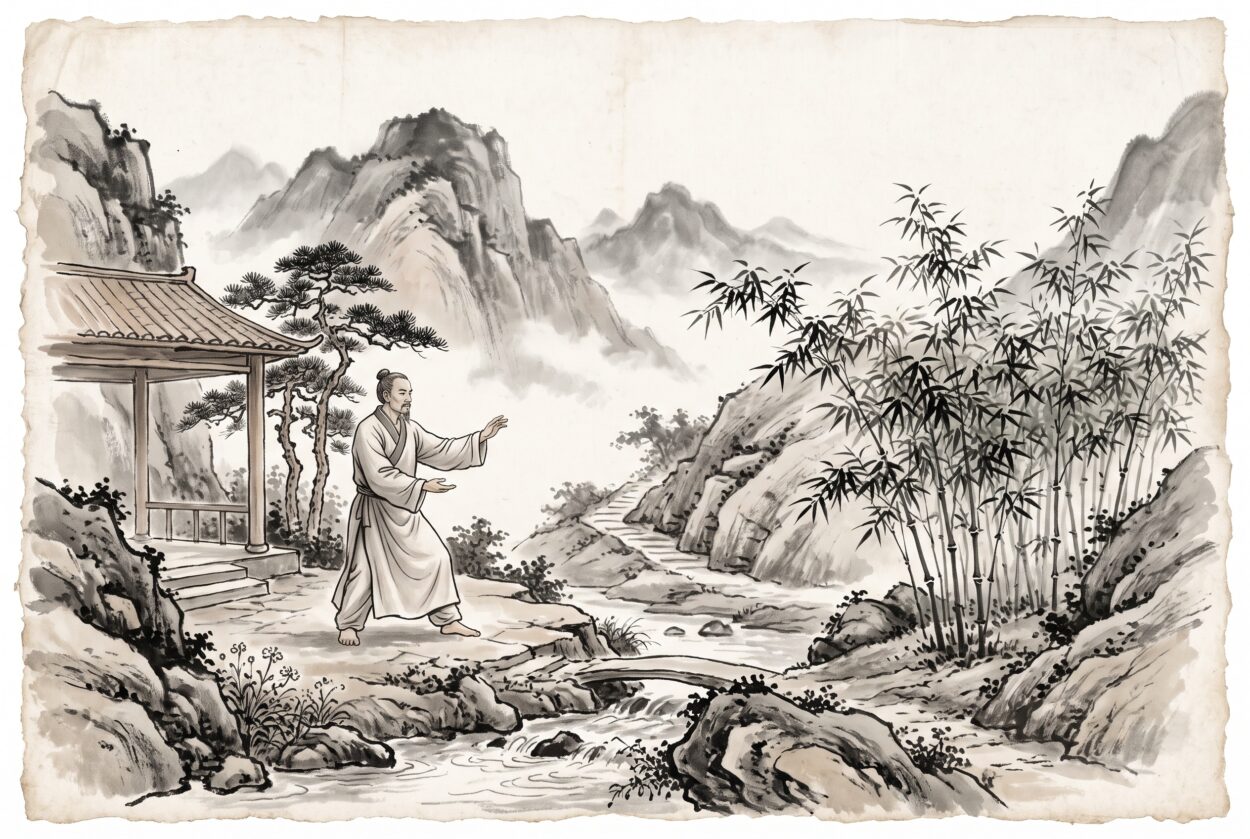
In personal growth and professional development, an individual must remain down-to-earth, embracing the wisdom of moving slowly at first. One should consciously avoid becoming showy, overly competitive, or obsessively eager to overwhelm peers in the early stages of an endeavor. By preparing sincerely, aligning mind and body, and systematically eliminating arrogance, one builds the quiet stamina required for monumental tasks. Those who burn out early through reckless ambition or loud self-promotion ultimately fail to accomplish great deeds when real challenges arise. As the ancient Chinese proverb wisely reminds us: “A long journey tests a horse’s stamina; time reveals a person’s true character.” Because life is an extended marathon rather than a brief sprint, opportunities will inevitably present themselves to those who are patient; therefore, what one must fear is not a temporary lack of chances, but rather a lack of internal perseverance and staying power.
To truly excel, one must learn to accept immense responsibilities without taking them lightly, possess ample personal strength, and systematically refuse to seek public validation. A person of high character remains strictly disciplined, cultivating the deep patience required to shoulder heavy burdens across vast distances. Furthermore, by adopting the fine horse’s motto — “Unless it is pure and clean, I would rather starve to death than accept it” — an individual vows never to take even the smallest ill-gotten gain, nor accept compromised ethics or improper authority. Only by maintaining such unwavering personal integrity can one gradually become a reliable pillar of society, capable of supporting others.
The enduring wisdom of a loyal general
Ultimately, Yue Fei’s reflections on horses are more than historical notes on animal behavior; they offer a masterclass in character development, personal discipline, long-term endurance, and moral purity. His observations, carefully preserved across centuries within historical archives, continue to illuminate the path for modern readers seeking to cultivate themselves and act with unyielding righteousness. In the quiet, unboastful strength of a fine horse, Yue Fei recognized the precise qualities required of an honorable leader, whereas in the impatience of a poor horse, he exposed the exact pitfalls that guarantee premature failure. His enduring wisdom remains timeless, serving as a steady guide as we navigate the long, complex journey of human life.
Translated by Audrey Wang and reviewed by Helen London
Follow us on X, Facebook, or Pinterest
