
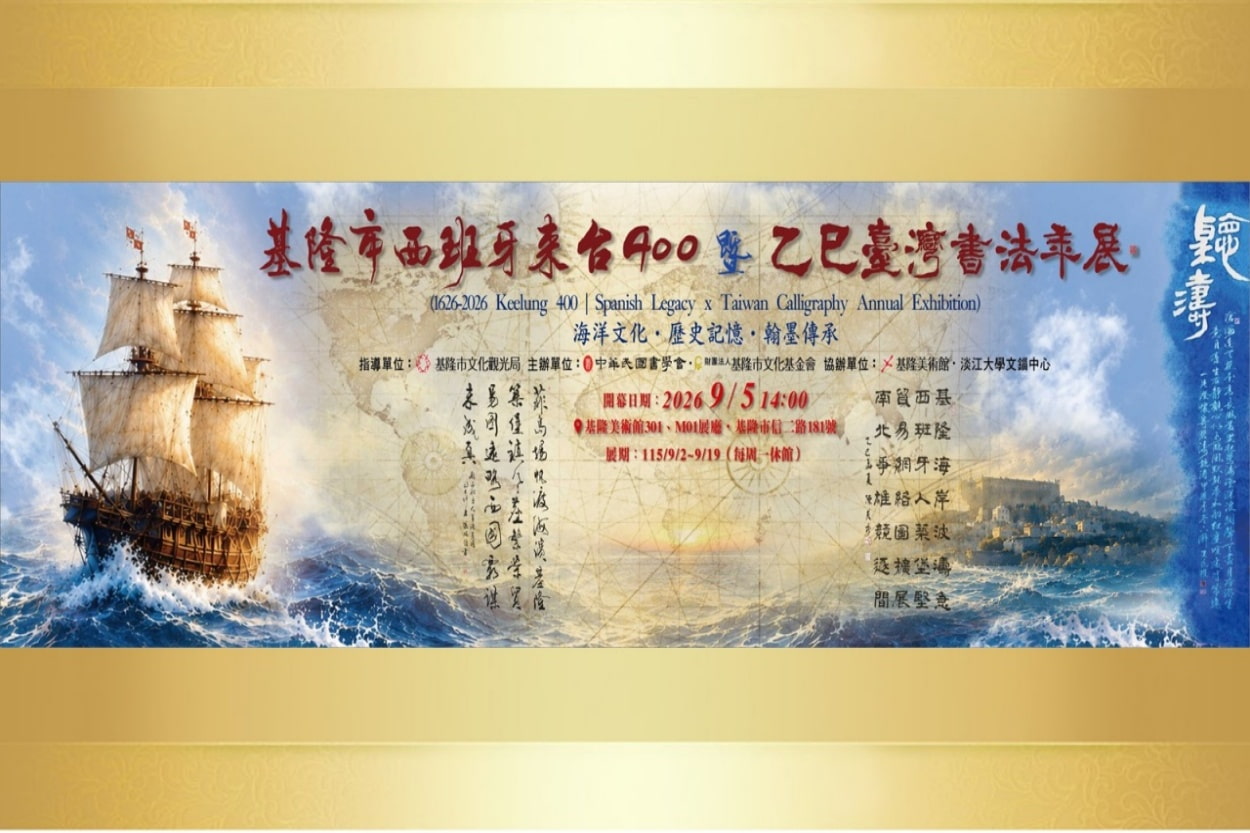
To commemorate the 400th anniversary of the Spanish fleet’s arrival at Keelung from Luzon in the Philippines in 1626, and the establishment of San Salvador on Heping Island, the Chinese Calligraphy Association, R.O.C., and the Keelung City Cultural Foundation are jointly presenting the “Keelung 400th Anniversary of the Spanish Arrival in Taiwan & Taiwan Calligraphy Annual Exhibition.”
The exhibition, curated by Professor Chang Ping-huang, president of the Chinese Calligraphy Association and a professor at Tamkang University, runs from September 2 to 19, 2026, at the Keelung Museum of Art.
Bringing together history, calligraphy, and digital technology, the exhibition explores Keelung’s role in maritime exchanges during the Age of Discovery and highlights the continued development of Taiwan’s calligraphic arts.
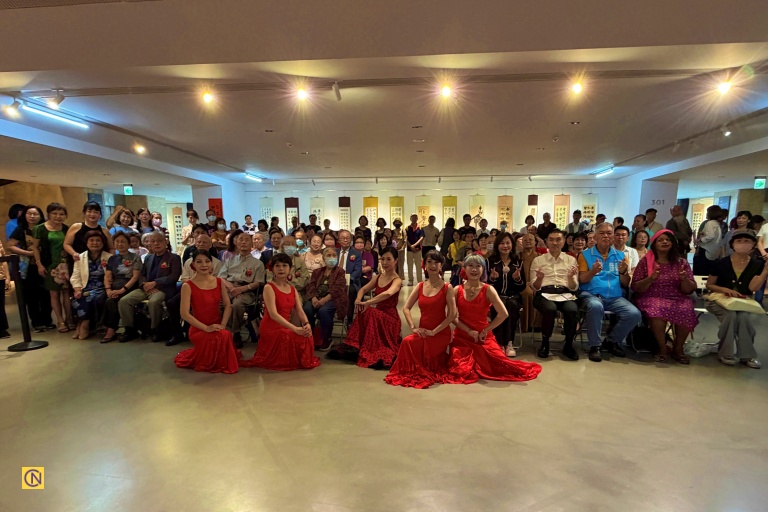
The grand opening took place at the Keelung Museum of Art on September 5, drawing more than 100 artists, cultural figures, and members of the public.
Spanish dance opens the ceremony
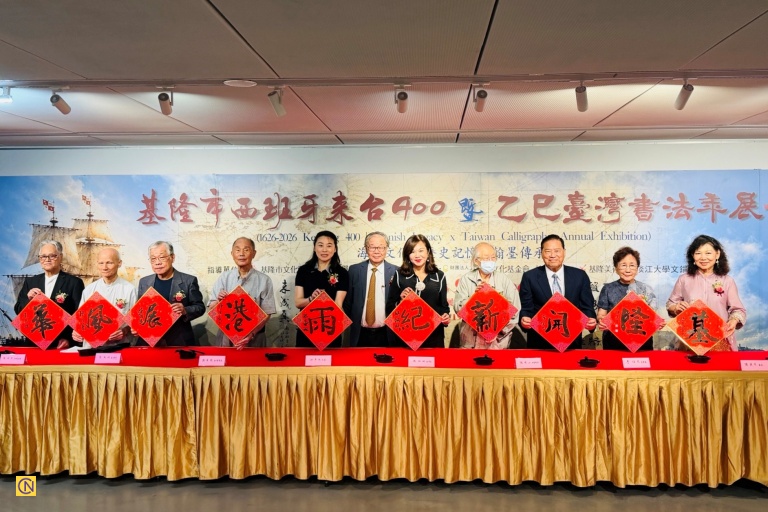
The opening ceremony began with a lively Spanish dance performance. Professor Chang Ping-huang delivered the opening remarks, while Keelung Mayor George Hsieh and Wang Wei-Chuan, president of the Chinese Calligraphy Association, were invited to address the gathering.
Ten distinguished guests, including Keelung Deputy Mayor Chiu Pei-lin and renowned Taiwanese calligraphers Tao Ching-shan, Chiang Meng-lung, Chang Ming-lai, and Chen Li-hsueh, served as honorary calligraphers and jointly wrote the auspicious phrase, “Keelung Opens a New Chapter; the Rainy Port Shines with Splendor. (基隆開新紀、雨港展風華)”
Their brushwork symbolized Keelung’s embrace of its historic legacy while looking toward a new cultural future.
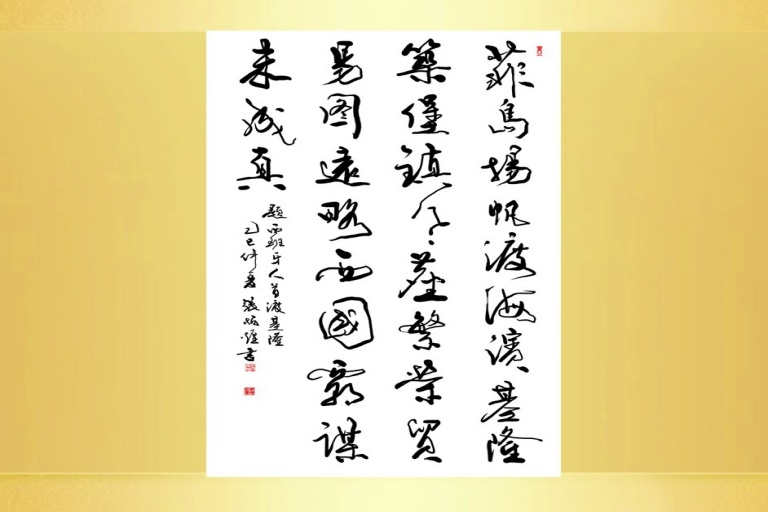
400 years of maritime history revealed through calligraphy
In 1626, the Spanish established San Salvador in Keelung, making the city an important point of maritime exchange in East Asia during the Age of Discovery.
Organized around maritime culture, historical memory, and calligraphic heritage, the exhibition takes visitors on a journey across four centuries through calligraphy, historical imagery, and maritime artifacts.
A digital reconstruction of San Salvador is featured alongside an antique model of a 1607 Spanish galleon from Tamkang University’s Maritime Museum, offering visitors a glimpse into Keelung’s historic role in the maritime world.
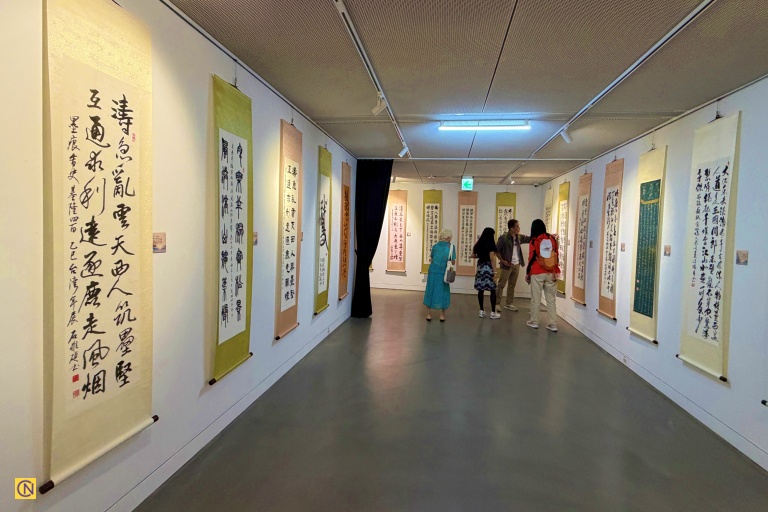
A showcase of contemporary ink art
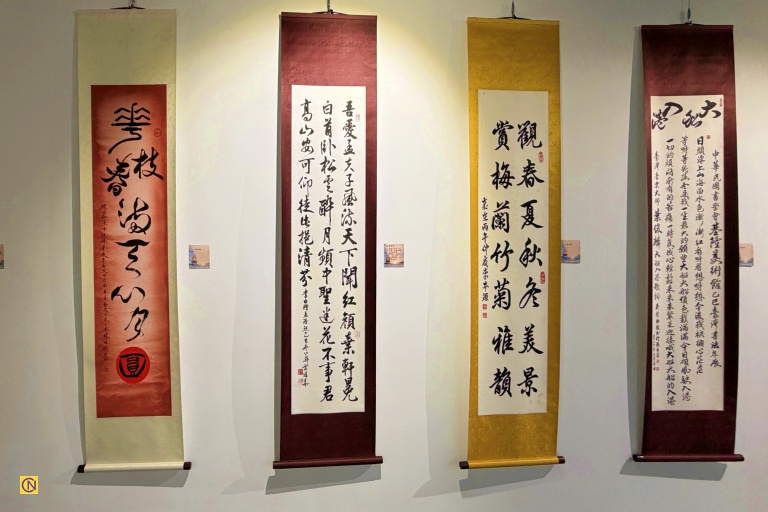
Founded by Professor Chang Ping-huang in 1994, the Taiwan Calligraphy Annual Exhibition has documented calligraphy’s development in Taiwan for 32 years.
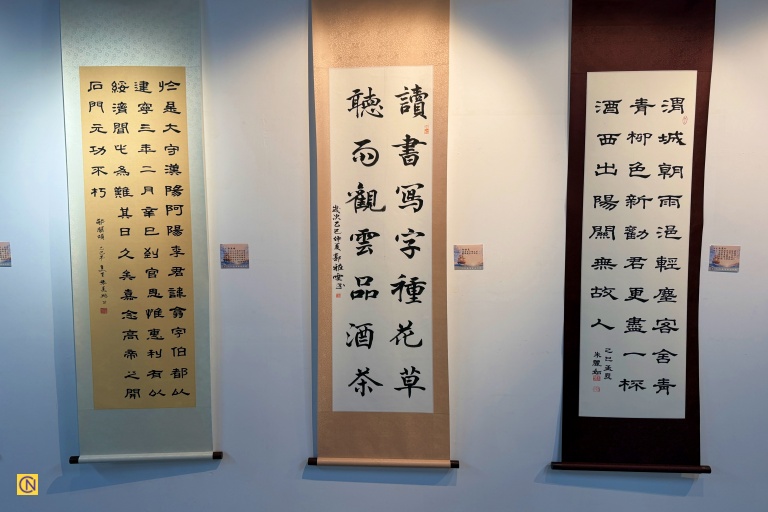
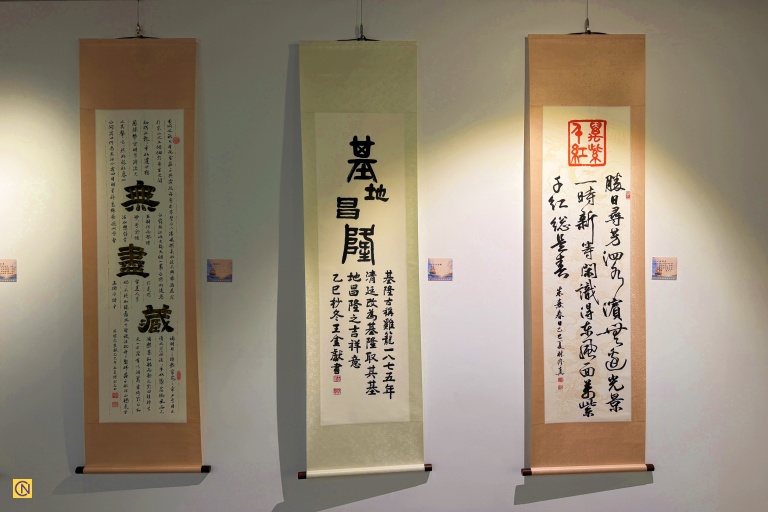
This year’s exhibition features 240 works, including 36 works by renowned artists, 91 works exempt from preliminary review, and 113 selected works. The collection encompasses a wide range of styles, including seal, clerical, regular, running, and cursive scripts, showcasing the diversity of contemporary Taiwanese calligraphy.
Professor Chang has devoted decades to calligraphy education, Taiwan-Japan cultural exchange, and integrating digital technology with traditional calligraphy. His receipt of Japan’s “Order of the Rising Sun, Gold Rays with Rosette” this year further highlights his longstanding contribution to Taiwan-Japan cultural exchange.
Technology meets tradition
The exhibition also embraces digital innovation through the “Smart e-Brush” interactive experience, allowing visitors to write Chinese or Spanish messages of blessing and save their digital creations.
A “Keelung Vision Message Wall” invites visitors to share their hopes for the city’s future development and cultural growth.
From maritime encounters 400 years ago to the art of calligraphy today, and finally to citizens collectively writing their vision for the future, the exhibition goes beyond mere remembrance of history. It transforms history into cultural inspiration for Keelung’s next chapter.
Follow us on X, Facebook, or Pinterest
