
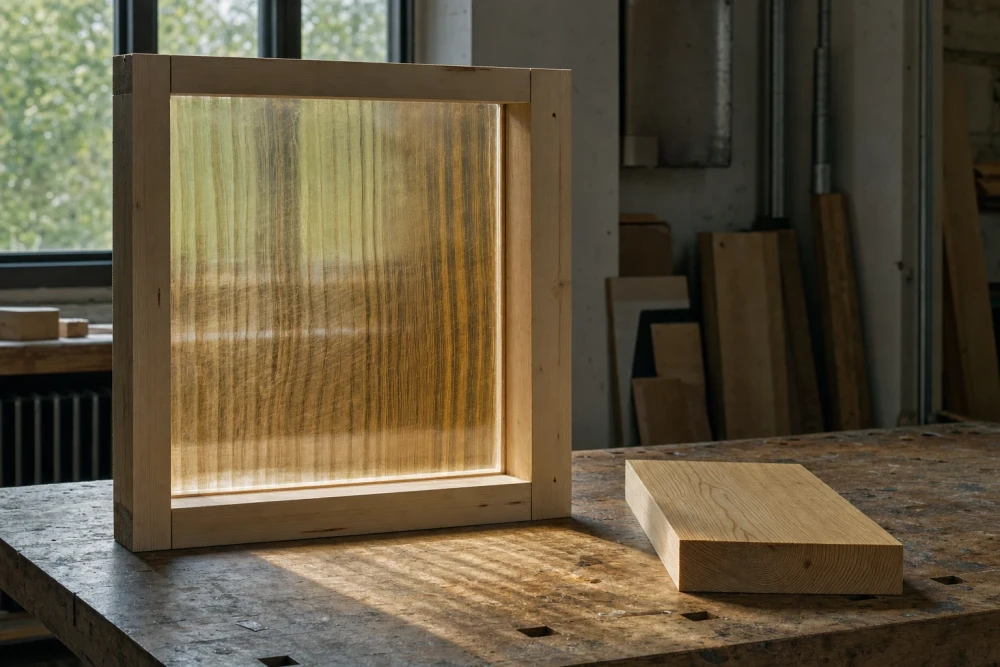
Transparent wood may be the strangest building material you have never heard of, and it could soon be sitting in your window frame. Researchers have learned to take an ordinary plank, strip out the substance that makes it brown, and turn it into a pane you can see through, one that insulates far better than the glass we have leaned on for three thousand years.
The idea sounds like a party trick. Wood is the definition of opaque; blocking light is practically its job. Yet the same fibers that hold up a tree can let daylight pour through if you remove one stubborn ingredient and replace it with something clear. What remains is a material that keeps the strength of timber, refuses to shatter like glass, and slows the escape of heat that drains so much energy from our buildings.
A discovery that began with a curious botanist
The story starts in 1992, when German botanist Siegfried Fink bleached wood until it turned see-through. Fink was not trying to reinvent the window. He wanted to study the inner architecture of plants, and making the tissue transparent let him look straight into their structure. His work sat quietly in the scientific record for decades.
Then a Swedish materials scientist named Lars Berglund, a professor at the KTH Royal Institute of Technology in Stockholm, came across Fink’s old research and asked a much bigger question. If you could make wood transparent, could you make it do the job of glass? That single reframing turned a botanist’s laboratory curiosity into one of the more promising sustainable materials in modern engineering.
How transparent wood is actually made
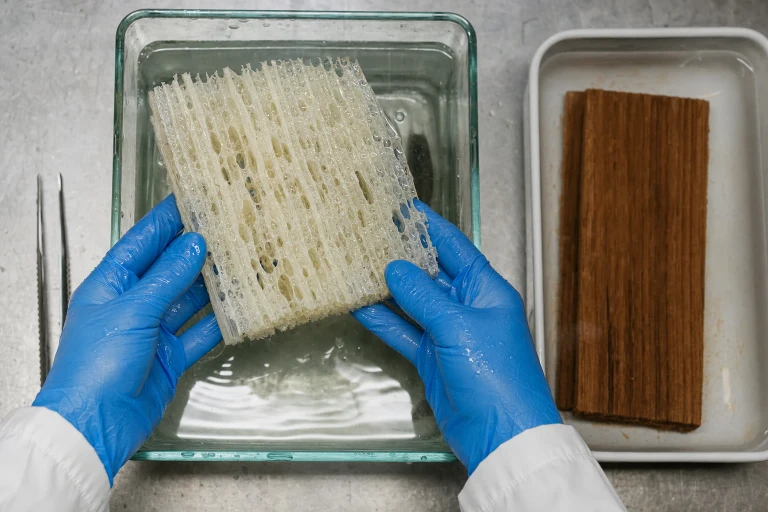
To understand transparent wood, it helps to know what wood really is. At its core, timber is two things working together: cellulose fibers that give it strength, and a brown, glue-like polymer called lignin that binds those fibers and absorbs light. Lignin is the reason a plank looks like a plank. It is also the reason you cannot see through it.
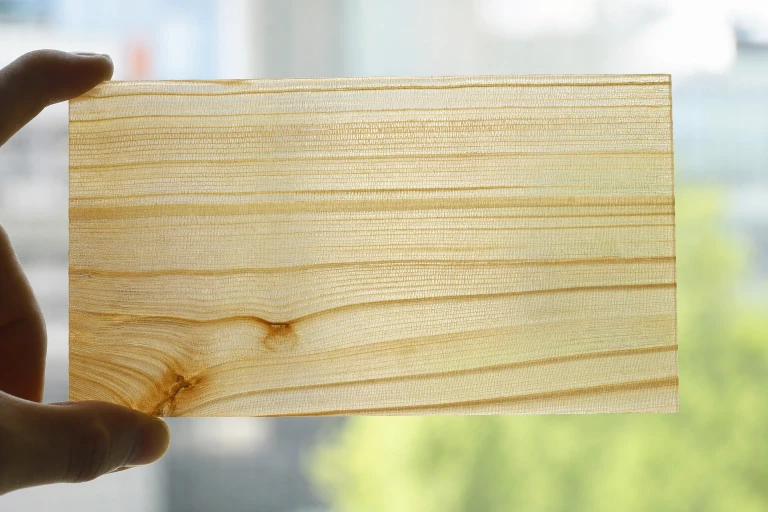
Strip the lignin out with a chemical bath, and you are left with a pale, ghostly skeleton, a network of hollow channels that once carried water and nutrients up the tree. Those empty tubes scatter light, so the delignified wood looks white rather than clear. The final step is to fill the channels with a clear polymer whose light-bending properties match the surrounding cellulose. Once the gaps are filled, roughly 85 to 90% of light passes straight through a thin sheet. The plank becomes a pane, but it keeps the toughness of the tree it came from.
Why it beats glass where it matters most
Glass has one quiet weakness. It is a single solid sheet, so heat crosses it easily, which is why windows are the leak in almost every building. A significant share of the energy we pay to heat and cool our homes slips away through the glass.
Wood behaves differently because of its microscopic structure. Those countless tiny tubes break up the path heat would otherwise take, so warmth moves through the material several times more slowly than through glass. The material tends to let visible light through while blocking more of the infrared energy that carries heat. Studies of transparent wood used as a window glazing have estimated it could cut the energy spent on heating and cooling in office buildings by roughly a quarter to a third, a serious number when you multiply it across a city.
From laboratory curiosity to real buildings
Transparent wood is not yet on the shelf at your local hardware store, and there are hurdles to clear. The clear polymers used to fill the wood are often petroleum-based, which dulls the environmental promise, so researchers are working toward plant-derived alternatives. Scaling the process up while keeping panes clear at greater thickness is another challenge, since transparency drops as the material gets thicker.
Even so, the potential runs well beyond windows. Because the material can be engineered to store and release heat, and because it works with light in useful ways, scientists have explored versions for solar cells, glowing panels, and load-bearing structural glazing that a pane of glass could never safely provide. It is renewable, it comes from an abundant resource, and it fails gracefully instead of exploding into shards.
We did not invent it; we unbuilt a tree
There is something humbling in the whole idea. For 3,000 years we melted sand at 1,500° to manufacture glass, pouring enormous energy into forcing a raw material to become clear. The better option may have been growing in the forest the entire time.
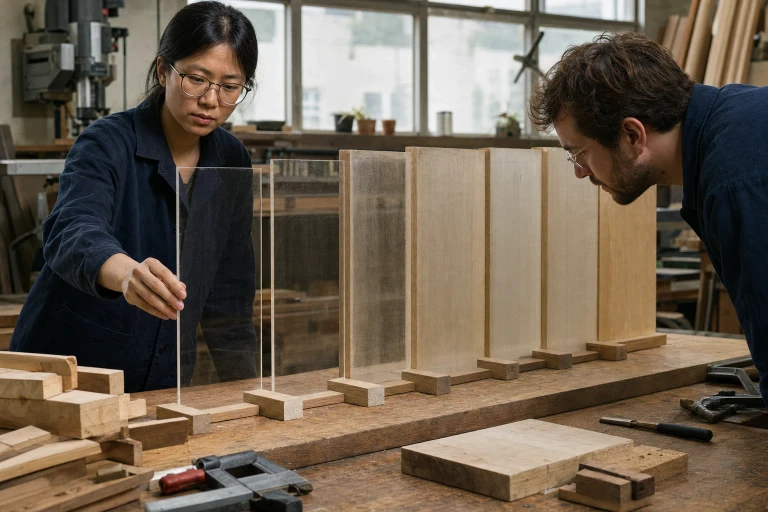
We did not build transparent wood so much as unbuild a tree, taking it apart and filling the gaps with something clear. The capacity for light was always there, locked inside the fibers. Something brown was simply in the way. Remove it, and the wood does what it could apparently always do: let the light through.
Follow us on X, Facebook, or Pinterest
