
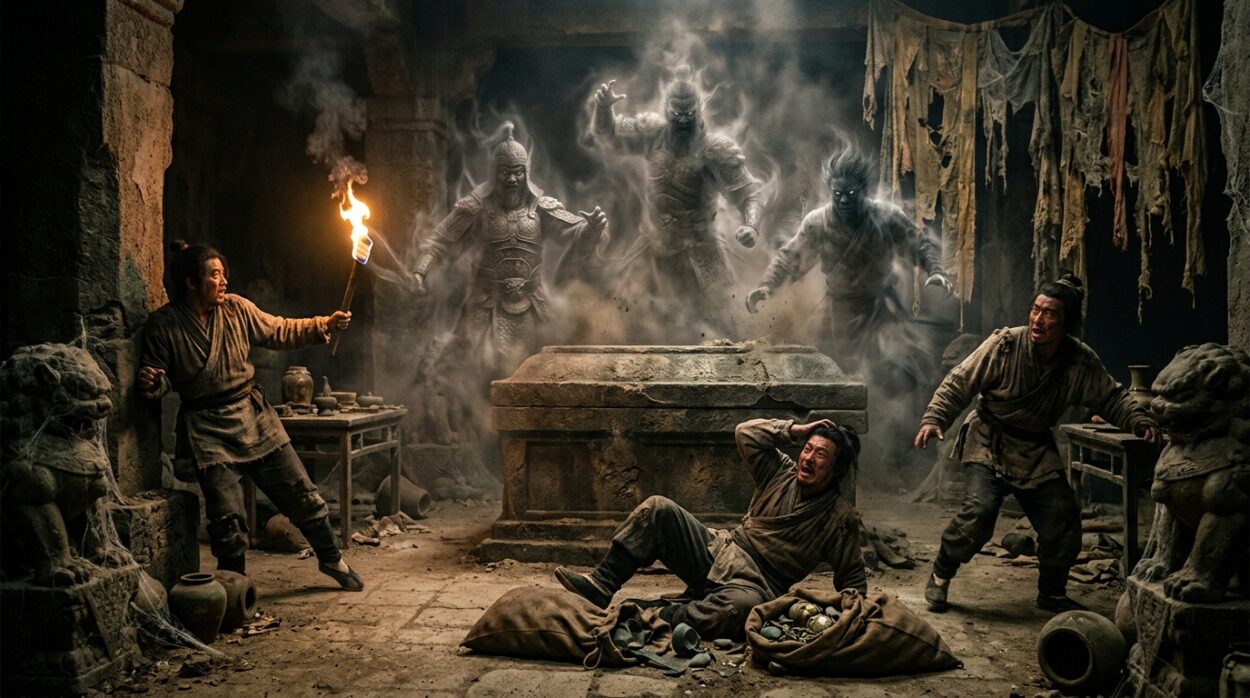
Historically, many tomb raiders have suffered severe retribution after breaking into ancient tombs. In realms unseen by human eyes, divine forces and spirits constantly watch mortal actions, and neither good nor evil can remain hidden from their gaze. Chinese folklore and historical anecdotes are rich with chilling accounts of grave robbers who met grim fates after violating sacred rest. Two prominent tales from bygone eras illustrate this enduring moral theme: Wang Yanzuo’s supernatural encounter during the Qing Dynasty and the tragic madness that befell a band of robbers during the Five Dynasties and Ten Kingdoms period.
The incident of Wang Yanzuo in Shuangfengwei
During the Qing Dynasty, a tomb-raiding incident — unintentional yet deeply consequential — occurred in Shuangfengwei, Tongcheng, Anhui Province. The protagonist of this strange encounter was an ordinary farmer named Wang Yanzuo.
The accidental discovery
While plowing his fields, Wang’s plow struck something hard. When he cleared the earth, he accidentally discovered several valuable cultural relics hidden in an ancient, forgotten tomb. These artifacts included an exquisite ancient tripod and a radiant bronze mirror. Believing that, after so much time had passed, no living descendant would care about these ancient items, greed overtook his better judgment, and he secretly took them home.
When he placed the antique bronze mirror on his table that evening, a miraculous phenomenon occurred: it shone so brightly it lit his entire room all night. Wang Yanzuo and his wife foolishly believed they had struck ultimate fortune, cherishing and marveling at the artifact all the more.
The wrath of the black fiend
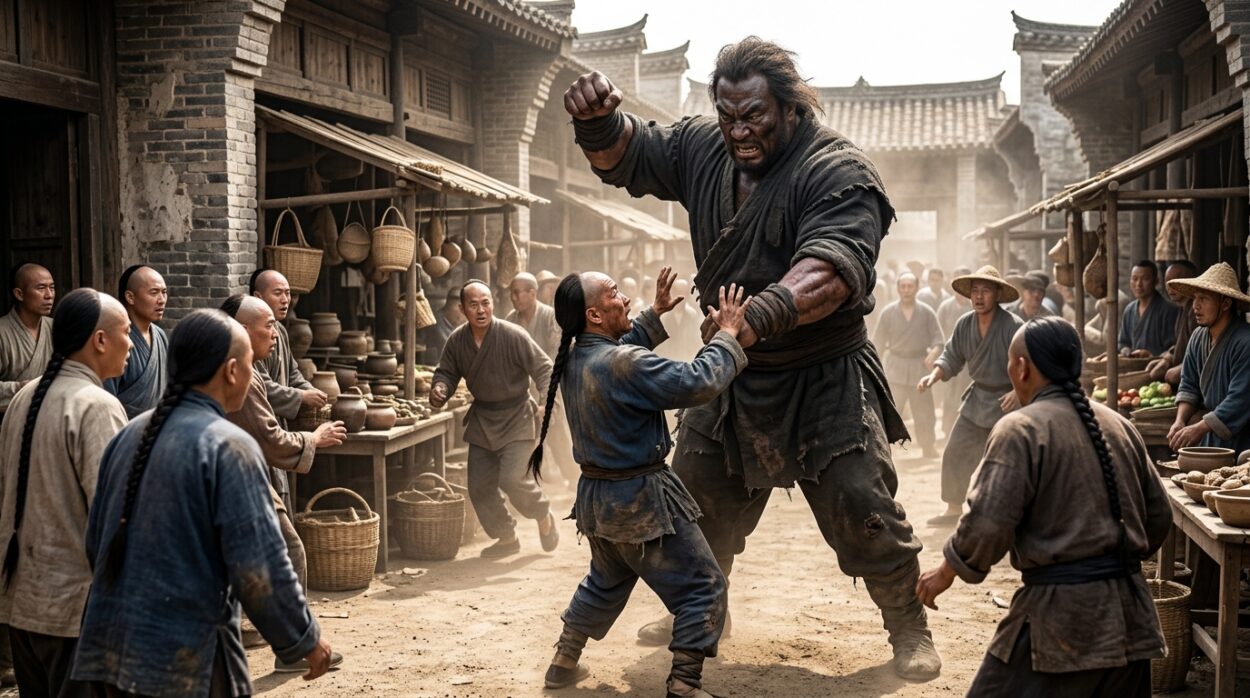
Not long after this discovery, while walking through the bustling local market, Wang Yanzuo was suddenly blocked by a terrifying-looking, dark-faced man. This imposing figure stood over ten feet tall, possessed broad shoulders and a thick waist, and glared with a ferocious, intimidating face. Without asking any questions or offering a warning, the giant raised a massive fist and struck Wang with blinding speed. Wang was left utterly bewildered and bruised.
Only after striking him down did the dark-faced giant reveal his terrifying identity:
“I am the Black Fiend! You have desecrated Miss Luk’s grave; you therefore deserve to die. This Miss Luk was the daughter of Lord Luk An. In the first year of the Yuanyou era of the Northern Song Dynasty, Lord Luk was appointed Prefect of Tongcheng, Anhui, and brought his family here. Lord Luk was an honest, upright official who implemented many benevolent policies for the people. Unfortunately, this young lady died young from an illness and was buried right here. The Heavenly Emperor, taking pity on her as the beloved daughter of an upright official, sent me to guard her grave and appointed Miss Luk as the divine deity in charge of smallpox and epidemics for the entire Huizhou Circuit. I never expected that you would dare to steal the treasures from her sacred resting place while I and the young lady were temporarily away.”
As soon as the Black Fiend finished his pronouncement, Wang Yanzuo collapsed unconscious to the ground. Concerned neighbors, who recognized him from the village, hurriedly carried his limp body home.
Divine justice and penance
Upon returning home, a large, painful, and malignant boil immediately erupted on Wang Yanzuo’s back, causing him excruciating agony. At the same time, Wang’s wife began behaving strangely, often shouting, weeping, and cursing for no reason.
Terrified by these supernatural afflictions, the entire Wang family pooled their resources to invite a high-ranking Buddhist monk to perform an elaborate memorial service and offer sacrifices to appease and deliver the departed soul. Just as the rituals were underway, the ethereal spirit of Miss Luk, the rightful owner of the ancient tomb, manifested and spoke directly to Wang:
“That elaborate ritual won’t be necessary. Since you are merely an ignorant villager who has acknowledged your guilt and repented, I am willing to spare your life. However, you must return the ancient tripod, the bronze mirror, and every other looted item to their original places as quickly as possible. You must also purchase a proper wooden coffin and give my remains a dignified burial. Furthermore, because I have become the local deity presiding over smallpox, I am entitled to receive continuous offerings and incense. Therefore, you must personally engrave the details of this miraculous incident onto a stone stele to inform all the villagers, ensuring my spirit may forever manifest its divine power.”
The Goddess of Smallpox added a final instruction:
“Mr. Yao Yizuo in the city is a Gongsheng scholar of deeply upright character, respected and trusted by all. You must go to him personally and ask him to compose an epitaph for me.”
She assured Wang that if he faithfully followed her instructions word for word, he would remain safe and unharmed. Wang Yanzuo hurriedly knelt, bowing deeply in gratitude, before raising a practical dilemma: “When I was plowing the field, I only saw those treasures; I truly did not see the young lady’s remains. Even if I were to buy a coffin now, where would I go to gather her remains?”
Miss Luk calmly explained:
“When I passed away, I was a young girl. My bones were fragile, and over so many centuries, my remains have long since turned to dust. However, the dust formed from my remains is entirely different from ordinary soil. It is exceptionally pure and emits a distinct golden luster. When you go to the grave to collect the soil, simply hold it up to the brilliant sunlight — you will see the difference immediately.”
Resolution
Following Miss Luk’s precise instructions, Wang Yanzuo returned to the excavation site and successfully discovered the pure, glowing soil. He purchased a sturdy coffin and reverently reburied the sacred soil. Afterward, he visited Mr. Yao Yizuo in town to request the epitaph. To his astonishment, Mr. Yao revealed that he had already dreamed of the Goddess of Smallpox nights prior and was more than willing to write the inscription. The monument was erected, the biography completed, and soon after, Wang’s malignant back sore vanished completely.
The mad tomb raiders of Anzhou
A parallel cautionary tale unfolds during the tumultuous Five Dynasties and Ten Kingdoms period. Approximately twenty li east of Anzhou City stood a grand, ancient tomb. A greedy band of professional tomb raiders targeted this structure, spending several grueling days digging through its defenses until they finally breached the inner chamber.
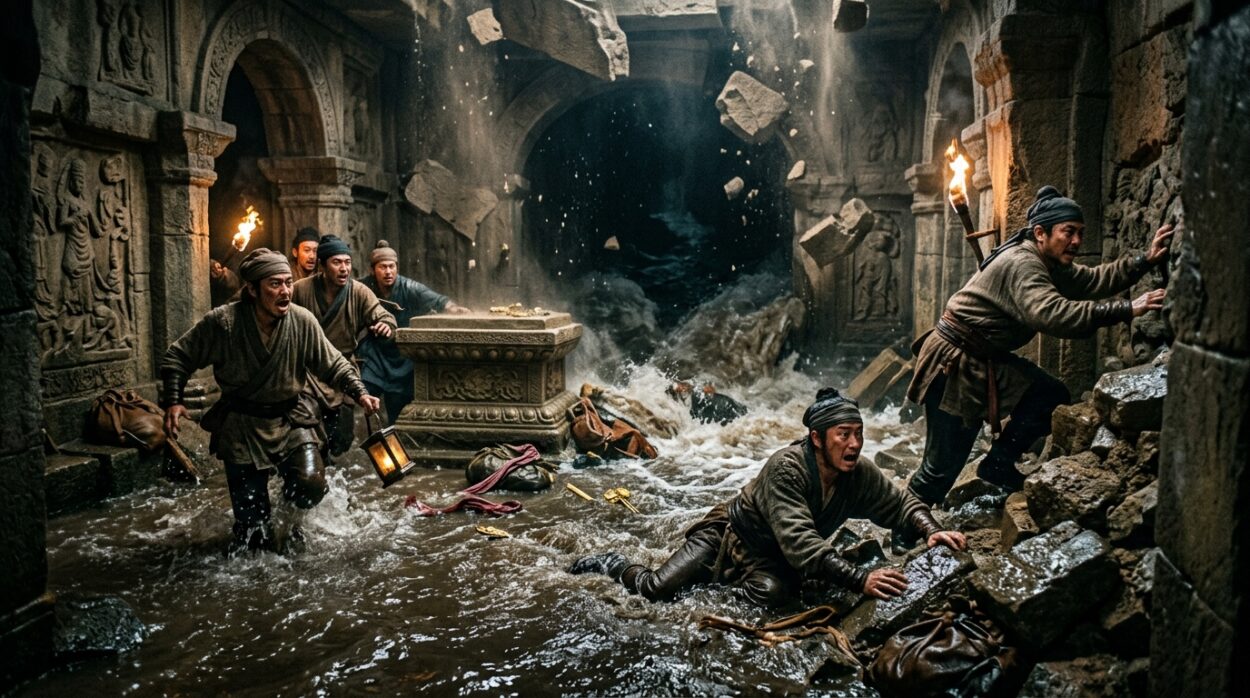
Inside, they uncovered hundreds of gleaming gold hairpins that collectively weighed an astonishing one hundred jin. The main chamber also featured a grand stone pedestal containing numerous ancient sashes and priceless ceremonial treasures.
Greed drove them further. When one of the tomb raiders greedily pulled a decorative belt from its resting place, an unnatural surge of water gushed from the tomb’s depths, rapidly flooding the passageway. Terrified, the robbers scrambled frantically to escape before being completely submerged, and the breach they had forced collapsed and sealed itself shut behind them.
Seeking to profit from their expedition, one of the tomb raiders later presented two of the gold hairpins to the local prefect, Wu Yu.
The magistrate’s dream
That very night, Governor Wu Yu experienced a vivid and unsettling dream. A dignified man dressed in ancient imperial attire, flanked by a solemn retinue of attendants, appeared before him and stated:
“I am Lord Wu of the Southern Barbarians, and my eternal residence has just been savagely destroyed by a band of vile tomb robbers. Since you and I share the same noble surname, I implore you to have my resting place repaired. Do not worry about the culprits; the tomb robbers will soon go mad and die horrible deaths of their own accord. There is no need to trouble yourself with capturing them.”
Deeply shaken by the nocturnal visitor, Governor Wu immediately dispatched laborers to restore and seal the damaged tomb. True to the spirit’s prophecy, more than thirty members of the raiding party simultaneously lost their minds within a single 24-hour period. Seized by sudden, irreversible madness, they perished one by one until not a single member of the gang survived.
Conclusion
These timeless accounts serve as stern moral warnings across Chinese history. Whether through divine intervention by local deities like Miss Luk or spectral justice exacted by ancient lords like Lord Wu, the universe depicted in these legends ensures that those who desecrate the sacred dead for material gain ultimately face inescapable doom.
Translated by Eva and reviewed by Maria
Follow us on X, Facebook, or Pinterest
