
Editor’s note: This first-person essay was originally written by Liu Leyuan (劉樂園) and published in Chinese by The Epoch Times. It has been translated and edited for English publication.
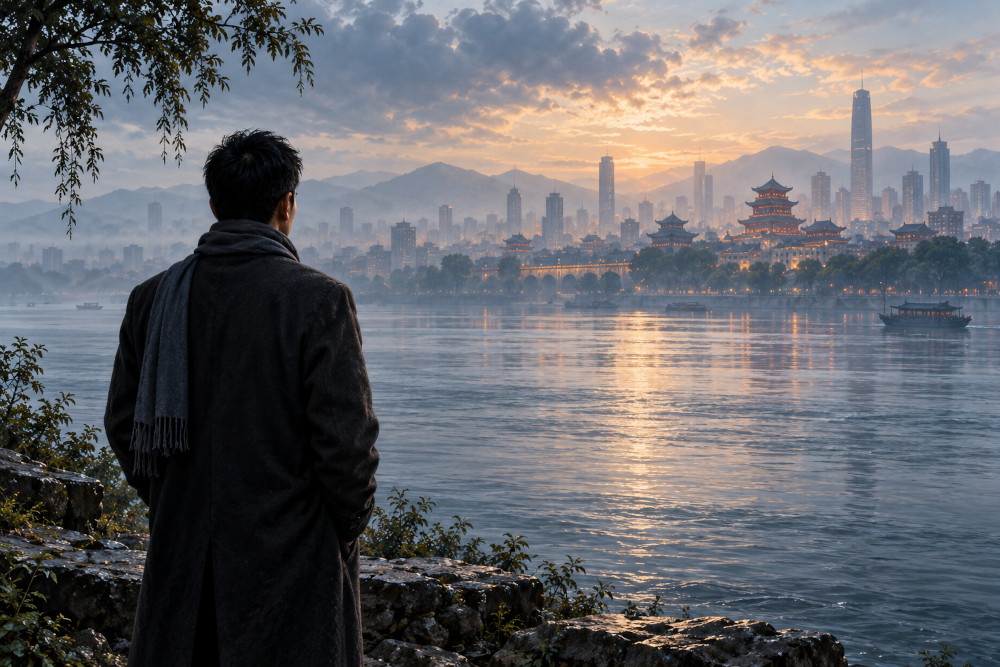
When we are young, we tend to believe that our hometown will always be there, waiting for us. We imagine that the world’s most beautiful scenery lies somewhere beyond the horizon, while home is simply a familiar place where we can rest whenever we grow weary of traveling.
Only after we have gone far from home do we begin to understand a painful truth: Some paths, once taken, become one-way roads, and returning is no longer a simple matter.
Someone once lamented: “A wanderer may have nothing left in his luggage, yet still dare not return home.”
When we first leave our country, our hearts are filled with ambition and hope. But after years of living as strangers in a foreign land, we begin to understand that freedom can come at the price of profound loneliness. Even more difficult than material hardship, however, is the fear that takes root within us.
Sometimes, it is not that we do not wish to return home. It is that we cannot be certain what awaits us when we get there.
After spending more than 30 years in mainland China and experiencing firsthand the cold, ruthless workings of its political system, I arrived in a country where freedom of expression was protected. I picked up my pen and began writing commentaries exposing the Chinese Communist Party’s lies, challenging its authoritarian rule, and speaking out for democracy.
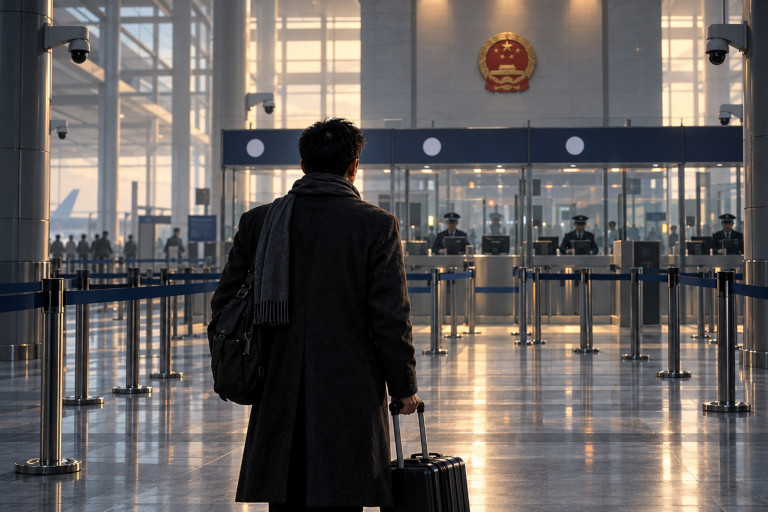
Once my writing became inseparable from my convictions, the words “going home” took on an entirely different meaning. Returning was no longer as simple as buying a plane ticket.
In Chinese history, there is a famous story about the military leader Xiang Yu, who was defeated in 202 B.C. and retreated to the Wu River. Although a boatman offered to take him across to safety, Xiang Yu refused. Having lost the men who had followed him into battle, he felt unable to face their families and the elders of his native region.
My circumstances are different, but the image of a river that cannot be crossed has stayed with me. I may be able to pass through customs, but the Wu River within my heart is far more difficult to cross. In my mind, waiting on the opposite bank is not a mother with open arms, but security agents and the cold embrace of iron shackles.
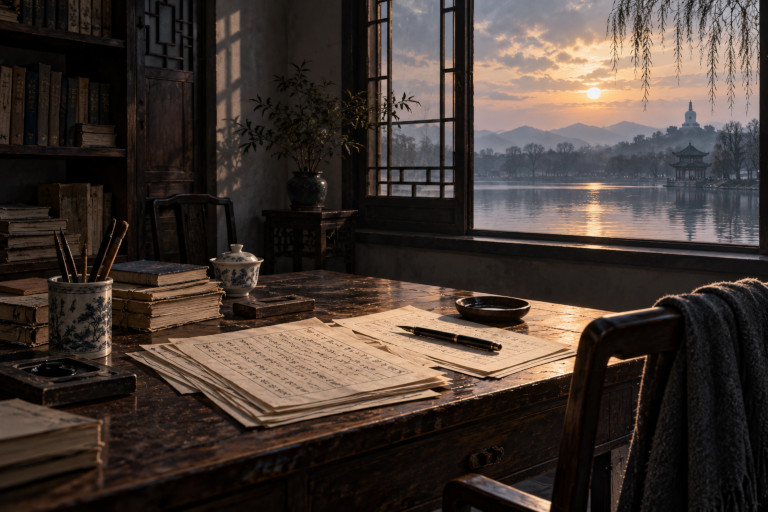
I often think of the great Chinese writer Lao She. In 1949, after the Chinese Communist Party seized power, he returned from the United States, drawn by the new government’s promises of a brighter future. For a time, those promises seemed to be fulfilled. He received prestigious appointments and was celebrated as one of China’s leading literary figures.
But in 1966, during Mao Zedong’s Cultural Revolution, the same Communist regime that had once honored him turned against him. Red Guards publicly denounced, humiliated, and beat him. Shortly afterward, he was found dead in Beijing’s Taiping Lake, widely believed to have drowned himself in despair.
The promises that drew him home had ended in persecution and death.
When I first read about tragedies like his, they seemed to belong to a distant and terrible chapter of history. I never imagined that someone as ordinary as I am, living an ocean away, might one day face a situation that would bring such a fate to mind.
A million-yuan offer and a troubling invitation
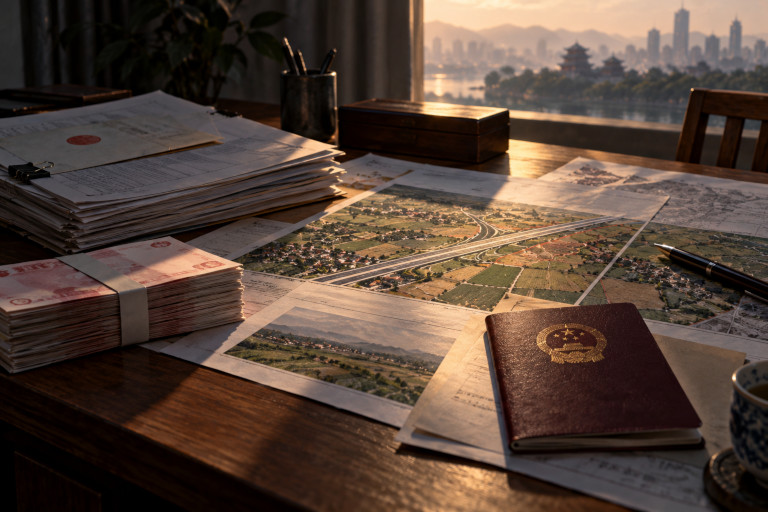
Not long ago, I received a telephone call from a friend in my hometown. He told me that a new expressway was being constructed and that the project had taken over land belonging to my family. The compensation, he said, would amount to more than one million yuan (about US$150,000).
Under ordinary circumstances, this might have been welcome news. Yet behind the substantial sum of money, I sensed something troubling. People back home seemed unusually insistent that I return to China in person to sign the necessary documents and collect the payment.
Their repeated urging left me deeply uneasy.
The moment I hung up the phone, a chill ran down my spine.
In an age when the long arm of authoritarian power can reach across national borders, what exactly did that million-yuan compensation represent? Was it simply a long-overdue payment for my family’s land, or could it be bait, part of a calculated attempt to lure an outspoken overseas critic back within the regime’s grasp?
I had no way of knowing. Perhaps the requirement to appear in person was entirely legitimate. But after everything I had witnessed and written about the Communist Party, could I afford to take that chance?
I dared not gamble with my freedom. Nor could I afford to.
Too many people had already paid a terrible price for believing they could return to China safely.
The fate of those who returned
Consider Luo Daiqing, a Chinese student at the University of Minnesota. While studying in the United States, he posted several satirical images and comments about Chinese leader Xi Jinping on Twitter. When he returned to Wuhan for summer vacation in 2019, he was detained by Chinese authorities and subsequently sentenced to six months in prison for “picking quarrels and provoking trouble.”
His offense was expressing opinions in a country where freedom of speech is protected. Yet the Chinese Communist Party reached across the Pacific to punish him for what he had said.
Then there is Zhang Yadi, a young Chinese woman who studied in France and contributed to a platform supporting Tibetan culture and human rights. When she returned to China in 2025, she was taken into custody by state security authorities. Human rights organizations reported that she was held incommunicado on suspicion of “inciting separatism.”
Her peaceful advocacy overseas had made her a target of the Chinese authorities. A young woman who should have been free to visit her family instead found herself facing the possibility of years in prison.
I also think of Zhou Qiang, known online as “Zhouzhou Kan,” a fellow Chinese-language commentator who had built a substantial following while living in the United States.
In March 2021, Zhou returned to China to visit his family. Soon afterward, he disappeared from public view. For years, those who had followed his political commentary were left wondering what had happened to him.
Reports published in July 2025, based on information attributed to Zhou himself, revealed that he had been sentenced to four years and three months in prison for “inciting subversion of state power.” He was reportedly released in June 2025.
Four years of a man’s life, taken from him because the government considered his words a threat to its power.
Even more disturbing is the case of Niu Tengyu, a young computer programmer caught up in the notorious Esu Wiki controversy.
In 2019, Chinese authorities launched a sweeping investigation after websites published private information about the families of senior Communist Party officials, including relatives of Xi Jinping. Niu, then only twenty years old, became one of the principal targets of the investigation.
He was arrested in a cross-provincial police operation and subsequently sentenced to fourteen years in prison. His family and attorneys have challenged the prosecution and maintained that he was unjustly held responsible.
According to accounts documented by Chinese Human Rights Defenders, Niu was subjected to appalling torture while in detention. He was allegedly forced onto a tiger bench, deprived of sleep, suspended by his wrists, beaten, and burned on his genitals with a lighter.
These are not descriptions of justice being served. They are allegations of calculated brutality against a young man caught in the machinery of political repression.
A fourteen-year prison sentence, accompanied by such accounts of torture and abuse, should shock the conscience of anyone who believes that the law exists to protect human dignity rather than crush it.
The Chinese Communist Party speaks constantly of national security and social stability. Yet cases like these reveal how easily those expressions can become justifications for punishing people whose words or activities displease those in power.
These tragedies do not belong to some distant era. They have unfolded in our own time, and their consequences remain painfully real.
I cannot know whether the offer of compensation for my family’s land was an attempt to lure me back to China. But I know enough about the fate of other overseas Chinese to recognize the danger.
For someone who has openly criticized the Communist Party, crossing the border may mean surrendering more than the freedom to speak. It may mean losing the freedom to leave again.
The two homelands we carry within us
In truth, I have come to believe that a person can have two homelands.
One is the homeland that exists today, where those in power can twist the truth, punish dissent, and turn even the most ordinary aspects of life into instruments of political control. It is a place where denunciations, intimidation, and the threat of imprisonment can make the land of one’s birth a source of fear.
The other homeland lives in memory, preserved in the heart. It is the place of childhood, of familiar landscapes and treasured traditions, where the richness of Chinese culture remains untouched by the cruelty of the present.

The homeland that exists today is one I fear returning to. The homeland preserved in my memories is one I can never truly recover, even if I were able to go back.
Looking ahead, I see the unfamiliarity of a foreign land. Looking back, I see a past marked by sorrow and loss, a world that time and political upheaval have placed beyond my reach.
This is one of the deepest tragedies of exile. The country we remember and the country we might return to are no longer the same.
I do not know when China will finally wash away the bloodshed and suffering brought about by decades of Communist tyranny. But I continue to hold on to one hope: that someday, every Chinese person living overseas, regardless of political beliefs, will be able to return to their homeland openly, peacefully, and with dignity.
No one should have to hurriedly delete articles before boarding a plane. No one should have to conceal opinions expressed abroad or pretend to support a government they do not believe in. And no one should have to stand at the threshold of their homeland, trembling as they ask themselves: “Will something happen to me if I go home?”
A truly powerful nation should have nothing to fear from the independent voices of ordinary people. And a homeland worthy of our love and longing should never demand that its sons and daughters remain silent or kneel before they are allowed to come home.
May the day finally come when those who have wandered far from home can return without the haunting fear of secret imprisonment, torture, or simply disappearing without a trace.
For what tugs most deeply at the human heart is not some distant place we have yet to reach. It is the homeland buried deep in our memories — the place we still love and dream of seeing restored one day to freedom and dignity.
Translated by Katy Liu
Follow us on X, Facebook, or Pinterest
