
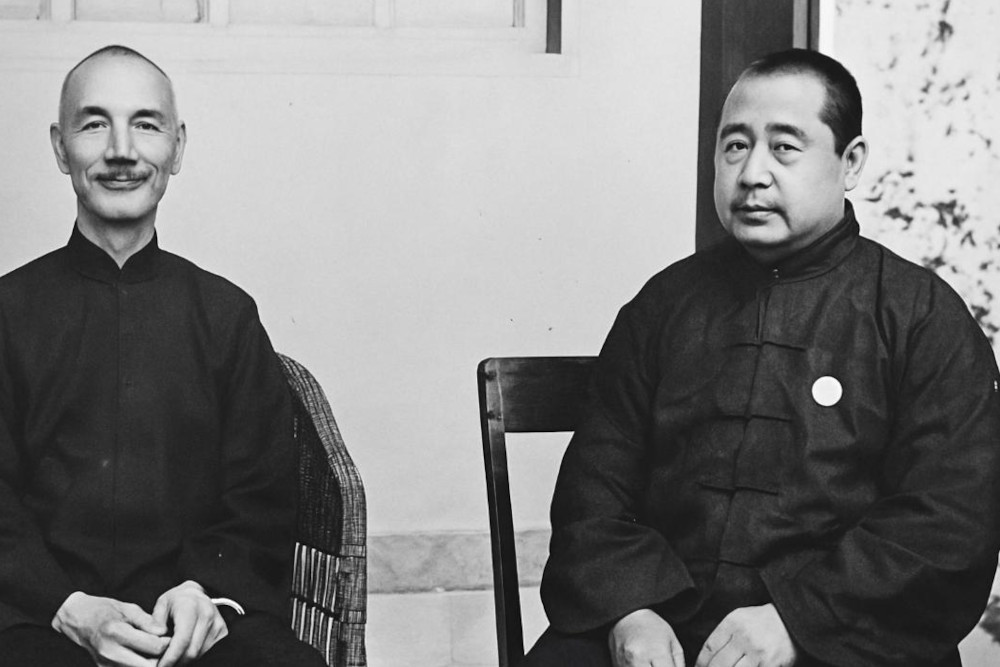
During the most perilous moment of the Second Sino-Japanese War, a revered Tibetan Buddhist master named Zhang Jia offered a critical eight-character prophecy: “Relocate the capital to Chongqing; victory in resisting Japan is possible.” Chiang Kai-shek followed this advice — and it helped him avert disaster and eventually secure victory. Years later, Zhang Jia would offer another cryptic phrase that foreshadowed the Nationalist government’s retreat to Taiwan: “Victory does not leave An, defeat does not leave Wan.”
A Buddhist master held in high regard
In the Gelug school of Tibetan Buddhism, the title Zhang Jia is used for a reincarnated spiritual master. During the Qing Dynasty, the second Zhang Jia was granted the title of “Great National Master” by Emperor Kangxi, and this honor continued through successive emperors.
After the fall of the Qing Dynasty and the founding of the Republic of China in 1912, the seventh Zhang Jia declared his support for the new republic at the age of 22. Leaders of the Nationalist government welcomed his backing, and Zhang Jia went on to advise the government for years to come. During the Second Sino-Japanese War, he traveled across Mongolia to help stabilize the public mood and support the war effort.
‘Relocate the capital to Chongqing, and victory is possible’
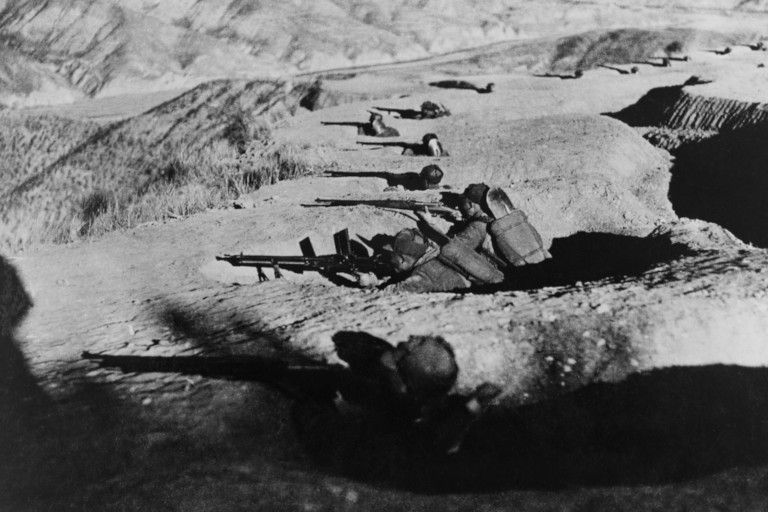
After enduring foreign invasions during the late Qing, China remained impoverished and fragmented when Chiang Kai-shek came to power. His government struggled to rebuild amid growing internal and external threats. Then, in 1937, Japan launched a full-scale invasion following the July 7 Incident, triggering the Second Sino-Japanese War. Outmatched in military power, the Nationalist army suffered major defeats — including the devastating Nanjing Massacre.
At this moment of national crisis, Zhang Jia urged Chiang Kai-shek to relocate the capital to Chongqing. With few options left, Chiang Kai-shek agreed. According to some sources, astrologers later confirmed the wisdom of this decision.
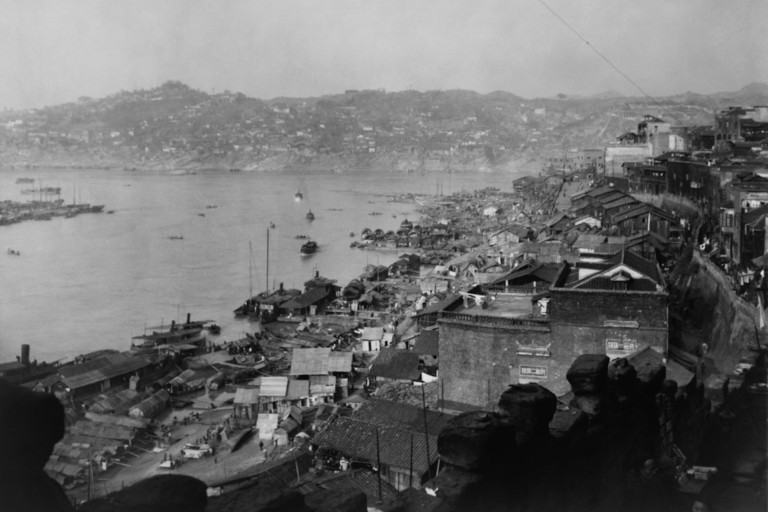
One celestial omen in particular — the 1937 alignment known as “Mars guarding the Heart” — signaled great danger for a country’s ruler. Without decisive action, Chiang Kai-shek might have perished that year, opening the door for Japan to take full control of China. Zhang Jia, aware of this astrological threat, helped Chiang Kai-shek sidestep catastrophe. After the capital was moved, military conditions improved, and the U.S. began to provide critical aid, which contributed to Japan’s eventual defeat.
‘Victory does not leave An, defeat does not leave Wan’
Near the end of the war, Zhang Jia offered another cryptic warning: The Nationalist government should neither return to Nanjing nor remain in Chongqing — it should move to Xi’an. Why Xi’an?
In that year, Saturn entered the celestial mansion known as Jing, which corresponds on earth to the land of Qin — modern-day Shaanxi Province. While Chiang Kai-shek led the military resistance against Japan, the Chinese Communist Party, backed by the Soviet Union, had quietly built a base in Yan’an, also located in Shaanxi. Zhang Jia observed that Saturn, a planet of good fortune, was now favoring this region.
He interpreted this as a sign that the Communists would continue gaining power unless the Nationalist government counterbalanced their influence by relocating to Xi’an. He expressed this in the phrase “Victory does not leave An, defeat does not leave Wan” — a poetic warning that if victory was to be secured, the capital should remain near Xi’an (An), and if defeat came, the government would end up retreating to Taiwan (Wan is a poetic reference to Taiwan, derived from its historical name “Wan Island”).
Although Chiang Kai-shek reportedly considered establishing a western capital in Xi’an, the plan never came to pass. The Nationalists returned to Nanjing instead. In feng shui circles, there’s an old saying: “A capital in Nanjing is destined to be short-lived.” As events would show, that prediction proved accurate.
The fall of Nanjing and the rise of the Communists
Between 1944 and 1948, Saturn remained in the position of Jing, casting its auspicious influence over Yan’an. The Communist forces, benefiting from this symbolic “cosmic fortune,” began to overwhelm the Nationalist army during the Chinese Civil War. By 1948 — the Year of the Earth Rat — the Communist Party’s rise peaked. The Nationalist army suffered one crushing defeat after another, and the Republic of China soon lost control of the mainland.
Yet despite the overall collapse, one final reversal shocked observers. In October 1949, Nationalist forces dealt the Communists a devastating blow at the Battle of Guningtou on Kinmen Island. The invading Communist troops were completely annihilated. When Chiang Kai-shek heard the news, he reportedly wept with relief and declared: “Taiwan is safe now.”
That moment marked the beginning of the Taiwan Strait divide. And so Zhang Jia’s prophecy — “defeat does not leave Wan” — was ultimately fulfilled.
Translated by Joseph Wu
Follow us on X, Facebook, or Pinterest
