
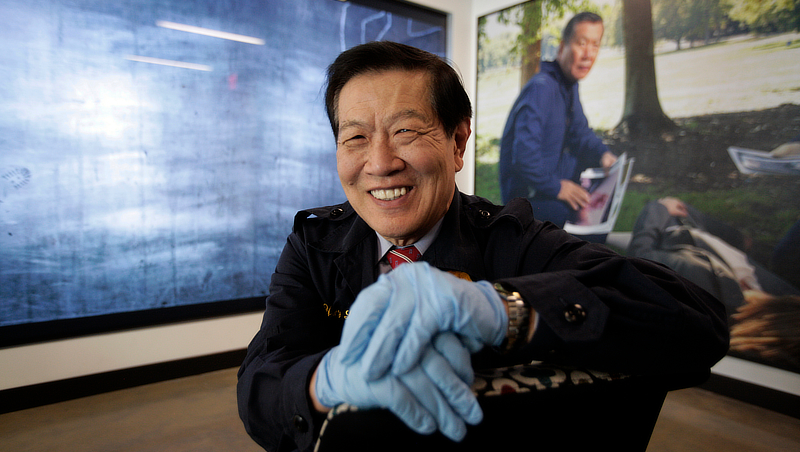
When it comes to crime-solving legends, few names carry the weight of Dr. Henry Lee. Internationally recognized for his pioneering work in forensic science, Dr. Henry Lee has solved over 6,000 cases, ranging from the mundane to the most complex and mysterious. Yet, when asked which case left the most profound impression on him, he didn’t cite the infamous O.J. Simpson trial or any other high-profile headline. Instead, he chose a case no media ever reported — a quiet tragedy involving an elderly woman with no fame, no money, and no voice. “Cases have no rank; lives have no price.” This, Lee said, is one of the principles he’s lived by for decades.
A murder no one reported
Years ago in California, an elderly woman who lived alone was found dead on her kitchen floor by a kind neighbor delivering an apple pie. What appeared to be a simple act of neighborly kindness quickly turned into a complex murder investigation.
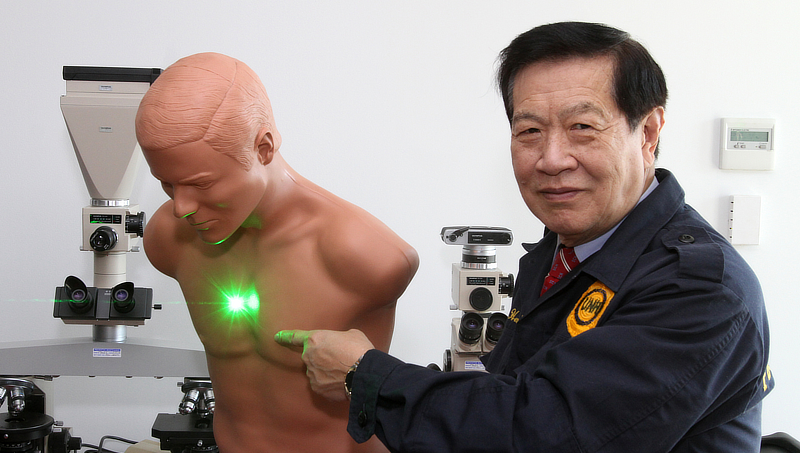
“When I arrived,” Dr. Henry Lee recalled, “the kitchen floor was suspiciously clean-scrubbed, an attempt to destroy evidence. That told me the killer knew her routine. Someone familiar.” He discovered 32 stab wounds — most inflicted after death. “That pattern suggested either a psychotic episode or drug-induced rage.” Using chemical reagents and laser scanning, Dr. Henry Lee was able to detect shoe prints invisible to the naked eye and trace them to a specific shoe brand.
Despite a snowstorm that night, Dr. Henry Lee ordered 200 detectives to search dumpsters. “They said visibility was too poor and overtime pay would be high,” he said. “But I told them: the people are worried, and we don’t have time. If the trash is picked up tomorrow, we’ll lose everything.” Half an hour later, a bloody pair of shoes was recovered from a supermarket dumpster. Matched with the victim’s blood, the shoes led them to a store where, just hours earlier, someone had purchased the exact pair with a credit card.
By 6 a.m., detectives were knocking on the killer’s door. It was the victim’s nephew. Strung out and desperate for money to feed his addiction, he had asked his aunt for cash. She refused. He shoved her, fatally injured her, panicked, and then tried to cover it all up. The entire case — from discovery to confession — was solved in under 12 hours. No press ever covered it. But to Dr. Henry Lee, that didn’t matter. “For someone poor and powerless, we did everything we could. The community respected that.”
What crime reveals about the human soul
Over the years, Dr. Henry Lee has stood at thousands of crime scenes. But he never let the horror strip away his humanity. “Even criminals have emotions,” he said. “Crime doesn’t always stem from evil. Some are impulsive — moments of rage. Others are professional criminals — cold, calculated, and unredeemable.” He believes that not all criminals should be punished the same way. “Some need second chances. If someone makes a mistake in the heat of the moment, locking them away for life does no one any good. Let them repay society with their skills.” That’s why he approaches every case with objectivity. “We can’t go in with assumptions. Every case deserves an open mind.”
The psychology behind crime
According to Dr. Henry Lee, a great detective needs more than science — they need insight into human nature. “Crime has patterns,” he explains. “Summer sees more sexual offenses; winter, more alcohol-fueled violence. And when the economy dips, robberies rise.” Understanding these correlations helps predict and prevent future crimes. It also speaks to his broader philosophy: real detective work lies in the gray zones of the human experience.
Why he never chased power or wealth
Dr. Henry Lee’s fame is global, but he’s remained remarkably humble. “I’ve never been interested in power or money,” he said. “I was police commissioner for two terms. Everyone wanted me to stay. But I knew it was time to step down.” He walked away from politics, even when encouraged to run for governor. “I proved that a Chinese American could do the job well. That was enough.” After his mother passed away, Lee didn’t throw lavish memorials. Instead, he and his family donated a gymnasium and set up a scholarship in her name. “The most valuable things in life,” he says, “money can’t buy.”
Friends have often joked that Dr. Henry Lee should become a monk or a preacher, given his calm demeanor and philosophical outlook. “I don’t follow religion formally,” he said, “but I believe in karma, in fate. Even us meeting today — that’s fate.”
How he defines success
Dr. Henry Lee’s definition of success is deeply personal. “Every morning, I look in the mirror and ask, ‘Did I give my best yesterday?’ If the answer’s yes, that’s enough.” His accolades are many. He still serves as Director of the Forensic Science Center in Connecticut, is a chief professor at the University of New Haven, and even has a forensic museum named after him along Interstate 91.
He’s authored forensic classics like Cracking Cases and Cracking More Cases — books so precise and riveting they’ve been compared to Sherlock Holmes stories. Harvard Law Professor Alan Dershowitz called Dr. Henry Lee “unparalleled in the world,” a man who sees order where others see chaos.
Sharing knowledge, shaping the future
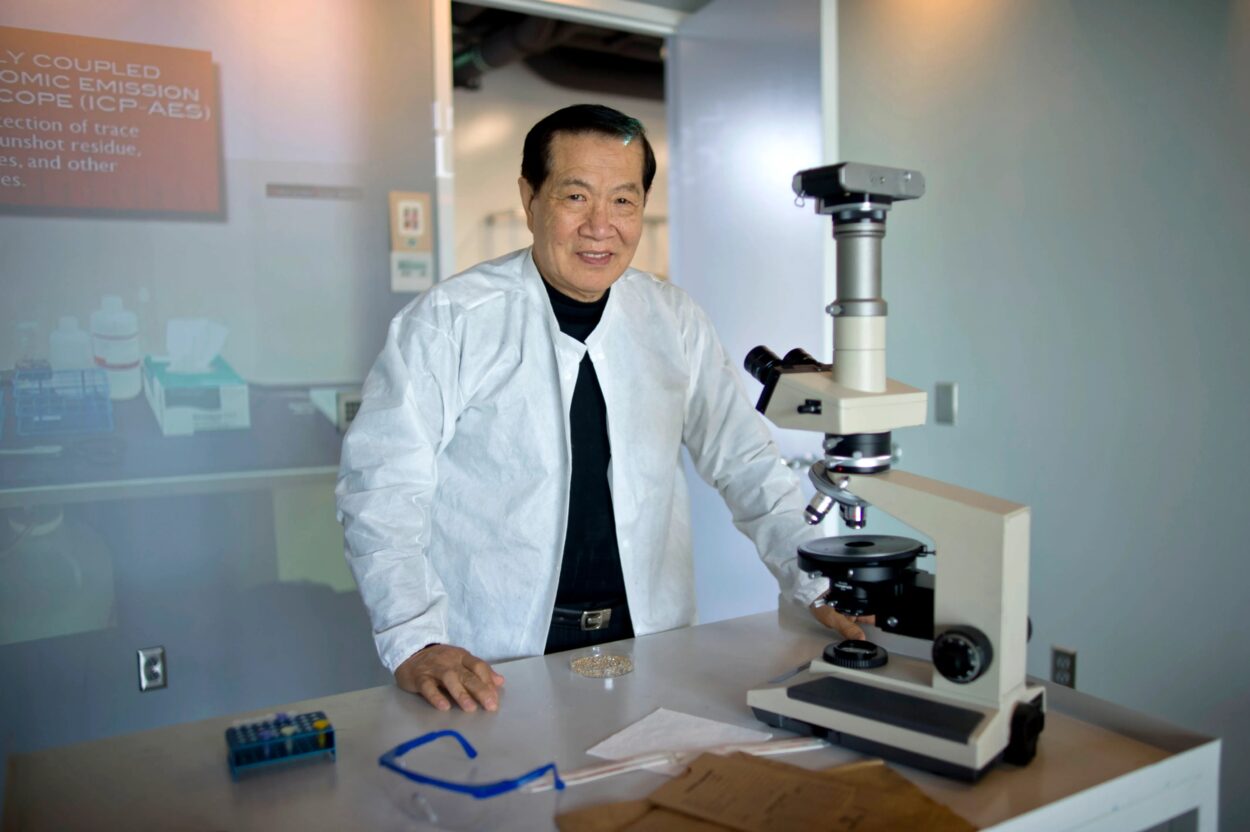
Despite his busy schedule, Dr. Henry Lee continues to lecture globally, mentoring the next generation of leaders. His students come from across continents — Russia, Africa, the Middle East, and Europe. Many now lead forensic labs in their own countries. But he knows that science can only go so far. “You can teach forensics. But character? That can’t be taught. It depends on the student’s readiness,” he said, quoting an old Western proverb: “You can lead a horse to water, but you can’t make it drink.”
A life shaped by purpose, not ambition
Dr. Henry Lee never set out to become a global icon. “I just wanted to be a good police officer in Taiwan. Later, I became a good student in the United States. Then a good professor, a good lab director, a good husband and father.” He has tasted the finest cuisine yet knows what hunger feels like. Slept in luxury hotels, but also in cemeteries. After four decades, Dr. Henry Lee feels he has fulfilled his mission. “I never did anything for applause. To face myself with honesty.”
Follow us on X, Facebook, or Pinterest
