

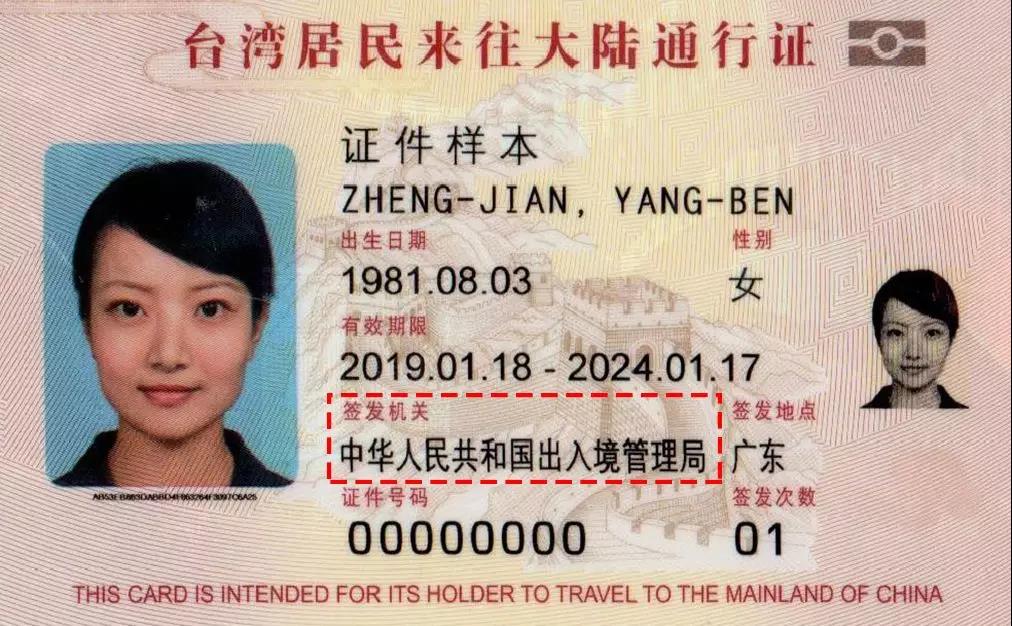
The Communist Party of China (CCP) recently introduced a new measure to waive the NT$1,500 (US$51) fee for any Taiwanese applying for Taiwan Compatriot Certificates for the first time. In response, the Mainland Affairs Council warned that this is a new package for the CCP’s upgraded united front work, with limited actual benefits.
Mr Chen Zhiqiang (pseudonym), a veteran Taiwanese businessman who was once deeply trapped in the Chinese market, said: “Free things are often the most expensive.” He warned from his own experience that free Taiwan Compatriot Certificates are just bait. Taiwanese businessmen who truly enter the Chinese market may face the risks of vicious competition, land traps, judicial black boxes, sexual seduction and control, and property plunder.
Reluctant to enter the Chinese market
“I never believed in the Communist Party. It was the Japanese businessmen who forced us to set up factories in China. I had to go after trying to delay for 10 years.”
Mr Chen said that initially, Japanese customers strongly demanded that Taiwanese manufacturers set up branches and factories in China to cooperate in market expansion. If the Taiwanese manufacturers did not cooperate, the Japanese customers would cancel the orders. He had no choice but to enter the Chinese market.
He used one sentence to point out the truth about the Chinese market: “You think you are doing business, but you are playing a game. Your opponent is the Chinese Communist Party, which holds all the cards and rules.”
Customs randomly detains goods and opens boxes
He recalled that in the early days, he only did small-scale trade worth a few million. As a result, one year before the Chinese New Year, the entire batch of goods was seized by the Chinese customs.
“I heard that a total of 600 cargo ships were detained at that time, and our entire batch of goods was seized. No one was responsible, and there was no reason given. If you dared to ask, you would be punished.”
He laughed helplessly and said that he was scolded when he called the customs: “Who are you? How do you know this number?” The goods were detained, opened, and smashed, and he had to bear it all by himself. He said, “That’s not doing business, that’s being held hostage.”
“At that time, our company had two batches of goods. One batch was detained, and the other was forcibly unpacked during transportation. The original precision packaging was destroyed, and the items were repacked into sacks. When they were shipped, a lot of the parts were broken. The combined loss of the two batches exceeded several million New Taiwan dollars.”
The spirit of contract does not exist in China
Mr Chen emphasized that the CCP’s ability to control and bribe should not be underestimated. “Don’t imagine that you are smarter or more shameless than the Communist Party. They can do anything.”
For example, some Taiwanese companies set up factories in China in the early days. The sites were usually located on the edge of the city or in rural areas. However, as urbanization progressed, the original remote factory areas were gradually swallowed up by urban expansion and became prime locations. To build real estate, local governments would force companies to relocate in the name of development.
He said that when the Communist Party sets its sights on a piece of land, it will ask the business owner to relocate to a new location 20 to 30 kilometres away. If business owners cooperate with the relocation, although new land is provided on the surface, there is no real compensation. The Taiwanese business owner is still bearing all construction costs. If the business owner does not cooperate, the business will frequently harass and force the owner to relocate based on reasons such as audits, environmental assessments, or fire protection.
This is the CCP’s “legal plunder” of Taiwanese businessmen. “As long as the Communist Party holds one percent of the shares, it can use administrative power to override management rights. Company law and the spirit of contract do not exist in China at all,” said Mr Chen.

All enterprises are merely the CCP’s tools
“The Communist Party’s attitude is apparent — all enterprises belong to the Communist Party,” said Mr Chen. It has the right to interfere and control at any time, especially in large-scale enterprises. As for those small factories with only 20 or 30 people, on the surface, it does not matter, but in fact, it is also infiltrating, such as setting up Party branches and trade unions to exert control.
He stated that if you open a factory in a local area and cannot find a local person to be the factory manager, it would be challenging to push anything forward. These locals are familiar with government departments such as public security and fire protection. Many of them have been classmates since elementary school, junior high school, or high school. They have local connections, so their words have adequate power.
Mr. Chen elaborates further; for instance, they must hire a local person as the factory manager. The factory manager does not have to do anything, but still receives a salary of 3,000 yuan a month. He is also given a car to go around for social events and networking. This expense is quite frustrating for business owners, but it is a necessary expense, because without the help of the “local boss,” many things will not be done at all.
Why do Taiwanese businessmen still invest in China despite the risks?
Given the numerous risks in China, why do so many Taiwanese businessmen continue to invest there? Mr Chen replied with a wry smile: “They think it’s profitable, since the CCP knows how to package it, so that everything seems to be great and rich. It’s just like the Communist Party, which appears to be powerful on the surface, but it’s already corrupt and rotten inside.”
“Why did those Taiwanese businessmen who were addicted to it maintain their silence later?” “The reason is simple — all the evidence was in the hands of the Chinese Communist Party,” said Mr Chen.
Mr Chen talked about a friend he knew in the past who had connections with very high-level CCP officials. The friend said that starting several years ago, the Communist Party selected beautiful female college graduates yearly and trained them specifically to serve the party’s mission.
“What’s the mission?” “They are required to have children with foreign businessmen and gain their trust, but they are not allowed to have any emotional connection. The purpose is to gather intelligence.”
“The secretaries you hired and the ladies you met in nightclubs may all have missions.” He said that every lady in those clubs had to write a report, detailing the guest’s name, the time they entered the room, and the time they left. They also cooperated with surveillance cameras to capture everything without blind spots.
“Isn’t this terrifying? These images and information will become evidence against you in the future, making it impossible for you to speak out forever. I’m not making this up, this is what the police themselves said, this is reality,” said Mr Chen.
Taiwanese businessmen are escaping China, but some are unable to leave
Mr Chen pointed out that those who are still advocating for Taiwanese companies to enter the Chinese market are either naïve or “seeking replacement.” “If they can’t escape themselves, they will find new people to take over. It’s not that they don’t want to leave, it’s that they can’t leave.”
He gave an example: Some Taiwanese companies have been operating in the local area for many years, and it is difficult to move their equipment, employees, and factories. To reduce losses, they can only persuade new Taiwanese companies to take over their assets. “On the surface, they say they are sharing business opportunities, but in fact, they want someone to take over the crap!”
“You think the CCP is developing the economy, but it is using the economy to develop the United Front.” Mr. Chen stated that the CCP does not adhere to the principles of free market competition, instead operating a system of resource control and power oppression. “They don’t need to convince you; they just need to leave you with no other choice.”
In conclusion, Mr Chen said with emotion: “China is not a market, but a cage. The free Taiwan Compatriot Certificate is not a pass, but shackles.”
Translated by Chua BC and edited by Maria
Follow us on X, Facebook, or Pinterest
