

Zhong Liyi, also known by his courtesy name Zi’a, was a native of Shanyin in the Kuaiji region during the Eastern Han Dynasty. Known for his kindness and integrity, he served as an official who upheld justice and remained incorruptible throughout his career.
Even in his youth, Zhong Liyi had a strong desire to help others. While serving as a regional inspector early in his career, many of his subordinates benefited from his generosity and support. One year, a deadly epidemic swept through the region, claiming over ten thousand lives. As others fled in fear, Zhong Liyi chose to stay behind. He personally tended to the sick and distributed medicine. Despite his constant exposure to the disease, he remained unharmed — almost as if heaven protected those who practiced genuine virtue.
A compassionate official who put people first
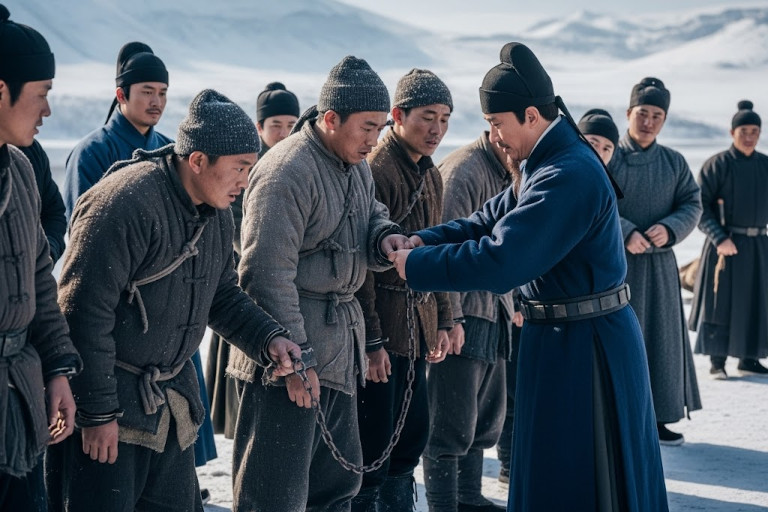
Because of his outstanding moral conduct, Zhong Liyi was soon recommended as a “Filial and Incorrupt Official,” a prestigious designation in ancient China. He later received a promotion. During one bitter winter, he was assigned to escort a group of labor conscripts to the Henei region. These conscripts were essentially prisoners forced into service and were typically transported under heavy restraint. Many were poorly clothed, and some were so ill they could no longer walk.
When Zhong Liyi’s group reached Hongnong, he immediately ordered the local magistrate to prepare warm clothing for them. Upon hearing of this act, Emperor Guangwu praised Zhong Liyi as a compassionate and exemplary official.
Zhong Liyi later went a step further — he removed the conscripts’ shackles and allowed them to walk freely to their destination. Remarkably, every one of them arrived on time, without a single delay. Whether serving as a county magistrate or in other posts, Zhong Liyi consistently treated people with empathy and fairness. Even those who had committed crimes were often moved by his character and chose to change their ways.
Governing with trust and humanity
One such case involved a man named Fang Guang, who had been imprisoned for a crime. While in jail, he received news that his mother had passed away. Devastated, he refused to eat. Touched by his grief, Zhong Liyi gave him permission to return home and bury his mother. After the funeral, Fang Guang came back to prison of his own accord — an extraordinary example of trust rewarded and the power of humane governance.
Upholding principles in the face of power
After Emperor Xian ascended the throne, Zhong Liyi was appointed as a high-ranking official. Around that time, a corrupt official was investigated for embezzling gold and jewels. The emperor ordered the confiscated goods to be distributed among the court ministers according to rank. Zhong Liyi received some of the jewels, but he immediately threw them to the ground and refused to bow in thanks. Surprised, the emperor asked why.

Zhong Liyi calmly replied: “I once read that Confucius, though thirsty, refused to drink from a spring named ‘Thieves’ Well,’ and that Zeng Shen turned his carriage around rather than travel a road named ‘Victorious Over One’s Mother.’ They did this to avoid anything with an improper meaning. These jewels came from corruption — I cannot accept them.”
Impressed by his unwavering principles, the emperor exclaimed: “You are truly a man of integrity!” He then replaced the reward with money from the imperial treasury instead.
Translated by Cecilia
Follow us on X, Facebook, or Pinterest
