
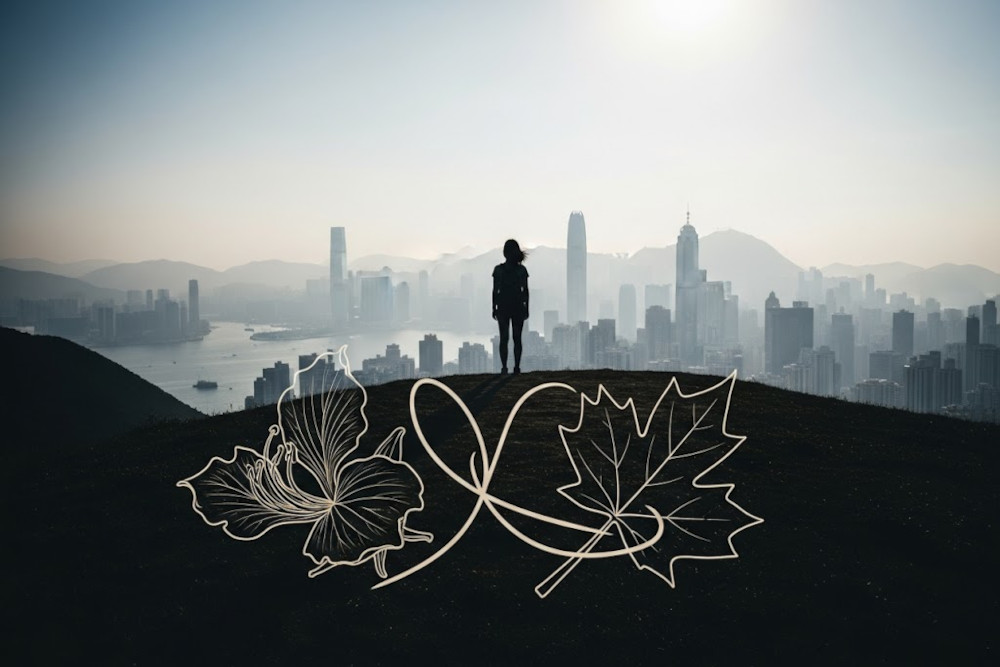
On July 1, 2025 — Canada Day — “Liberate Hong Kong Square” outside the Pacific Mall in Toronto stood silent and solemn. Dressed in plain clothing, a middle-aged Chinese woman named Mimi approached a symbolic monument dedicated to the anti-extradition protesters. She bowed respectfully, then laid down a bouquet of yellow flowers.
“This isn’t just about Hong Kong,” Mimi said quietly. “It’s a test of conscience for every Chinese person.”
Behind the monument, a large banner fluttered with the words: “Liberate Hong Kong, revolution of our times.” Hand-painted slogans and flags made by Hong Kong activists were displayed throughout the square. As Mimi took in the familiar words, memories surged — of her journey from mainland China to Hong Kong, and eventually to Canada. Once a confused and silent bystander, Mimi had become someone with unwavering resolve. Her transformation was an awakening born from witnessing the truth.
The 2019 protests became a turning point
When the anti-extradition protests erupted in 2019, Mimi and her husband were still living in Hong Kong. Originally from mainland China and married to a native Hong Konger, she didn’t fully understand why so many young people had taken to the streets.
“At the time, we didn’t quite get it. But our conscience told us — they were right,” Mimi recalled.
Though not involved on the front lines, Mimi and her husband joined the massive protest marches on June 9 and July 1, wearing black in solidarity. “Those young people were speaking out for justice, for freedom.”
Mimi remembered herself mostly as an observer. But that changed the day she witnessed the police fire tear gas and swing batons to disperse unarmed demonstrators.
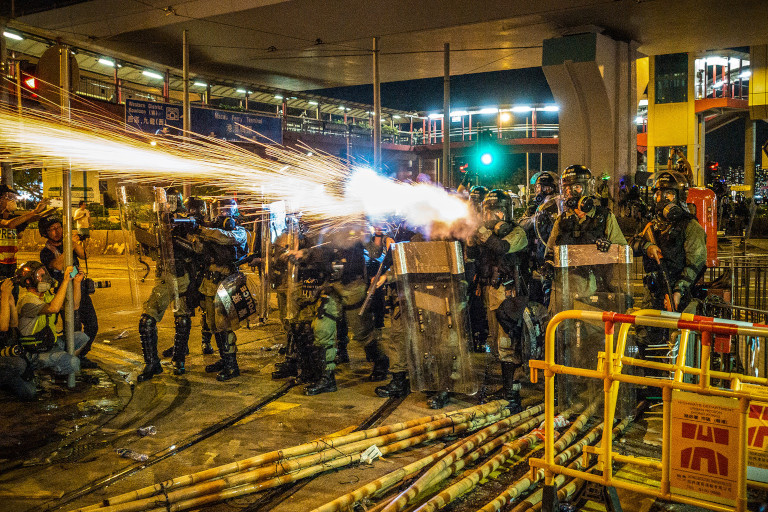
“I had lived in Hong Kong for nearly 30 years. The police always seemed friendly, like a neighbor,” Mimi said, her voice shaking. “But that day, something changed. Their expressions, their behavior — even their accents. They didn’t feel like Hongkongers anymore. They felt like mainland armed police.”
Mimi watched as teenagers covered their faces with towels, poured water on each other to ease the sting of tear gas, stumbled, bled, and fled. “That wasn’t the Hong Kong I knew. It was a battlefield.”
Leaving Hong Kong meant choosing freedom at a cost
After the National Security Law was imposed in 2020, Hong Kong changed. Fear and censorship took hold. Mimi and her husband realized it was no longer safe to stay. They made the difficult decision to emigrate with their family to Canada.
“We weren’t trying to run away. But we knew Hong Kong was no longer free,” Mimi said.
During her first two years in Canada, Mimi struggled to adjust to a new life. Still, her heart remained with Hong Kong, and she began searching for fellow Hongkongers. “We felt like people who had lost our home — always looking for familiar flags and voices.”
One day, Mimi came across a display organized by Hong Kong activists in Toronto — memorials, exhibits, and quiet vigils that continued day after day. It moved her deeply.
“There was a Hong Kong man in his seventies named Wing. He had protested at the square every single day since 2018 — rain, snow, even in minus-20 degrees. He made the signs and set up his own tent. His persistence shook me.”
Inspired by Wing’s commitment, Mimi, her husband, and another friend in Canada began joining the demonstrations weekly. “We’re not doing anything big. But just standing there is a kind of testimony — and a responsibility.”
A clear break from the Chinese Communist Party
Years abroad brought Mimi not just distance, but clarity. She began to study the history and tactics of the Chinese Communist Party (CCP) and reflect on her past silence.
“I now realize that the CCP does not represent the Chinese people. It’s an evil regime that holds the Chinese people hostage,” Mimi said. “If we don’t speak out and separate ourselves from it, the world may eventually hold all Chinese people responsible for what it has done.”
Mimi drew a parallel with history: “During World War II, the U.S. sent Japanese Americans to internment camps because of Japan’s government. We can’t let the CCP drag our entire ethnicity down.”
“I’ve already quit the Communist Party, the Youth League, and the Young Pioneers. I want no ties to that system anymore,” Mimi said firmly. “This isn’t just a political choice — it’s about saving your soul.”
She urged others to do the same: “You don’t need to fill out any forms. Just make the decision in your heart: I am no longer part of it. I’ve cut all ties.”
Even simple actions matter, Mimi said. “Tell the truth to those around you. That alone is powerful.”
Belief in justice and the collapse to come
Mimi emphasized that her anti-communist stance isn’t based on emotion, but on facts and truth.
“Guo Wengui once said the anti-extradition movement was the first door to bringing down the CCP. Now we’ve passed through the second, maybe even the third. Its collapse is near.”
Mimi said that behind China’s calm façade lie sharp declines in population, a failing economy, and a loss of public trust. “They say there are still over a billion people, but the real number might be just 600 or 700 million. The youth have no future. How long can a country like that hold together?”
She believes deeply: “Good will be rewarded, and evil will be punished. The CCP cannot last. Justice may be delayed — but it will come.”
Hope begins with courage and kindness
Though her views have cost her friendships and strained family ties, Mimi has no regrets. “Some people don’t believe at first — but the truth always surfaces. When the firewall falls, they’ll see everything clearly.”
Mimi said she’s become more peaceful and firm in her beliefs. “People need conscience and courage to speak up for what’s right. As long as that spark remains, we can ignite hope in others.”
“The CCP isn’t as powerful as it pretends to be — it’s a paper tiger. If we stand together, it will fall,” Mimi said.
Mimi believes Hong Kong was just the first crack, and many more awakenings will follow. “We must not abandon our yearning for freedom. Fear cannot become the reason we stay silent.”
On that Canada Day, her solitary figure bowed before a monument in Toronto. Small though Mimi was, her words carried strength: “A single spark can start a prairie fire. We may not do great things — but we can do the right thing.”
Translated by Chua BC
Follow us on X, Facebook, or Pinterest
