
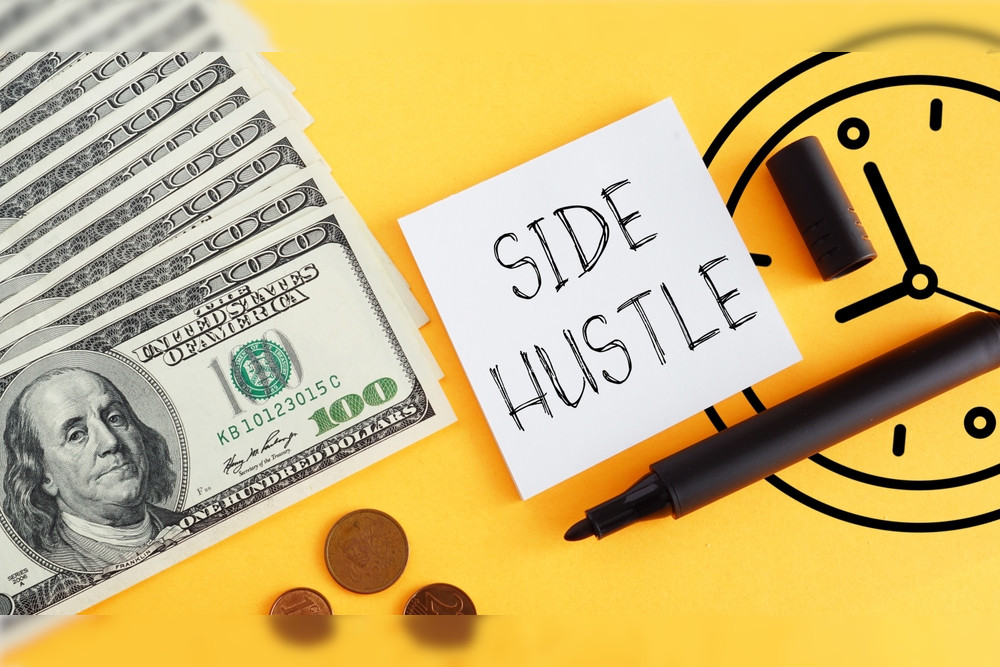
Forget “focus.” Forget “grind.” Forget the Silicon Valley gospel of sticking to one startup idea. Chris Koerner — the self-proclaimed “side hustle maniac” — is proving you can make millions by doing the exact opposite.
He’s not a monk-like founder coding in a garage. He’s not a Harvard dropout raising venture capital to build the next unicorn. He’s the guy chasing random, weird, often ridiculous business ideas — and somehow stacking them into a portfolio that pumps out US$8,000 a day in cash flow. That’s more than most “serious” startup founders ever see.
So what’s the trick? And why does it look less like Wall Street and more like a carnival game on a lake in New Zealand?
The gospel is dead
Every business podcast, TED talk, and productivity guru repeats the mantra: Focus. Niche down. Stick with one thing until you master it.
Chris Koerner laughs in their faces. He’s started more than 30 businesses, six of which now throw off six-figure cash flows each. To him, chasing shiny objects isn’t a flaw — it’s the business model. The way he puts it, compounding doesn’t care if you’re working on one company or a dozen. As long as you stay in the game, you’ll eventually stumble on enough winners.
In his words: “Ideas are avocados. They go brown fast. If you don’t take a bite, they rot.”
The hole-in-one casino on water
The first side hustle sounds like a scene from Jackass. In New Zealand, off the side of a road, sits a floating golf green. For US$40, you get 25 balls. Sink a hole-in-one from 111 yards away and you win US$10,000.

The math? Amateur golfers only hit a hole-in-one once in 25,000 tries. This little roadside shack, a green bobbing in the lake, and one guy with an iPad nets between US$300,000 and US$500,000 a year.
It’s not a golf business. It’s math as a service — an outdoor slot machine disguised as sport.
Chris Koerner’s critique: Why is there only one in the world? Why isn’t every golf course throwing balls into ponds with a US$10k jackpot? More people should be doing this because, he argues, men will always pay to throw rocks in water. Add Instagram bragging rights, and you’ve got a perpetual money printer.
Facebook Marketplace: The billion-user goldmine nobody talks about
Forget Silicon Valley AI hype. Forget ad agencies charging US$10k retainers. Chris Koerner swears the most overlooked growth channel in America is… Facebook Marketplace.
One billion monthly active users. Free organic reach. And an entire shadow economy of seven-figure hustlers.
He cites fence installers landing US$7,000 jobs from a single Marketplace post and high schoolers running US$500,000 gutter cleaning businesses from neighborhood apps.
Then there’s Chris Koerner’s own stunt: During the 2021 Bitcoin craze, China banned mining. Everyone wanted rigs. He listed “hosting” on Facebook Marketplace for US$200. The rigs themselves cost US$10,000, but the listing’s cheap appearance drew people in. With no paid ads, just organic posting across multiple fake accounts, he closed nearly US$10 million in sales in three months. Profitably.
Was it sustainable? No. Did it work? Absolutely.
The banana stand economy
Arrested Development had it right: There’s always money in the banana stand.
On Balboa Island in California, seven competing banana stands sling frozen chocolate-dipped bananas for US$8 a pop. One shop generates US$7 million in annual revenue from just 300 square feet.
Margins on a banana, chocolate, and peanuts? Astronomical.
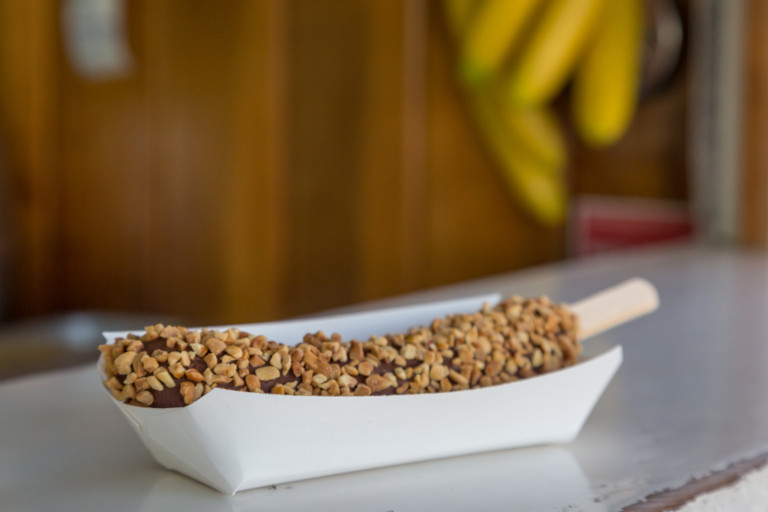
Chris Koerner filmed a video breaking down the numbers, then asked the obvious question: Why isn’t this replicated in every tourist town in America?
The real hustle isn’t bananas — it’s cloning tourist traps. Copy the gimmick — indoor sledding, funnel cakes, old-timey photo booths — drop it into another high-traffic destination, and let the tourists fund your retirement.
It’s not innovation. It’s transplant surgery for fads.
The Buc-ee’s heist (kind of)
Then there’s the gas station hustle that borders on performance art.
Buc-ee’s is a Texas cult. Fifty-one locations. Beaver mascots. Brisket sandwiches. The cleanest bathrooms on earth. Each store generates US$60-80 million annually.
When Chris Koerner realized they didn’t sell merch online, he went rogue. He and his wife dropped US$3,000 buying up every beaver-branded product in sight. They built BeaverSnacks.com, hired a photographer, uploaded everything to Shopify, and pitched Texas reporters.
The stunt went viral. Headlines screamed: Texas Man Makes $200,000 in 30 Days Reselling Buc-ee’s Snacks Online.
Instead of suing, Buc-ee’s lawyers called. They didn’t mind — as long as he changed the name, added disclaimers, and stopped using yellow. They even linked to his store in their FAQ.
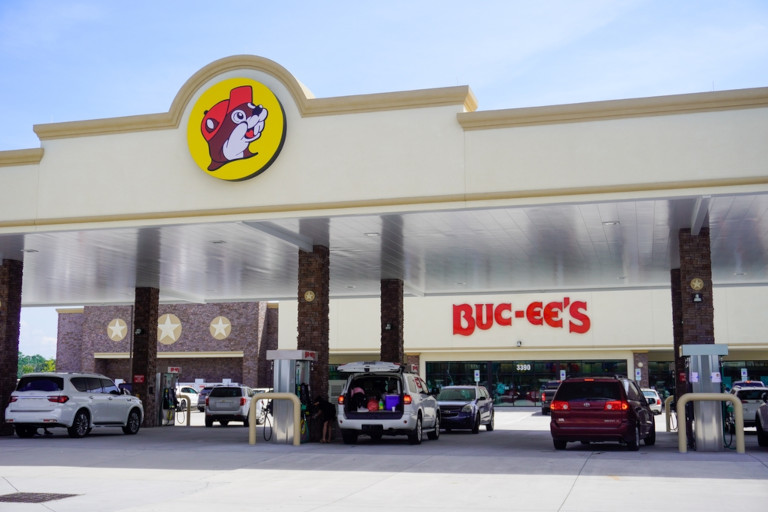
Now it’s a US$3-5 million annual e-commerce business — pure arbitrage.
Pet cremation: The grim cash cow
Sounds grim. It is grim. Also wildly profitable.
Pet cremation runs at 90 percent margins. And with more dogs in America than children, demand is only climbing.
Chris Koerner and a partner launched two businesses: a programmatic SEO site generating cremation leads nationwide, and a refrigerated-van service shuttling pets from clinics to cremation centers.
It’s not sexy. But neither are most millionaire-makers. Weak competition + high margins = easy money.
As Buffett said: “The secret to winning is weak competition.”
Stump grinding, but make it B2B
Tree-trimming companies hate stumps. They require specialized grinders, which eat into profits.
Chris Koerner scraped every tree company in Houston, had a Virtual Assistant cold-call them, and asked: “Would you outsource stump grinding?” Half said yes.
That’s it. A business model born in 72 hours.
It’s not about inspiration. It’s about asking a thousand boring businesses what problem annoys them most — then charging to fix it.
Secret pickleball: The Costco-sized ping-pong cult
Pickleball is America’s fastest-growing sport. Courts are full. Players are rabid.
Chris Koerner had a warehouse on his property. Instead of renting it to landscapers, he painted lines, added cameras and key-card access, and launched Secret Pickleball: US$149 a month, capped at 150 members. No staff. Just 24/7 play.

Setup cost: US$30-40k. Projected monthly revenue: US$22,000. Margins: 90 percent.
Because no one likes waiting for a court, scarcity itself becomes the selling point.
The philosophy of chaos
So what ties together bananas, golf balls, cremations, and pickleball? A worldview.
- Focus is overrated. Compounding works on chaos, too.
- Copy, don’t innovate. Don’t add “your twist.” Shamelessly clone what’s already winning.
- Say yes to everything. Overcommit. Increase capacity. Let Parkinson’s Law filter what matters.
- Test fast, kill faster. Run an ad. Cold call strangers. Scrape data. Validate in 24 hours or move on.
- Pick easy games. Go where competition is fax-machine-level weak.
To Chris Koerner, entrepreneurship isn’t about passion or destiny. It’s about running enough experiments that a few snowball into empires.
The counterculture of capitalism
There’s a deeper cultural undertone here.
While Silicon Valley worships billion-dollar disruption, a parallel economy thrives in the shadows. The side-hustle renaissance. It’s scrappy. It’s opportunistic. It looks more like hacking carnivals and gas stations than writing code.
And yet, it may be more democratic.
These aren’t unicorns. They’re donkeys — stubborn, reliable, and everywhere.
Banana stands, Facebook Marketplace, and pet cremations may not change the world. But they change bank accounts.
Conclusion: The anti-startup playbook
Chris Koerner doesn’t claim to be building the next Apple. He’s building a junk drawer of small, weird, and wildly profitable ventures.
And maybe that’s the point.
For most people, the path to freedom isn’t raising venture capital or “focusing” until they hate their lives. It’s copying what works, testing ideas fast, and saying yes until something sticks.
It’s the capitalism of chaos. And it works.
Because while the world obsesses over billion-dollar startups, Chris Koerner is quietly raking in US$3 million a year — from bananas, golf balls, dead pets, and pickleball.
Welcome to the new American dream.
Follow us on X, Facebook, or Pinterest
