
In an age when speed has become a virtue and silence a void to be filled, what does it mean to wait? On a small farm in rural China, a man has built an audience of nearly a million by doing almost nothing — sitting still as seeds sprout, as clouds pass, as months turn quietly into years. His slow, meditative videos seem to ask us: If rest itself can be a form of resistance, what exactly are we resisting — the world, or our own impatience?
Through his lens, growth becomes revelation, and stillness becomes a kind of truth. In watching him, we confront a question our screens rarely allow us to ask: What if the future doesn’t belong to the fastest among us, but to those who have learned to move with time instead of against it?
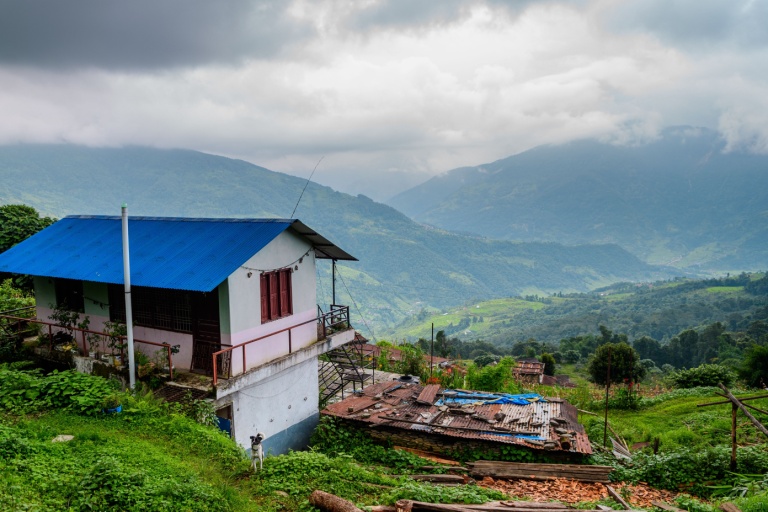
On a small farm tucked into the folds of rural China, a man sits motionless beside a patch of soil. His clothes are faded, his gaze steady. Around him, time moves differently — a seed sprouts, the sky shifts, shadows inch across a mountain ridge. In a few seconds, the screen compresses what took months — sometimes years — to unfold. The video ends, leaving millions of viewers wordless and strangely calm.
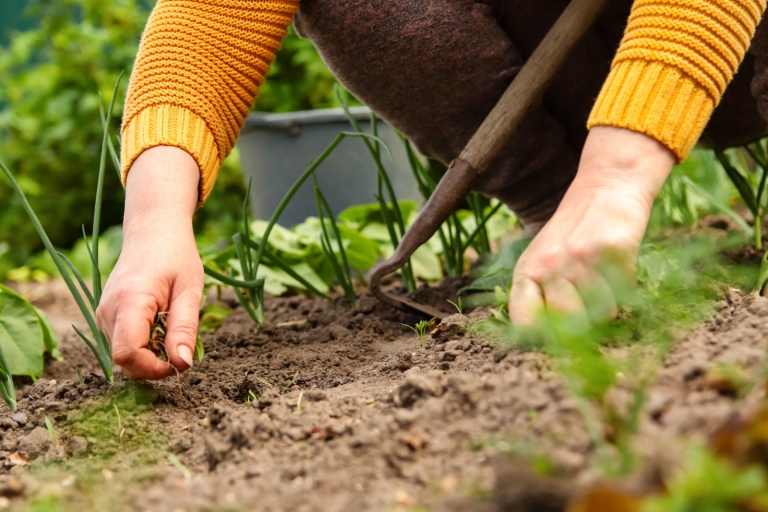
He is not dancing, not selling, not performing. And yet nearly a million people follow him on Douyin, China’s version of TikTok. His feed is filled with time-lapse meditations on growth: beans unfurling, moss thickening, cabbages blooming, mist rolling down a valley. Always the same setting. Always the same man, his hands in the soil, his posture unhurried. In an online world built on acceleration, his presence feels like a pause button.
A quiet revolution in the feed
To scroll through Douyin is to experience motion sickness — cuts every second, trending audio, faces shouting into the void. Attention is currency, and the algorithm rewards excess. Yet amid this chaos, a man who has quietly filmed vegetables for two years has become a star.
It’s tempting to call it irony. But his success is less paradox and more prophecy. In a moment when digital culture feels overclocked, people are drawn to what moves slowly, even imperceptibly. His channel offers no punchlines, no “content.” It offers continuity.
In Reddit threads about “slow living” and on Weibo under his posts, followers describe his clips as “therapy for the timeline.” One viewer wrote: “He doesn’t post much, but when he does, I feel like I’ve waited with him.” That comment captures the essence of his appeal: this isn’t entertainment; it’s accompaniment. Watching him is like borrowing someone else’s patience.
Psychologists have begun to identify this craving as a form of attention restoration — our minds recovering from overstimulation through quiet, rhythmic experiences. His videos function almost like digital incense: they don’t grab you; they steady you.
Filming what can’t be rushed
In a brief interview posted by a local media outlet, the creator explained that each of his time-lapse projects takes anywhere from two months to two years. The process is grueling: setting up a camera in the same spot every day, adjusting for wind, rain, insects, and light shifts. “You have to be okay with loss,” he said. “Sometimes the plant dies, and you start again.”
That resignation — an acceptance of impermanence — is itself the art. Every frame is a reminder that beauty depends on time’s slow cooperation. His repetitive outfit, unchanged across seasons, has become an accidental costume of consistency. Whether intended or not, it reinforces the spiritual throughline of his work: a devotion to sameness in a world allergic to it.
The result is cinematic, though he never calls himself a filmmaker. Each video is a miniature ode to the unseen forces that shape life — gravity, sunlight, decay. The camera’s eye reveals what human eyes miss: how silence has movement, how stillness can pulse.
To record growth is to acknowledge mortality. His clips — seed to stem, bud to bloom to rot — carry an emotional rhythm that transcends language. The videos are often set to ambient soundscapes: wind, water, a single chime. The effect is monastic, like sitting beside someone who has learned not just to wait, but to listen.
From Dao to digital: The philosophy behind stillness
Whether consciously or not, his practice echoes the ancient Chinese philosophy of Daoism. The Dao, often translated as “the Way,” emphasizes harmony with natural rhythms, non-interference, and the futility of forced progress. The Daoist principle of wu wei — literally “non-action,” but better understood as “effortless alignment” — runs through every pixel of his videos. Laozi wrote in the Dao De Jing: “Nature does not hurry, yet everything is accomplished.” In that sense, the farmer’s content is more than aesthetic — it’s a philosophical embodiment. His refusal to hurry is a moral act in an impatient age.
Modern China’s rural creators, including well-known figures like Li Ziqi, have revived interest in agrarian life and traditional crafts. Yet this man stands apart. While Li’s videos resemble polished folklore, his are pure meditation: the land not as a stage but as a teacher. He doesn’t explain or interpret his work; he repeats it. That repetition — plant, water, wait, film — is its own sermon.
The act of doing the same thing with care is a quiet rebellion against a digital culture that equates novelty with worth. In Daoist cosmology, stillness isn’t absence — it’s balance. And that is precisely what his audience senses. Watching his plants grow, we aren’t escaping time; we’re remembering how to inhabit it.

The art of rural mindfulness
Rural China has always held symbolic weight: simplicity, endurance, closeness to the land. But for this creator, it’s not nostalgia — it’s mindfulness. His garden becomes a living meditation cushion. His body, unadorned and unfiltered, turns ordinary gestures — sweeping, watering, sitting — into poetry. Western mindfulness often arrives packaged in apps, courses, or yoga mats. He is different. It is implicit, unbranded, and local. It belongs to the soil. He doesn’t name it mindfulness because he doesn’t have to; he lives it.
There’s something almost literary about the visual repetition. Each clip is a haiku in motion: an image stripped to essentials, inviting the viewer to notice what remains unsaid. In one viral video, fog rolls over a field as morning light creeps through; he sits in profile, unmoving, as if waiting for the mountain to breathe. Online commenters joke that he must be “the world’s most patient influencer,” but beneath the humor lies recognition. He embodies what we’ve lost: the ability to live in rhythm with something other than the clock.
Why the future might be slow
The more digital life accelerates, the more value accrues to what can’t be rushed. In the U.S., searches for “slow content” and “digital minimalism” have spiked. On Chinese social media, hashtags like #SlowLifeChallenge (慢生活挑战) and #RuralRebirth trend among young urban users seeking mental balance. This movement isn’t about rejecting technology; it’s about reclaiming attention. The farmer’s quiet fame proves that even algorithms can’t entirely suppress our need for stillness. Ironically, it’s the same platforms that profit from chaos that now amplify tranquility.
Philosopher Byung-Chul Han, in The Burnout Society, wrote that modern fatigue stems from “excess of positivity” — too much doing, wanting, achieving. In contrast, the slow influencer embodies negative capability — the power to stay undefined, to not push, to exist. His following suggests that people aren’t only tired; they’re spiritually homesick. This homesickness is global. Across continents, a cultural countercurrent is forming: forest bathing in Japan, slow TV in Norway, mindfulness retreats in Silicon Valley. All point to a rediscovery of slowness as a form of survival.
The farmer’s videos remind us that attention, like a seed, grows only when given time. His digital garden has no ads, no slogans, no hooks — just light, soil, and patience. Perhaps the most actual influence is not what goes viral, but what lingers.
Conclusion: What endures
In one of his earliest posts, a small sapling pushes through frost, its tender green defying the cold. Months later, it blossoms, then fades. The camera holds still. There’s no message, no closure — just life moving through its quiet, endless cycle. In that stillness, we sense something rare: peace that wasn’t designed, beauty that wasn’t optimized. His slow films remind us that time, not content, is the real teacher. Maybe that’s why his audience keeps returning. In watching him, they aren’t seeking escape — they’re seeking return: to rhythm, to patience, to meaning.
In the end, he doesn’t give us more to see. He teaches us how to look.
Follow us on X, Facebook, or Pinterest
