
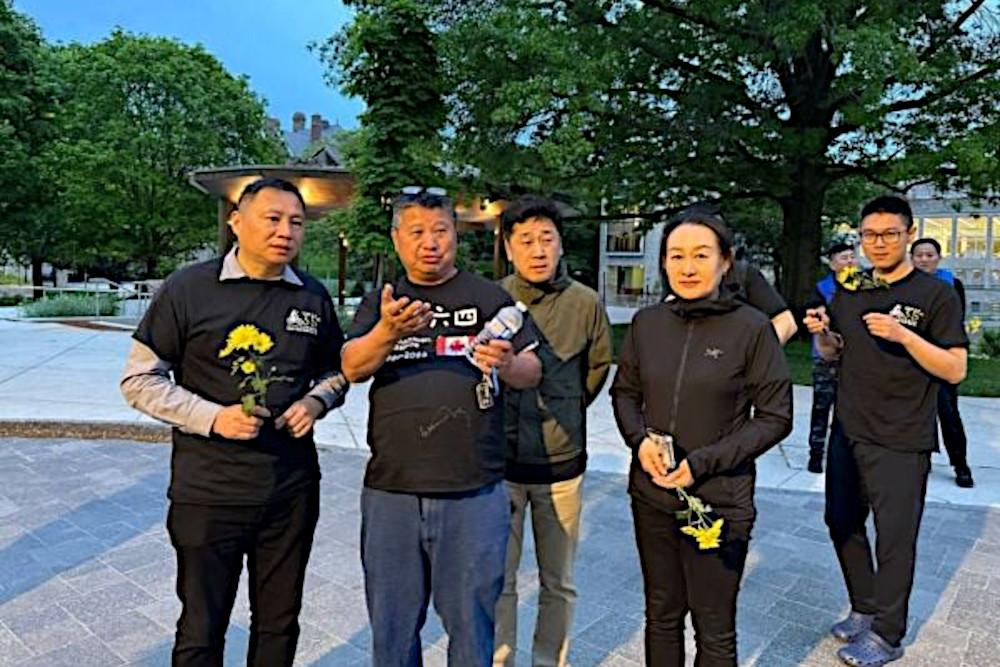
At a quiet café in Toronto, Zhang Yan spoke calmly as she shared her extraordinary journey from educator in mainland China to pro-democracy activist overseas. Once a respected principal devoted to teaching, she now devotes her life to speaking out for freedom and human dignity.
Zhang Yan began her career in education, founding a small non-profit institution that provided tutoring and learning guidance for middle and high school students. Her goal was not to drill students for exams, but to help them develop healthy study habits and balanced lives. Over 10 years, her school has trained nearly 100 students. “Education shouldn’t produce mechanical learning machines,” she said. “It should nurture thoughtful, capable individuals.”
But her vision of education often clashed with the reality she saw around her. In mainland China, she said, corruption in schools begins early — sometimes as soon as kindergarten. “To change a child’s seat might cost 1,000 or 2,000 yuan [US$140-280]. During festivals, teachers receive all kinds of gifts — some parents even give fur coats or cars. Those who don’t give are criticized, or their children are singled out.” To Zhang Yan, such practices destroyed fairness and integrity in education.
What troubled her even more was what she called “brainwashing education.” Students were constantly exposed to political content, while practical skills and independent thinking were ignored. “The entire system is full of hidden rules,” she said. “It’s hard to hold on to real education in such an environment.”
Lockdowns and the loss of freedom
Zhang Yan’s turning point came during the COVID-19 pandemic. She described her experience under China’s strict lockdowns as a nightmare that almost cost her life. “After returning from the United States, I was forced into quarantine,” she recalled. “They welded the door shut — we had no freedom at all.” She watched workers in protective suits seal doors with iron bars, leaving residents trapped inside. “Even when someone had a fever or ran out of medicine, no one came to help. That’s when I realized that under this system, even our right to exist doesn’t belong to us.”
To Zhang Yan, the so-called epidemic prevention measures were not about public health, but about control and profit. “People had to pay for their own isolation, hotels charged outrageous prices, and even toddlers were forced to take repeated COVID tests,” she said. “That’s not disease control — it’s psychological and physical domination.”

Zhang Yan also questioned the official reports from Wuhan. “Death became just a number,” she said quietly. “Crematoriums were running day and night, and the number of urns far exceeded the official figures.” She cited the case of citizen journalist Fang Bin, who filmed a van carrying eight bodies outside a hospital and was sentenced to three years in prison. “Those who aren’t counted, who have no names or tombstones, aren’t even considered human in the Party’s system,” she said. “Where there are no human rights, there is no dignity — even after death.”
Her voice grew firm as she continued: “The most fundamental problem in China is that people have no freedom under Communist Party rule. This isn’t only a human rights issue — it’s about the dignity of existence itself. A dog or a raccoon in a Western country might be freer and happier than many Chinese citizens.”
Finding courage in the face of fear
After leaving China, Zhang Yan settled in Canada, where she began to learn the truths that had been hidden from her. Online, she read about the 1989 Tiananmen Square massacre, the persecution of Falun Gong practitioners, and the suffering of Tibetans and Uyghurs. “In China, I only heard the Party’s propaganda saying Falun Gong was political,” she said. “But when I met them here, they were so kind — they wouldn’t even harm a mosquito. The propaganda was all lies to justify repression.”
In February 2024, Zhang Yan joined the China Democratic Party Canada Committee (CDPCC) and soon became one of its volunteer editors. She published articles under her real name documenting the activities of the overseas democracy movement, served as a member of the secretariat for the CDPCC’s Fourth Party Congress, and volunteered at the June Fourth Memorial Museum in Toronto. “For me,” she said, “this isn’t just meaningful work — it’s a commitment to my beliefs.”
She often attends pro-democracy and human rights events in Toronto, including the Jasmine Action in front of the Chinese Consulate, Remembrance Day, International Human Rights Day, and the local support gatherings for the June Fourth Memorial Museum. “You can see me at almost every event,” she said with a small smile.
Inspiration from a mentor
Zhang Yan draws strength from her mentor, Wang Juntao, chairman of the China Democratic Party National Committee, who has been imprisoned twice for his political activities. “Chairman Wang often tells us real cases — members who were arrested immediately upon returning to China, some who disappeared, some who died in prison. I know the risks of speaking out,” she said, “but I also know the price of silence. Freedom’s meaning only becomes clear when it’s under threat.”
She described Wang as “a true hero” and her spiritual guide. “Even after two prison terms, he still believes that China will one day have democracy. What I can do is continue passing on that belief.”
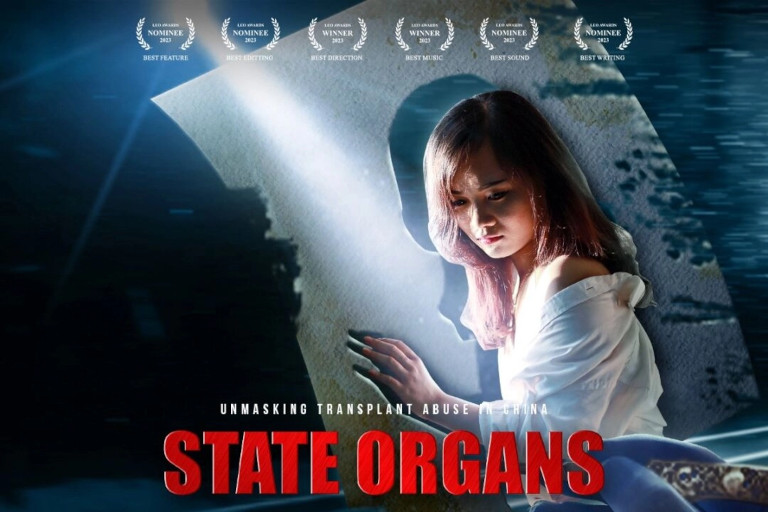
Zhang Yan’s compassion also extends to other victims. She mentioned the documentary State Organs, which exposes live organ harvesting from Falun Gong practitioners, and the tragic story of human rights lawyer Li Jinjin. She also follows the case of 22-year-old British student and pro-Tibet editor Zhang Yadi, who was detained by China’s National Security Bureau after returning home and has been missing since. “These stories make me more determined to speak up for the Chinese people,” she said.
“At first, I was terrified,” she admitted. “I worried about retaliation and about my family being targeted. But when I saw Chairman Wang, nearly seventy years old, still standing firm, my fear disappeared. What was left was only admiration — and courage.”
Every person is part of the change
Even in Canada, Zhang Yan has felt the reach of the Chinese regime. “The CCP’s long arm extends overseas through pro-Party groups and online trolls,” she said. “They spread fear, fabricate rumors, and threaten activists. If even those of us living in free countries are too afraid to speak for the Chinese people, then there really is no hope for China.”
She believes that China’s problems stem from one-party rule. “The essence of autocracy is the destruction of humanity. The Communist Party maintains its power through lies and violence, exploiting the people at will,” she said. “But each of us can help awaken others. I hope more Chinese will stand up for their beliefs and dignity, just as Falun Gong practitioners have done.”
Today, Zhang Yan calls Canada her home. “I chose to stay here because democracy and freedom are like air,” she said. “Once you’ve breathed it, you can never live without it.” For the first time, she feels she understands the true meaning of life and the worth of being human. “I will never go back,” she said quietly. “To return would be like suffocating.”
Translated by Chua BC
Follow us on X, Facebook, or Pinterest
