
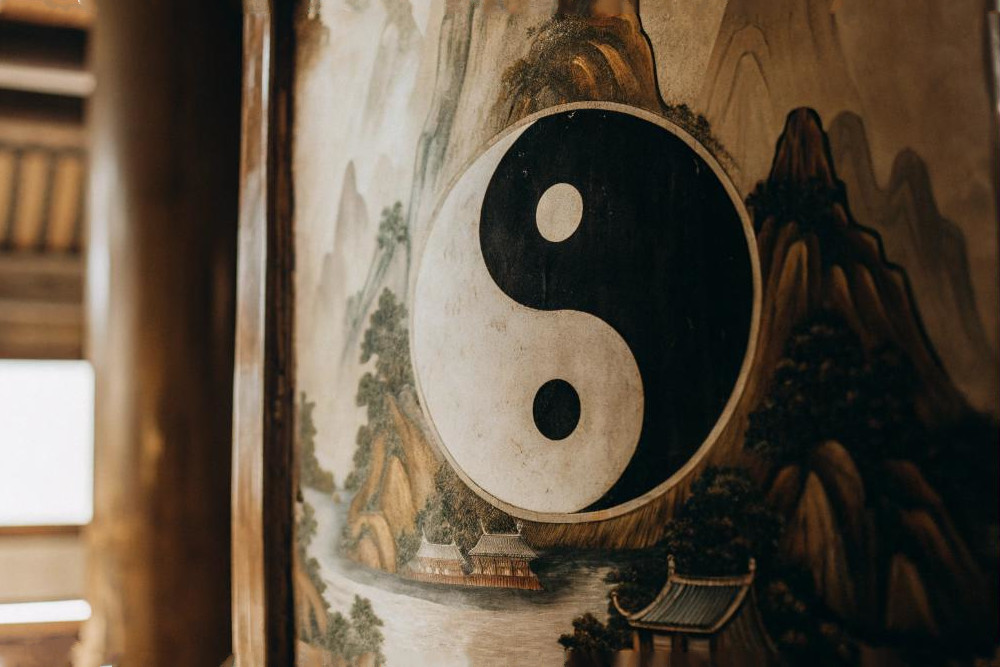
The art of letting go is not a technique we master but a posture we learn — one that becomes increasingly necessary in an age of relentless uncertainty. Across cultures and centuries, from Taoist sages to modern psychologists, humans have tried to understand why we cling so tightly to things that cause us suffering — and why loosening our grip feels like risking the collapse of the self.
In a world reshaped by social media personas, unstable identities, and emotional scarcity, the practice of release has become both a spiritual necessity and a psychological challenge. To understand how this difficulty evolved, we begin with the oldest advice of all: Flow with what is, not with what you wish it to be.
Letting go, as Taoism teaches, begins not with surrender, but with a radical reorientation of how we think life unfolds. And as we follow this old philosophy into the lived experiences of modern people — into Reddit confessions, Jungian theories, and cultural patterns — we find that release is not a luxury. It is survival.
Taoism and the fluid nature of release
Taoist philosophy has long argued that clinging is the root of tension, that the desire to control the uncontrollable distorts the natural flow of life. The Tao Te Ching suggests that “nature does not hurry, yet everything is accomplished,” a line often attributed to Laozi and frequently cited in contemporary writings on Taoist psychology.
At the core of this worldview is wu wei — commonly translated as “effortless action” or “non-forcing.” It is not passivity, but a mode of acting that does not resist the current. Scholars describe it as aligning oneself with the rhythms of existence rather than manipulating them. In practice, wu wei is a quiet rebellion against the modern obsession with control. We are trained to force outcomes: career success, romantic security, personal reinvention. Yet Taoism poses a question we rarely ask: What if the effort is the problem?
This thought naturally leads toward an uncomfortable truth. When your actions are built on fear — fear of losing someone, fear of losing status, fear of losing control — those actions create the very suffering you try to avoid. This is where Taoism begins to intersect with your contemporary emotional life, setting the stage for a deeper inquiry into how people today describe the difficulty of letting go.

What the Internet reveals about clinging: Voices from Reddit
While ancient philosophy offers elegant metaphors, modern life provides something else: raw honesty. And nowhere does this honesty appear more vividly than on Reddit. Across subreddits like r/Buddhism, r/Stoicism, r/AnxiousAttachment, and r/attachment_theory, thousands of users describe the painful reality of attachment.
One of the most common threads — especially after breakups — reads like a chorus of desperation: “Why can’t I let go, even when I know it’s over?” A user in r/AnxiousAttachment writes that every attempt to detach “feels like severing a limb.” Another confesses that the logical part of the mind understands the relationship is unhealthy, “but my nervous system didn’t get the memo.”
These discussions illuminate a psychological tension that Taoism already articulated. We cling not only to people, but to identities, narratives, and imagined futures. As one poster in r/Buddhism explains, letting go feels like “stepping into emptiness,” echoing a fear that is both ancient and universal.
What makes these confessions so important is the clarity with which they expose a contradiction: People do not cling because they want to suffer — they cling because their identity feels threatened by change. This realization brings us to the next link in the chain: the question of who is doing the clinging. For that, we turn to Carl Jung.
Carl Jung and the ego’s hunger for attachment
Carl Jung believed that the ego — the conscious “I” we identify with — exists as only one small island in a vast ocean of unconscious drives, fears, and potentials. According to Jung, the ego desperately seeks stability. It wants certainty, identity, continuity. When life threatens these, the ego does what it knows best: It grasps.
Jungian analysts often argue that attachments are rarely about the object itself. More often, the person or situation becomes a vessel for a disowned part of the psyche. Jung referred to these structures as complexes — emotionally charged patterns shaped by early experiences.
For example:
- A partner becomes a symbol of safety that the ego never developed internally.
- A job becomes the proxy for one’s sense of worth.
- A belief becomes a refuge from existential uncertainty.
These attachments persist because losing them feels like losing oneself. Jung famously warned that “what you resist not only persists but grows,” a line that is frequently paraphrased in psychological literature and misattributed online, but is grounded in his concept that unintegrated emotions manifest outwardly until they are consciously faced. If Taoism says release control, Jung says understand the part of you that clings. And as modern society amplifies the ego’s fragility, Jung’s insights begin to feel eerily prescient. Which leads to the next layer: how the world we’ve built intensifies the very attachments we struggle to let go of.
Archetypes in a modern world: Why we cling more today
To explore why letting go has become harder, we must examine how Jungian archetypes now shape society in ways Jung never lived to see.
The persona in the age of social media
The persona — the mask we present to the world — has never been more carefully curated. On Instagram, TikTok, LinkedIn, and even dating apps, we continuously sculpt a digital self that demands maintenance. The collapse of a relationship today doesn’t just mean heartbreak. It means a fracture in the narrative we publicly built. As one Reddit user lamented, “I don’t know how to be someone else now.”
Shadow projections
Jung warned that whatever we refuse to recognize in ourselves becomes projected onto others. If we reject our vulnerability, we cling to someone who embodies it. If we fear our anger, we attach to partners who express it on our behalf. Modern life — with its relentless demand to present as competent, attractive, or spiritually “well” — pushes more and more of the psyche into the shadow. The more we repress, the more violently we cling.
Consumerism as a substitute for identity
Jung believed the psyche seeks meaning, not pleasure. But in a culture that treats consumption as self-definition, we learn to cling to possessions as symbols of selfhood. The Taoist warning against “grasping” becomes freshly relevant here.
Letting go becomes not merely emotional work, but cultural defiance. If this is the world we inhabit, then the question becomes: how do we practice release not as avoidance, but as transformation? The answer requires merging Taoist softness with Jungian depth.

Where Taoism and Jung converge: Two lenses on release
At first glance, Taoism and Jungian psychology appear unrelated — one a mystical philosophy, the other a structured exploration of the psyche. Yet their insights converge in striking ways.
Both distrust rigid control
- Taoism insists that forcing life creates suffering.
- Jung argues that when the ego tries to dominate the psyche, unconscious forces retaliate.
Both view identity as fluid
- Taoism sees selfhood as ever-changing, like water.
- Jung sees the self as an unfolding process of individuation.
Both understand letting go as inner alignment, not external resignation
In Taoism, release is a return to the natural way of things. In Jung, release is the integration of inner fragmentation. The combination is powerful. Taoism softens the grip. Jung reveals what is gripping. But neither system leaves us in abstraction. Both move toward practice — toward what it means to live the art of letting go in daily, uncertain life. This brings us to a final movement: how to translate philosophy and psychology into lived experience.
Practicing the art of letting go in an uncertain world
The art of letting go is not an event but a discipline — a way of being that must be rehearsed in the small, almost invisible places.
Taoist approaches
- Practice wu wei in micro-moments: Resist the urge to over-manage. Where there is tension, experiment with doing less.
- Embrace emptiness as possibility: Taoist writers emphasize that value comes from empty space — the cup holds water because it is hollow. To let go is to make room.
- Spend time in unstructured nature: Neurological studies indicate that natural environments reduce rumination and soften emotional rigidity. Nature teaches release through immersion, not instruction.
Jungian approaches
- Ask which part of me is clinging: Identify the projection, complex, or unmet need disguised as attachment.
- Track recurring emotional patterns: What repeats reveals what remains unintegrated.
- Shadow journaling: Write if I thoroughly let go, what quality in myself do I fear encountering?”
The combined path: Letting go and letting come
Taoism reminds us that when we stop grasping, life reorganizes itself. Jung reminds us that when we release projections, the psyche reorganizes itself. Letting go is not disappearance — it is reorientation — a movement away from the known and toward a deeper, more spacious self. And so we return to the beginning: The art of letting go is, ultimately, the art of trusting that who you will become is not dependent on what you currently cling to.
Follow us on X, Facebook, or Pinterest
