

Medical reports don’t always reveal how well an older person is really doing — but leg strength often does. Many people in their seventies who can still shop for groceries, take public transportation, and travel independently share a common trait: strong legs, steady balance, and little reliance on others.
By contrast, many seniors are not sidelined by a major illness, but by a single fall that slowly leads to reduced mobility. In that sense, maintaining leg strength plays a quiet but critical role in preserving independence as we age.
What happens when leg strength starts to decline
Have you noticed any of these changes recently?
- Feeling the need to sit down after walking only a short distance.
- Climbing stairs much more slowly than before.
- Needing to push with your hands to stand up from a chair or toilet.
- Walking more cautiously, especially when crossing the street.
These changes rarely appear all at once. More often, they reflect a gradual loss of leg muscle strength that develops quietly over time.
One man in his seventies, for example, had long managed his blood pressure and lived independently. One evening, while taking out the trash, he misjudged a small step, lost his footing, and fractured his hip. The surgery went well, but his leg strength never fully returned. What worried him most was not the injury itself, but the possibility of becoming a burden to his family.
For many older adults, loss of independence does not begin with disease — it begins when their legs can no longer reliably support them.

Why leg strength often declines with age
Several everyday factors contribute to weaker legs over time:
- Too much sitting, too little movement: Muscles weaken when they aren’t used. Over the years, the muscles in the thighs and calves gradually lose mass, placing more strain on the knees.
- Gradual weight gain: Even modest weight gain increases the pressure on knee joints during walking and stair climbing.
- Circulation and metabolic issues: Poor control of blood pressure, cholesterol, or blood sugar can affect circulation, making legs more prone to soreness, numbness, or cramping.
- Footwear and walking environments: Slippery floors, unstable shoes, and uneven surfaces increase the risk of falls — especially when ankle strength has already declined.
An important takeaway for staying mobile
Leg strength does not improve on its own. Without regular use, it tends to decline.
The good news is that muscle is living tissue. Even later in life, it can still respond to safe, consistent training. Research and real-world experience show that people in their seventies and eighties can improve leg strength through appropriate exercises. Improvements in balance, walking speed, and confidence often follow.
A Quick Self-Check: Before starting, ask yourself these three questions:
- Can you stand up from a chair without using your hands?
- Do you need to pause halfway when climbing a flight of stairs?
- While holding a chair for support, can you stand on one leg for 5-10 seconds?
If these feel difficult, there’s no need to be discouraged. In many cases, it simply means this is a good time to begin.
3 simple leg exercises you can do at home
No gym or equipment is required — just a sturdy chair.
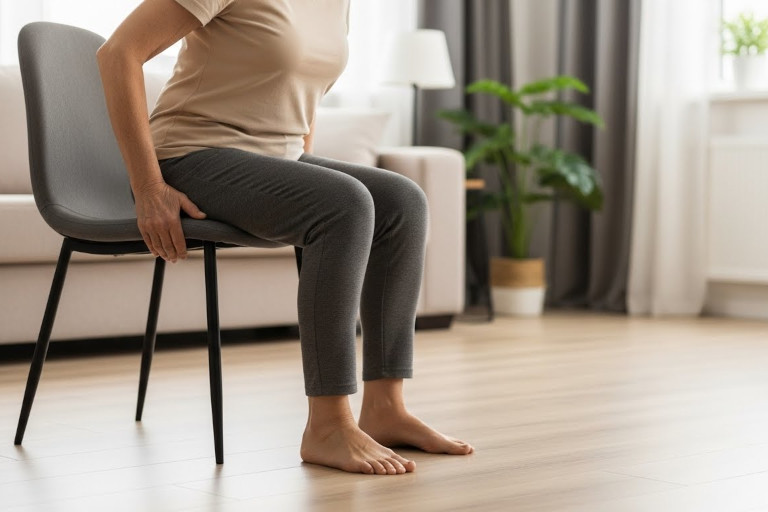
1. Chair stand. This exercise supports your ability to stand up independently.
- Sit on the front third of the chair.
- Place your feet shoulder-width apart, flat on the floor.
- Lean slightly forward and stand up using your legs.
- Slowly lower yourself back down.
Start with 8-10 repetitions, performed as two sets. If that feels challenging, even 3-5 repetitions are enough to get started.
2. Heel raises with chair support. This movement strengthens the calf muscles, which play an important role in circulation.
- Hold the back of the chair with both hands.
- Keep your toes on the ground and slowly raise your heels.
- Pause briefly, then lower them slowly.
Aim for 15 repetitions per set, for one or two sets. With consistency, many people notice less calf cramping and swelling.
3. Side leg raises and single-leg standing. These exercises improve balance and stability, which are key for fall prevention.
- Side leg raises: Hold the chair with one hand. Lift the opposite leg 8–12 inches to the side while keeping your upper body upright. Do 10 repetitions on each side.
- Single-leg stand: Hold the chair with one hand and lift one foot off the floor. Start with 5 seconds and gradually increase the duration.
A Daily Routine: A total of 10-15 minutes per day is sufficient. You can arrange the routine like this: After dinner → Short rest → Chair stands → Heel raises → Side leg raises → Single-leg standing.
A good intensity is when your body feels warm, and you’re slightly out of breath, but still able to speak comfortably. Consistency matters more than volume. Small daily efforts add up.
Everyday habits that support healthy legs
- Wear stable, non-slip shoes.
- Manage body weight to reduce knee strain.
- Stand up and move every 30 minutes if you’ve been sitting.
- Eat enough protein to support muscle maintenance.
Note: If you have severe heart disease, significant joint pain, or have recently had a stroke, consult a doctor before starting any new exercise routine.
Strong legs make it easier to stay independent and active. If you can still stand up and walk a few steps today, there is still an opportunity to rebuild strength. The effort you make now may quietly shape how well you move in the years ahead.
Translated by Patty Zhang
Follow us on X, Facebook, or Pinterest
