
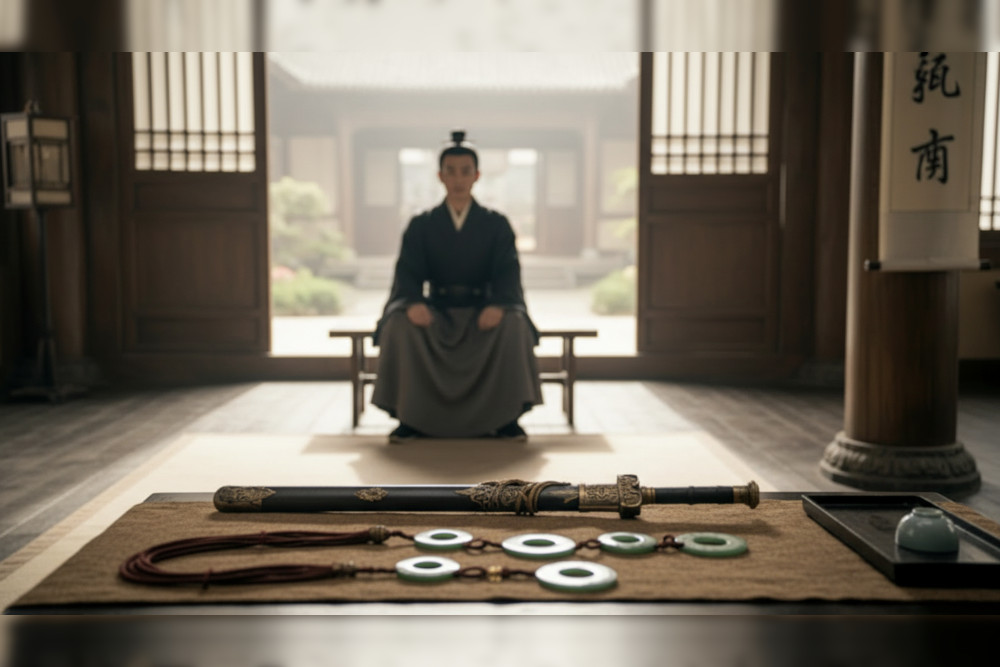
What does it mean to “yield”? Is it a form of weakness, or a deliberate choice rooted in self-cultivation and restraint? In traditional Chinese thought, yielding was often seen not as surrender, but as clarity — knowing what is worth pursuing and what is not.
A story recorded by Jia Yi, a prominent thinker and political commentator of the Western Han Dynasty, explores this idea through a sharp contrast between inner virtue and outward display. Set during the Spring and Autumn and Warring States periods, the account follows an encounter between the Crown Prince of Wei and a ruler of the State of Zhai — one who took pride in flaunting his wealth.
A visitor adorned in wealth
When Marquis Jing of Zhai paid a formal visit to the Crown Prince of Wei, his appearance was impossible to ignore. At his waist hung a sword decorated with feathers and jade. From the other side, precious pendants were draped, their polished surfaces catching the light and reflecting it back and forth in dazzling flashes.
The two men sat together for some time, exchanging courtesies. Yet throughout the meeting, the Crown Prince never once remarked on the sword or the ornaments. He did not inquire about their origin, value, or craftsmanship.
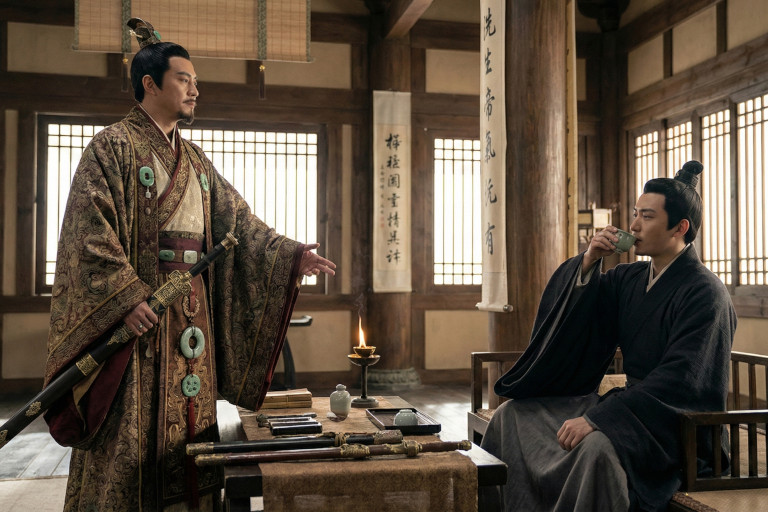
Marquis Jing grew restless. Unable to endure the silence any longer, he finally asked: “Does your state possess treasures as well?”
The Crown Prince replied calmly: “Yes, it does.”
Redefining what counts as a treasure
“And what are those treasures?” Marquis Jing pressed.
The prince answered: “Our ruler keeps his word. Our officials are loyal. Our people trust and support their leader. These are the treasures of Wei.”
“That’s not what I mean,” Marquis Jing said. “I’m asking about tangible treasures.”
The Crown Prince nodded. “We have those too,” he said. “Consider this: Tu Shizhao oversees the markets of Wei, ensuring honest trade, free of deception, so that both young and old are treated fairly. Xi Xin governs Yangyi, where people do not take what is lost along the road. And Mang Mao serves in the court, drawing capable and virtuous scholars from neighboring states through his integrity. These men are the great treasures of Wei.”
Wealth that suddenly felt heavy
Marquis Jing fell silent. His expression darkened. Without a word, he removed the sword and pendants from his body and placed them beside his seat. Then he rose abruptly, left without taking formal leave, and climbed into his carriage.
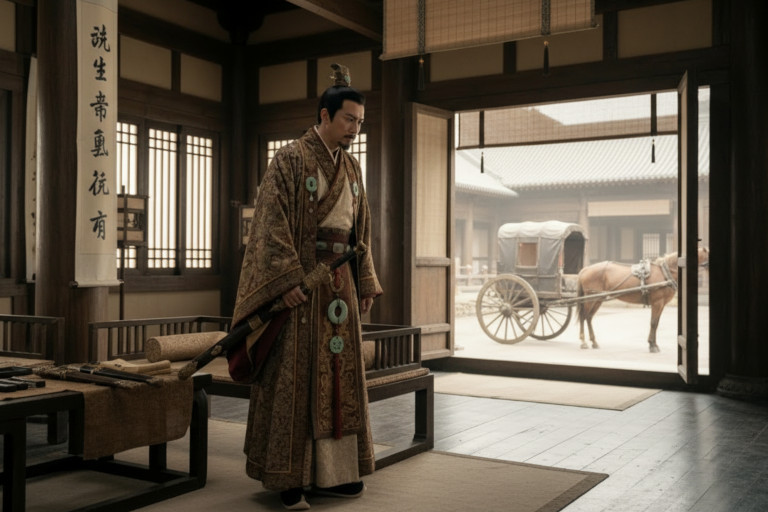
The Crown Prince, startled by the sudden departure, immediately sent an attendant after him with the items. Along with them, he conveyed a message:
“I do not possess the virtue required to accept these treasures, nor the ability to safeguard them on your behalf. They cannot keep me warm in winter or satisfy hunger in times of need. Please do not leave them with me, for they would only bring misfortune.”
When attachment becomes a burden
The Crown Prince of Wei was known for his simplicity and integrity. His detachment from material wealth was not a performance, but a reflection of his inner discipline. In thought, speech, and action, he remained unmoved by worldly temptations, believing that distance from excess was a way to avoid harm.
Marquis Jing, by contrast, had intended to impress his host with glittering displays of status. Instead, he returned home carrying the very treasures he had hoped would elevate him — now stripped of their meaning. According to later accounts, he withdrew from public life and remained secluded until his death.
Even at the end of his life, it was said, he could not release his attachment to what he believed gave his possessions value. That fixation weighed on him, leaving him consumed by melancholy and isolation.
Translated by Patty Zhang, edited by Maria
Follow us on X, Facebook, or Pinterest
