
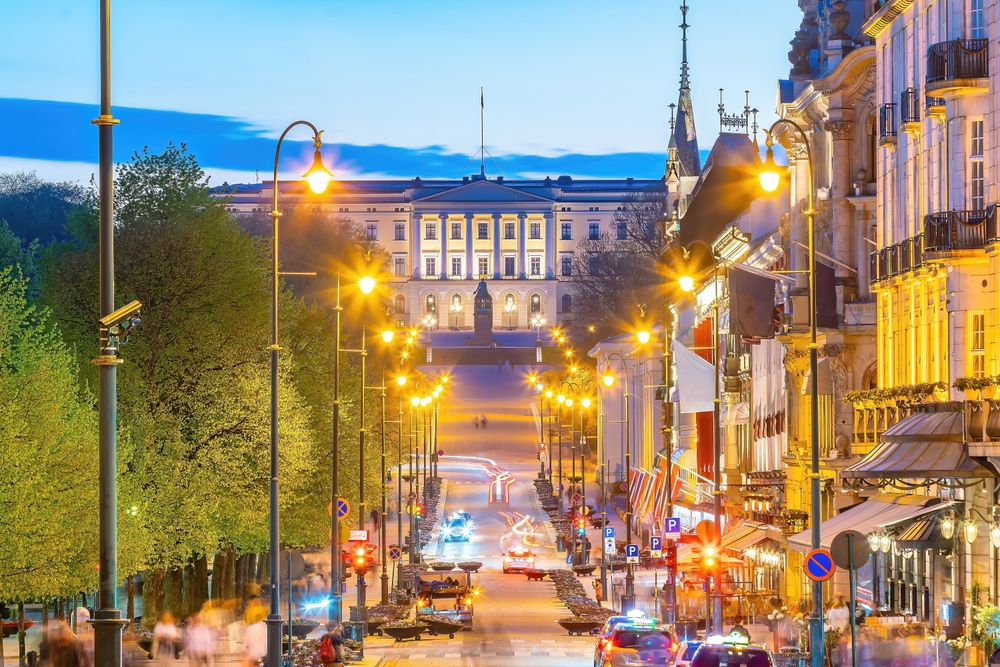
Norwegian winters feel endless. Sunlight is a luxury, skimming low along the horizon and casting a pale glow across ice-covered granite. This is a country that prizes restraint, resilience, and order. At the end of Karl Johans gate stands the Royal Palace of Oslo (Det kongelige slott), a stately presence overlooking a prosperous and quietly disciplined nation. Its thick walls shut out the cold winds — and, just as effectively, the noise of the outside world.
Yet in the final years of the 20th century, a summer heatwave from the south carried with it the pounding rhythms of electronic music, breaking through that calm and unsettling Norway’s carefully maintained image of perfection.
This is not a fairy tale about a prince rescuing a Cinderella who needed saving. Nor is it a story of luck. Every choice made here carried consequences, and often a high cost. It is the story of two imperfect people who recognized one another amid public scrutiny and private turmoil, and who chose — through unusual honesty and resolve — to face those storms together.
If history is shaped by coincidence, then the meeting of Norway’s Crown Prince Haakon and Mette-Marit was one of its most improbable turns.
Born a prisoner of royalty
Haakon Magnus was born in 1973. From his first breath, the outline of his life had already been drawn. As the only son of King Harald V and Queen Sonja, he was heir to the Norwegian throne and the future of an ancient monarchy.
As a young man, Haakon fit the Nordic ideal: deep-set eyes, a straight nose, and a quiet, introspective presence. He grew up in Oslo, and although his parents tried to give him a childhood that felt as ordinary as possible — sending him to public school and enrolling him in the Boy Scouts — the title of Crown Prince formed an invisible barrier that never fully receded.
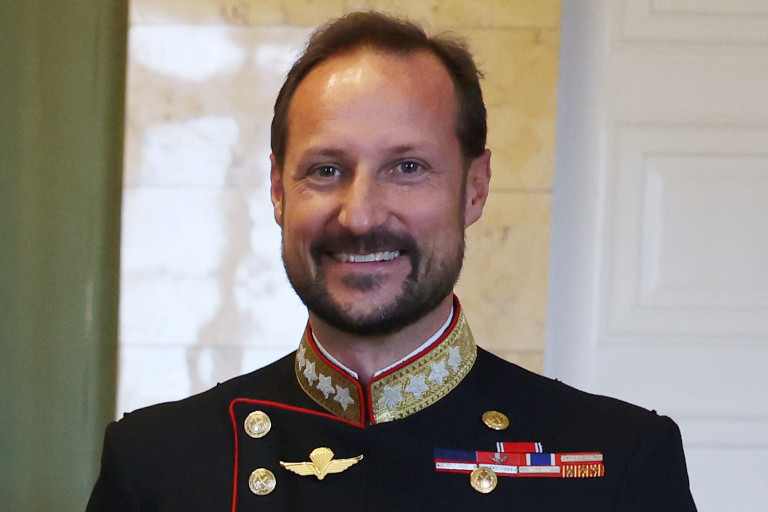
He was capable, composed, and acutely aware of his responsibilities. He trained at the Naval Academy and later studied political science at the University of California, Berkeley. He learned how to greet crowds, speak with precision, and smile for cameras. But beneath that polished exterior was a young man drawn to rock music, restless for freedom, and quietly longing for a life that felt genuine.
He had also witnessed a defining chapter of his parents’ marriage. King Harald had fought for nine years to marry Sonja, a woman without royal lineage. The lesson — that love could demand sacrifice — was not lost on their son. By the late 1990s, Haakon found himself searching for something more than duty or expectation: a connection that existed beyond titles.
The wild rose of Kristiansand
Mette-Marit Tjessem Høiby’s path could not have looked more different. Born in the southern coastal city of Kristiansand, she grew up in circumstances marked by instability. Her parents’ divorce left lasting impressions, and by her teenage years, she had developed a fierce resistance to authority.
In the 1990s, Oslo’s underground culture flourished. Mette-Marit was drawn into the world of electronic music and rave parties — a scene built around all-night dancing, escape, and experimentation. It was also a world often intertwined with drugs and chaotic relationships. She shaved her head, wore exaggerated clothing, and spent long nights in smoke-filled clubs, trying to define herself through rebellion. When the music stopped, the emptiness remained.
Then came an event that would alter her life entirely. She became pregnant. The child’s father was a man with a serious criminal record involving drugs and violence. The relationship collapsed, and Mette-Marit gave birth to her son, Marius, on her own.
By the age of twenty-six, she stood at a difficult crossroads. Without higher education or stable employment, she worked in restaurants while raising a two-year-old child alone. Norwegian society was rarely generous toward single mothers — especially those with a complicated past. She felt worn down and uncertain about the future. But when she looked at her son, she knew she could not remain where she was. She wanted change. She wanted a way forward.
Two lives — one shaped by privilege, the other by struggle — seemed destined never to intersect. And yet, in the summer of 1999, they did.
A fateful chord at the Quart Festival
Held each July in Kristiansand, the Quart Festival was Norway’s largest music event at the time. Sun, beer, and loud rock music filled the air. For Haakon, it was a brief escape from royal obligations. For Mette-Marit, it was familiar ground — perhaps work-related, perhaps simply a place to feel anchored.

They had met once before through mutual friends, but only in passing. This time, amid the noise and crowds, something changed.
There were no formal suits or palace rituals. Haakon wore a plain T-shirt. Mette-Marit appeared without careful styling or polish. They crossed paths again at a private gathering, and in that informal setting, she did something unexpected: She spoke to him not as a prince, but as a person.
She told him about her life — about raising a child alone, about the choices she regretted, about wanting something better. She did not soften her past or ask for sympathy. She simply told the truth.
For Haakon, who was accustomed to guarded conversations and careful performances, her openness was striking. He saw someone who had struggled, made mistakes, and still wanted to move forward. Instead of pulling away, he felt drawn closer. What stayed with him was not her appearance, but the steadiness in her gaze — a clarity that had survived years of turmoil.
That night, Haakon fell in love. Not with an idealized story, but with a person who had nothing left to hide.
A national trial
Their relationship remained private for nearly a year. Like many couples deeply in love, they built an ordinary life together in an Oslo apartment. Haakon helped care for Marius, picking him up from kindergarten and sharing daily routines that felt far removed from palace life.
Eventually, secrecy became impossible. When the engagement was announced in late 2000, the reaction across Norway was swift and unforgiving.
Many found the idea unacceptable. How could a future queen be someone without a university degree, who had worked in restaurants, lived within nightclub culture, and had a child with a convicted criminal? Tabloid headlines resurfaced old photographs. Former relationships were dissected. Her past was replayed again and again.
Public approval of the monarchy dropped sharply. Some voices demanded that Haakon give up his claim to the throne. Others questioned the institution itself.
At the center of it all, Mette-Marit withdrew from public life, overwhelmed by accusations that painted her as calculating and unworthy. Haakon faced the hardest decision of his life. His father understood the emotional stakes, having once faced similar opposition himself. But as king, Harald V also had to consider the stability of the monarchy.
Under pressure from the media, the church, and political institutions, Haakon made his position clear. He told his father that if he could not be with Mette-Marit, he could not fulfill his role with integrity. If the cost of love was the throne, he was prepared to pay it.
This was not a dramatic gesture made in haste. It was a choice he had weighed carefully. Without her, the crown meant nothing more than obligation without meaning — and the choice he had made would soon force both of them into a public reckoning that Norway could not ignore.
See Part 2 here
Translated by Audrey Wang
Follow us on X, Facebook, or Pinterest
