

In January 2026, Sharyn Alfonsi, a veteran correspondent for the renowned American news program 60 Minutes, interviewed U.S. figure skating champion Liu Meixian (often referred to as Alysa Liu). At the time, Alysa Liu was undergoing grueling training to make a comeback for the 2026 Milan Winter Olympics.
On camera, she was seen attempting highly complicated jumps on the ice over and over again, falling repeatedly, only to get back up and continue practicing. She was attempting the extremely difficult triple-and-a-half jump in women’s figure skating: spinning three and a half times in the air and landing on just one foot — the slightest loss of balance would result in a hard fall. Seeing this, the host couldn’t help but remark, “This is exactly what it takes to become a champion!”
In competitive sports and the performing arts, people often see only the moment of glory, yet rarely witness the hardships behind it. They behold the gold medals, the applause, and flowers, but overlook the countless falls and the shedding of sweat and tears during long, arduous training. As the old saying goes, “One minute on stage, after ten years of practice behind the scenes.” A true champion isn’t just characterised via outstanding technique; more importantly, it’s about a mindset — one that doesn’t back down in the face of setbacks and persists even in the face of pain.
During the interview, when the host asked her if such high-intensity training was painful, Liu smiled and said something truly memorable: “Actually, I love struggling. It makes me feel alive.” This statement captures the true spirit of a champion. Despite the painful training, she is willing to keep going — and, more importantly, she relishes the pain. It’s a case of “pain leading to pleasurable gain.”
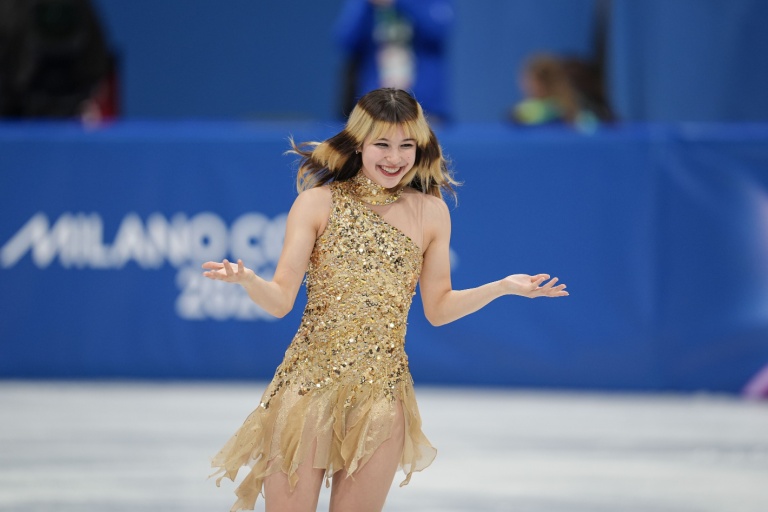
Alysa Liu has achieved remarkable success in the world of figure skating. She has won the U.S. Figure Skating Championships twice and claimed multiple gold medals in international competitions. At the 2026 Milan Winter Olympics, she won the gold medal in women’s singles, securing the United States’ first Olympic title in that event in 24 years. Behind these honors lies the story of getting back up after countless falls.
It’s just like what those who constantly challenge and surpass themselves like to say: “I’m a masochist.” In fact, Alysa Liu’s statement, “I enjoy struggling and honing my skills,” carries a similar meaning to “I’m a masochist” — it implies a willingness to embrace hardship and find joy in it.
While watching this training video, Shen Yun dancer Sam Pu was deeply moved. On February 25, 2026, on Shen Yun’s “3 Musketeers” channel, he offered a professional analysis, noting that the triple-and-a-half jump Alysa Liu was practicing requires immense rotational power and exceptional balance; even the slightest deviation can result in a heavy fall, just as seen in the video.
“I think for any high-intensity art or sport, the process isn’t glamorous — it just looks like this,” Pu said. In the video, Alysa Liu immediately shouted, “One more!” after falling. “She acts like a true champion,” Pu said. “I think her mindset is really good. Mindset is the most important thing.”
Pu said he has had similar experiences himself. During a training session, he ruptured his Achilles tendon and went through surgery and rehabilitation. Even during the most difficult times, he kept telling himself to stay positive, and he eventually returned to the stage. “I kept telling myself to stay positive — that’s how I truly felt like I was back in dance. She said, ‘One more time’ — even though she fell many times, and it was clearly painful.” But Alysa Liu seemed to relish this process of “falling down, getting up, getting up, falling down.” She didn’t back down, she didn’t give up, and she didn’t complain. “That’s the champion’s mindset — that’s why she’s so outstanding,” Yu said.
In fact, this spirit exists not only in sports but also in the arts. Yu said that watching Alysa Liu’s training process immediately reminded him of the training experiences of Shen Yun dancers. “Seeing this makes me very proud. This is the behind-the-scenes of their training, and in fact, it is very similar to the training experiences of Shen Yun dancers.”
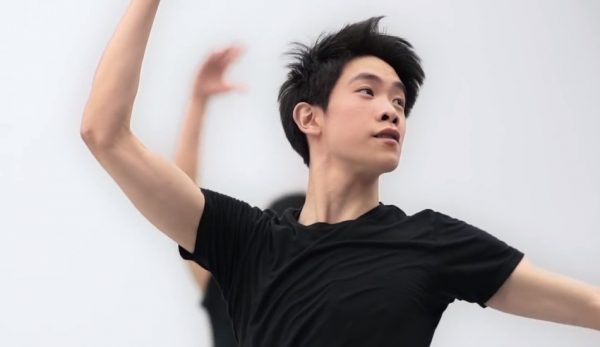
Many people see Shen Yun performers in the theater executing elegant, light-footed movements — soaring high into the air and performing consecutive flips — yet few realize just how grueling their daily training is. The highly technical skills of Chinese classical dance — flips, spins, and jumps — require long-term, rigorous training to master. Behind every seemingly effortless movement lies tens of thousands of repetitions.
In the worlds of art and sports, there are no shortcuts. Whether it’s figure skating, dance, opera, or traditional Chinese opera, achieving excellence demands sweat and even pain. Many in the performing arts know this well: without rigorous training, it is impossible to showcase true artistic beauty on stage.
In this sense, Alysa Liu’s statement, “I enjoy the struggle and the discipline,” is not merely the insight of an athlete but the shared sentiment of all who pursue excellence. The birth of a champion is never a coincidence. Nor is the glory on stage ever easily attained. Whether it is a figure skating champion on the ice or a Shen Yun dancer on stage, their success stems from the same spirit: getting back up after a fall, trying again after a failure — and they truly relish this process, just as Alysa Liu said: “I love the struggle and the discipline.” This is the mindset of a champion.
Yet, there are always those who shy away from arduous training and lack reverence for perseverance and self-discipline. They cannot endure long-term, rigorous training; some harbor resentment after failure; and some biased media outlets, faced with Shen Yun performers’ outstanding achievements and Shen Yun’s magnificent influence, fail to understand the arduous efforts behind them and instead voice narrow-minded or even distorted opinions. Yet Alysa Liu’s single phrase about the champion’s mindset — “I enjoy the struggle and the discipline” — is enough to put those people and media outlets to shame.
Translated by Eva and edited by Maria
Follow us on X, Facebook, or Pinterest
