
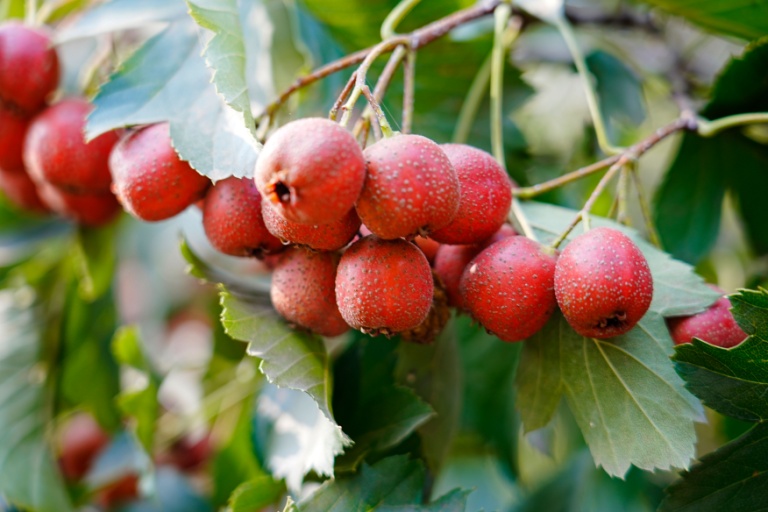
For over a thousand years, a small red berry has been quietly healing, nourishing, and delighting people across China. The Chinese hawthorn — known as shan zha (山楂) in traditional Chinese medicine has a history as rich and layered as the culture that first discovered its remarkable properties. A mountain boy once stumbled upon its healing power. An imperial concubine regained her appetite thanks to its tart sweetness. The stories behind this humble fruit reveal something beautiful about how ancient wisdom finds its way into everyday life.
You may have seen these bright red berries threaded onto sticks at a Beijing street market or spotted dried hawthorn slices in an Asian grocery store. Either way, there is far more to this fruit than meets the eye. In this article, we will explore the fascinating legends behind Chinese hawthorn, its time-tested health benefits in traditional Chinese medicine, what modern science has to say, and three simple recipes you can try at home.
The legend of the Chinese hawthorn (山楂)
A boy, a stepmother, and a mountain berry
One of the most beloved stories about Chinese hawthorn begins with a prosperous businessman who remarried after his first wife’s death. His new wife, unfortunately, harbored deep resentment toward his young son from the previous marriage. While the businessman traveled for work, the stepmother devised a cruel plan. She began preparing the boy’s meals with half-cooked rice, hoping the indigestible food would slowly make him ill. Week after week, the boy’s health declined. He grew pale and thin, his stomach constantly aching.
But fate had other plans. The boy, sent to work in the mountains, discovered a tree bearing clusters of small, bright red berries. Hungry and desperate, he ate them. The tart, slightly sweet fruit settled his stomach in a way nothing else had. Day after day, he returned to the tree, eating the berries with his meals. To the stepmother’s astonishment, the boy did not waste away. Instead, color returned to his cheeks. His strength came back. His digestion, once ruined by the half-cooked rice, was restored by the little red berries he had found in the wild.
When the businessman returned home and learned what had happened, he took great interest in these healing berries. He brought them back to the city, where they quickly became prized for their remarkable digestive properties. The berries, of course, were Chinese hawthorn — and this legend is one of the earliest stories explaining how shan zha entered the world of traditional Chinese healing.

The romance of Shandong’s hawthorn trees
In Shandong province, where hawthorn trees grow abundantly in the foothills, local folklore tells a different kind of origin story — one woven with romance.
Long ago, a beautiful young woman lived with her family by a river in the foothills. Further downstream lived a kind young man. They shared the same scenery, drank from the same clear stream, and naturally fell in love. But the young woman’s beauty caught the attention of the imperial court, and an edict arrived ordering her to enter the palace as a concubine.
The lovers were heartbroken. The young woman bought time by declaring she needed to keep a hundred-day vigil at her mother’s tomb. The story varies in its telling, but in every version, the hawthorn tree stands as a symbol of enduring love and quiet resistance.
To this day, the Chinese associate hawthorn with romance and good fortune. The tree is Beijing’s best-known native species, growing wild in the hilly ranges surrounding the Forbidden City. Its blossoms appear at weddings and festivals, carrying with them the old Shandong promise that love, like the hawthorn, endures.
From palace medicine to street snack: How Chinese hawthorn became tanghulu
How hawthorn berries saved an imperial concubine
Perhaps the most famous Chinese hawthorn story traces back to the Southern Song Dynasty (1127 to 1279) and the origin of tanghulu — the iconic candied hawthorn treat.
Emperor Song Guangzong had a beloved imperial concubine named Huang Guifei. One day, she fell gravely ill. She refused all food and drink, and the palace physicians could do nothing to restore her appetite. Day after day, she wasted away while the emperor grew increasingly desperate.
Finally, a traditional herbal practitioner was summoned. After examining her, he offered a surprisingly simple prescription: peel and core fresh hawthorn berries, coat them in crystallized rock sugar, and have the concubine eat five to ten of them before each meal for one week.
To everyone’s amazement, it worked. Not only did Huang Guifei enjoy the sweet-tart treats, but her appetite returned within days. Her strength followed. The palace cooks, delighted by the remedy, began threading the sugar-coated berries onto bamboo sticks for easier eating.
Beijing’s iconic treat
Word of the cure spread beyond the palace walls. Street vendors began recreating the Chinese hawthorn recipe, and bingtang hulu (冰糖葫芦) — what we now call tanghulu — was born. What started as a medicinal prescription became the beloved street snack that every Beijing child grew up eating. Vendors sold them in the hutong alleyways on cold winter days.
Today, tanghulu has gone viral far beyond China’s borders, with food creators worldwide sharing their own versions. But at its heart, this Chinese hawthorn treat remains what it has always been: a delicious reminder that the line between food and medicine in Chinese culture was never very thick.
Chinese hawthorn in traditional Chinese medicine
What is shan zha (山楂)?
In traditional Chinese medicine (TCM), hawthorn berry — or shan zha — belongs to the category of herbs that relieve food stagnation. It has been a cornerstone of Chinese herbalism since at least A.D. 659, making it one of the longest-used digestive remedies in recorded history.
TCM properties of shan zha:
| Property | Detail |
|---|---|
| Nature | Warm |
| Flavor | Sour, sweet |
| Target organs | Heart, Liver, Spleen, Stomach |
| Category | Herbs that relieve food stagnation |
| Key action | Promotes digestion, invigorates blood |
How TCM uses hawthorn for digestion
The primary use of shan zha in TCM is to resolve food stagnation — particularly after consuming rich, greasy, or heavy meals. If you have ever felt that uncomfortable heaviness after a large dinner, a TCM practitioner might recommend hawthorn.
The famous formula Baohe Wan (Preserve Harmony Pills), first recorded in 1481, features hawthorn as a key ingredient. For over five centuries, this formula has been one of the most widely used digestive remedies in Chinese medicine, prescribed for bloating, indigestion, and poor appetite. Think of it this way: if your digestive system is a fire that breaks down food, hawthorn helps keep that fire burning steadily. It does not force digestion but supports it, gently moving things along when they have stalled.
Heart and circulation support
Beyond digestion, TCM practitioners have long used hawthorn to invigorate blood circulation and address what is called “blood stasis” — a condition where circulation becomes sluggish. This traditional use for heart and circulatory health, as we will see, has caught the attention of modern researchers.
Modern science validates Chinese hawthorn benefits
What research says about hawthorn benefits
Modern science has begun to validate what Chinese healers observed centuries ago. Chinese hawthorn (Crataegus pinnatifida) is now one of the most studied traditional herbs for cardiovascular and metabolic health.
- Cardiovascular health: A systematic review found that hawthorn is included in more than 50% of TCM formulations approved for the treatment of high cholesterol. That makes it the single most popular traditional Chinese herb for hyperlipidemia. A separate 2020 review found that hawthorn supplements reduced blood pressure in people with pre-hypertension or stage 1 hypertension.
- Rich in protective compounds: Hawthorn’s leaves, fruits, and seeds contain flavonoids, triterpenic acids, and sesquiterpenes. These polyphenols are powerful antioxidants that help protect cells from oxidative damage.
- Digestive and metabolic support: A comprehensive review examined the effects of Chinese hawthorn on metabolic syndrome. Researchers found promising evidence for its role in supporting healthy cholesterol levels and blood sugar regulation.
A word of caution
While Chinese hawthorn has a long safety record, it is important to approach it with the same respect you would give any remedy. According to Memorial Sloan Kettering, unwanted effects are rare, with mild dizziness being the most commonly reported side effect. Doses up to 1,800 mg daily for up to 16 weeks are considered safe for most people.
That said, hawthorn is not a substitute for medical treatment. If you are managing heart disease, high blood pressure, or taking medications, speak with your healthcare provider before adding hawthorn to your routine. The best approach is an informed one.
Three easy Chinese hawthorn recipes to try at home
1. Hawthorn sweet and sour beverage (classic summer drink)
This refreshing Chinese hawthorn drink has been a staple in households for generations. The combination of hawthorn and black plums creates a beautifully balanced sweet-tart flavor that is perfect on a hot day.
Ingredients:
- 200 g dried Chinese hawthorn
- 50 g dried black plums (wu mei)
- Three teaspoons brown sugar (adjust to taste)
- One quart of water
Instructions:
- Soak the dried hawthorn in cold water for 30 minutes
- Rinse twice to remove any dirt or residue
- Bring one quart of water to a boil in a pot
- Add the hawthorn and black plums
- Reduce the heat and simmer for one hour, allowing the flavors to fully develop
- Stir in brown sugar until dissolved
- Strain, refrigerate, and serve cold
This drink is especially popular during Chinese summers. The sourness of the hawthorn naturally stimulates appetite and aids digestion — exactly as TCM has long prescribed.

2. Hawthorn berry tea (山楂茶): Simple daily wellness
For a lighter, everyday option, hawthorn tea takes just minutes to prepare and makes an excellent after-meal drink.
Ingredients:
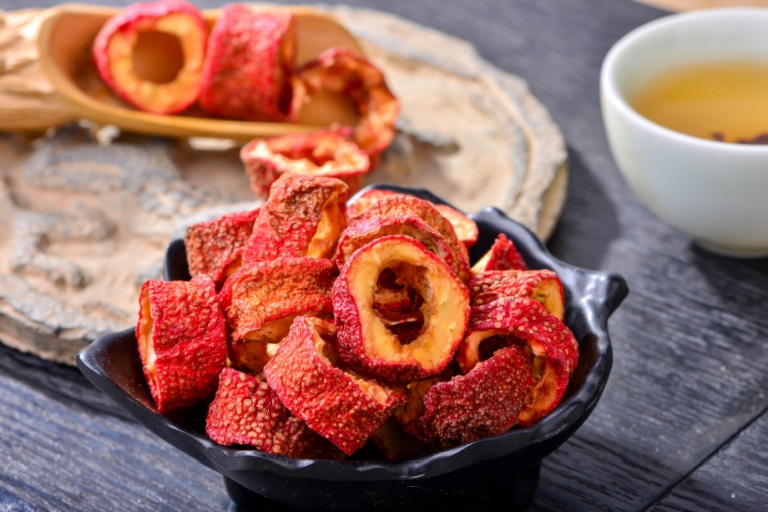
- 10 to 15 dried hawthorn slices
- 500 ml hot water
- Honey to taste (optional)
Instructions:
- Rinse the dried hawthorn slices briefly under water
- Place them in a teapot or large mug
- Pour 500 ml of freshly boiled water over the slices
- Steep for 10 to 15 minutes, allowing the water to turn a warm amber color
- Add honey if desired, though many enjoy it plain
Drink this tea after meals to support digestion. The gentle sourness wakes up the palate and helps your stomach process heavier foods — a practice Chinese families have followed for centuries.
3. Homemade tanghulu (冰糖葫芦): The imperial remedy turned snack
Bring a piece of Song Dynasty history into your kitchen with this simple Chinese hawthorn recipe for candied berries on a stick.
Ingredients:
- 20 fresh Chinese hawthorn berries (or large dried ones, rehydrated)
- 200 g white sugar
- 50 ml water
- One tablespoon of corn syrup (prevents crystallization)
- Bamboo skewers
Instructions:
- Wash the hawthorn berries and pat dry. Remove stems and, if desired, core them
- Thread three to five berries onto each bamboo skewer
- Combine sugar, corn syrup, and water in a small saucepan. Stir until mixed
- Bring to a boil over medium heat, then reduce to a steady simmer
- Do not stir once boiling. Watch for the sugar to turn a light golden color and the steam to stop rising — this means the water has evaporated and the candy is ready
- Working quickly, dip each skewer into the hot sugar, rotating to coat evenly
- Place on parchment paper or a lightly oiled surface to harden (about 30 seconds)
The candy shell should be thin, glassy, and crack satisfyingly when you bite into it. That contrast — sweet crunch of sugar coating against the tart burst of Chinese hawthorn inside — is what has made tanghulu irresistible for nearly a thousand years.
How to select and store Chinese hawthorn
Fresh hawthorn is available in autumn at Asian grocery stores and some farmers’ markets. Look for firm, bright red berries without soft spots or wrinkling. Fresh berries keep in the refrigerator for up to two weeks.
Dried hawthorn slices and whole berries are available year-round at Chinese grocery stores and online. They should be a deep reddish-brown with a slightly tart aroma. Store in an airtight container in a cool, dry place, where they will keep for up to a year. When shopping, you may see hawthorn labeled as shan zha, shanza, or by its botanical name, Crataegus pinnatifida. All refer to the same fruit.
Chinese hawthorn: A berry worth knowing
From a mountain boy’s desperate hunger to an imperial concubine’s lost appetite, Chinese hawthorn has been quietly proving its worth for over a thousand years. What traditional Chinese medicine understood centuries ago — that this small, tart berry supports digestion, nourishes the heart, and invigorates the body — modern research continues to confirm.
The beauty of shan zha lies in its simplicity. You do not need expensive supplements or complicated preparations. A cup of hawthorn tea after dinner. A refreshing summer beverage shared with family. A stick of homemade tanghulu that connects you to a tradition stretching back to the Song Dynasty. These small, consistent practices are how ancient wisdom becomes part of a modern life.
Try one of these Chinese hawthorn recipes this week. Your stomach — and perhaps your sense of wonder — will thank you.
Follow us on X, Facebook, or Pinterest
