
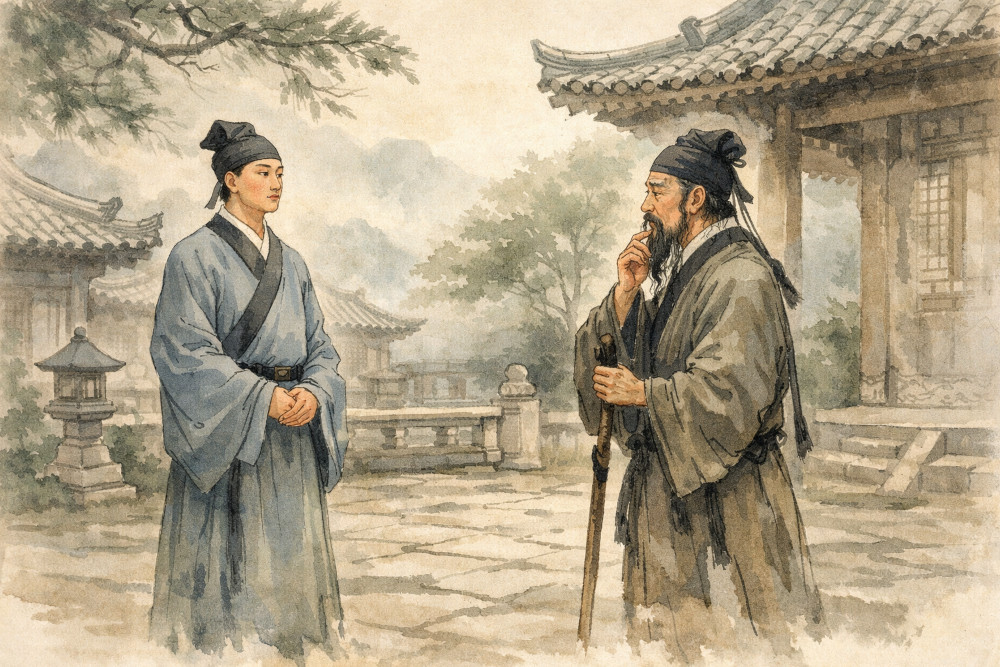
Zhang Jun (1097-1164), courtesy name Deyuan, was one of the Southern Song Dynasty’s best-known officials. He resisted the Jin, served as both a military leader and a statesman, and over the course of five reigns won the trust of three emperors. Under Emperor Xiaozong, he was eventually granted the noble title Duke of Wei. What makes his long rise even more remarkable is that, according to traditional accounts, it had been predicted almost from the moment he began his career.
A prediction at the start of his career
When Zhang Jun was still serving as a relatively minor official, he once met a Taoist priest whose insight would stay with him for the rest of his life.
The priest first studied him quietly without saying a word. Then he asked Zhang Jun to walk a few steps. After watching him closely, he spoke with unusual respect: “From your voice and the way you carry yourself, I can see that you are destined for great wealth and honor. In less than ten years, the realm will fall into turmoil. When that time comes, you will hold military power and rise to great prominence, either as a general or as a chief minister. You will render distinguished service to the court. Take good care of yourself.”
Zhang Jun was stunned. He quickly brushed the praise aside, saying he dared not accept such lofty words. Not long afterward, the Taoist priest disappeared.
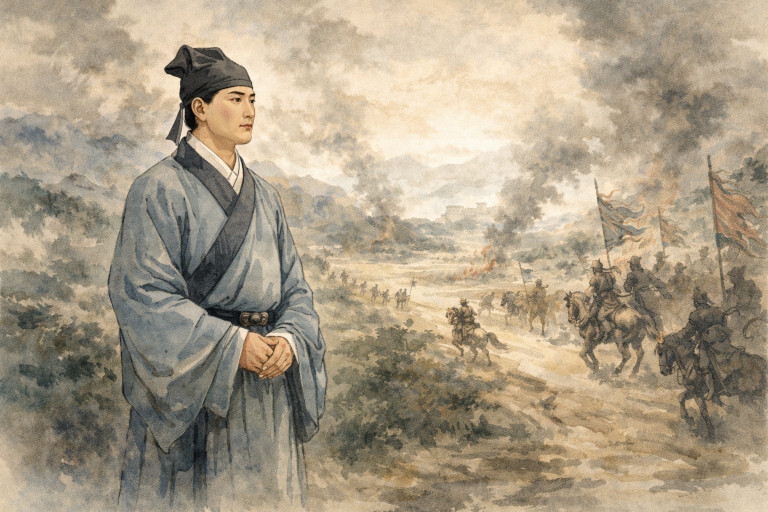
Within ten years, however, events unfolded just as the priest had said. The empire was shaken by chaos, and Zhang Jun’s career began to rise. Remembering the astonishing encounter, he sent people to search for the Taoist, but no one could find him.
The Taoist returns
Much later, Zhang Jun’s fortunes took a darker turn. Because he had fallen out with the notorious minister Qin Hui, he was demoted and sent away to Hezhou, in present-day Anhui. Qin Hui regarded him as an enemy, and Zhang Jun lived with deep unease, uncertain what might happen next.
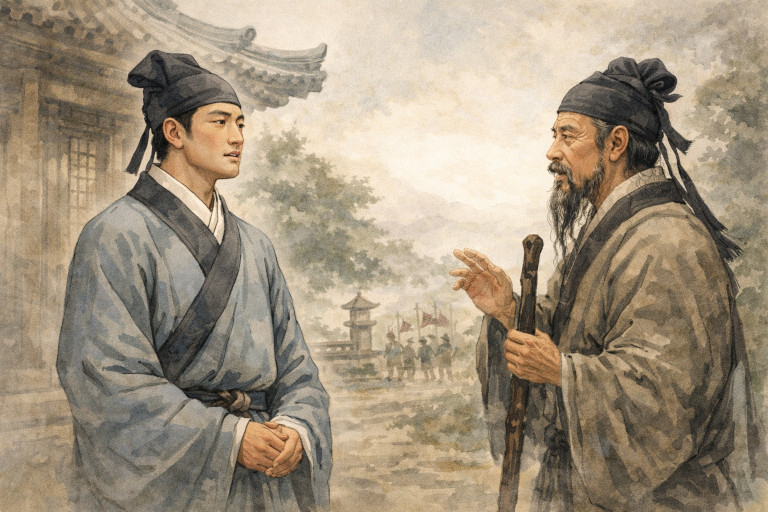
Then, one day, the Taoist priest suddenly appeared again.
By that point, some thirty years had passed, yet the man looked exactly the same. Zhang Jun was overwhelmed. He greeted him at once and said with emotion: “I searched for you for so many years, but you never showed yourself. Now that I am in trouble, you have come to see me. Why is that?”
The Taoist replied calmly: “I know your situation well. You need not fear Qin Hui. His end is near, while your blessings are far from exhausted. In time, you will rise again.”
For Zhang Jun, the words must have carried extraordinary weight. The priest had foretold one turning point in his life with startling accuracy. Now he had returned to speak of another.
Prophecies about his sons
At that moment, Zhang Jun’s eldest son, Zhang Shi, came forward to pay his respects. The Taoist examined him for a long time before speaking again.
“Your future fame,” he said, “will be tied to the way you see the world. One day, you will command the southwest and your name will be known far and wide.”
Zhang Jun then led the priest to see his younger son, who was asleep. By candlelight, the Taoist looked closely at the child and smiled.
“This boy’s blessings are even greater than his brother’s,” he said. “His future cannot be measured.”
Years later, the predictions were said to have come true. Zhang Shi rose to high office and was appointed Commissioner of Military Affairs under Emperor Xiaozong, making the unusual transition from civil service into military leadership. Zhang Jun’s younger son also went on to enjoy a successful official career, winning favor under three emperors and rising through a series of important posts.
What is meant to be will come
The story ends with a familiar saying from traditional Chinese culture: “What is fated to be yours will come in time. What is not fated should not be forced.”
That idea lies at the heart of this account. Zhang Jun’s life is presented not simply as a political success story, but as a reminder that rank, honor, hardship, and restoration may all unfold according to a pattern beyond human calculation. Whether one takes the tale literally or sees it as a moral reflection on destiny, its message is clear: some things in life are won through effort, but some seem to arrive only when their time has come.
Translated by Cecilia
Follow us on X, Facebook, or Pinterest
