
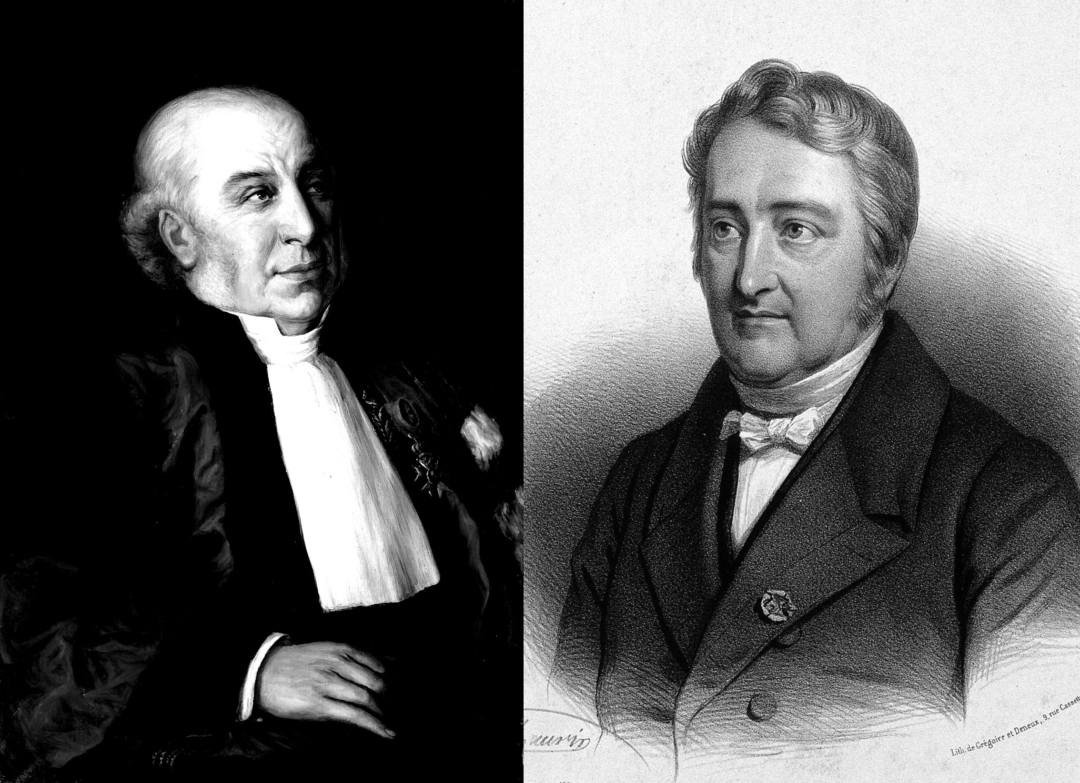
Although cinchona bark was effective, its complex composition made it hard to predict, leading to inconsistent dosing and unpredictable therapeutic effects. What exactly was it in this mysterious bark powder that truly provided antimalarial protection?
Thus, beginning in the mid-18th century, chemists and pharmacists across Europe undertook more than 70 years of relentless effort that finally bore fruit in 1820. That year, two young French pharmaceutical chemists, Pierre Pelletier and Joseph Caventou, successfully isolated the pure, reproducible antimalarial compound for the first time using chemical methods. They named it “quinine.” The term “quinine” derives from the South American indigenous word “quina” (bark). This miraculous, frost-white crystalline powder is also known in China as “Cinchona frost.”
This marked the first time in human history that a single, structurally well-defined active ingredient with proven therapeutic efficacy had been clearly isolated from a plant-based medicinal material, a milestone of epoch-making significance. It is worth noting that Pertière and Caventou not only isolated quinine but also subsequently isolated a series of important alkaloids, including strophanthin, caffeine, and morphine, directly propelling the birth of modern medicinal chemistry.
Thereafter, quinine replaced cinchona bark powder as the treatment of choice for malaria and became an essential requirement for armies operating in tropical regions, sometimes even influencing the course of war.
Shaping the course of history
Before the 18th century, the primary cause of death among European troops in Africa, along the West African coast, and in Southeast Asia was often not combat, but malaria rampant in those regions. European colonists, unaccustomed to the local environment, fell ill and died in large numbers, leading many areas to be dubbed “the graveyard of white men.”
After the discovery of quinine in the early 19th century, the British Army began systematically distributing it — not just for treatment, but for preventive use. This allowed British forces to maintain long-term garrisons in high-malaria areas and sustain their troop strength.
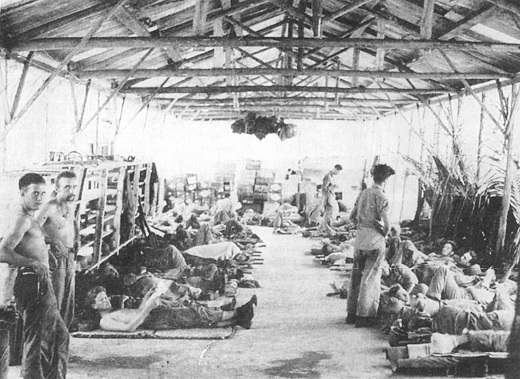
Historians often say, “It was not the Maxim machine gun that conquered Africa, but quinine.” Quinine’s role in World War II is another prime example. During World War II, American and Japanese forces engaged in prolonged combat in the tropical jungles of Southeast Asia. It was a region characterized by sweltering heat, widespread swamps, and swarms of mosquitoes, making it one of the world’s most malaria-ridden areas. Malaria became an “invisible enemy.”
In 1942, Japan rapidly occupied the Dutch East Indies, effectively “cutting the throat” of the Allied medical system. Why? Before World War II, over 90% of the world’s natural quinine came from the Dutch East Indies — now Indonesia — particularly the core production area of Java. Back then, the Dutch introduced cinchona trees to Java, established large-scale plantations there, and gradually gained control of the global supply through selective breeding and chemical purification techniques.
The consequences of the quinine shortage were stark and bloody on the front lines of both armies. At that time, alternative treatments for malaria were not yet widespread, and many soldiers had no idea how to protect themselves from mosquitoes. As a result, the malaria infection rate among U.S. troops once exceeded 80%, and approximately 60,000 American soldiers died of malaria before they even saw a Japanese soldier.
Malaria directly slowed the U.S. advance in the Southwest Pacific. It reached the point where the Allied high command issued a clear order: “No offensive operations are to be launched until the malaria problem is resolved.” The shortage of quinine forced the U.S. military to take action: regardless of the side effects, synthetic antimalarial drugs had to be brought into service. Consequently, the alternative drug Atabrine was deployed on a massive scale.
The problem was that it was not well-tolerated: it caused nausea and vomiting; it turned the skin and whites of the eyes yellow; and it could even trigger mental disorders. Many soldiers secretly spit out the pills. Consequently, the U.S. military took an unprecedented step: they used posters, cartoons, and propaganda films to repeatedly drill the message into soldiers — “If you don’t take the medicine, you’ll get malaria; if you get malaria, you’re no longer a soldier.”
They even militarized and disciplined the administration of medication: soldiers assembled at set times, swallowed their pills on the spot, under the supervision of officers. This was no longer a medical issue, but a matter of military discipline. On the tropical battlefield, whoever could control malaria truly controlled the army. Quinine and alternative medications determined whether an army could survive and reach the battlefield.
Artemisinin: A new antimalarial drug
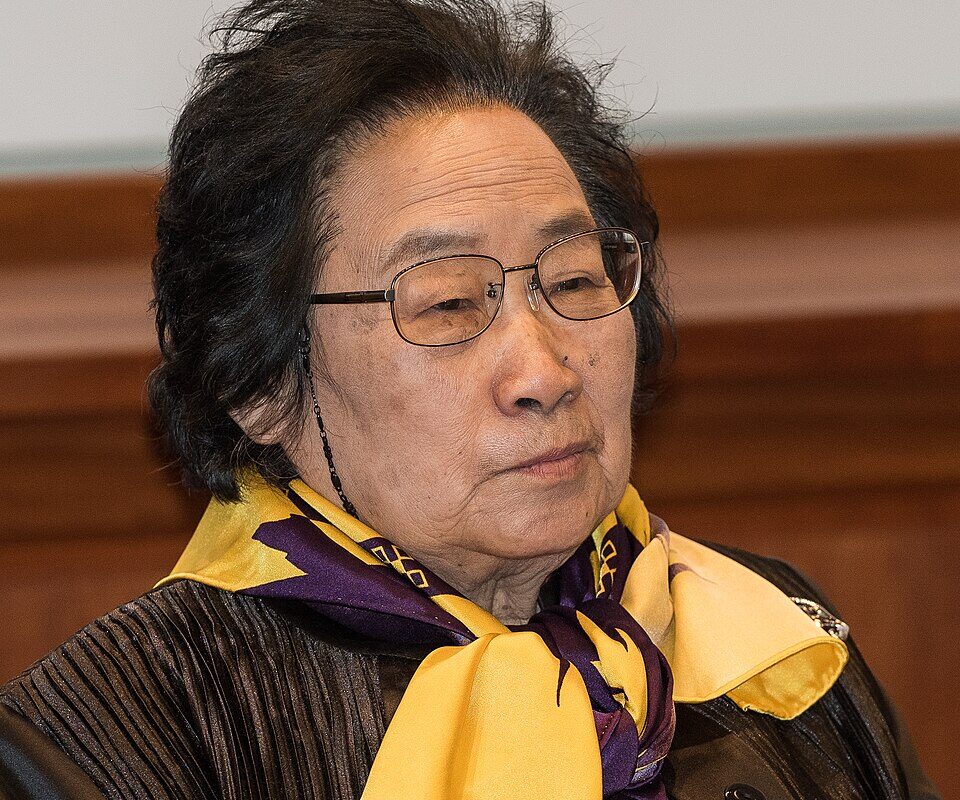
Quinine was widely used to treat malaria for over two hundred years, until 1909, when the mosquitoes that spread the disease developed resistance. Humankind urgently needed a new antimalarial drug. Years later, a miraculous drug called artemisinin emerged. Chinese medicinal chemist Tu Youyou changed the world with a single blade of grass.
In fact, as early as the Eastern Jin Dynasty (A.D. 317-420), Ge Hong’s Elbow-Room Emergency Formulas mentioned using wormwood to treat malaria: “Take a handful of wormwood, soak it in two liters of water, squeeze out the juice, and drink it all.” Subsequent medical texts also included formulas for treating malaria by boiling Artemisia or making pills from it. However, it was not until more than a thousand years later that the phrase ”a handful of Artemisia” reappeared in the mainstream medical text Compendium of Materia Medica.
While compiling and analyzing medical texts, Li Shizhen discovered that earlier scholars had distinguished between green and yellow varieties of Artemisia. To be cautious, he listed both ‘Artemisia’ and “yellow-flowered Artemisia” as separate entries and reproduced Ge Hong’s formula of “a handful of Artemisia.” However, he did not verify its efficacy. Consequently, Artemisia remained buried in the archives. (Note: Yellow-flowered Artemisia (scientific name: Artemisia annua) is a plant belonging to the genus Artemisia in the Asteraceae family.
When the above-ground parts of the plant are dried, they become the traditional Chinese medicine known as “Artemisia annua.” This is distinct from the plant commonly referred to as “Qingsong.”) During the War of Resistance, malaria raged in the southwestern rear areas, and imported quinine became scarce. People thus placed their hopes in traditional Chinese medicine. Changshan, listed in medical texts throughout history as a key herb for treating “malaria with alternating chills and fever,” thus emerged as a leading candidate.
The research team led by Zhang Changshou, the founder of Chinese pharmacology, isolated “changshan alkaloids” and discovered that their efficacy even surpassed that of quinine. Once again, Artemisia annua was a missed opportunity. However, changsan alkaloids had a critical drawback: significant side effects, particularly severe nausea, vomiting, and gastrointestinal irritation. This severely limited their potential for large-scale clinical application.
On May 23, 1967, a secret research project codenamed “Project 523” was officially launched. Its primary objective was to develop a new treatment for malaria to help North Vietnamese soldiers — supported by the two communist nations of China and the Soviet Union — reduce non-combat casualties caused by malaria during the Vietnam War.
In January 1969, Tu Youyou joined the “Project 523” team, leading her colleagues in screening traditional Chinese herbal medicines for new drugs to treat chloroquine-resistant falciparum malaria. However, after screening more than 100 traditional Chinese herb samples, Tu Youyou still had nothing to show for her efforts. One day, as she was flipping through Elbow-Back Emergency Prescriptions once again, a sudden insight struck her: Could the high temperatures during the extraction process have destroyed the organic compounds? She therefore decided to try an extraction method using low-boiling-point solvents. And just like that, artemisinin — which had been overlooked countless times — finally came to light.
The artemisia extract obtained by Tu Youyou’s team proved far more effective than the previously obtained samples from high-temperature decoction. This crucial step demonstrated that the problem lay not with the herbal material itself, but with the extraction method, which had destroyed the active ingredients.
Since then, the value of artemisinin has gradually been “proven” by clinical data worldwide. When used in combination therapy, artemisinin is estimated to reduce overall malaria mortality by more than 20% and child mortality by more than 30%, making an immeasurable contribution to global public health. Today, artemisinin is widely used in malaria-endemic regions worldwide.
In 2015, Tu Youyou was awarded the Nobel Prize in Physiology or Medicine for this discovery. Looking back at history — from cinchona to quinine and finally artemisinin — more than 300 years have passed since Emperor Kangxi swallowed that life-saving packet of “cinchona bark” powder sent by the Sun King.
See Part 1 here
Translated by Audrey Wang and edited by Helen London
Follow us on X, Facebook, or Pinterest
