
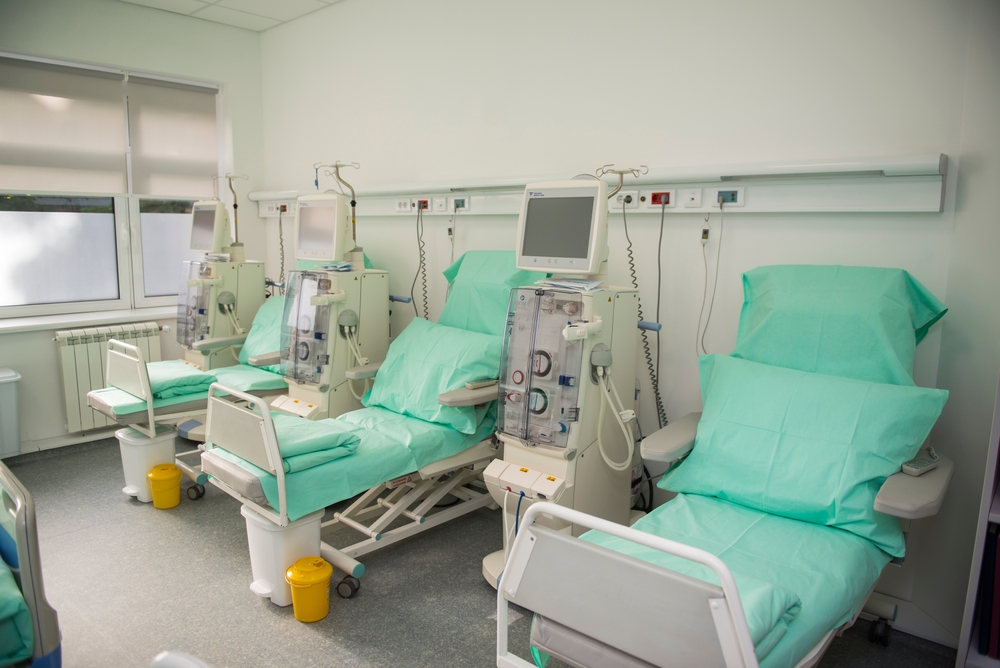
Imagine yourself at 30 — a time when you should be charging ahead in your career, planning a future with your partner, or perhaps immersed in the joys of parenthood. Yet, within the room of dialysis centers, a group of young faces, three times a week and four hours at a time, are tethered to cold, clinical dialysis machines.
Dialysis in young adults is no longer a rare medical anomaly tucked away in textbooks — it is becoming a quiet emergency unfolding in clinics across the world. Imagine yourself at thirty, a time when you should be charging ahead in your career, planning a future with your partner, or perhaps immersed in the joys of parenthood. Yet inside the rooms of dialysis centers, a growing number of young faces sit tethered to cold, clinical machines three times a week, four hours at a time, watching their lives forced to hit the pause button before they ever truly began.
This suffocating sensation, the feeling that one’s “life has been forced to hit the pause button,” is not a distant, abstract concept. Dr. Hung Yung-hsiang, a nephrologist, posted an article on his social media account, noting that young people often require dialysis very quickly. Many people expressed deep regret and disbelief when they received their diagnosis. Most have no prior history of chronic illness, and many consider themselves “strong as an ox.” It wasn’t until swelling and breathlessness that they finally sought medical attention — only to be told that their kidneys had already “logged out.”
To identify the “invisible killers” destroying young kidneys, Dr. Hong scoured dozens of authoritative international medical journals. He compiled a list of the major diseases and habits leading to dialysis in individuals under the age of forty — a vital health warning for everyone living in the modern world.

Why dialysis in young adults is rising faster than anyone expected
Xiaohan is a 26-year-old office clerk who works long hours every day to reach her performance. Her method for relieving stress was simple: two cups of bubble tea a day. For the past six months, she has frequently felt her face was puffy, always assuming it was just swelling from staying up late. It wasn’t until working overtime one night that she suddenly felt her lungs drowning and breathless, and rushed to the emergency room.
Dr. Hong, the physician in charge of her treatment at the time, looked at the alarming blood test results and gravely informed the family that Xiao Han’s uremic toxin levels had skyrocketed off the charts, resulting in pulmonary edema. She required immediate intubation and emergency dialysis, or her life would be in grave peril.
Trembling in her hospital bed, Xiao Han asked, “All I did was enjoy drinking beverages and staying up late. I’m still so young — why have I lost my kidneys just like this?” Subsequent hospital examinations revealed that Xiao Han had been suffering from proteinuria for several years. She likely had chronic glomerulonephritis without even realizing it. Coupled with years of lifestyle habits that damaged her kidneys, this ultimately culminated in an irreversible tragedy.
Ailments leading to dialysis in young adults
The kidneys function like a sophisticated water filter. While some damage constitutes an “act of nature,” other damage is entirely “man-made.”
Chronic kidney injury of unknown origin
This often occurs among young people engaged in high-temperature work or outdoor labor. Prolonged exposure to high heat without adequate hydration causes the kidneys, much like a machine operating without water, to age rapidly. If one further consumes traditional Chinese herbal medicines of unknown composition or anti-inflammatory painkillers indiscriminately, it will exacerbate kidney inflammation.
Early-onset hypertension
Do not assume that high blood pressure is a condition exclusive to the elderly. Young adults typically possess highly elastic blood vessels and are often “completely asymptomatic.” By the time they experience symptoms such as dizziness, the delicate capillaries within their kidneys have already been damaged by the sustained high pressure. This condition is typically closely linked to obesity and sleep apnea.
Early-onset diabetic nephropathy
This is the reason behind the rapid rise in rankings observed over the past two decades. High blood sugar causes the kidney’s filtration membranes to “caramelize” — becoming brittle and rigid — until they eventually rupture, resulting in a complete loss of function.
Glomerulonephritis
Glomerulonephritis is a very common occurrence among young people in Asia. When you catch a cold or have a sore throat, your body’s security system, the immune system, sets out to apprehend the “intruders,” but inadvertently mistakes its own internal filters for enemies and destroys them. If you notice that your urine takes on the color of “meat-washing water” following a cold, you must seek medical attention immediately.
This is the leading cause of kidney dialysis among young people worldwide — specifically, conditions such as “polycystic kidney disease” (in which the kidneys become riddled with fluid-filled cysts). Although this constitutes an unavoidable genetic predisposition, early diagnosis combined with dietary management can delay the onset of dialysis by ten or even twenty years.

Silent killer: The leading “bad lifestyle habits” that destroy your kidneys
If hereditary diseases serve as the initial spark, then these five bad habits act as the fuel that turns that spark into an inferno:
Drinking sugary beverages
Sugary beverages are the primary culprit behind kidney damage. The uric acid produced during fructose metabolism acts like shards of broken glass, scraping against the renal tubules and triggering chronic inflammation.
Dr. Hong offers a solemn and earnest reminder: the kidneys are an extremely “silent” organ. They may exhibit absolutely no pain or symptoms until 70% of their function is lost. “Put down that beverage you’re holding!” This is not a scare tactic, but a life-saving plea.
Starting today, drink an extra glass of plain water, avoid taking painkillers indiscriminately, and undergo regular kidney function check-ups. Please remember: your kidneys must accompany you for the entirety of your life. They have no backup files. I hope that, twenty years from now, you will be grateful to the person you are today, the person willing to make changes for the sake of their health.
Excessively salty and ultra-processed foods
Excessive sodium intake leads to high blood pressure and arterial hardening. While the delicacies found at night markets may be tempting, they place a heavy burden on the kidneys.
Abuse of painkillers and over-the-counter medications
Long-term use of potent anti-inflammatory painkillers causes a drastic drop in renal blood flow. For individuals with pre-existing kidney issues, this can be nothing short of a tsunami. Extremely high-protein diets: The fitness trend is currently booming. However, if one consumes excessive protein while suffering from impaired kidney function, it overworks the kidneys — much like racing a vintage car down a highway.
Chronic late nights and sleep deprivation
The nighttime hours are a critical period for the kidneys to detoxify the body and regulate blood pressure. Consequently, insufficient sleep directly accelerates the decline of kidney function.
Translated by Patty Zhang and edited by Amanda
Follow us on X, Facebook, or Pinterest
