
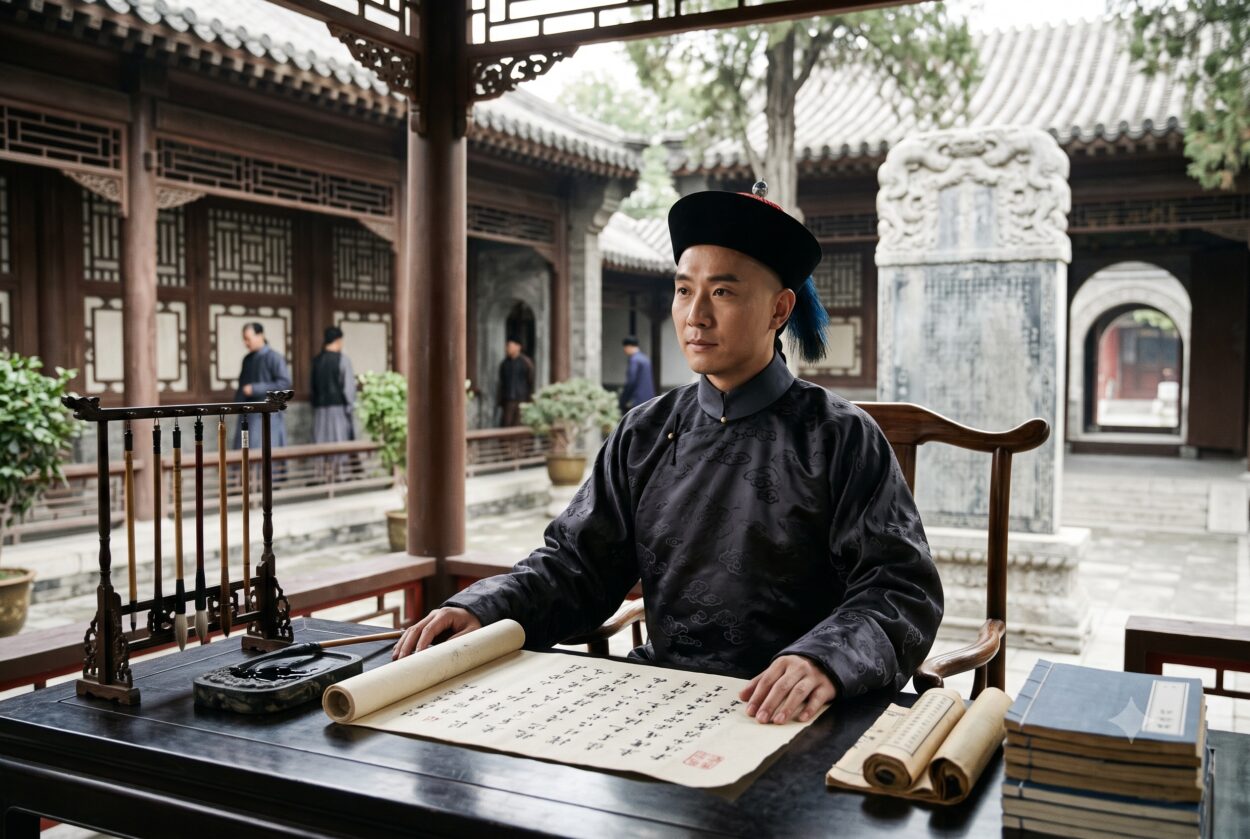
In the late Qing Dynasty (1839-1912), there lived an official named Gao Zanshan (courtesy name Xiangting), a native of Xiangcheng, Henan, and a fellow townsman of Yuan Shikai. Born during a period of political turmoil and social change, Gao followed the traditional path of scholarship that could lead to government service.
In 1894, during the Jiawu year of the Guangxu reign, Gao achieved second place in the imperial examination for Yougong (Outstanding Tribute Students). The Yougong system was highly selective, with provincial education officials recommending scholars who demonstrated both academic excellence and moral character. After review by the governor-general or governor, only a small number were selected to continue their studies at the Imperial Academy in the capital.
This distinction opened the way for official service, in which selected scholars could assume positions of responsibility and devote themselves to the governance of the state. In an era when officials were expected not only to possess knowledge and ability, but also to uphold moral character, Gao’s journey appeared to embody the ideals of the traditional scholar-official.
An incorruptible official maintained virtue during a corrupt era
By the late Qing Dynasty, corruption had become deeply rooted within official circles. A saying of the time — “having one hundred thousand taels of silver within three years was considered a clean prefect” — reflected how common the pursuit of personal wealth had become among officials.
Gao Zanshan stood apart from this culture of corruption. Throughout his service as County Magistrate of Dingyuan and Taihe, local records describe his efforts to restore order, promote education, provide famine relief, and improve waterways for the benefit of the people. Unlike many officials of his era, Gao did not use his position to pursue wealth or personal comfort. He lived with strict simplicity and left behind little of material value.
To those who admired him, Gao seemed to represent the ideal scholar-official: disciplined, incorruptible, and devoted to his duties. Yet his life would later reveal a deeper truth — that moral character cannot be measured by one virtue alone.
A darker side emerged from a seemingly upright official
Guo Zeyun, who once served as Secretary-General of the State Council of the Republic of China, offered a different perspective in his writings. He acknowledged that Gao Zanshan was known for his incorruptibility and personal austerity, but he also described a darker side of Gao’s character — one marked by severity and a lack of restraint.
During Gao’s tenure as Sub-prefectural Magistrate of Bozhou, the region was plagued by bandit activity. In his efforts to restore order, Gao adopted extreme measures. According to Guo’s account, captured suspects were subjected to “extra-legal punishments” — interrogations conducted outside the bounds of the law, including torture used to obtain confessions.
After obtaining a confession, Gao would immediately order execution. Yet under Qing Dynasty law, death sentences required review by higher authorities and final approval from the Board of Punishments. By bypassing these procedures, Gao placed his own judgment above the established system of justice.
The executions themselves were reportedly carried out with extraordinary brutality. Some suspects — many of whom had confessed under torture — were subjected to cruel punishments before being killed. When others hesitated to carry out the executions, Gao did so himself, even allowing blood to stain his official robes.
Such methods went far beyond the punishments permitted under Qing law, which recognized only beheading and strangulation as lawful forms of execution. The punishment known as lingchi (death by a thousand cuts) was reserved only for the most serious crimes. Gao’s actions, therefore, represented not merely harsh enforcement, but a departure from the principles of lawful justice.
Within less than a year of Gao’s administration in Bozhou, bandit activity reportedly declined significantly. Gao viewed this as evidence that his severe methods had succeeded in restoring order. Yet his story raises a profound question: Can order achieved through cruelty truly be considered justice?
The traditional law of cause and effect manifested in his life
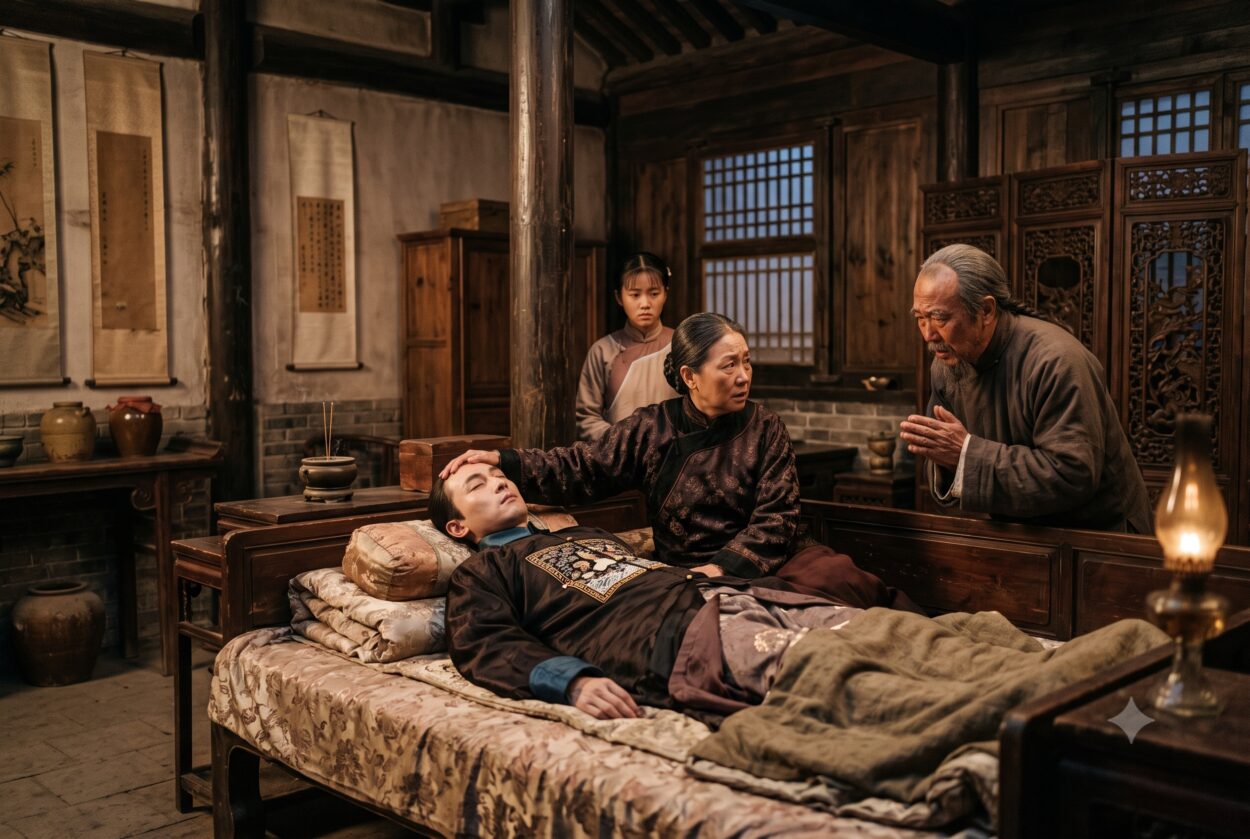
One day, Gao Zanshan suddenly fell gravely ill and slipped into a coma. After briefly regaining consciousness, he told those around him that his primordial spirit had traveled to the Underworld and that he was about to face judgment. Soon afterward, he lost consciousness again.
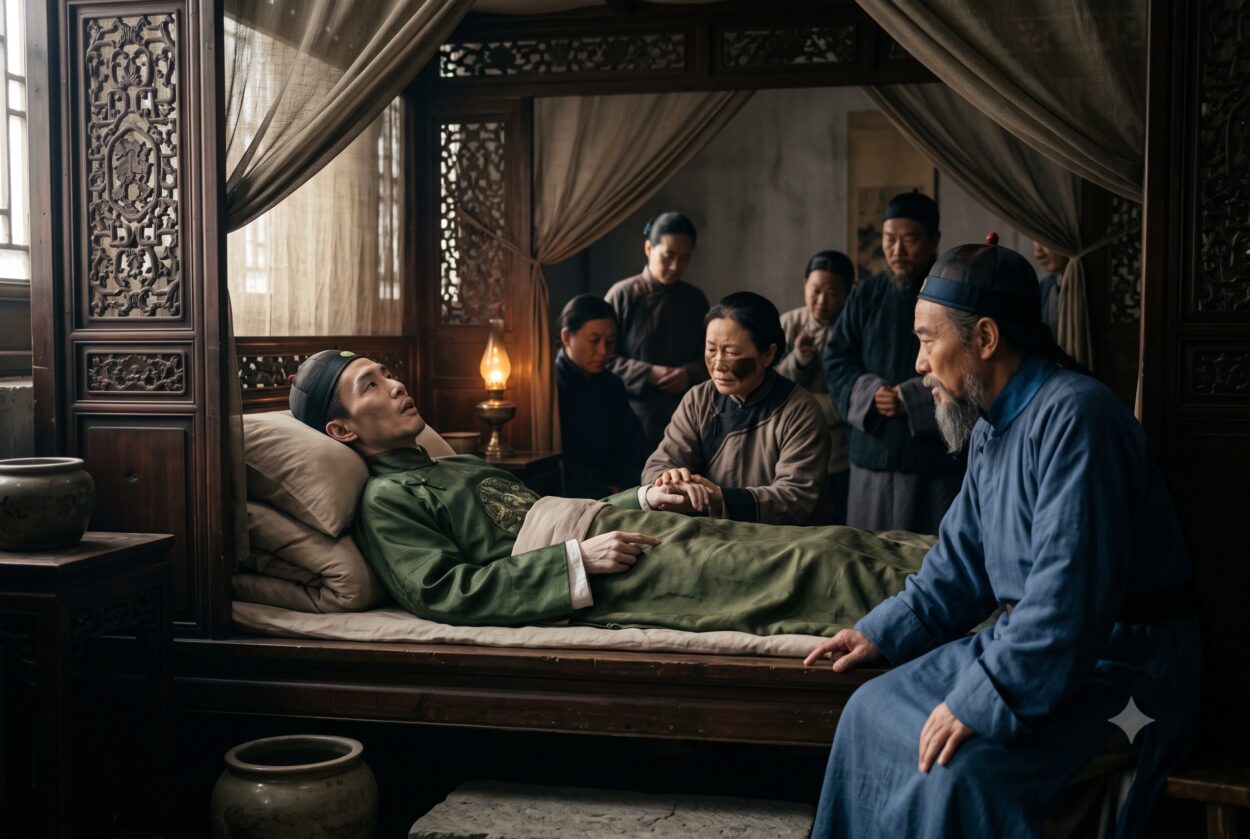
While in the coma, he continued speaking as though engaged in a profound struggle. At first, he cried out in anger, “You thieving rats, how dare you!” Then came a long stream of attempts to justify and explain his actions. Gradually, his words changed into confessions and admissions of guilt. Finally, he cried out, “I am being cast into the boiling cauldron” — a reference to the traditional punishment of being placed in a vat of boiling water or oil.
Those present came to believe that his primordial spirit was experiencing judgment and punishment in the Underworld, while his physical body reflected that suffering. According to the account, his body underwent a terrifying transformation: “every bone in his body shattered, and his flesh liquefied,” and he died amid agonizing cries.
Gao Zanshan’s words before his death led those who witnessed the event to reflect on the existence of realms beyond the visible world and the possibility that human actions carry consequences beyond what can be immediately seen. According to traditional beliefs, the primordial spirit and the Underworld exist beyond the limits of ordinary human perception, and a clear connection links what happens to a person in one realm to what manifests in another.
In this account, the suffering Gao experienced in his final moments was understood as a manifestation of karmic retribution — a profound reminder that actions are not without consequence. Whether seen through the lens of spiritual belief or moral reflection, the story illustrates an enduring principle: the choices we make and the way we treat others ultimately shape the path we walk.
A final evaluation reveals the complex lessons of his legacy
Mr. Guo Zeyun lamented that although Gao Zanshan appeared to be a refined and scholarly official, there was a deeply troubling side to his character that was hidden beneath the surface. Gao was not a man who pursued wealth or used his position for personal gain. Yet his story reveals that a person may appear upright in one aspect of life while still harboring flaws that affect the lives of others.
Whether Gao’s actions were driven by hatred toward criminals, a desire to gain recognition for restoring order, or the belief that his methods were justified by their results, the consequences remained the same. He placed his own judgment above established law and caused suffering through methods that disregarded the protections meant to prevent injustice.
By using torture to obtain confessions, Gao created the possibility that innocent people could be falsely accused and condemned. The responsibility of an official is not only to punish wrongdoing, but also to uphold justice, follow the law, and protect the innocent. Without compassion and restraint, even the pursuit of order can lead to the very injustice one seeks to eliminate.
Gao Zanshan lived a life of personal austerity and refused to enrich himself through corruption. Yet being incorruptible in one area of life could not compensate for the harm caused by a lack of mercy toward others. His story offers a profound reminder that true virtue is not defined by a single quality. It requires integrity, but also humility; discipline, but also compassion; the courage to act, but also the wisdom to recognize the limits of one’s own judgment. The law of cause and effect reminds us that every choice, intention, and action carries a consequence — whether positive or negative. The qualities we cultivate within ourselves, the kindness we extend to others, and the actions we set into motion all shape the path we walk and the future we ultimately encounter.
Translated by Patty Zhang and reviewed by Tatiana Denning
Follow us on X, Facebook, or Pinterest
