
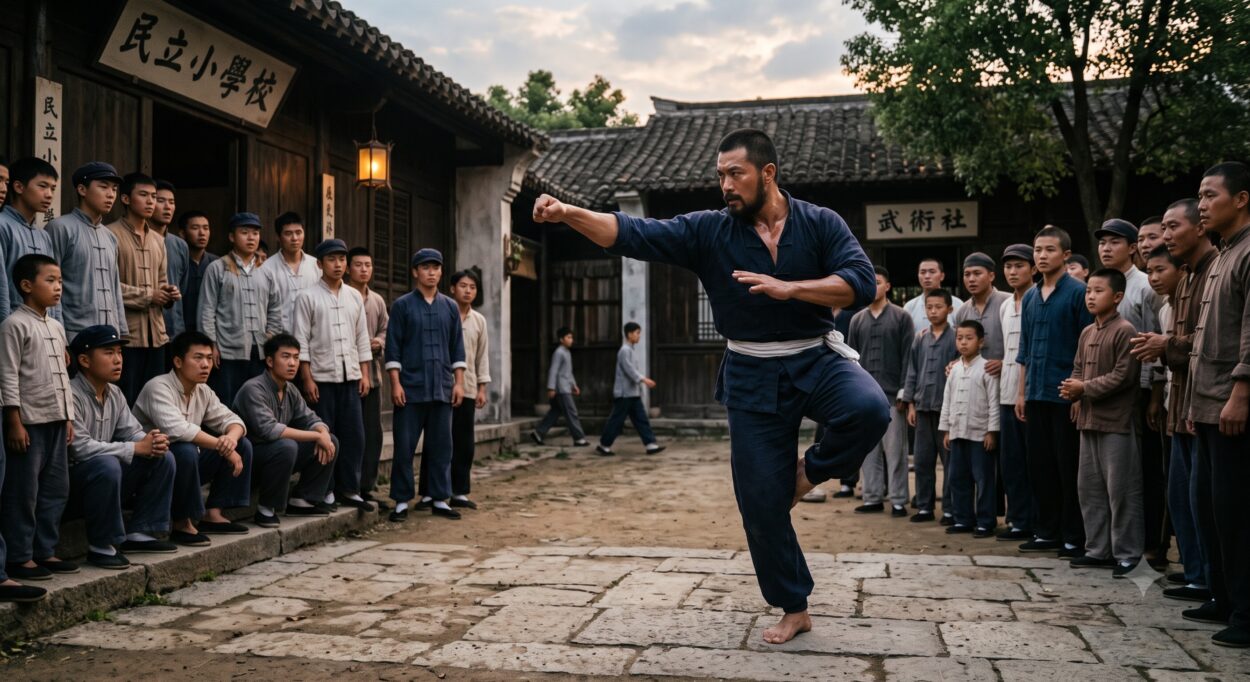
In the traditional world of Chinese martial arts, there is a saying that true mastery comes from cultivating both the external and the internal. External training strengthens the body, while internal cultivation refines one’s energy, mind, and spirit. When these two paths are harmonized, practitioners may develop abilities that seem almost beyond imagination.
Li Wu and the hidden tai chi master
During the Republican era in China, a large, powerfully built man named Li Wu taught physical education at a school. Strong and athletic, he had learned a number of martial arts forms and often practiced them in a quiet corner of the campus after class. His impressive routines attracted many students and martial arts enthusiasts, who gathered to watch with admiration.
The applause gradually fed his pride. Convinced of his own skill, Li Wu became somewhat arrogant and occasionally treated others with a lack of courtesy. As a result, he was not especially well-liked. Among the school’s staff was an elderly gatekeeper named Chen, a man in his fifties or sixties. He appeared small and slender — hardly someone who would stand out in a crowd. But Li Wu, being a martial artist himself, noticed something others overlooked.
Every step the old man took was steady and firmly rooted, yet at the same time light and effortless, as though he floated without ever losing contact with the ground. The moment Li Wu saw him walk, he realized he was in the presence of a true master.
One day, Li Wu struck up a conversation with old Mr. Chen, and naturally, the topic turned to martial arts. In good spirits, the old man smiled and said: “Let me show you a little trick.” Without warning, he moved swiftly to a nearby tree and, with a casual wave of his hand, caught a sparrow. He placed the tiny bird gently in his open palm and relaxed his hand. The sparrow tried several times to fly away, but each attempt failed. Li Wu watched and thought: “An amusing trick — but what use is it in actual combat?” The old man seemed to read his thoughts.
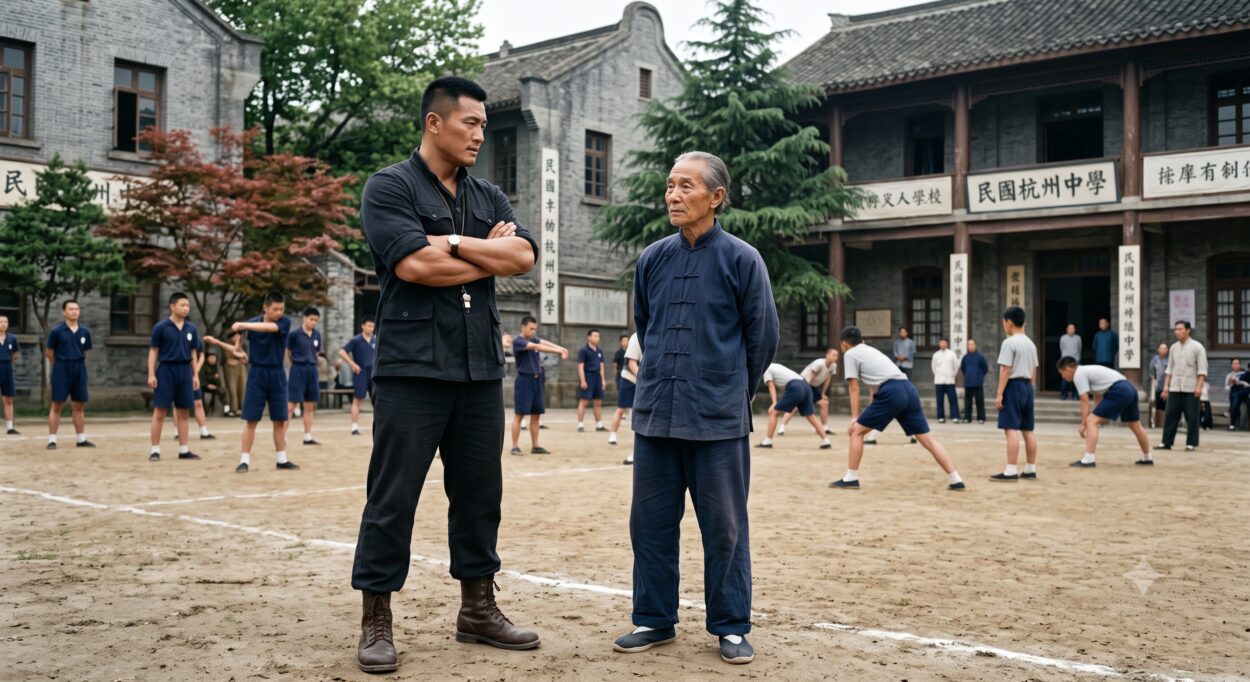
Smiling, he said: “In a moment, I’ll place my palm against the back of your neck. Let’s see whether you can free yourself.” Li Wu confidently stretched out his neck. As soon as old Mr. Chen rested his palm lightly against it, Li Wu tried every possible movement to shake it off. He twisted, turned, and exerted all his strength, yet no matter what he did, the old man’s hand seemed to follow him effortlessly, always remaining in gentle contact with the back of his neck. After exhausting himself, Li Wu finally gave up.
Only then did he truly understand the old Chinese saying: “No matter how good you think you are, there is always someone better.” From that day forward, his pride faded. He became noticeably more humble, treating others with greater respect. Sometimes, the greatest lesson in martial arts is not how to defeat an opponent, but how to conquer one’s own ego. It carries a deeper message — that true mastery begins with cultivating one’s character.
A thousand miles in a day: Wen Xi
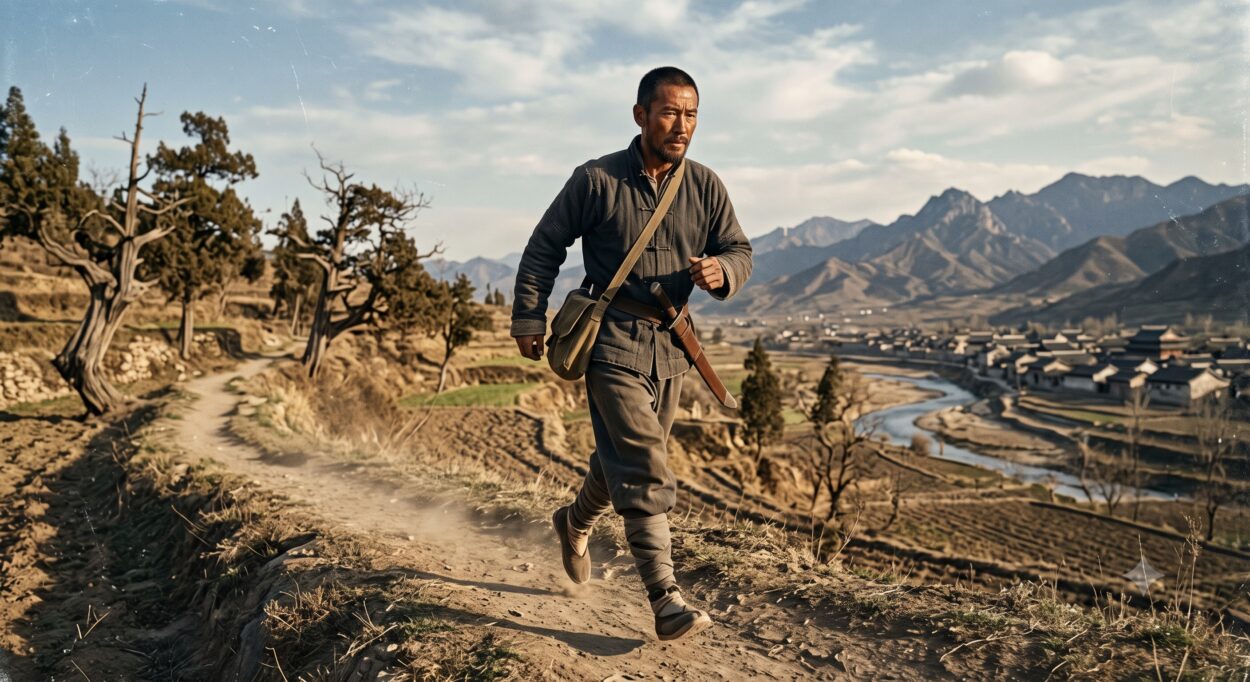
During the Republican period, a high-ranking government official employed a bodyguard named Wen Xi, who was renowned as an exceptional martial artist. Unlike ordinary bodyguards, Wen Xi had a remarkable reputation. It was said that he could travel a thousand li in a single day — and even make the return journey before nightfall, covering several thousand li in total. This ability was attributed to his mastery of qinggong, the legendary skill of lightness in martial arts.
Whenever he had a day off, Wen Xi enjoyed visiting fellow martial artists to exchange techniques and learn from one another. One evening, after finishing his shift, he changed into dark travel clothes and quietly left Beijing. To call it “walking” would hardly be accurate. He seemed almost to be flying. In only about two hours, he arrived at a village in Shandong Province that was home to a famous martial arts family.
Silently, he perched atop the family’s wall, observing the courtyard before announcing himself. His movements were so light that an ordinary person would never have noticed his presence. Then a voice came from inside the house: “My friend on the wall, won’t you come in and join us for a cup of tea?” Wen Xi smiled to himself. Since he had already been discovered, there was no point in remaining hidden. He slid down from the wall into the courtyard, clasped his fists in greeting, and said: “I am Wen Xi from Beijing. I’ve come to pay my respects.”
The master of the household, also surnamed Chen, returned the salute. “I have long admired your reputation. To meet you today is truly an honor.” After exchanging introductions, the two men sat together over tea, discussing martial arts, personal cultivation, and the ethics that should guide every practitioner.
Eventually, they moved into the courtyard to demonstrate their skills. Wen Xi wielded a sword. Master Chen carried a staff. The duel lasted for several hundred exchanges, with neither gaining the upper hand. Then Wen Xi suddenly changed his technique, launching a swift thrust directly toward his opponent’s throat. Instead of blocking the attack with his staff, Master Chen calmly extended two fingers.
With astonishing precision, he caught the sword blade between them. No matter how hard Wen Xi pushed, the sword would not advance even the slightest bit. Realizing he had met someone of even greater attainment, Wen Xi immediately withdrew his sword and admitted defeat. Master Chen merely smiled.
By then, a banquet had already been prepared. The two martial artists returned indoors, shared food and wine, and continued their conversation late into the night. When it was finally time to leave, Wen Xi bid his gracious host farewell. Less than two hours later, he was back in Beijing, ready to resume his duties as though nothing extraordinary had happened.
Whether one views these accounts as literal history or treasured legends, they preserve an enduring ideal of traditional Chinese martial arts: true greatness is measured not merely by remarkable skill, but by humility, virtue, and a lifelong willingness to learn from those whose wisdom surpasses our own.
Translated by Katy Liu and edited by Tatiana Denning
Follow us on X, Facebook, or Pinterest
