
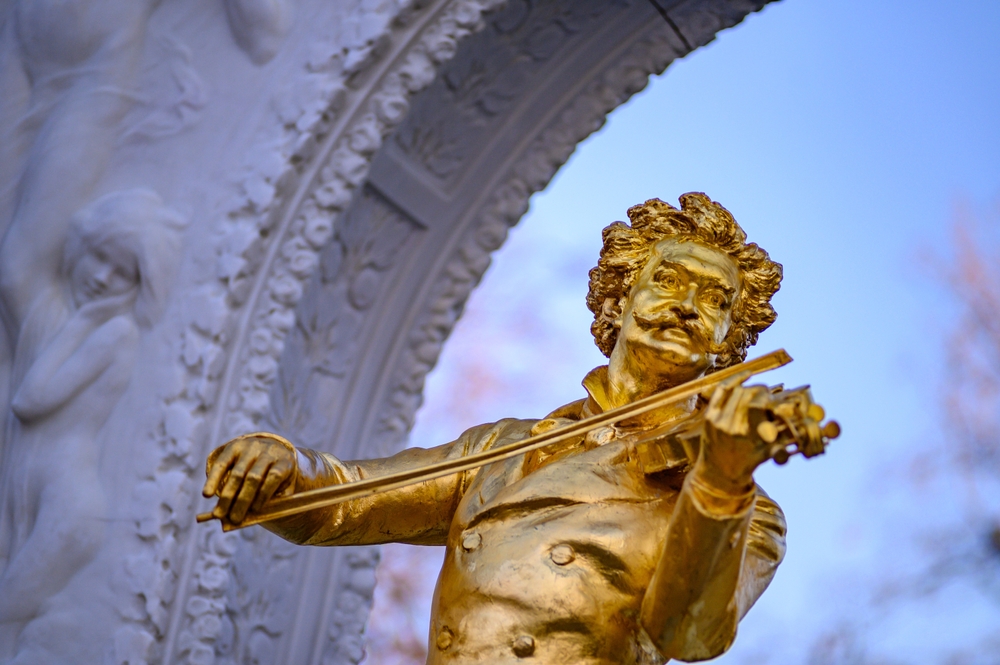
In 19th-century Vienna, no name embodied the romance, elegance, and exuberance of the age more completely than Johann Strauss II. At the lift of his baton, grand ballrooms came alive, and his waltzes seemed to set an entire continent in motion. Their buoyant melodies sparkled with the effervescence of champagne, becoming the soundtrack of an era. During Hollywood’s Golden Age, the 1938 classic The Great Waltz introduced audiences worldwide to a romanticized vision of the “Waltz King.” Through poetic storytelling and sumptuous imagery, the film transformed Strauss’s life into a sweeping tale of love, music, and artistic triumph. The reality, however, was far more complex.
The man who captivated millions with melodies of joy and elegance lived an emotional life marked by profound turbulence. His relationships with three women — marked by devotion and heartbreak, companionship and betrayal — unfolded like one of his own great Viennese waltzes, carrying him through soaring triumphs and devastating sorrows.
Prelude: The encounter of Vienna’s prodigal son and a celebrated singer
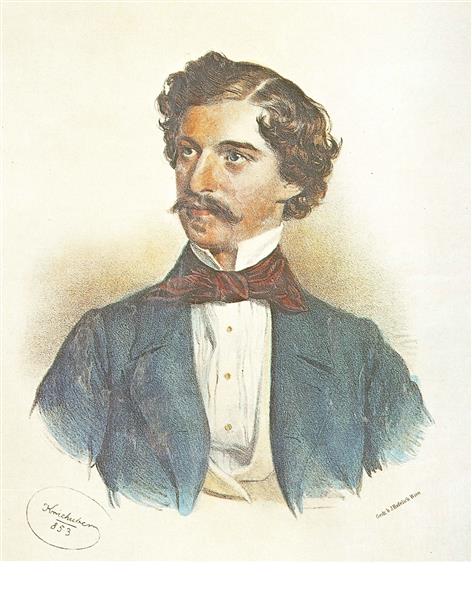
Before he married, the young Johann Strauss II was Vienna’s most sought-after bachelor. With his signature black curls, neatly trimmed mustache, and dark eyes that reflected both passion and melancholy, he made every appearance at the conductor’s podium a sensation, making him the object of admiration among the noblewomen in the audience. Yet behind his dazzling public image, Strauss was weary. He lived under the towering legacy of his late father, Johann Strauss I, while the relentless demands of touring across Europe left him physically drained and emotionally exhausted.
In 1862, at the age of thirty-seven, Strauss met the woman who would transform his life: Henriette Treffz, affectionately known throughout Vienna as Jetty. Seven years his senior, Jetty was a celebrated former opera soprano and a well-known figure in Viennese society. Having spent years on the stage herself, she understood the triumphs, pressures, and emotional sensitivities of an artist’s life. Strauss was drawn to her maturity, warmth, and musical intelligence, while Jetty recognized the vulnerability that lay beneath his fame and brilliance.
The two fell deeply in love and were married in the autumn of 1862. For Strauss, Jetty would become the greatest blessing of the first half of his life. After their marriage, Jetty gave up her own stage career to devote herself entirely to her husband’s work. She became not only his wife, but also his manager, confidante, and emotional anchor. She copied orchestral scores by hand, handled his correspondence and business affairs, shielded him from unnecessary social obligations, and created a peaceful sanctuary where his creativity could flourish.
With Jetty’s unwavering love and support, Strauss entered the most productive period of his career. In 1867, as Austria struggled to recover from its defeat in the Austro-Prussian War, he composed The Blue Danube. Its graceful, uplifting melodies offered a welcome source of hope and national pride, and the waltz would eventually become known as Austria’s unofficial second national anthem.
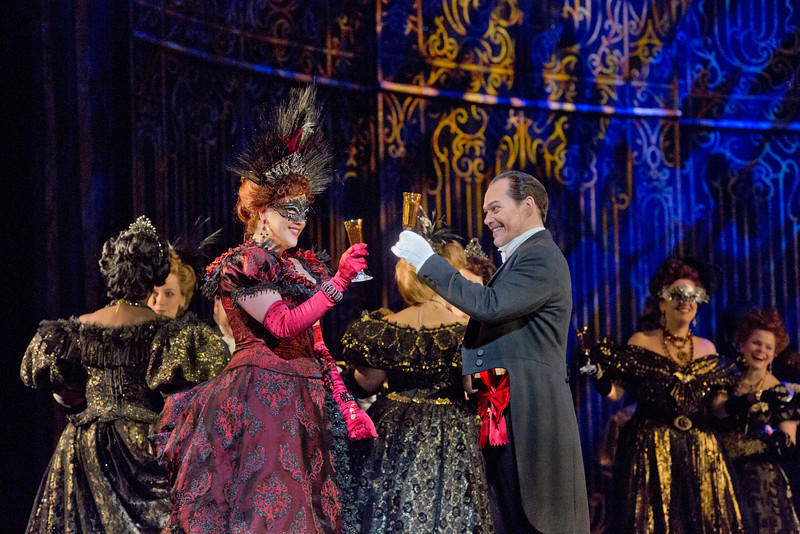
Strauss soon turned his attention to operetta. In 1874, his masterpiece Die Fledermaus premiered, cementing his reputation as a composer beyond the waltz. Behind that triumph stood Jetty, whose quiet devotion and tireless support had made so much of his artistic success possible. But their 16 years of perfect companionship ended cruelly. In the spring of 1878, Jetty died suddenly of a heart attack. The unexpected farewell devastated Strauss, silencing the warmest chord of his life.
Variation: A stormy interlude and the price of passion
After Jetty’s death, Strauss was consumed by loneliness and fear. He dreaded darkness, solitude, and the emptiness of a house no longer managed by her. In despair, he shocked everyone by announcing a new marriage just seven weeks after Jetty’s passing. His bride was Angelika Dittrich, known as Lili, a young soap opera actress 30 years his junior.
Strauss believed her youthful energy would banish his shadows, but he soon realized he had entered a nightmare. Lili had little interest in his music; she was attracted instead by the prestige of being the “Waltz King’s” wife, along with the wealth and social standing it brought. She could not understand his long hours of composing or tolerate his eccentricities born of nervous exhaustion. The mansion no longer glowed with warm lamplight or the sound of copied scores, but echoed with quarrels, broken dishes, and Lili’s extravagant bills.
During this marriage, Strauss’s creativity declined. In 1882, after four chaotic years, the union collapsed. Lili left with her jewels and eloped with the director of the Vienna theater. The betrayal made the 57-year-old Strauss a laughingstock in Vienna. His spirit nearly broke, and he even declared he could no longer write a single note.
(to be continued)
Translated by Cecilia and edited by Tatiana Denning
Follow us on X, Facebook, or Pinterest
