
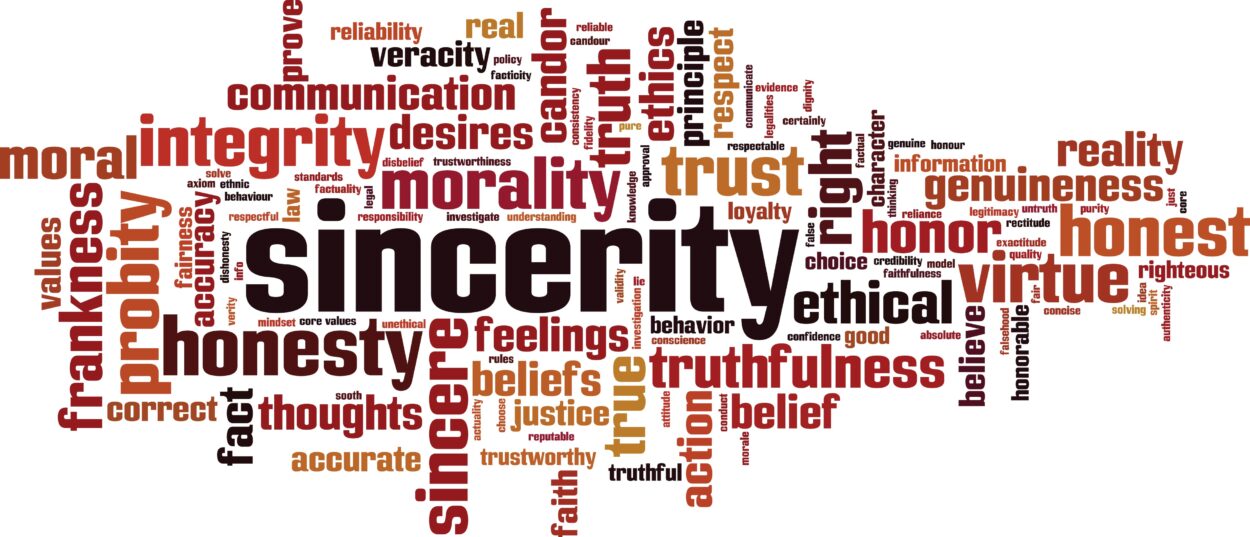
Sincerity is a quality we all aspire to embody — in our interactions with others, in our work, and even in our relationship with ourselves. Yet, how often do we pause to reflect on whether our thoughts, words, and actions truly come from a sincere heart? Sincerity is more than simply being honest; it is the expression of a genuine and upright heart. The ancients said, “If you are sincere inside, it will naturally show outside.” When the heart is pure and sincere, this inner quality naturally manifests outwardly — in a person’s words, actions, expression, demeanor, and even the way they look and carry themselves. Their honesty, humility, and warmth can be felt by those around them, inspiring trust and respect. Sincerity is not merely a virtue that shapes personal character — it is a force that transcends time and touches the hearts of others. Whether in seeking knowledge, fulfilling one’s aspirations, or the lifelong journey of cultivating character, sincerity serves as the foundation upon which true wisdom, meaningful achievement, and lasting respect are built.
Sincere scholars seek the true essence of all knowledge
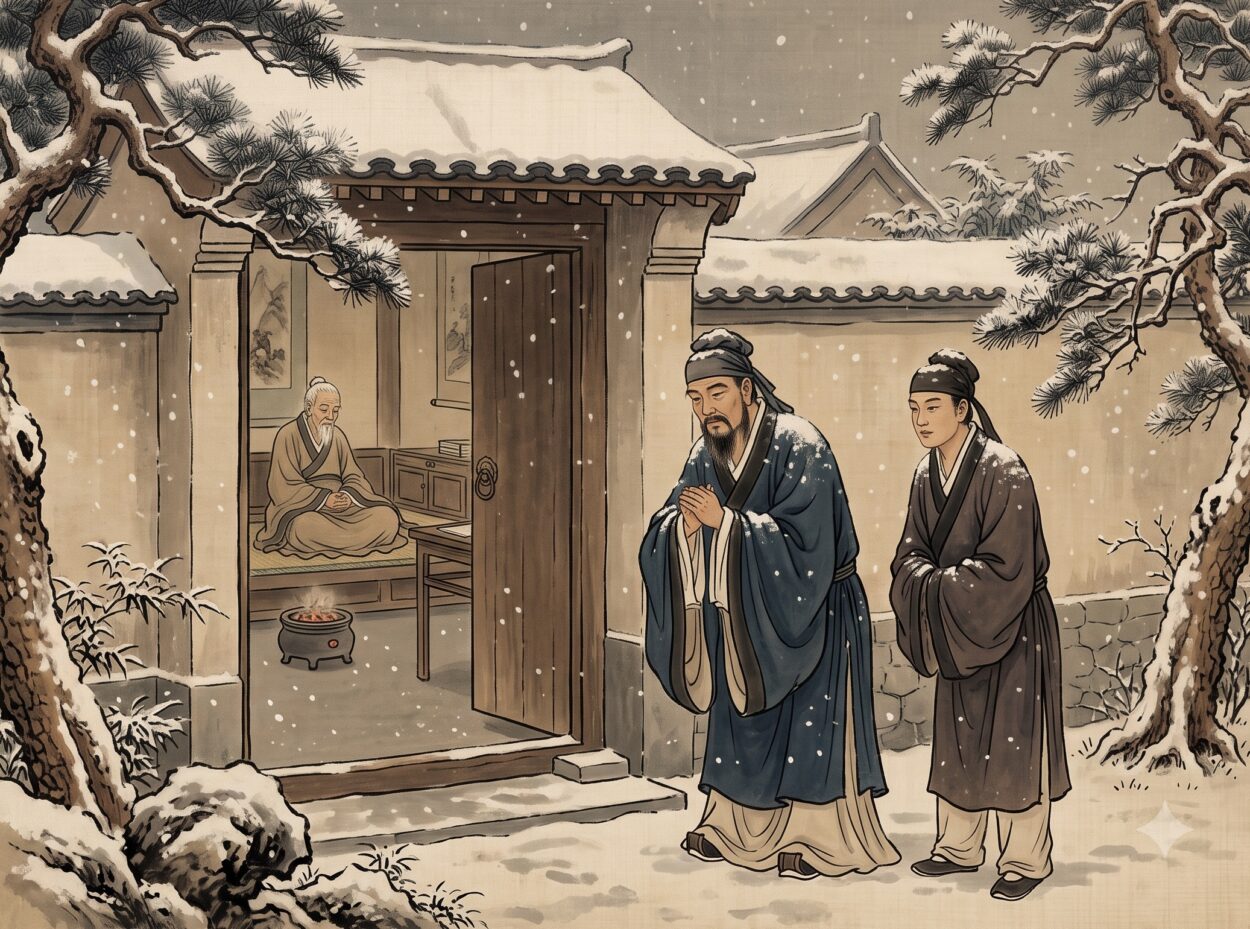
One cold winter, the scholar Yang Shi — already in his forties and having passed the imperial examinations — continued his pursuit of deeper knowledge. Seeking the true teachings of Neo-Confucianism, he traveled to Luoyang with his friend You Zuo to study under the renowned scholar Cheng Yi. When they arrived at Cheng Yi’s residence, they found that their teacher was resting with his eyes closed. Despite the freezing weather and the closed door before them, neither disciple felt impatient or wished to disturb him. Instead, they stood respectfully outside, quietly awaiting his awakening.
As heavy snow fell and the bitter wind swept through the courtyard, the snow gradually rose around their ankles. Yet the two men remained standing, unmoved by the cold, with only their sincere desire for knowledge and their deep respect for their teacher in their hearts. By the time Cheng Yi awoke and opened the door, more than a foot of snow had accumulated, and the two disciples stood before him like snow-covered figures, bowing respectfully with solemn expressions. Their act of “standing in the snow before Cheng’s door” became a lasting symbol of respect for teachers and devotion to learning. It demonstrated the power of utmost sincerity — a sincere heart that allows a person to remain steadfast, endure hardship, and persevere through challenges. With such sincerity, knowledge, and achievements can withstand life’s storms and eventually bear lasting fruit.
People often believe that intelligence, strategy, or cleverness are the qualities needed to pursue knowledge and achieve success. Yet history reminds us that sincerity is often the foundation upon which true wisdom is built. Without a pure and sincere heart, how could Yang Shi have earned the trust of a great teacher, received his teachings, and gone on to become a founding figure of the Min School of Neo-Confucianism?
Sincerity becomes the ballast stone of our careers
In ordinary life and daily work, sincerity is also a cornerstone. “He’s an honest man!” has long been considered one of the most important qualities when older generations choose a son-in-law. This wisdom comes from recognizing what truly sustains a relationship. A couple may begin with limited resources and encounter disagreements and difficulties along the way. Yet, as long as both people share a sincere desire to build a good life together and work toward a common goal, they can support each other through financial hardships and life’s challenges. This kind of honesty becomes the ballast stone that keeps a marriage steady through life’s storms.
Similarly, in the workplace, sincerity is the foundation of trust, teamwork, and meaningful cooperation. Looking back through history, during the Three Kingdoms period, Liu Bei was a leader with limited resources and few supporters. Recognizing the exceptional wisdom of the reclusive strategist Zhuge Liang, Liu Bei personally visited him three times, demonstrating his deep respect and sincere desire to seek his guidance. Moved by Liu Bei’s humility and sincerity, Zhuge Liang agreed to serve him and devoted the rest of his life to helping him achieve his vision. Their legendary partnership, which contributed to remarkable accomplishments, was built on one essential quality: sincerity.
True character is the most irreplaceable personal charm
Sincerity allows us to connect with others on a deeper level. In a world that often values cleverness, image, and social refinement, genuine character has the greatest power to touch people’s hearts. The renowned Japanese actor Ken Takakura is an example of an artist whose appeal came not only from his talent, but from his authenticity and inner character. When Ken was young, he was quiet and somewhat shy, unlike the polished and outgoing young actors who were popular at the time. Yet perceptive directors recognized something rare in him: a genuine and sincere nature. Behind his reserved appearance was a heart that was simple, steadfast, hardworking, and honest.
Ken did not win audiences over by displaying extraordinary technique alone. Instead, he brought his own life experiences and emotions into his performances, giving himself fully to each role. The characters he portrayed — often quiet, strong, and deeply human — resonated with audiences around the world because of their unmistakable sincerity. Despite his worldwide fame and numerous honors, Ken never became boastful or self-satisfied. His quiet, grounded nature protected him from the distractions of fame and the pursuit of worldly recognition, allowing him to maintain a simple, humble way of life.
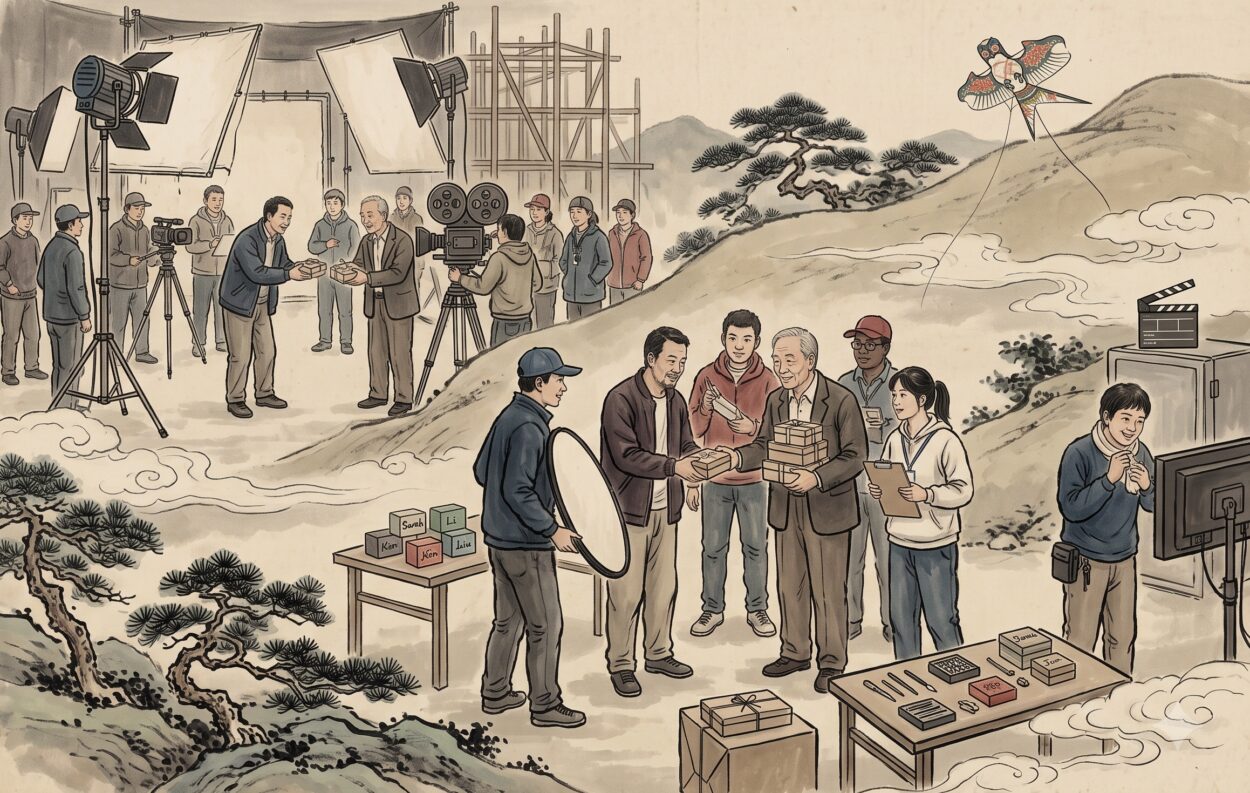
In 2005, at the age of 74, Ken traveled to China to film a movie. On set, this internationally respected actor demonstrated remarkable dedication to his work. He insisted on performing without a stunt double and, out of consideration for his fellow crew members, declined special treatment or extended periods of rest while others continued working. Before leaving, he quietly took the time to remember everyone’s name on the crew. He personally prepared thoughtful gifts engraved with each person’s name — not only for the director and lead actors, but also for the lighting assistants, production staff, and others working behind the scenes. His gesture reflected genuine respect and care, without any trace of formality or superiority. On the day of his departure, nearly eighty crew members were moved to tears. The lasting admiration people have for an artist is not built solely on appearance or talent, but on the character behind the work. True sincerity and kindness create a personal charm that cannot be replaced — and they become a timeless source of influence and inspiration.
Good people persist despite facing hardships
Although sincerity is precious, it is also one of the easiest qualities to lose and one of the most difficult to maintain when facing hardship. When circumstances become challenging, a person’s true character often reveals itself. In 1957, the renowned dramatist Wu Zuguang openly shared his views on the literary world of the time. During the intense political atmosphere of that era, however, his honesty was viewed as unacceptable. He was labeled a rightist and sent to endure hard labor in Beidahuang.
While Wu was suffering through this difficult period, his wife, the famous Pingju opera actress Xin Fengxia, also faced tremendous pressure. Officials urged her to divorce him and cut ties with him. Yet she chose to remain loyal, expressing her determination through a reference to a beloved traditional Chinese story: “Xue Pinggui went to war, and his wife Wang Baochuan waited for him in a cold kiln for 18 years. If she could wait 18 years, then I will wait 28 years.” Her words reflected more than devotion between husband and wife — they revealed the strength of a sincere heart that remained unchanged in the face of hardship. She did not choose based on convenience, personal benefit, or fear of difficulties, but remained true to her values and the bond she cherished. Throughout history, those who preserve sincerity and integrity during difficult times often leave behind a legacy that earns lasting respect. Sincerity is not proven when life is easy; it is revealed when maintaining it requires courage, sacrifice, and perseverance. Like a small light in the darkness, a sincere heart can guide one’s own path while bringing warmth and hope to others.
Sincere living brings true divine enlightenment
The ancients said, “When the utmost thought reaches the Way, even silence reveals sincerity.” When a person’s heart reaches a state of purity and sincerity, they can form a deeper connection with the world around them and perceive truths beyond ordinary understanding. In the history of classical music, the contrast between Mozart and Salieri has often been used to illustrate the difference between technical pursuit and the power of genuine inspiration. Salieri devoted his life to rigorous practice and discipline, yet he struggled to understand Mozart’s seemingly effortless brilliance. Watching Mozart’s playful and childlike nature, he could not comprehend how such simplicity could give birth to music of such extraordinary depth. What Salieri could not see was that Mozart’s greatest works did not come solely from technique, calculation, or ambition. They flowed from an inner purity and sincerity — a creative spirit untouched by excessive striving. The truth and beauty expressed through his music came from a place that no method or strategy could fully reproduce.
This reflects a profound wisdom of life: “Unmoved by honor or disgrace, great wisdom may appear simple.” In a complex world filled with competition, desires, and distractions, maintaining a sincere and pure heart is an extraordinary practice. Sincerity may seem simple, but it carries profound strength. It allows us to seek truth with humility, build relationships with trust, face hardships with integrity, and bring warmth to those around us. Throughout life’s journey, sincerity is not something we achieve once and possess forever — it is a path we continue to walk, refine, and return to.
Translated by Joseph Wu and reviewed by Tatiana Denning
Follow us on X, Facebook, or Pinterest
