
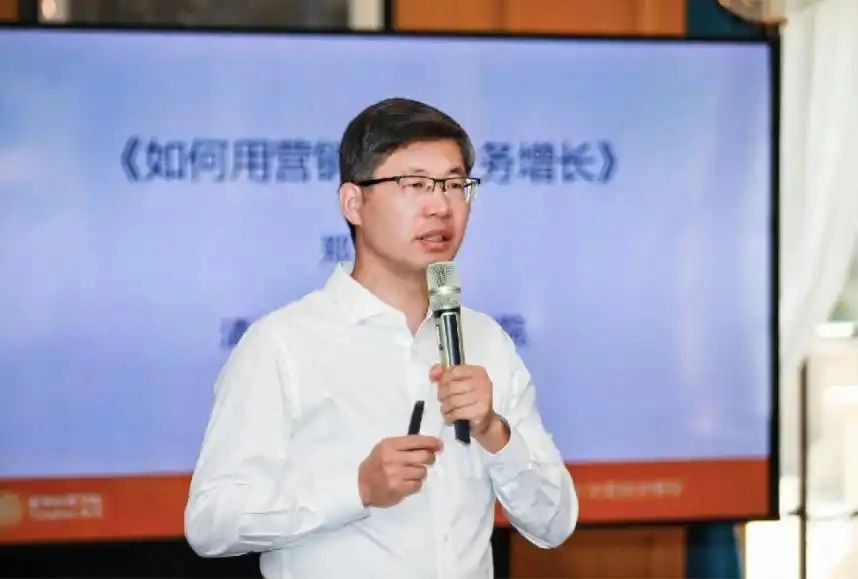
As the economy in China deteriorates, the CCP (Chinese Communist Party) authorities — fearful of the public speaking the truth — are forcibly silencing dissent. Recently, a former associate professor at Tsinghua University was reported on the spot by a student after expressing a “pessimistic” view of China’s economic situation during a lecture. He was subsequently summoned by police for questioning, an incident that has drawn significant attention.
Zheng Yuhuang reported for class; police arrived for questioning
On June 28, Zheng Yuhuang — a former associate professor and doctoral advisor in the Department of Marketing at Tsinghua University’s School of Economics and Management — was lecturing on China’s current economic situation; he specifically discussed how the outlook is “macro-pessimistic but micro-optimistic,” a trend likely to persist for 20 to 30 years. A student instantly reported him. Just how despicable must one be to report a teacher? The police subsequently came to the classroom and questioned him.
Zheng Yuhuang: Do not artificially create inequality
According to multiple videos circulating online, Zheng said: “This world should be a world of equality for all. They themselves receive tens of thousands of yuan a month in pensions within the system, and they don’t see the suffering of ordinary people at the bottom.” Zheng stated that in the past two years, he has transitioned from a professor to an intellectual: “I must speak for the people; it’s that simple. I must speak for the people at the bottom.” Zheng Yuhuang claimed that many people are beneficiaries of the system: they have Beijing residency permits but don’t want others in the country to have them; they own cars in Beijing but don’t want others to be able to buy cars there either. “These people are all wicked; they are all beneficiaries of the system.” Zheng Yuhuang also said: “1.3 billion people have never been abroad, don’t even have passports, what kind of worldview are you talking about!”
“Don’t always talk about the urban-rural divide, artificially creating inequality. Stop creating inequality between those within the system and those outside it.” Zheng further emphasized: All are Chinese citizens and should be equal! It’s unreasonable to arrange things through the system, where some people are in the upper class while others only receive 100 yuan a month; that “violates the spirit of equality.”

Zheng Yuhuang: I strongly dislike elevating economic issues to a nationalistic level. Zheng mentioned that a water seller in China became a tycoon. “There’s no such example in other countries. Why? It shows our water is bad!” In other developed countries, tap water is safe to drink. Why can we allow water sellers to become the richest people, instead of those in high-tech industries?
Zheng Yuhuang stated that he strongly dislikes elevating commercial issues to a nationalistic level. If China were entirely composed of domestic brands, when all foreign brands withdrew from China, many unscrupulous brands would emerge, using all sorts of additives and excessive technological tricks. The significance of foreign-invested enterprises lies in demonstrating how high-quality products can be made with ethical standards. More competition is better for ordinary Chinese people.
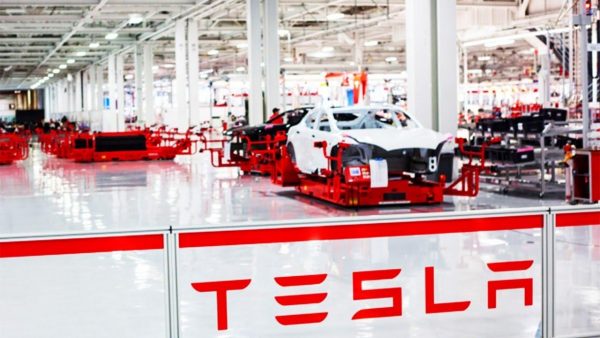
“I don’t understand why a group of populists wants to, and even desperately so, drive all foreign-invested enterprises away?” He further explained that in some industries with foreign competition, it actually improves people’s welfare. In other industries, where no competition exists, and even private enterprises aren’t allowed to compete — “that’s where we suffer.” “The existence of foreign-invested enterprises brings us benefits.” Zheng Yuhuang: Tesla provides international commercial insurance for all employees and their families – Tsinghua University doesn’t. Zheng Yuhuang cited Tesla as an example. Tesla, the first wholly foreign-owned car company in China,
Citing Tesla — China’s first wholly foreign-owned automaker — as an example, Zheng noted that the company provides international commercial insurance for all its employees, including their families. He compared this to other Chinese companies, asking: “Which other Chinese company provides international medical insurance for its employees, including their families?” “Let me put it this way: I have worked as a Professor for 16 years, and even Tsinghua University doesn’t have such insurance. Our companies should learn from them,” said Zheng. He added that foreign companies usually offer “very generous” severance compensation packages for their employees — do Chinese companies do that?”
“Foreign-invested enterprises are extremely important to us in China. Some of our populists are always hoping to eliminate them. If this mindset doesn’t change, we can’t become an advanced country,” envisions Zheng. Zheng Yuhuang: It’s not that the global economy is bad, it’s that we’re bad.”
In another video circulating online, Zheng remarked that while the current economic situation is certainly grim, the problem lies not with the global economy but with “us.” The global economy is faring well; looking at GDP figures, countries like Vietnam, India, Argentina, and Venezuela are making rapid strides, and Cuba has just announced what he described as the most incredible market-oriented reforms in its history — though he noted he “dared not say too much” about it.
Zheng also pointed out that the U.S. is hosting the World Cup, with tickets costing over $10,000 selling out instantly and stadiums packed to capacity. The U.S. spent $5.5 billion on a luxurious stadium without engaging in wasteful excess. In contrast, he noted: “We used to revel in being called ‘infrastructure maniacs.'” For a single mega-event, we would build dozens of stadiums, only for them to go to waste and lose money later — costs ultimately borne by ordinary people.
These comments sparked heated discussion among netizens on X: “It’s becoming increasingly difficult to speak the truth in China.” “Discussing the pessimistic side of the economy has long been a taboo subject for Tsinghua’s School of Economics and Management for years.” “In this country, telling the truth is the ultimate crime.” “Professor Zheng is one of the few people left who can still speak the truth; if such a good teacher is forced to leave, it would be a disgrace to the Chinese nation.” “It’s rare to find someone sober and speaking the truth.”
Others commented: “How good can you expect a country to be where people are so afraid to speak?” “A country that dreams of whitewashing itself.” “The CCP’s specialty is ‘distorting facts and brainwashing the people’; the people don’t ‘understand the truth,’ so this is the inevitable result.” “The economic crisis is a mirror, reflecting the success of others and your own (the CCP’s) incompetence.”
Translated by Patty Zang and reviewed by Maria
Follow us on X, Facebook, or Pinterest
