
Moments of danger have a remarkable way of revealing a person’s true character. When fear takes hold, some people think only of themselves, while others choose compassion — even at personal risk. History has preserved countless stories showing that kindness is never truly a sacrifice. Those who save others often end up saving themselves as well. One such story has been passed down for generations in Qingdao, Shandong Province.
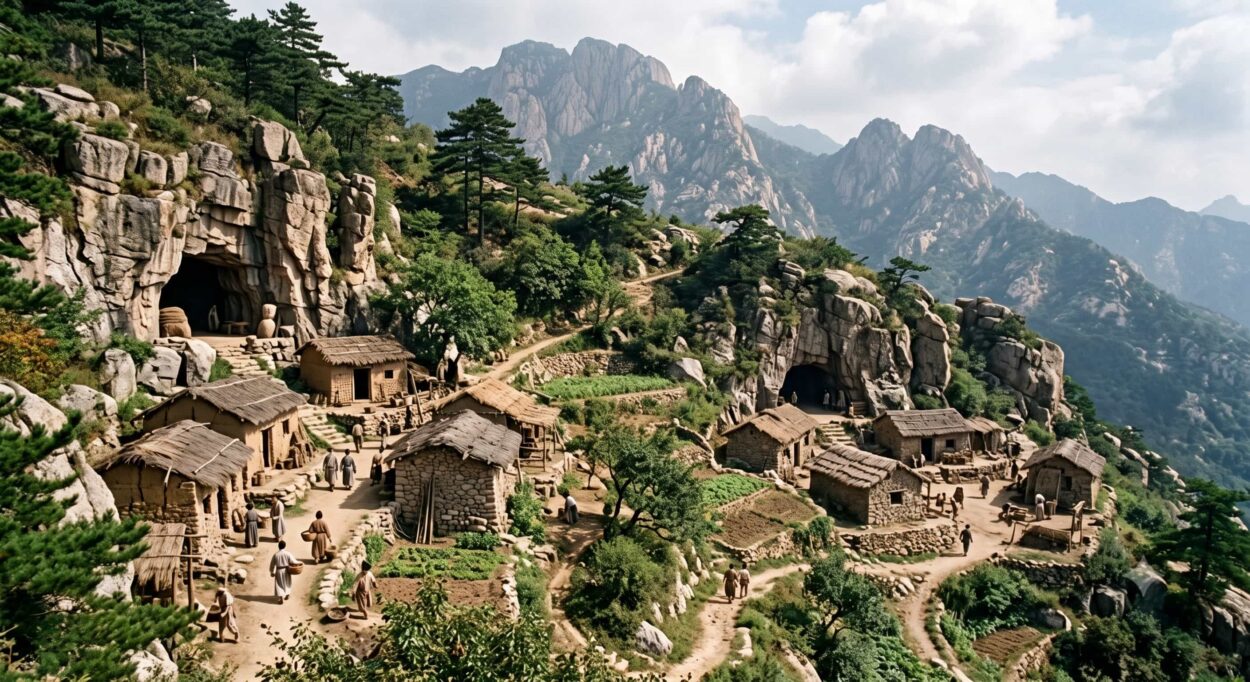
On the eastern slopes of Mount Laoshan once stood two neighboring caves, Taoshidong and Shashidong. Outside each cave was a small village bearing the same name — Taoshidong and Shashidong. The two communities shared the same landscape and lived under similar circumstances. Today, however, only Shashidong Village remains. The reason, according to local tradition, is tied to a remarkable act of compassion during one of the region’s darkest times.
A test during a time of peril
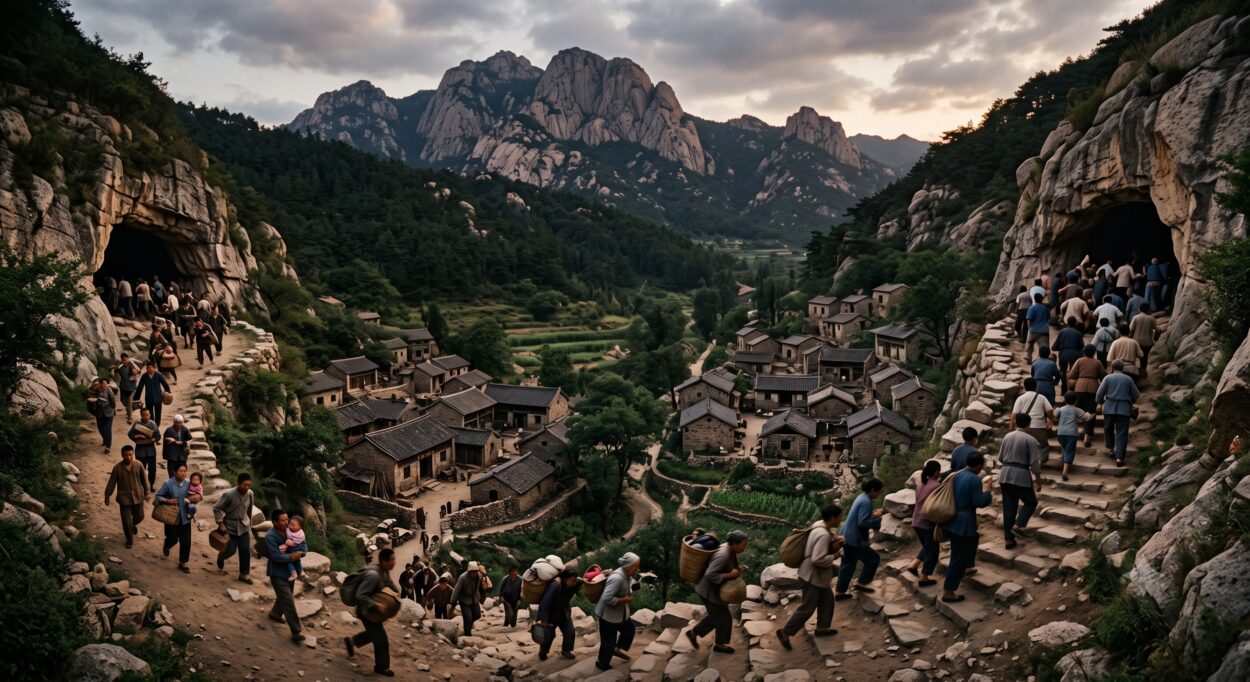
In those days, bands of ruthless outlaws terrorized the countryside throughout Shandong. Wherever they traveled, they left a trail of destruction — burning homes, looting villages, and killing anyone who stood in their way. When word spread that the bandits were approaching, panic swept through both villages. Knowing they had little chance of defending themselves, the villagers fled into their nearby caves, hoping the natural shelters would conceal them until the danger had passed.
As the people of Taoshidong Village hurried into Taoshidong Cave, a woman carrying a young child arrived after hearing the alarming news. Desperate for refuge, she followed the villagers inside. The cave, however, was small, and those already sheltered there feared that admitting another person might jeopardize everyone’s safety. Reluctant to share their limited hiding place, they hesitated to let the frightened mother and her child enter. Inside Taoshidong Cave, the villagers sat in tense silence, scarcely daring to breathe. Then the child suddenly began to cry.
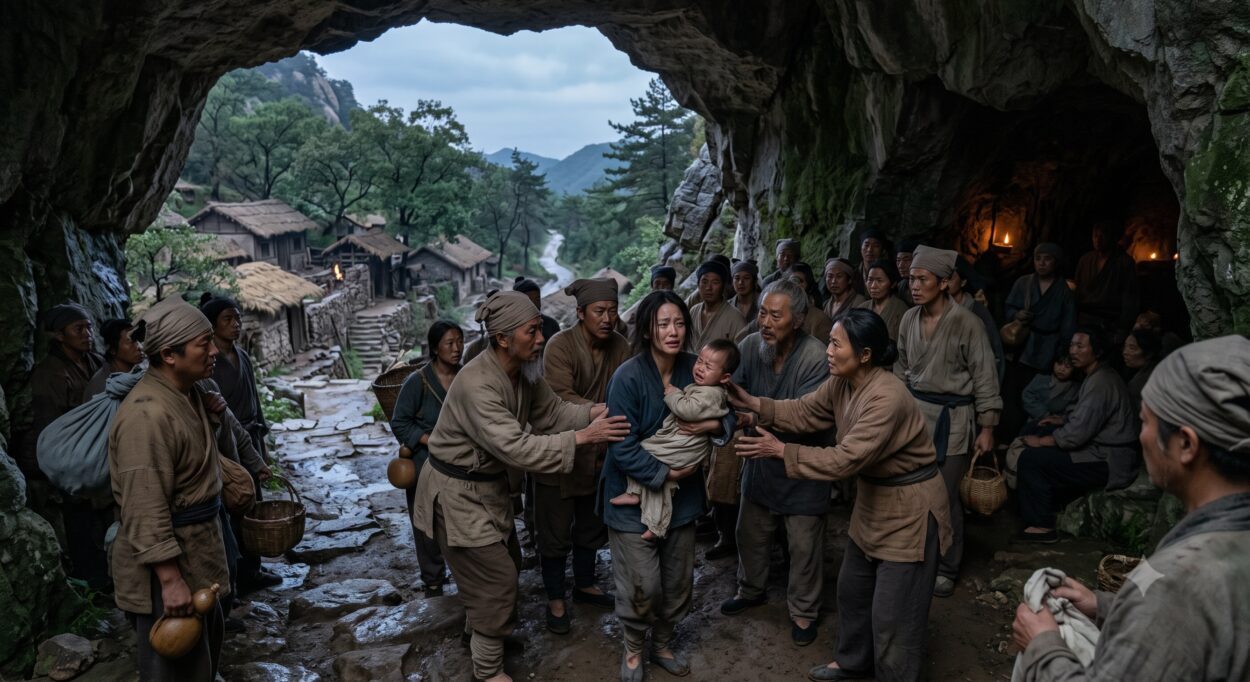
The young mother tried everything she could to comfort him, but despite her desperate efforts, his cries only grew louder. Fear quickly spread through the cave. Some villagers worried that the sound would carry outside, alerting the bandits to their hiding place and putting everyone in mortal danger. Soon, voices began insisting that the woman leave. Others, consumed by fear for their own safety, offered no objection. Instead, they joined the growing chorus demanding that the mother and her child be driven away. Heartbroken and with tears streaming down her face, the woman had no choice but to leave the shelter of the cave. Clutching her crying child, she made her way toward nearby Shashidong Cave, uncertain whether anyone there would take her in.
Inside Shashidong Cave, the villagers also heard a child crying in the distance. Curious and concerned, several people cautiously looked outside to see what was happening. When they saw the exhausted mother carrying her child, they did not hesitate. Rather than turning her away, they quickly welcomed her into the cave. Understanding that the child’s cries could draw unwanted attention, they thoughtfully arranged for the mother and child to stay near the back of the cave, where the sound would be less likely to carry outside. Surrounded by people who showed kindness instead of rejection, the child gradually quieted, and calm once again settled over the cave.
Then something remarkable happened. As soon as the woman and her child had settled safely in the back of the cave, the child stopped crying altogether. The anxious silence returned, and the villagers remained hidden for the rest of the day, scarcely daring to speak or move.
Saving others with compassion brings unexpected protection
Hours later, they noticed something unusual — the village dogs, which had barked relentlessly throughout the ordeal, had suddenly fallen silent. One of the young men cautiously stepped outside to investigate. After searching the area, he returned with welcome news: the bandits had finally moved on. Relieved, the villagers of Shashidong emerged from the cave. Looking toward neighboring Taoshidong Village, however, they were surprised to find it eerily still. Concerned, they sent the same young man to tell the villagers there that the danger had passed. When he arrived, he found a heartbreaking scene. The bandits had slaughtered every inhabitant of Taoshidong Village.
As the grim news spread, someone remembered the desperate mother and her crying child who had sought refuge earlier that day. But when they searched for them, there was no trace of either the woman or the child. They had vanished as mysteriously as they had appeared. The following spring, another mystery emerged. In the places where the two villages had once stood, people discovered a cluster of pure-white azaleas unlike any others in the Laoshan region. Their appearance only deepened the sense that something extraordinary had taken place. According to local legend, the woman was no ordinary traveler. People came to believe that she was Bodhisattva Guanyin, who had descended to the human world disguised as a helpless mother to test people’s hearts in a moment of life-and-death crisis.
Whether regarded as history or legend, the story has endured because it speaks to something timeless. The same danger confronted both villages, yet each responded differently. One chose fear; the other chose compassion. Their fates suggest that the heart we reveal in moments of crisis may shape our own destiny. It serves as a timeless reminder: saving others is often the same as saving ourselves.
Translated by Joseph Wu and edited by Tatiana Denning
Follow us on X, Facebook, or Pinterest
