
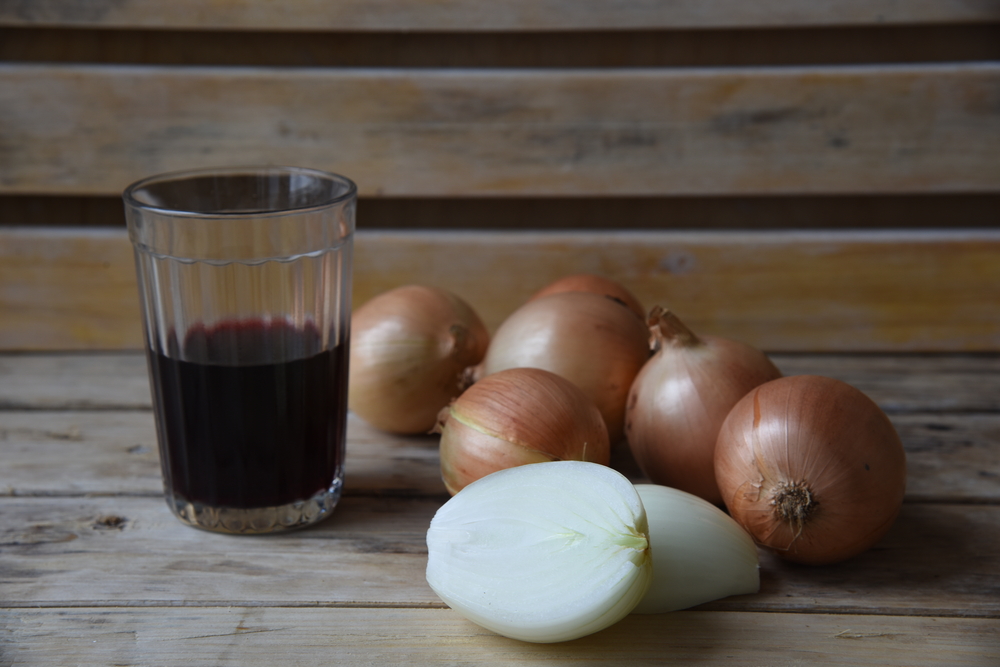
Picture a glass jar on a kitchen windowsill, deep ruby in the afternoon light, a few pale onion wedges suspended in wine. A friend in Hong Kong keeps one going year-round. A grandmother in Japan pours herself a small glass every evening and credits it for her steady blood pressure and easy sleep. Onions soaked in red wine are one of those quiet home remedies passed from hand to hand across East Asia. It promises a great deal: calmer nights, brighter eyes, fewer trips to the bathroom, a gentler heart. Some of those claims are hopeful folklore. A few, it turns out, have caught researchers’ interest.
So let us look with warm curiosity and honest eyes. Where does this tonic come from? What do tradition and modern science each actually suggest? How do you make it, and who should be careful? Here is what you need to know before you steep your first jar.
Onions soaked in red wine?
Onions soaked in red wine are a simple home tonic made by steeping raw onion wedges in red wine for about a week, then drinking it by the small glassful. Beloved in Japan and among Chinese families in Hong Kong, it is treasured in folk tradition as a gentle daily pick-me-up for the heart, eyes, and sleep. It is a tonic, not a medicine.
The idea is humble. Two ordinary ingredients: a clean jar and a little patience. Nothing exotic, nothing expensive. That accessibility is part of its charm, and it fits neatly beside the other quiet, low-cost practices we explore in Nspirement’s traditional Chinese health tips. Yet the pairing is more thoughtful than it first appears because onion and red wine each contain compounds that scientists study for their effects on the heart.
A folk remedy loved in Japan and Hong Kong
The most-repeated origin story is a modest one. A traveler visiting Hong Kong got talking with a wine retailer, who shared the recipe and mentioned that the remedy was “quite popular in Japan” for easing the aches and complaints that come with age. The visitor was skeptical, tried it anyway, and later passed it to family members, some of whom reported feeling better after a few weeks. That is how folk medicine has always traveled: not through clinical trials, but through a neighbor, a shopkeeper, a relative who swears it helped. In Japan, especially, everyday home remedies handed down by grandmothers hold a warm place in daily life, and a wine-and-onion tonic sits comfortably in that tradition.
Onions themselves have a long history in folk healing far beyond Asia. Across many cultures, they were valued as an antiseptic, a diuretic, and a general strengthener, prized as much for their pungency as their nourishment. What the East Asian version adds is the wine: a companion ingredient with its own reputation for warming the body and lifting the spirits.

How onions and red wine work together
Here is where folklore meets the laboratory, so let us be careful and specific. Two plant compounds explain most of the interest.
Onions are one of the richest everyday sources of quercetin, a flavonoid that researchers study for its antioxidant and anti-inflammatory activity. Red wine, meanwhile, carries resveratrol and related polyphenols, long discussed for their possible role in heart health. Put the onion in wine to create a simple extract that draws these compounds together.
One small study gave this idea a proper test. In a 2016 trial published in Phytotherapy Research, researchers followed 23 adults with elevated cholesterol for 10 weeks. One group drank a red wine extract of onion each day; the other drank red wine alone. Both groups saw improved antioxidant activity, but only the onion-and-wine group showed a meaningful drop in total and LDL (“bad”) cholesterol, and a favorable shift in a clotting-related marker. The researchers concluded that the onion extract offered an “additional” cardioprotective benefit over wine alone. You can read a plain-language summary of the findings from the industry outlet NutraIngredients, or the study record on PubMed.
It is important not to oversell this. One 23-person study is a promising signal, not proof, and it measured cholesterol and antioxidant markers, not eyesight or sleep. Broader reviews of onions’ bioactive compounds describe antioxidant, anti-inflammatory, and cardiovascular-supportive properties, and a separate pilot study on quercetin-rich onion juice points in the same direction regarding cholesterol. The honest summary: There is real reason to think that the combination of onions and red wine supports antioxidant and cholesterol health, and little hard evidence for the more dramatic claims.
The benefits
In folk accounts, onions soaked in red wine are credited with a long list of effects. Read these as traditional beliefs and gentle hopes, not medical guarantees. Where research exists, it is limited, and none of this replaces professional care.
- Heart and cholesterol support: Traditionally used to help maintain healthy blood pressure and cholesterol levels. This is the claim with the most supporting evidence, thanks to quercetin and resveratrol.
- Restful sleep: Long valued as an evening tonic for calmer, deeper sleep, much like the traditional Chinese teas people sip for calmness.
- Tired, strained eyes: Believed to ease eye fatigue and the blurriness of long screen days. (The old claim that it lets you “read without glasses” is folklore, not fact.)
- Fewer nighttime bathroom trips: A frequently repeated benefit among older users.
- Joint comfort and circulation: Said to warm stiff, aching knees and support circulation.
- Digestion: Onions have a long-standing reputation for stimulating appetite and easing digestion.
Notice the pattern. The gentle, plausible claims (antioxidant support, circulation, digestion) align with what we know about the ingredients. The miraculous ones (curing insomnia outright, restoring eyesight) belong to the warmth of storytelling rather than the clinic.
How traditional Chinese medicine views the onion
Traditional Chinese medicine (TCM) does not think in terms of quercetin or LDL. It reads foods by their nature and the way they move energy through the body, and here the onion fits a familiar picture.
The common bulb onion (洋葱, yángcōng) is considered warm and sweet-pungent. It belongs to the same aromatic allium family as the scallion (葱白, cōng bái), which classical texts have used for centuries to disperse wind-cold and unblock the flow of yang energy. Foods with this warm, pungent character are traditionally understood to move qi, promote circulation, warm the middle, and help the stomach and spleen do their work.
Seen this way, pairing a warming allium with wine, itself considered warming and dispersing, is not random. It is the same logic behind so many traditional tonics: warm the body, keep things moving, support digestion and circulation gently over time. It is the quiet, cumulative approach we see in other folk preparations, such as the ancient remedy of pears steamed with Sichuan pepper. None of this is a modern medical claim. It is a centuries-old way of understanding why a food might make you feel warmer, lighter, and more at ease.

How to make onions soaked in red wine
The recipe is forgiving and takes only a few minutes of hands-on work. Here is the classic method.
Ingredients:
- 2 onions (about 3 onions for a full 750 ml bottle)
- 500 ml red wine
- A clean glass jar with a lid
Steps:
- Wash and peel the onions, then cut each one into 8 wedges.
- Place the wedges in the jar and pour in the red wine until they are covered.
- Seal the jar and let it rest in a cool, dark place for 7 to 8 days.
- Strain, separating the wine from the onions into different containers, and keep both refrigerated.
How it is traditionally taken
About 50 ml (roughly a small wine glass) once or twice a day, or around 20 ml for older adults. Many people eat a few soaked onion wedges with the wine. If you prefer not to drink alcohol, the folk workaround is to dilute a serving with an equal amount of water, simmer it for about 5 minutes to cook off the alcohol, then let it cool; a spoonful of honey softens the sharpness. Use your refrigerated batch within a couple of weeks and trust your senses; discard it if it smells or tastes off.
Who should be careful
Because this tonic contains alcohol and a concentrated dose of onion, a few sensible precautions are warranted. This is where honesty serves you better than enthusiasm.
- It contains alcohol: It is not suitable during pregnancy or breastfeeding, for anyone recovering from alcohol dependence, or for those who avoid alcohol for health, religious, or personal reasons. The boiled, alcohol-reduced version is the safer route if you still want to try it.
- It may thin the blood: Both onion and red wine can gently slow blood clotting. If you take blood thinners or are scheduled for surgery, talk to your doctor first.
- Mind your medications: If you manage blood pressure or diabetes, this tonic is not a substitute for prescribed treatment, and you should never stop or reduce medication on your own. Ask your doctor how a daily onion-wine serving might fit in.
- Go easy on the stomach: Large amounts of raw onion can cause heartburn, gas, or an upset stomach. Start small.
When in doubt, check with a healthcare professional or a qualified TCM practitioner who knows your history. A folk tonic should complement good care, never replace it.
A gentle tonic, honestly weighed
Onions soaked in red wine are exactly what they appear to be: an old, affordable, hand-me-down tonic with a genuine kernel of promise and a generous wrapping of hope. The science provides strong support for its heart- and antioxidant-protective benefits, thanks to the quercetin in onions and the polyphenols in red wine. The grander claims are best enjoyed as folklore, taken with a smile rather than a prescription.
Perhaps that is the truest lesson of remedies like this one. Wellness is rarely about a single miraculous jar. It is built from small, steady, low-cost habits practiced with patience, the kind we gather in our no-cost wellness habits from Chinese tradition. If a nightly glass of onion-steeped wine brings you a little warmth, a little calm, and a lot of connection to the grandmothers who passed it down, that is a quiet gift worth savoring, sensibly and in moderation.
Follow us on X, Facebook, or Pinterest
