

No single AI model does everything, and after two years of using these tools full-time — for published writing, shipping code, and paying clients — I can tell you the people who insist otherwise are usually selling a subscription. The pros don’t pick a champion. They run a fleet, and they route work across it the way a shop foreman assigns jobs to the machine that does each one best.
That framing has never been more useful than it is right now, because the top of the market just rearranged itself twice in three weeks, and a quieter revolution is happening beneath it that most people are ignoring for reasons unrelated to quality.
The frontier reshuffled — again
Anthropic’s Claude Fable 5, released June 9, 2026, is the first publicly available Mythos-class model — the same underlying model as the restricted Mythos 5, but wrapped in safety classifiers. Days later it vanished. A June 12 U.S. export-control directive forced Anthropic to suspend Fable 5 and Mythos 5 worldwide; the Commerce Department lifted the controls on June 30, and Anthropic restored Fable 5 for all customers on July 1.
It came back with a catch, and that’s the interesting part. The reinstated model ships with new cybersecurity classifiers and routes requests that trigger them silently to Opus 4.8 — so routine coding and debugging often fall back to Opus 4.8. In practice, the model you meter is not necessarily the model that serves your request. Anthropic’s own architecture, in other words, already embodies the thesis of this article: even inside a single product, the “best” model is task-dependent, and a safeguard layer decides which one you actually get. When a query touches cybersecurity, biology and chemistry, or model distillation, Opus 4.8 handles the response instead of Fable 5.
Worth noting for the record, and worth holding lightly: the suspension itself is contested. Amazon researchers reported a method of bypassing Fable 5’s safeguards to the U.S. government, which triggered the action — but Anthropic later stated that less-capable models, including Opus 4.8, GPT-5.5, and Kimi K2.7, could identify the same vulnerabilities, and that nothing in the results revealed unique Mythos-level capability. A credentialed Stanford security researcher publicly doubted there was a real factual basis for the shutdown. I mention this not to litigate it — Anthropic’s own statement is the place to go for the official account — but because the episode is the cleanest illustration you’ll find of how tangled capability, safety, and policy have become at the frontier.
On the other side of the aisle, OpenAI moved. On June 26, it announced GPT-5.6 as a three-model family: Sol (the flagship), Terra (balanced), and Luna (fast and cheap), with a new maximum reasoning-effort setting and an “ultra” mode that orchestrates parallel subagents. The headline number is real: on Terminal-Bench 2.1, GPT-5.6 Sol Ultra leads at 91.9%, plain Sol at 88.8%, ahead of Claude Mythos 5 at 84.3%, Fable 5 at 83.4%, and Opus 4.8 at 78.9%.
But before anyone declares a new king, two facts reframe it. First, access: GPT-5.6 is in a limited preview, open only to a small set of vetted organizations via API and Codex, at the U.S. government’s request; general availability is planned “in the coming weeks,” with no firm date. Second, epistemics: those benchmark figures come from the vendor’s own launch chart. On Scale AI’s standardized public leaderboard — identical scaffolding across all models — the SWE-Bench Pro leader as of late June was GPT-5.4 at 59.1%, with no standardized Fable 5 or GPT-5.6 entry at all, and vendor-reported scores consistently run 10–30 points above the standardized numbers. So “Sol beats Fable 5” is a defensible sentence about one chart and a meaningless one about a model most people can’t call yet. When you cannot license it, the leaderboard is trivia.
The myth of one AI model for everything
Here is the mistake almost every newcomer makes, and plenty of executives too: They treat model choice as a horse race with a single finish line. Pick the smartest one, run everything through it, done.
The reality is that a frontier model is not a monolith of “intelligence” — it’s a bundle of distinct capabilities with different price and latency profiles, and those capabilities peak in different places even within the same lab’s lineup. Anthropic’s Opus is unusually good at long-form prose and reasoning over sprawling codebases. OpenAI’s Codex behaves like a fast, terse senior engineer. A cheap model can outperform an expensive one on the 80% of tasks that don’t require deliberation, and burn a fraction of the budget doing so. The teams doing this well in 2026 no longer ask “which model should we use?” They ask “which model for each task?”
That’s not a hedge. It’s the whole game.
Which model for which job
Strip away the marketing and a working division of labor falls out. This is close to how my own shop runs it.
For content and long-form writing, Opus remains the reach-for tool — it holds voice, structure, and argument across thousands of words better than the models optimized primarily for terminal work.
For coding, the split is based on whether the task requires thinking. Claude Opus 4.8 (released May 28, 2026) carries the deepest reasoning ceiling — a 1M-token context window and a markedly lower tendency to let a code flaw slip through unflagged — which is what you want for architecture, gnarly refactors, and multi-file bugs that ripple across a repo. For the routine execution layer — feature work, focused debugging, the button-color changes — you drop to a cheaper workhorse. Claude Sonnet 5 (codename Fennec) shipped June 30 at $2/$10 introductory pricing, giving Claude Code a cheaper default for routine work while Opus 4.8 and Fable 5 handle the hardest tasks. Below that, Claude Haiku 4.5 at $1/$5 handles quick edits and subagents. The general principle, which the labs now expose directly through effort controls: reserve deep-reasoning models for architecture and hard bugs, use fast, cheap models for routine edits, and tune the effort level within the model you’ve chosen.
For review and tests, Codex earns its keep. OpenAI now points Codex at the general gpt-5.5 model — there is no dedicated gpt-5.5-codex, and gpt-5.3-codex is deprecated — and Codex CLI with GPT-5.5 tops the public Terminal-Bench 2.1 leaderboard among usable pairings at 83.4%. Codex models spend longer reasoning and are significantly more token-efficient under the hood, and the GitHub app, with auto code review turned on per repo, actually finds legitimate, hard-to-spot bugs and lets you fix them inline. That is precisely the profile you want from a reviewer: patient, cheap per task, unimpressed by your first draft. MorphBuilder.io
The meta-point is architectural. The teams managing this most effectively run a model-abstraction layer — routing specific task types through specific models and swapping models at the routing layer without rewriting application logic — so whether GPT-5.6 beats Fable 5 matters less if you can swap in the winner within a week. Loyalty to a single model is a liability when the frontier moves monthly. Explainx
The open models nipping at the frontier — for a fraction of the price
Now the part the headline comparisons keep burying. While the closed labs trade benchmark points, a wave of open-weight releases — most of them from Chinese labs — has closed the gap to within a few points, at a tenth of the cost or less.
DeepSeek shipped V4 on April 24 in two variants — V4-Pro (1.6T total / 49B active) and V4-Flash (284B total / 13B active), both 1M context, MIT-licensed — with the Pro-Max configuration hitting 80.6% on SWE-Bench Verified (tied with Gemini 3.1 Pro) and 93.5% on LiveCodeBench. DeepSeek V4 Flash runs at roughly $0.14 per million tokens (input / $0.28 per million tokens (output). Set that against Fable 5’s $10/$50 and the economics stop being a rounding error.
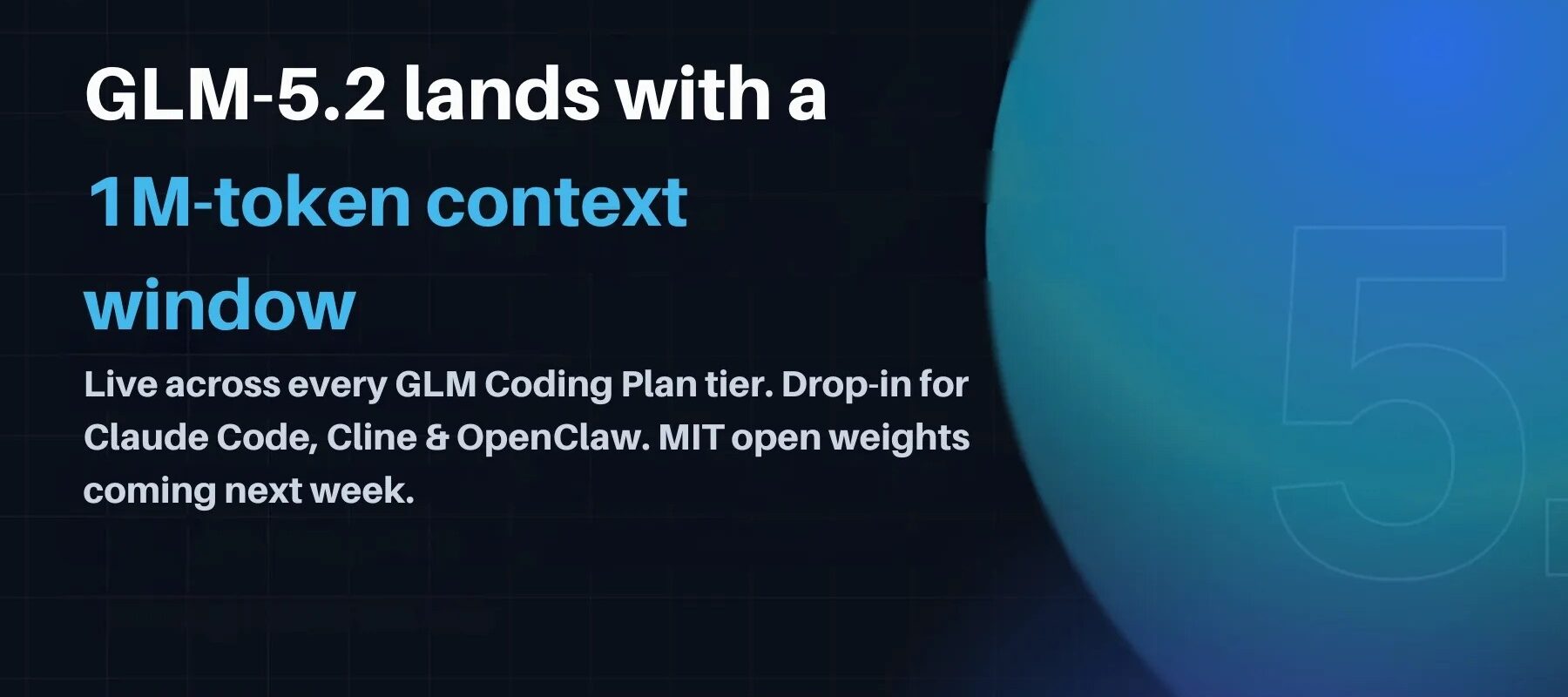
The current open-weight leader is arguably GLM-5.2 from Z.ai. Released in June, it extended its predecessor’s context to a full 1M tokens and is the first open-weight model to beat GPT-5.5 on SWE-Bench Pro, scoring 62.1 against GPT-5.5’s 58.6, and it tops the open field on the Artificial Analysis Intelligence Index at 51.1. The frontier still leads — Claude Opus 4.8 scores about 56 on that same index, roughly five points ahead — but “five points and a permissive license” is a very different conversation than the chasm of a year ago. Rounding out the field: MiniMax M3, released in June, is the first open-weight model to combine frontier coding, 1M context, and native multimodality; Kimi K2.6 excels at agent swarms and long autonomous runs; and Qwen3-Coder offers the best efficiency per active parameter.
One honest caveat, and it’s the kind that matters. Most of these are open-weight, not open-source. The distinction is real: open source means full code visibility and community auditing; open weights means you get the trained model file and can run or modify it, but the internal decision-making remains a black box even to the person running it — and most models marketed as “open source” are actually open weights. Where they still trail is the frontier reasoning end. For highly ambiguous, open-ended tasks that require deep planning, open models are less reliable than closed leaders. For structured, well-scoped work — which is most work — the gap has largely closed.
What it takes to run them yourself — and why most people don’t
If open models are this good and this cheap, why isn’t everyone self-hosting? The answer is not the model. It’s the machine underneath it, and the person who has to babysit it at 2 a.m.
The governing constraint is VRAM. At Q4_K_M quantization — the standard compression, roughly half the memory of full precision with quality most users can’t distinguish — plan for about 0.6–0.7 GB per billion parameters. There’s a trap here that catches nearly everyone: with the Mixture-of-Experts architectures that dominate the 2026 frontier, you must size against total parameters, not the smaller “active” count — DeepSeek V4-Flash is 284B total with ~13B active, and you still have to load all of it into VRAM. And at long context lengths, the KV cache — the model’s attention memory — can dwarf the weights themselves, which is why a model that fits comfortably at 8K context can run out of memory at 128K.
What that means in hardware: a 32B model at Q4_K_M fits a single 24GB RTX 4090; a 70B model needs 48–64GB, which in practice means dual GPUs or Apple Silicon’s unified memory. A Mac Studio with 192GB of unified memory can even hold a 70B model in full precision. But the genuinely frontier-competitive open models are another tier entirely: the 200B-plus MoE leaders like GLM-5.2, DeepSeek V4-Pro, and Kimi K2.7 need multi-GPU 80GB-class boxes, and none of them run on a single consumer GPU. The tooling has matured — Ollama and LM Studio make single-machine inference genuinely easy, while vLLM and SGLang handle production throughput — but easy to install is not the same as easy to operate.
That’s the real reason people shy away. Self-hosting is more than downloading a file: you handle dependencies, memory optimization, monitoring, and updates, and troubleshooting CUDA errors, kernel mismatches, or model incompatibilities takes specialized knowledge — where a cloud provider handles all the infrastructure, a self-hosted setup demands ongoing attention. The convenience tax is enormous, and for most teams it’s not worth paying until volume is high. The threshold math is roughly this: self-hosting a single-host model beats a hosted API once you sustain around 5 million tokens a day — and an H100 runs about $2–4 an hour on demand. Below that line, the API wins on every axis that isn’t privacy or principle. Above it, the savings become impossible to ignore. Most individuals and small shops live well below it, which is exactly why the open revolution is real on the benchmarks and nearly invisible on people’s desktops.
The coming fight over who gets the powerful models
Which brings us to the argument that will shape whether that cheap open option even stays on the table.
Anthropic CEO Dario Amodei has told lawmakers that open-source AI is moving down a “very dangerous path,” warning that once powerful models are released openly, companies lose the ability to monitor misuse, revoke access, or update safety guardrails. His concern is structural rather than incidental: a model downloaded millions of times cannot be recalled, patched, or shut down, and the original developer keeps no visibility into how it’s deployed. His June 2026 policy essay explicitly calls for the government to build an FAA-style framework — safety certification before public deployment above a capability threshold — a call echoed by a June executive order mandating classified benchmarking and pre-release review for the most powerful models. There are two honest ways to read this, and a serious person holds both.
Interpretation one: A sincere security concern
This is the read most consistent with Anthropic’s entire public posture, and the structural argument is not invented. Weights, once released, are permanent in a way source code releases never were, and the capabilities in question — cyberattack uplift, dangerous biological research — are exactly the domains where irreversibility is frightening. The Fable 5 routing described at the top of this piece is that same logic in miniature: Anthropic gates its own model on those exact categories. And Amodei has been directionally consistent since 2019, when, as OpenAI’s VP of Research, he was part of the team that chose to withhold GPT-2’s full weights due to concerns about misuse. A person who has argued the same thing for seven years is not obviously opportunistic.

Interpretation two: Closing a competitive gap that is closing fast
The timing is conspicuous. Amodei’s argument lands precisely as open models from Meta, Mistral, and DeepSeek continue to match closed systems at a fraction of the cost. The uncomfortable structural fact is this: Anthropic sells API access to Claude; open models that approach Claude’s capabilities are a direct competitive threat; and Amodei’s safety concerns — even if genuinely held — align closely with Anthropic’s commercial interests. The counter-arguments are also technical, not merely cynical. Model weights leak routinely, stripping built-in guardrails is reportedly a weekend’s work, and a “safe” version and an unrestricted one can end up as nearly the same file — while closed models aren’t immune either, since anyone can query one enough times to distill a smaller copy that inherits most of its behavior minus the safety training. Open weights also enable independent researchers to audit for biases and failure modes that internal teams might miss or have incentives to minimize. If the restriction can’t actually hold, the safety benefit shrinks while the competitive benefit remains.
The right resolution isn’t to pick a villain. It’s to notice the incentive architecture. You do not need a conspiracy to explain why the CEO of a closed-model company advocates policy that would hobble open rivals; you only need to observe that the safest-sounding policy also happens to protect the incumbent, and that this alignment does not require anyone to be lying. The concern can be real and self-serving at once. The most defensible summary is the least satisfying one: frontier open weights carry real, documented risks, but closed systems are not automatically safer — they simply shift the risk from misuse to monopolization. Where you land depends on which of those two risks you fear more, and reasonable people fear different ones.
For the practitioner, the stakes are concrete. The fleet approach — Opus for reasoning, Sonnet 5 for execution, Codex for review, and an open model for the high-volume grunt work — depends on the cheap open tier remaining available. Watch this fight closely. This isn’t an abstract policy debate. It is a decision about whether the most useful column in your routing table remains open, and it will largely be made by people who profit from the answer.
Follow us on X, Facebook, or Pinterest
