
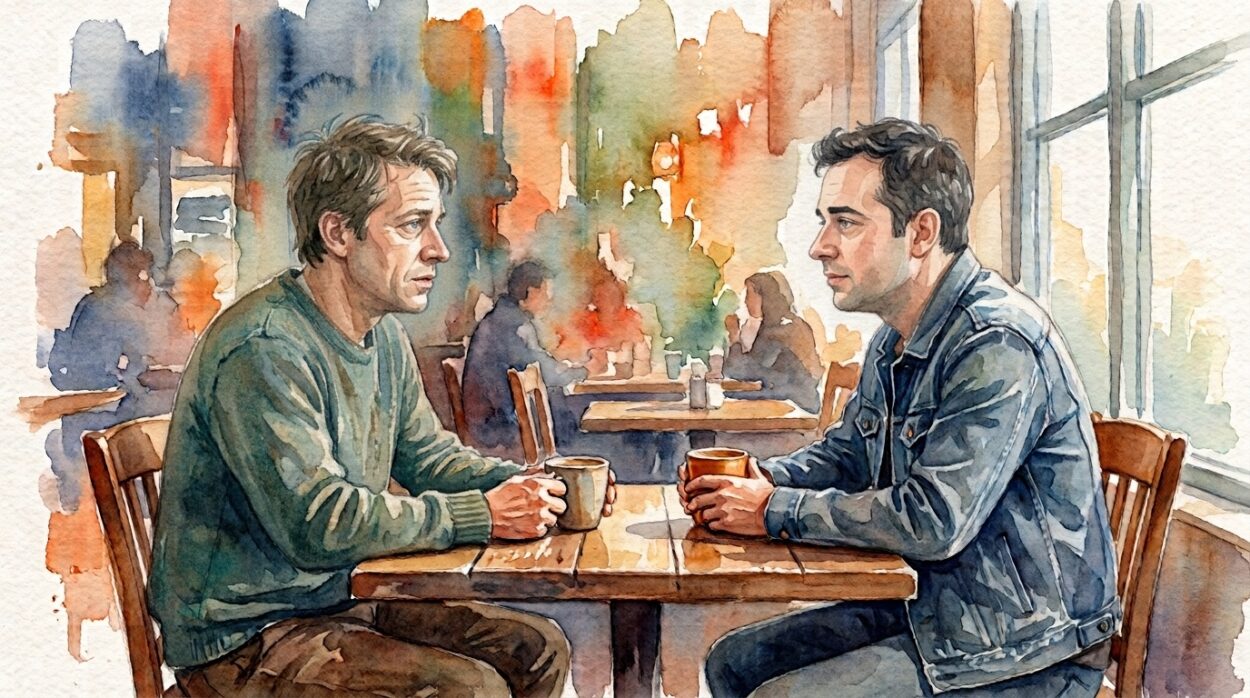
You encounter individuals and situations that test your patience, challenge your thinking, and occasionally bring out the worst in you. But what if those difficult moments aren’t merely obstacles to endure? What if they are opportunities to see yourself more clearly, release negativity, and become better than you were before? A few years ago, I was chatting with an old friend over coffee. As we talked, I began noticing something about the way he spoke. I held back for quite a while, but eventually, I decided to be honest with him.
“Have you ever noticed that you have kind of a ‘whiny’ tone when you talk?” I finally asked. By “whiny,” I didn’t mean he was actually whining; I meant his tone—a little complaining, a bit frustrated, and sometimes almost restless, as though something was always bothering him. He looked at me, clearly surprised, and asked: “Really? I never noticed that. Do I always sound that way?” I replied: “It’s something I always noticed, but never mentioned it. But I think that’s why these things can be so hard to change. If you don’t notice something in yourself, you may not even realize you’re doing it. Once you become aware of it, though, you have a chance to change it.” He became quiet, and after a moment, he gave a wry little laugh.
“You know, my family always tells me the same thing — that I whine and complain,” he said. He paused and shook his head, adding: “I guess they were right. I never realized I sounded that way.” He lowered his head and sat there thinking, as though he were finally seeing something about himself that had been there all along. Watching that moment of realization, I smiled with understanding. Indeed, the way we speak often reveals what lies within us. Imagine a beautifully made-up woman whose every word is filled with complaints and harshness. Would her outward beauty still leave the same impression? Or picture a gentleman dressed in a crisp, well-tailored suit, yet speaking constantly of petty grievances, resentment, and disdain. No matter how polished he looked, could his appearance conceal what his words revealed about his character? No matter how carefully we present ourselves on the outside, what lies within us has a way of showing through.
Understanding how your inner state reflects outer beauty
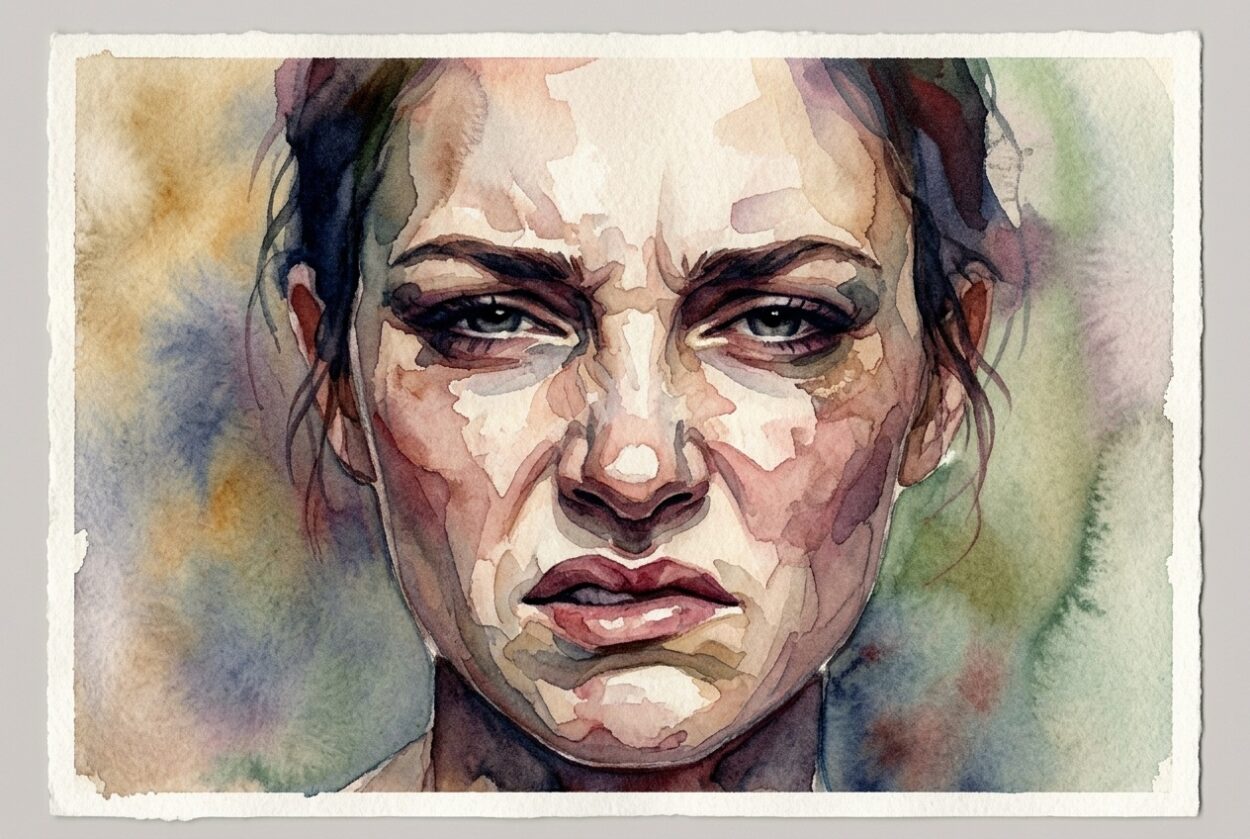
A friend once asked me: “Do you know when you look your ugliest?” I gave a self-deprecating smile and answered without hesitation: “When I’m angry.” I at least possessed enough self-awareness to recognize that about myself. My friend laughed and nodded. It is true. When you lose your temper, your facial expressions can change dramatically. Anger tightens the features, hardens the eyes, and can turn even a naturally pleasant face into a grimace. But what is happening on the outside is only part of the story. In those moments, anger and resentment twist the heart, too.
There is an old saying: “The face reflects the heart.” When the heart is unsettled, it often shows on the face. My friend’s question made me realize that losing my temper does more than make me look unpleasant — it also pulls me away from the person I want to be. Then he asked: “So, do you know when you’re at your most beautiful?” I shook my head and said: “I don’t know.” He smiled and replied: “When you laugh from the bottom of your heart.”
It sounds simple, but it’s profound. A carefree, radiant smile — like a gentle spring breeze — can’t easily be faked. We have all seen the difference between a genuine smile and one that reaches only the lips while the eyes remain unchanged. Sometimes, a forced smile can seem less beautiful than a quiet, natural expression. Perhaps even a genuine smile begins with what is happening inside. When the heart is peaceful, and when you are less burdened by resentment, prejudice, and petty concerns, something naturally softens in you. Learning to let go does not mean pretending that nothing matters; it means learning not to hold so tightly to every grievance, every irritation, and every hurt. Maybe that is why some people, despite aging, seem to become more beautiful as they grow older. Their beauty doesn’t stem from perfect features. It comes from something quieter — the warmth in their eyes, the gentleness in their expression, and the peace they carry within.
Navigating unexpected tests and reaching an emotional breaking point
I used to think that once I understood these concepts, I would sail smoothly through life. However, life has a way of giving us unexpected “pop quizzes.” Several years passed, and although I kept reminding myself to change my approach and be gentler with others, I had not made much progress. That friend of mine did not seem to change much either. Whenever we met, he would do most of the talking, often complaining about one thing or another in that same somewhat whiny, frustrated tone. If I tried to respond or offer a different perspective, he would grow impatient, as though he had already made up his mind and didn’t really want to hear what I had to say. It sometimes seemed as if he thought he was the smart one and I was the foolish one.
I tried to be tolerant. Because I was afraid of making him angry, I rarely said anything. Inside, however, I kept wondering, What is it about me that makes him treat me with such arrogance? Meanwhile, I had been under a lot of pressure from work and life. Then one day, while I was already feeling particularly frustrated and on edge, he started complaining again. Suddenly, something inside me snapped. Why should I have to put up with this attitude year after year?
Anger took over rationality almost instantly. I was no longer calm or gentle. Instead, I let him have it, firing back with some of the harshest words I could find. Uncomfortably, in that moment, I felt a certain sense of satisfaction. For a brief instant, it felt as though I had finally gotten even, restoring a kind of balance after putting up with his behavior for so long. But once the anger passed, I began to wonder: Was what I had done really right?
Processing a meaningful dream to gain personal perspective
A dream I had that night served as a wake-up call, jolting me out of my confusion about right and wrong. In the dream, a boy who seemed to have the mental capacity of a teenager ran up to my front door and scattered a pile of filthy items at my doorstep. I was angry and disgusted by what he had done, and in my frustration, I ended up stepping in the mess myself. Almost immediately, I wiped it off.
When I woke up, I lay there staring at the ceiling for a long time, reflecting on the dream. The image of the filth stayed with me. I began to see it as a reflection of what had transpired between my friend and me. He behaved in a way I found offensive, but by letting myself get angry and strike back, I stepped right into the mess with him. In life, you often believe that returning spite for spite, or demanding “an eye for an eye,” is the only way to stand up for yourself and regain your sense of justice. But from a higher perspective, when you let yourself respond in kind to another person’s “ugliness,” haven’t you already lost something?
Another person’s bad habits are like a mud pit. If you jump into it with them and wrestle out of anger, whether you win or lose, you will end up getting dirty too. True strength is not about striking back more fiercely. It is seeing the mud for what it is, stepping around it, and keeping your own heart clean. Remaining calm and peaceful when someone else is provoking you may be one of the hardest accomplishments to achieve.

Finding gratitude and growth through challenging personal encounters
Since that conflict, I have gradually found that when I hear him complain, I no longer feel the same urge to argue or defend myself. I still have moments when I feel irritated, but I recognize what is happening inside me more quickly and let it go. I have also come to realize that trying to lecture other people is usually futile. People generally do not like being lectured, even when the intention is simply to offer a gentle reminder. Perhaps I needed to learn that lesson myself. Instead of focusing so much on what was wrong with him, I needed to look at my own reaction.
If I can treat him with kindness and tolerance, and use my own understanding to stay calm and improve myself — rather than trying to force him to change — then even if he never recognizes his own shortcomings, I still gain something. I have changed myself. Isn’t that what really matters? After all, you cannot control another person’s thoughts, words, or behavior. What you can work on is your own heart and how you respond.
In that sense, perhaps I should be grateful to him. His behavior gave me an opportunity to see something in myself that I might otherwise have easily overlooked. What initially felt unfair and unpleasant became a chance for me to cultivate greater patience, compassion, and self-control. Maybe that is one of the unexpected gifts of the people who challenge us: They hold up a mirror — not necessarily a pleasant one, but one that shows us what still needs to change within ourselves. And sometimes, the person who tries your patience the most can teach you the greatest lesson: True change begins not with changing someone else, but with changing yourself.
Translated by Eva and reviewed by Tatiana Denning
Follow us on X, Facebook, or Pinterest
