
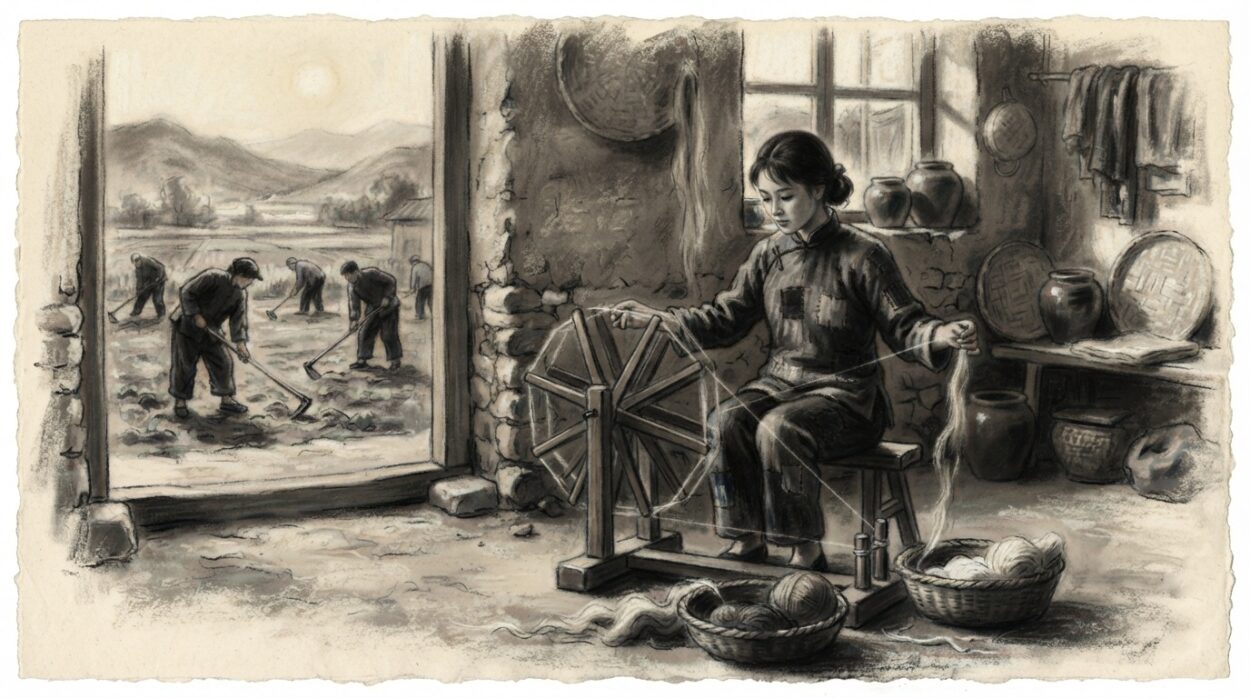
In Yushu City, Jilin Province, in 1930s China, a young woman surnamed Ma married into the local Li family. Rural life during this era was demanding, rooted in traditional rhythms: men worked the fields, and women managed domestic duties like spinning and weaving. The Li household, like many others in the region, followed familiar cultural structures and social expectations. However, daily life within the home carried unique personal strains. The winter months brought a bitterly cold climate to the northeastern countryside, turning evenings into long stretches of isolation and hardship. Although the household should have been a warm sanctuary from the freezing temperatures, habits and personal vices disrupted that peace, creating a tense atmosphere that tested the patience and emotional resilience of every family member under the roof.
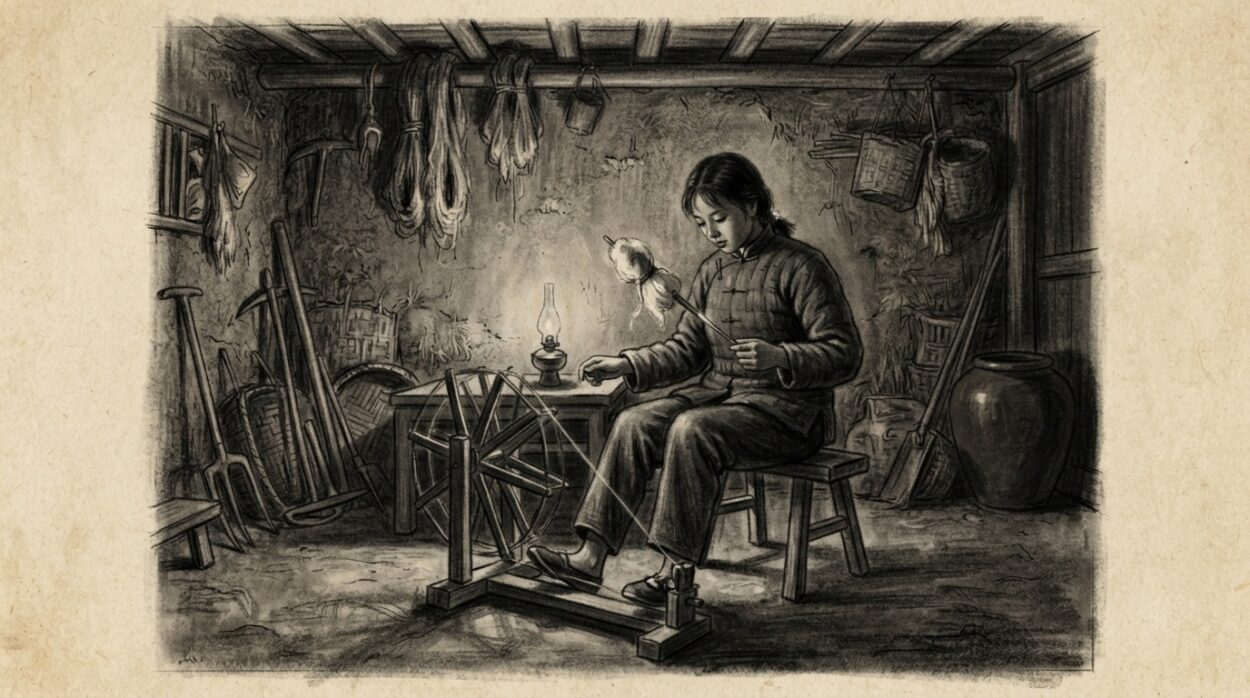
During these long winter nights, the head of the household — the young woman’s father-in-law — would regularly leave the warmth of the home to gamble. While he spent hours away, the young daughter-in-law would stay up late, keeping herself busy by spinning thread. She quietly maintained her vigil until he finally returned, stayed awake to open the heavy wooden door for him, and only then retired to her own quarters to sleep. Her mother-in-law had already set a strict deadline for her husband to return home, but the older man paid little attention to these boundaries, ignoring the rules his wife had set. This nightly pattern established a weary cycle of late-night tension, where the women of the house bore the emotional and physical burden of waiting for a patriarch whose habits showed no sign of improvement or consideration for the family.
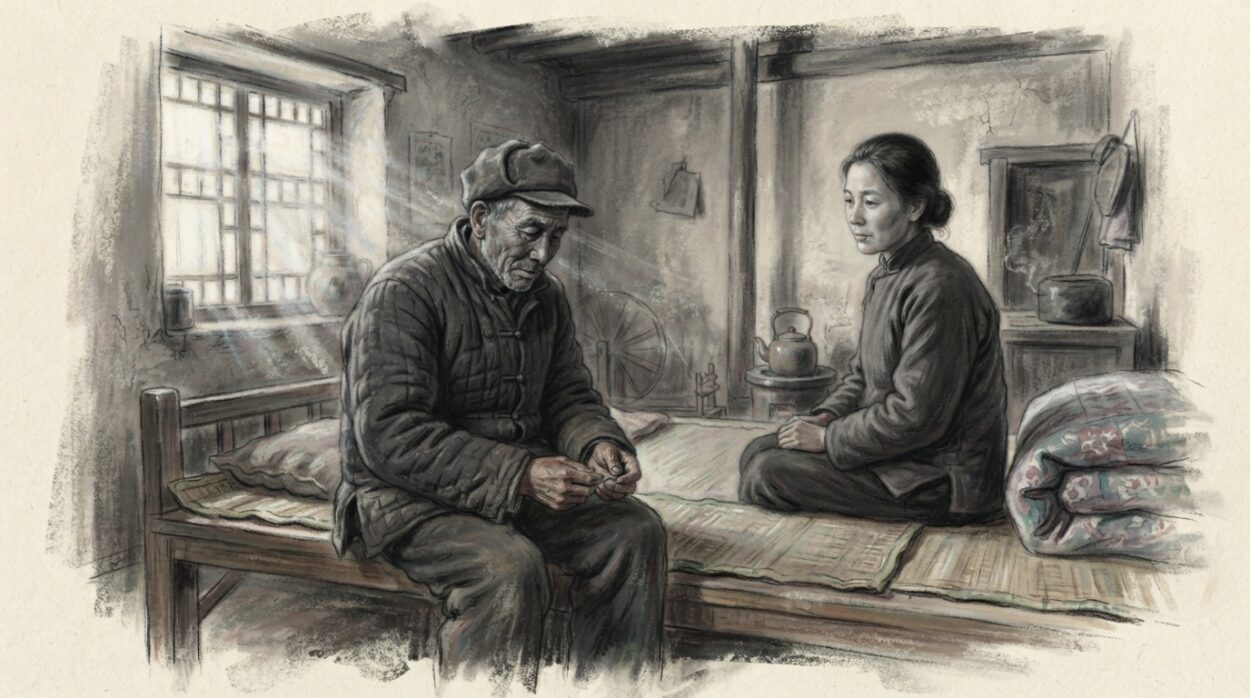
One particularly bitter day, the weary mother-in-law pulled her daughter-in-law aside to offer a practical solution to the exhausting routine. She told her directly that if the old man failed to arrive home by the established hour, she should simply lock the doors, go to bed, and stop waiting up to let him in. The older woman hoped this measure would alleviate some of the physical strain placed on the young bride, who was sacrificing precious hours of rest. Yet the young woman responded with a profound sense of duty and empathy that transcended mere convenience. She gently explained that while it was not her place to judge or interfere with her father-in-law’s personal habits, looking after his physical safety remained essential to her role. She noted that if he stayed out in the severe northeastern frost for too long and caught a dangerous chill, she would carry a heavy personal burden of responsibility.
A late-night return sparks an unexpected realization
The deep winter continued, and one night the old man did not return until the clock struck two in the morning. True to her word and her steadfast care, his daughter-in-law jumped up from her work as soon as she heard his knock, opening the door swiftly to let him out of the biting cold. After coming inside and shaking the frost from his coat, he looked around in surprise and asked his wife why the young woman was still awake at such an ungodly hour. The old lady snapped back in anger, asking him if he truly had the nerve to ask such a question. She explained, with sharp frustration, that the young bride sat spinning thread every night, waiting patiently for him to return so she could open the door before finally resting. Stunned by the revelation, the old man fell completely silent, sitting by the hearth to smoke in deep reflection until dawn broke.
As the morning light filled the room, the old man finally spoke to his wife, confronting his own behavior with sudden clarity. He admitted that he often came home past midnight without accomplishing anything worthwhile, yet his carelessness forced his daughter-in-law to sacrifice half her night just to welcome him inside. Thinking carefully about the situation for the first time, he confessed that his selfishness felt deeply shameful. In that defining moment, he decided to change his entire path. He declared that starting from that very day, he was quitting gambling entirely and forever. True to his word, he abandoned the vice. This remarkable shift happened not because he was scolded or cornered into submission, but because he was confronted with the pure, unselfish dedication of someone who cared for his well-being without demanding anything in return.
This seemingly simple story carries a profound and timeless lesson about the extraordinary strength found in genuine goodness. The young woman did not respond to her father-in-law’s harmful behavior with bitter criticism, sharp complaints, or outward resentment. Instead, she treated him with consistent kindness, patience, and unwavering respect. Sometimes, the quiet, unassuming power of authentic goodness can transform a person in ways harsh criticism, endless lectures, and angry confrontations never could. Human nature often makes us resist those who attack or judge us, hiding our flaws behind defensive walls. However, when met with pure, uncalculated sincerity, those walls begin to crumble, allowing true remorse and personal growth to take root naturally in the individual’s heart, without the bitter sting of forced compliance.
Contrasting approaches to human relationships
To fully understand why this transformation occurred, we can examine the three distinct people in this household: an old man trapped in a destructive gambling addiction, a frustrated wife who constantly complained about his behavior, and a compassionate daughter-in-law who quietly spun thread late into the night. The wife simply could not stand her husband’s reckless actions and irresponsible lifestyle. She focused entirely on his faults and desperately wanted him to change for the family’s good. However, her constant focus on his shortcomings only caused him to tune her out and refuse to listen. When we focus exclusively on what is wrong with another person, we tend to adopt an adversarial posture that alienates them and drives them further away from the positive changes we hope to see in their daily lives.
Frustrated by her husband’s persistent resistance, the old woman tried a different approach rooted in compromise and negotiation. She thought she would give him a reasonable time to go out, asking only that he return a little earlier to keep the peace. She reasoned that because winters in the Northeast were fiercely cold, her motivation came from care, and he would listen to reason this time. Yet, the old man continued to ignore her boundaries entirely. As a result, the mother-in-law’s frustration grew exponentially, fueling her inner resentment. She felt she was only trying to keep him safe, and his dismissive response felt like a personal insult. Her internal monologue shifted toward bitterness; if he wanted to freeze outside, perhaps he deserved to learn a harsh lesson the hard way.
When her husband finally stumbled home late and asked why the daughter-in-law was still awake, the old woman saw a golden opportunity to vent all her pent-up resentment at once. She lashed out with sharp sarcasm, asking how he had the nerve to even ask. But we must pause and evaluate what all her years of criticism, nagging, and venting had actually accomplished. She desperately wanted to change someone else through sheer force of will, but her underlying frustration and accumulated resentment only pushed him in the exact opposite direction. When we channel our energy into policing another person’s shortcomings, getting upset when they refuse to change, and allowing bitterness to take hold of our hearts, we create an emotional environment that makes genuine personal transformation virtually impossible for everyone involved.
Unpacking the unique mindset of the daughter-in-law
Why, then, was the young daughter-in-law able to accomplish what her mother-in-law could not achieve over many years? The core difference lay in her expectations: she expected absolutely nothing in return for her actions. She did not focus on her father-in-law’s numerous shortcomings or judge him for his personal failures. Instead, she focused entirely on his fundamental human well-being. She simply did not want an elderly man standing outside exposed to the freezing winter elements. As a member of the household, she saw opening the door for him as a natural part of her daily responsibility — and if something fell under her scope of duty, she believed in doing it thoroughly and cheerfully, without keeping score or demanding concessions.
This perspective meant no hidden bargaining, no underlying resentment, and no condition that the old man change his habits before she extended her care. Her choice to spin thread late into the night also reflected this balanced and practical attitude. In traditional rural households, spinning thread was an essential part of the domestic labor she was responsible for completing each day. Therefore, rather than sitting idly and resenting the wait, she used those late hours productively to get ahead on her required work. Furthermore, there was a practical reason for keeping busy: sitting in a quiet, dark room waiting for someone to return can easily induce heavy sleepiness. By keeping her hands occupied with her craft, she stayed alert and ensured she would hear his knock immediately.
The young daughter-in-law’s experience offers a remarkably simple yet profound lesson for modern life. We are reminded to care sincerely about others and quietly do what is ours to do, without attaching hidden conditions, demands, or expectations of immediate reward. That was the true secret behind her quiet influence, and it was not complicated. It was built entirely on foundation blocks of genuine kindness, profound sincerity, and deep-seated compassion. In a world that often relies on loud arguments, legalistic boundaries, and transactional relationships to resolve interpersonal conflicts, this historical account reminds us that sometimes the quietest, simplest actions hold the most transformative power over the human heart.
Cultivating a spirit of quiet compassion
When we look closely at the outcome of this family dynamic, we see how unconditional kindness creates a ripple effect of self-reflection. The father-in-law was not shamed into submission by a public scolding or a disciplinary lecture; rather, his conscience was awakened by the stark contrast between his own careless self-indulgence and the pure, quiet dedication of his daughter-in-law. When people are given the grace of being treated with respect despite their flaws, they often get the emotional breathing room to evaluate their own behavior honestly. Criticism often forces people into defensive corners, whereas unearned grace invites them to step out of the darkness and choose a better path of their own accord, transforming relationships from the inside out.
The lessons embedded in this 1930s account from Jilin Province extend far beyond the specific historical context of rural family life. Whether dealing with difficult colleagues, strained friendships, or complex family dynamics, the temptation to control others through criticism and frustration remains a universal human struggle. We often believe that if we push hard enough, complain loudly enough, or set strict enough conditions, we can force the people around us to become better versions of themselves. Yet this story shows that lasting change rarely comes from coercion. By shifting our focus away from others’ faults, letting go of bitter expectations, and tending to our own responsibilities with a compassionate heart, we foster an environment where true healing and personal growth can finally occur.
Ultimately, the Li family’s transformation highlights a profound truth: goodness is its own quiet force. The young woman did not set out to reform her father-in-law; she merely acted out of genuine care and a steadfast commitment to her daily responsibilities. Her story encourages us to examine our own hearts and motivations when conflicts arise in our relationships. Are we approaching others with demands for perfection and a head full of grievances, or are we offering patience, sincerity, and quiet support? By choosing compassion over complaint and sincerity over strategy, we open the door for profound changes — not only in the people around us, but within our own character as well.
Translated by Katy Liu and reviewed by Tatiana Denning
Follow us on X, Facebook, or Pinterest
