
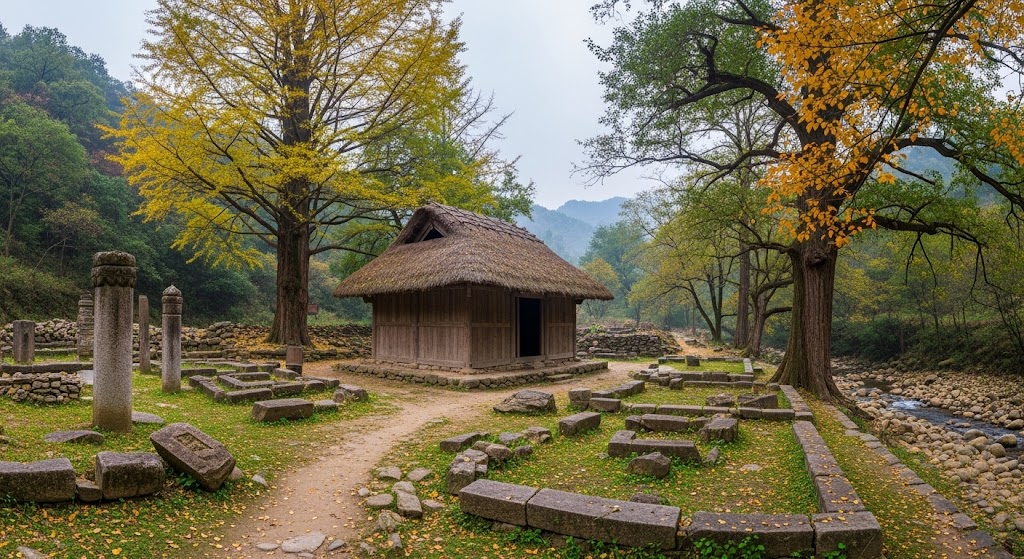
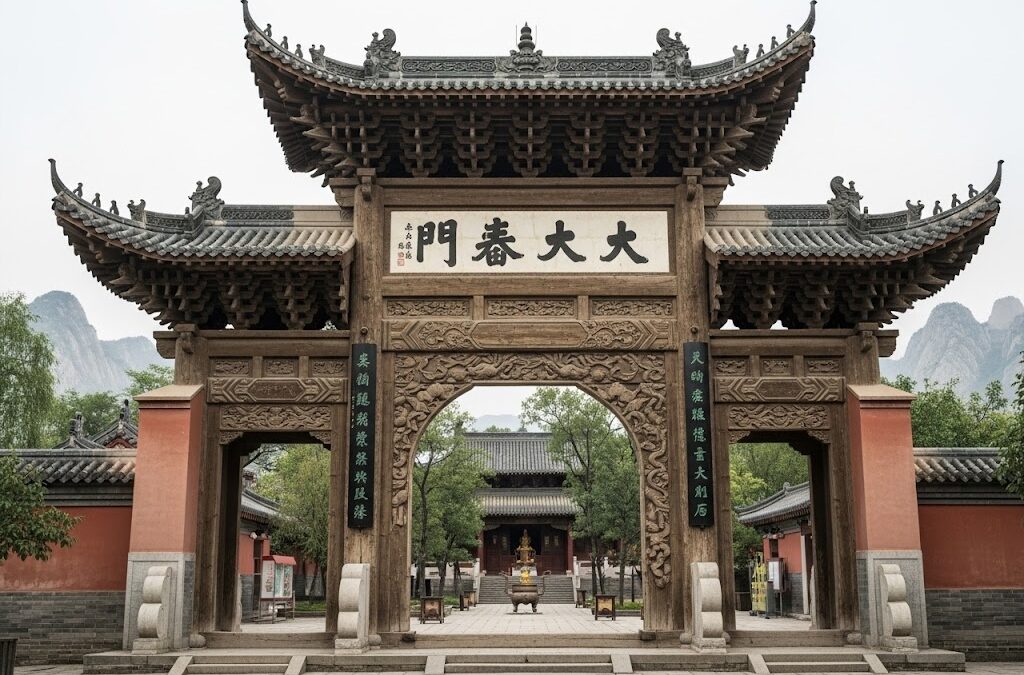
In the heart of Bozhou in Anhui Province stands Baiyi Temple (白衣庵), a centuries-old Buddhist sanctuary known not only for its spiritual legacy, but also for an extraordinary mystery: Its temple gate faces northwest — a rare orientation in traditional Chinese architecture. The reason behind this architectural anomaly? A profound story of reincarnation, in which a devoted monk was reborn as a wealthy Shanxi merchant to fulfill a vow from his previous life.
This is more than folklore. It’s a striking account that invites us to explore more profound questions about destiny, memory, and spiritual purpose — especially for those seeking to become immune to regret.
A temple destroyed, a vow left unfinished
Baiyi Temple dates back to the Song Dynasty, but was destroyed during the chaotic final years of the Ming era. In 1649, during the early Qing Dynasty, a humble restoration began with just a single thatched hut. Soon after, a wandering monk named Desheng arrived in Bozhou and vowed to rebuild Baiyi into a grand monastery north of the Yangtze.
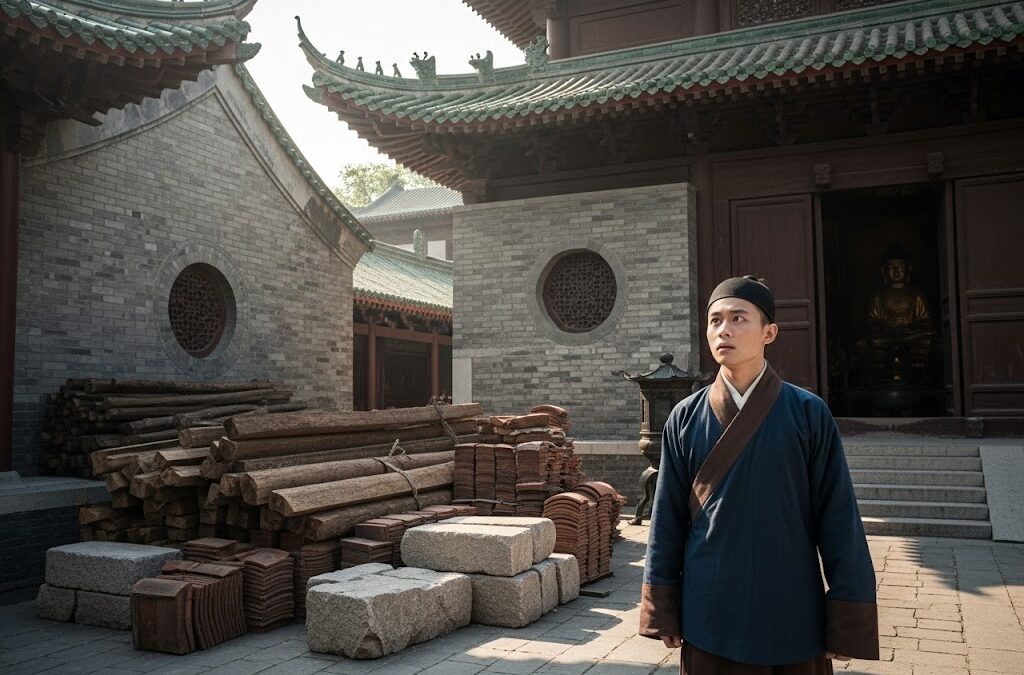
For decades, Desheng roamed the land, begging for donations, saving every coin, and purchasing land and materials. Finally, in 1740, everything was ready — but fate intervened. Desheng passed away before construction could begin. The vision died with him… or so it seemed.
A young merchant awakens to his past
Twenty years later, in 1760, a 20-year-old merchant named Dong Jixian from Shanxi arrived in Bozhou to trade medicinal herbs. During a casual visit to Baiyi Temple, he felt an eerie familiarity — the layout, the Buddha hall, even the piles of unused building materials. Then, something extraordinary happened. A flood of memories surged through him. Dong realized: I was Desheng in a previous life. He identified sacred texts that he had personally copied and official temple documents that he had once stored in the temple. Every detail matched. Overcome with emotion, he collapsed to the ground in tears.
From wealth to wisdom: Completing a life unfinished
Though Dong had once pursued the imperial exams, he had failed and turned to commerce, eventually amassing a fortune. Now, faced with the revelation of his past life, he returned home to Shanxi to seek his parents’ counsel. To his surprise, his parents weren’t shocked. They reminded him that, as a child, he would often ask: “Where is Baiyi Temple in Bozhou?”
With their support, Dong donated an enormous sum to restart the reconstruction. He oversaw the completion of the grand temple that his past self had envisioned. When the temple was finished, he even composed a calligraphic inscription recounting his reincarnation and his spiritual journey across two lifetimes. To honor this profound cycle of return, the temple gate was built facing northwest — toward Shanxi, Dong’s birthplace — symbolizing the bridge between past and present lives.
What does it mean to be immune to regret?
Desheng, the monk, left the world with unfinished business, but Dong, the merchant, returned to complete it. This powerful story reminds us that not all promises die with the person who made them. Some linger, waiting for a second chance. For those who believe in reincarnation, this tale isn’t just symbolic — it’s evidence of the soul’s continuity and its yearning for fulfillment.
But even beyond metaphysics, the story offers a lesson for this lifetime: We may not remember our past lives, but we carry their intentions — the dreams we left behind, the vows we didn’t keep. To live without regret, we must listen deeply to what calls us, even if it doesn’t make logical sense. Sometimes, healing a past wound means embracing something that feels strangely familiar, mysteriously urgent.
Final thoughts: When purpose transcends lifetimes
Whether you take this story as literal truth or symbolic wisdom, it holds an important message: unfinished spiritual work does not vanish. It waits. And sometimes, it returns to us — asking to be honored, asking to be fulfilled. To be immune to regret isn’t to avoid mistakes. It’s to walk the path you know deep down is yours, even if that path began lifetimes ago.
Follow us on X, Facebook, or Pinterest
