

Have you ever felt a powerful premonition of something before it happened?
Abraham Lincoln had a dream about his death three days before his assassination. During World War II, on the eve of Hitler’s bombing of London, countless household cats began acting strangely, with some pacing anxiously, others tugging at their owners’ clothing, trying to drag them outside. To many, such phenomena seem supernatural. Yet science has a name for it: the sixth sense.
In psychology and neuroscience, this sixth sense is known as extra-sensory perception (ESP). Unlike sight, hearing, smell, taste, or touch, it appears to tap into a different channel of awareness. One that gathers information from beyond the ordinary senses, and sometimes can glimpse the future.
Research suggests that this gift is not merely a fantasy, but is deeply linked to the brain’s natural prediction system. Scientists have discovered that the anterior cingulate cortex (ACC), located in the upper part of the prefrontal lobe, is situated along the septum between the left and right hemispheres.
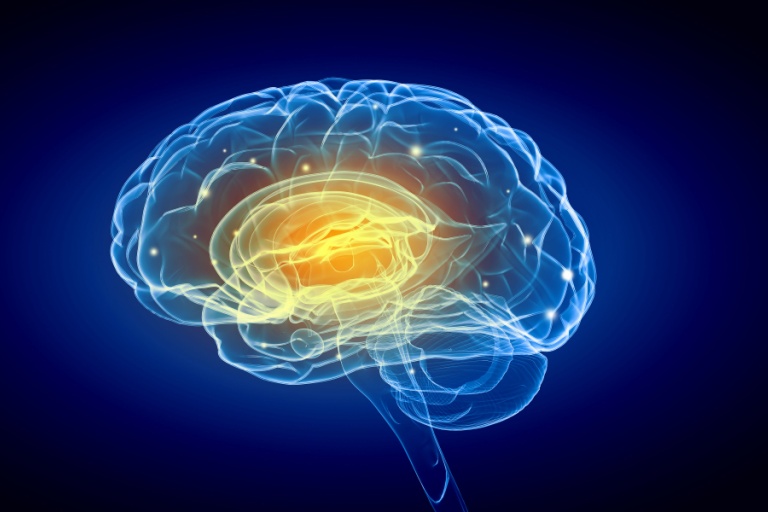
The ACC is linked to your emotional brain, specifically the limbic system, which is responsible for emotions, memory, and decision-making. This is the part of the brain that issues warning signals even before you consciously recognize danger, allowing your sixth sense to pick up risks or threats in advance.
One way to describe this ability is a model known as “Predictive Coding,” proposed by Rajesh P. N. Rao and Dana H. Ballard. The idea originated from computer science. The theory suggests that the brain does not process every detail of reality. Instead, the brain’s visual system relies on memory and experience to forecast, guess, or predict what is about to happen.
Higher parts of the brain send estimates about what we’re seeing to lower parts, and then the lower parts send back the differences between those estimates and what is actually being seen. By updating the predictions only when reality surprises us, you conserve a significant amount of processing resources (energy).
By creating a computer model using this concept, Rao and Ballard were able to show that the model “developed” brain-like features when shown natural images. Some of the “neurons” acted like real ones in the brain that respond to edges or changes in shapes. This suggests that some visual effects previously thought to result solely from direct input may be influenced by feedback from other brain areas, thereby facilitating the brain’s more efficient processing of images.
For example, when you step into a familiar room, your brain automatically “fills in” the lighting, furniture, and walls. If everything matches expectations, you hardly notice. But if a cat suddenly appears on the table, your brain instantly flags it as “unexpected,” and your attention sharpens.
Neuroscientist Andreas J. Keller and his research team at the University of California, San Francisco, have found striking evidence of this predictive mechanism. In experiments with mice, they discovered that neurons in the visual cortex not only receive direct sensory input, but also signals from higher brain regions. Messages not of what is, but of what should be.
This dual system allows the brain to detect anomalies, fill in gaps, and anticipate change. This internal simulation ability is the basis for the brain to anticipate external changes. Using techniques such as two-photon calcium imaging, genetic tagging, and optogenetics, scientists have been able to precisely track and control the activity of specific neurons in mice.
The sixth sense
The research team had proved that the feedback input indeed comes from a higher visual region rather than directly from the eyes. This breakthrough in predictive coding theory demonstrated that the brain already has a built-in mechanism that, in essence, constantly runs a silent simulation of the future, which brings us back to the concept of the sixth sense. When the brain detects subtle shifts in the environment, signals that don’t quite match your expectations, it can surface as a sudden unease, an inner nudge, or a powerful intuition.

Lincoln’s dream, the cats’ strange behavior, and the flashes of warning you sometimes feel in daily life may all arise from this hidden mechanism. In other words, your mind is constantly weaving together memory, perception, and internal models to calculate what comes next. Most of the time, this runs quietly beneath your conscious awareness. Sometimes, the result breaks through as a feeling of intuition so strong that it moves you to act. Your brain is naturally equipped with a built-in mechanism to foresee risks and possibilities, which may be the very root of what we call the sixth sense.
Perhaps each of us is born with a sixth sense, a natural gift for perceiving the future, although it often lies hidden in the depths of the subconscious. As science advances, we may one day learn how to awaken this inner perception, and the ability to glimpse what lies ahead will no longer belong to myth or mystery, but will be seen as the very fabric of human life.
Translated by Katy and edited by Helen London
Follow us on X, Facebook, or Pinterest
