
Energy, ambition, and the moral price of progress in a world rewired by China’s rise.
At night, from orbit, the Earth tells the truth. Cities gleam like neurons. Continents pulse with electricity. The map of human civilization glows wherever the current flows.
For the first time in history, one nation — China — now produces more of that light than the United States, the European Union, and India combined. Its power stations hum across deserts, mountains, and coastlines, feeding the vast digital metabolism of modern life: our factories, our feeds, our artificial intelligences.
Electricity has become the new measure of empire. Yet its conquest reveals a deeper rift. While China builds grids that stretch like veins across a continent, much of the West dismantles or delays its own, tangled in profit cycles and political paralysis.
Beneath the flicker of our screens lies a fragile infrastructure of faith — in shared systems, in collective purpose — that is dimming.
This is the story of how power, in its purest form, has shifted eastward: not as ideology, but as energy. And why the future may belong not to the loudest civilization, but to the one that simply keeps the lights on.
Energy as empire
Every civilization has its element. Rome’s was iron. Britain’s was coal. America’s was oil. Now, China’s is electricity — measured not in abstract numbers, but in a staggering fact: In 2024, China generated more electricity than the United States, the European Union, and India combined.
Power, in every sense, has become literal again.
For centuries, the dominance of nations could be charted through their mastery of energy — the ability to move goods, armies, and ideas. But the 21st century has inverted that equation. Power today is not only what fuels machines, but what sustains networks.
It flows invisibly through data centers, server farms, semiconductor fabs, and charging stations — the quiet circuitry of modern life.
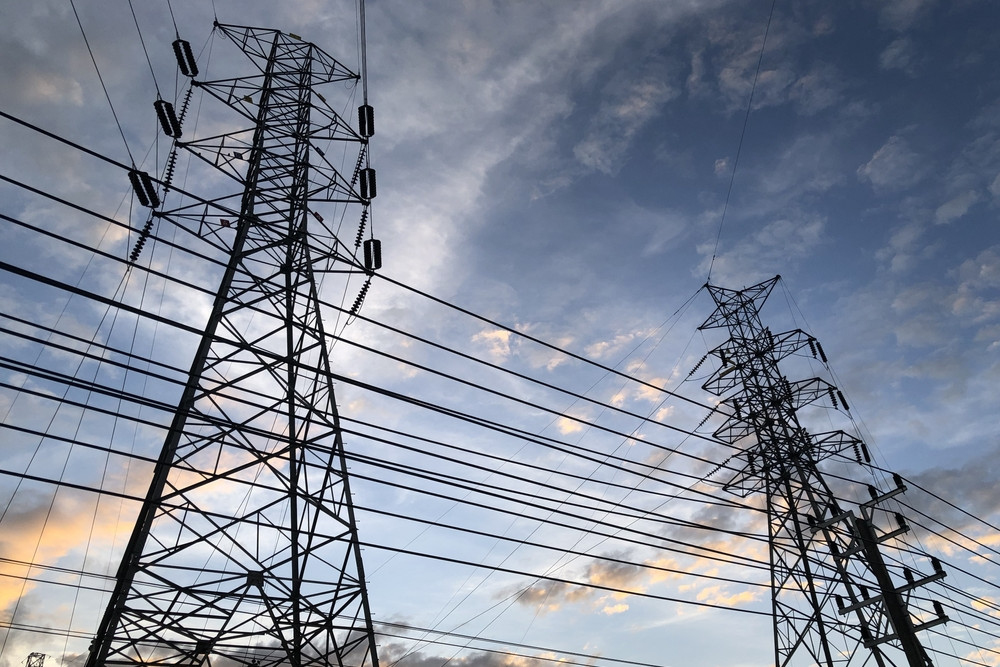
And while the West debates climate targets and quarterly profits, China builds substations, turbines, and the largest transmission grid in human history. Its energy output, now surpassing 10,000 terawatt-hours per year, has become the foundation of a new global hierarchy.
Every empire believes it is eternal — until the lights begin to flicker.
The question, then, is not merely how China rose, but why others fell — how societies that once electrified the world lost faith in their own infrastructure.
The moral collapse of infrastructure
The West’s energy stagnation is not a technological failure, but a philosophical one.
It is the story of a civilization that outsourced its labor, its production, and eventually its capacity to dream in decades rather than quarters.
Since the 1980s, governments in the U.S. and Europe have treated public works not as moral obligations but as market choices. Power plants, grids, and railways — once symbols of collective progress — became liabilities on balance sheets. Infrastructure was no longer built to last; it was built to return on investment.
Meanwhile, democratic societies grew risk-averse. Any project of national scale — a nuclear plant, a dam, even a high-voltage corridor — now stalls in a labyrinth of litigation and partisan noise.
The result is a form of moral infrastructure decay: the paralysis that comes when a culture can no longer act in unison for its own survival.
Electricity, like civilization, needs continuity. When the cultural current breaks — when faith in shared systems fades — decline begins quietly, like the hum of an aging transformer.
China’s state vision and the Western stall
China’s ascent in energy production is not a miracle of ideology, but of scale and planning.
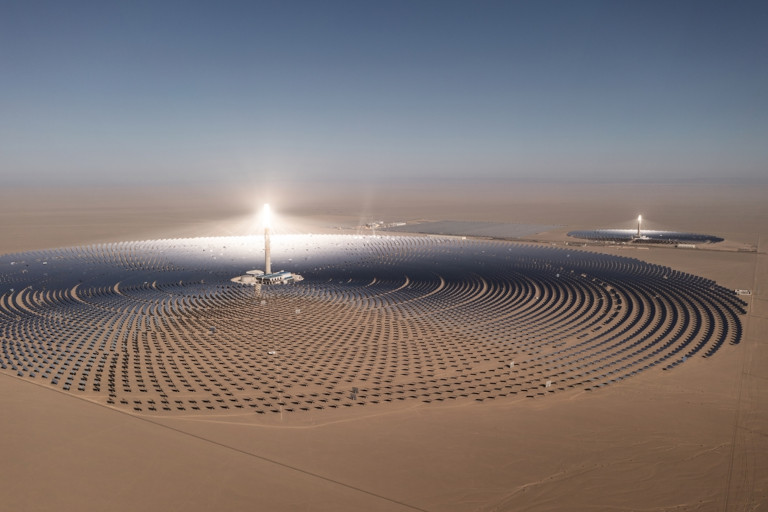
The Chinese Communist Party, ruling through centralized authority, has built more power infrastructure in two decades than the West has in half a century. Hydroelectric megaprojects like the Three Gorges Dam, ultra-high-voltage lines stretching thousands of miles, and vast solar deserts in Inner Mongolia testify to a state that sees energy not as commerce, but as destiny.
Yet this vision comes with moral contradictions as vast as the projects themselves.
China’s energy expansion has been fueled not only by ambition, but by coercion — enforced labor, censorship, and suppression of dissenting voices. The same system that mobilizes entire provinces to build solar fields also silences those who question its cost.
The persecution of groups like Falun Gong, ongoing reports of religious repression in Xinjiang, and strict control of media all reveal the human toll of centralized power unchecked. In this model, light comes at the expense of liberty.
Still, to ignore the results is to misunderstand history.
China has electrified 1.4 billion people, lifted hundreds of millions out of poverty, and achieved the infrastructure continuity the West now envies — albeit through means incompatible with democratic ideals.
It’s a paradox that defines the age: a free society unable to act, and an unfree one able to act too much.
The data delusion of modern life
Electricity isn’t just powering factories or governments. The real hunger lies in our pockets.
Every tap, click, and prompt is powered by an industrial backend few ever see. Training a single AI model can consume as much power as 10,000 American homes use in a year. Streaming platforms now consume energy equivalent to the entire nation of Spain.
Even the “cloud” — that ethereal metaphor of modern convenience — is rooted in sprawling server farms cooled by rivers of electricity, often in countries with the cheapest power, like China.
We outsource not just our manufacturing, but our energy appetite. The smartphone in one’s hand may have been assembled in Shenzhen using electricity from a coal plant in Shanxi, processed on a server in Guangdong, and stored in a data center powered by the same grid that lights up Shanghai’s skyline.
The digital world is not weightless. It’s built on cables, steel, and gigawatts.
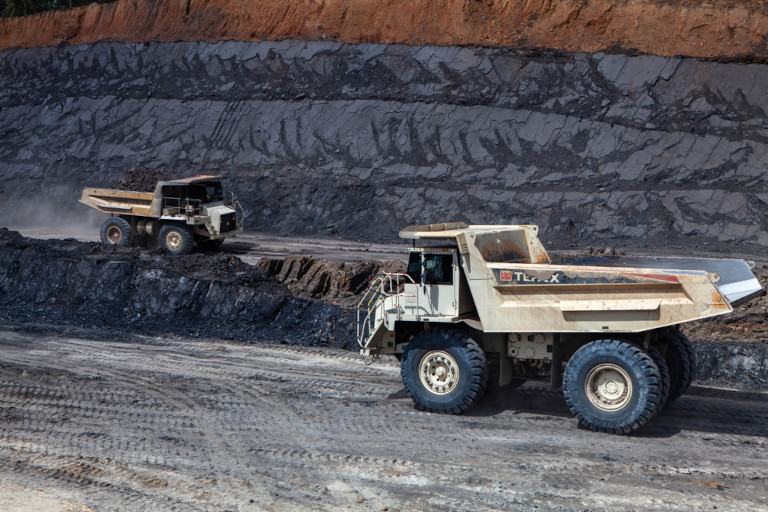
And while Western consumers increasingly demand “clean” technology, much of the energy sustaining that green transition — from battery production to solar panel manufacturing — flows through the same Chinese grid, powered partly by coal.
Which raises a deeper, civilizational question: what happens when a culture consumes more energy than it can morally or materially produce?
What a post-electric civilization might look like
When the Roman Empire fell, it wasn’t from lack of stone or slaves, but from the collapse of administrative energy — the inability to maintain the roads, aqueducts, and logistics that sustained its order.
Today’s societies risk a similar entropy, not in marble but in megawatts.
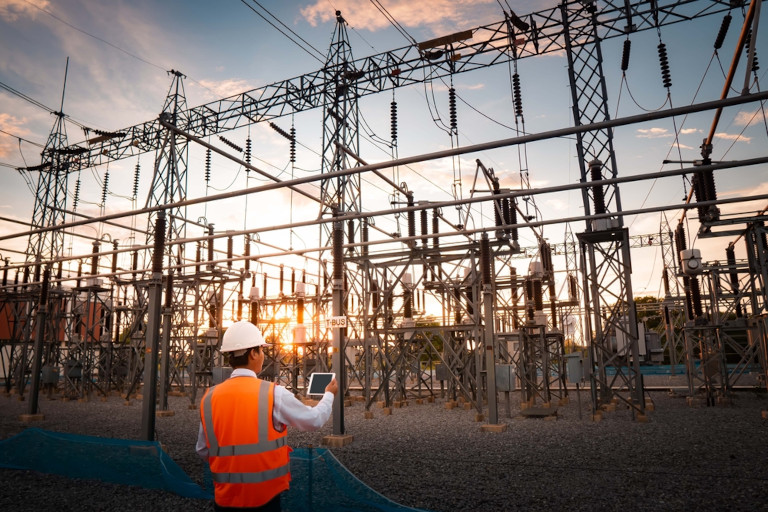
The West’s gridlock has become literal: aging substations, declining investment, and resistance to new power corridors have created an invisible fragility beneath the comforts of modern life.
Meanwhile, the East — led by China — has built the arteries of a new civilization, powered by vast flows of energy and data that bind its economy to ours in complex dependency.
But the lesson here is not imitation. The moral price of authoritarian efficiency remains too high.
Instead, the lesson is rediscovery: to rebuild collective purpose without central control, to reimagine energy not just as a commodity but as a covenant — the shared infrastructure that keeps societies alive, free, and human.
Civilization is, at its core, a story about the management of light — how we generate it, distribute it, and justify its use.
If the next century belongs to those who keep the lights on, it also belongs to those who remember why they’re worth keeping on at all.
Conclusion
Electricity has become our new empire — invisible, indispensable, and moral in ways we rarely consider.
China’s dominance in global power production may well define the coming century. But the ultimate question remains universal:
Will we build civilizations that merely shine — or ones that enlighten?
Follow us on X, Facebook, or Pinterest
