

In Principles for Dealing with the Changing World Order, Ray Dalio writes, “No system of government, no economic system, no currency, and no empire lasts forever, yet almost everyone is surprised and ruined when they fail.” That sentence, as terse as it is broad, haunts the edges of every global forecast today. The world is, Dalio argues, in the latter stages of a multi-century cycle, one in which the incumbents must contend with rising challengers and where internal stresses often precede external collapse.
If we take that framework seriously, then the key question becomes: where do the U.S., China, India, Germany, and South Africa each stand in this arc of rise, peak, and decline? How neatly (or messily) do they align with Dalio’s map of six power levers (innovation, competitiveness, military strength, trade/output, financial center strength, reserve-currency role) and with the internal and external cycles he describes?
In what follows, I sketch a comparative narrative — sometimes contradictory, always grounded in data — of a world in flux.

The United States: Last stand or slow fade?
The United States still embodies the established order in many ways. Its financial markets, dominant currency, depth of capital, and technology hubs remain unmatched globally. But the deep cracks Dalio warns of — excess debt, political polarization, and stretched social contracts — are increasingly visible.
Innovation and tech dominance
In the technology arena, the U.S. remains exceptional. A recent Federal Reserve note underscores that as of 2024, the U.S. hosted 4,049 data centers, outpacing the entire European Union (~2,250) and China (379) in scale and per capita intensity. That digital infrastructure undergirds AI, cloud, and big-data leadership, giving the U.S. a latency and responsiveness edge.
Financial hegemony and reserve status
Dollar dominance still anchors the financial world. Despite periodic discussions of “de-dollarization,” the dollar accounts for roughly 58 percent of disclosed global reserves. JPMorgan’s research on de-dollarization concedes that while shifts may occur gradually, the dollar’s network effects and deep liquidity are extraordinarily durable. In short, the U.S. continues to collect a quasi-tax on global capital flows.
Debt, polarization, and internal fragility
This is where Dalio’s warning looms largest for the U.S. Public debt is nudging or exceeding 100 percent of GDP, depending on the measurement. The Congressional Budget Office’s long-term outlook is sobering, pointing to rising interest burdens and structural rigidity. (CBO projections referenced via fiscal analysis groups). Further, President Trump’s tariff gambits have provoked stern rebukes from Dalio himself, who warned on Meet the Press of a potential “breakdown of the monetary order” and of outcomes “worse than a recession.”
In this regard, U.S. politics is enacting an internal order cycle: wealth gaps, institutional distrust, populist extremes, and fiscal irresponsibility — all the hallmarks Dalio sees in the decline phases of prior empires. Despite these risks, the U.S. remains a formidable anchor. Its ability to adapt — even in crisis — may yet outpace its structural drags. But unless debt is reined in, inequality is managed, and governance trends are reversed, the decline may accelerate faster than many expect.
China: The scaled challenger with structural headwinds
If the U.S. is the incumbent, China is the canonical contender. But Dalio’s model warns: scale is necessary but not sufficient; internal trajectories matter even more.
Innovation, scale, and climbing the ladder
China has rushed up the global innovation ladder. In the Global Innovation Index 2025, China continues to rise among the world’s top innovators. Its R&D infrastructure, state industrial policy, and scale markets provide fertile ground for incremental leapfrogging, especially in areas like AI, semiconductors, and green energy.
Research into AI publications from 2000 to 2025 confirms a dramatic shift: China expanded its share from under 5 percent to nearly 36 percent of global output, making it the single most dominant contributor — outpacing the U.S. and EU in sheer volume. That kind of momentum matters — not just for citation counts, but for setting research standards and ecosystems
Military, trade, and global posture
On military spending, China is firmly number two worldwide, playing both deterrent and projection roles. In trade and output, it remains an export engine; when global goods flows are disrupted, China often retains agility — especially via regional supply chains. But its financial system has limits. Capital controls, incomplete liberalization, and the lack of full convertibility hamper the yuan’s ability to become a global reserve or transaction medium. Today, the yuan accounts for just ~2 percent of global foreign exchange reserves.
Demographics, confidence, and internal cycles
Here is where China’s risk is substantive. The 2024 national data revealed a shrinking population (a decline of ~1.39 million people) and an aging population. The earlier one-child policy’s legacy is now constraining labor pools, consumption growth, and social support. Meanwhile, real estate stress (leveraged property developers, local government debt tied to land sales) weighs on consumer confidence and credit flows.
As Reddit commentary puts it bluntly: “The Chinese economy’s real-estate investing orgy is a house-of-cards. … The next generations are considerably smaller … the social safety net will be bankrupt.” Though colorful, such critiques echo a deeper Dalio warning: internal imbalances often precede external collapse. Yet if China can stabilize demographics, rewire its debt framework, and maintain innovation momentum, it may indeed ride the latter half of its ascent. If not, its trajectory could flatten or even reverse.

Germany: Advanced, constrained, strategic pivot point
Germany is the paradigm of a mature power in Dalio’s framework: high capability, but vulnerable to stagnation when momentum falters.
Innovation, competitiveness, and challenges
Germany consistently ranks among the more competitive economies globally. In the IMD World Competitiveness Ranking 2025, Germany is placed within the top 20 and is noted as one of the most improved among peers. That said, Germany’s industrial exports are under pressure from rising labor, energy, and regulatory costs. Its pivot into a higher-cost, high-wage Europe also constrains basic manufacturing competitiveness.
Energy, trade, and output pressures
The post-Ukraine energy realignment has hit Germany hard. Elevated electricity prices, dependence on imported gas, and transition risks have clouded industrial strategy. Reuters recently reported a sharper-than-expected drop in industrial output, affirming the structural drag. Trade remains Germany’s lifeblood — but its comparative edge has narrowed.
Military, financial center, and euro anchoring
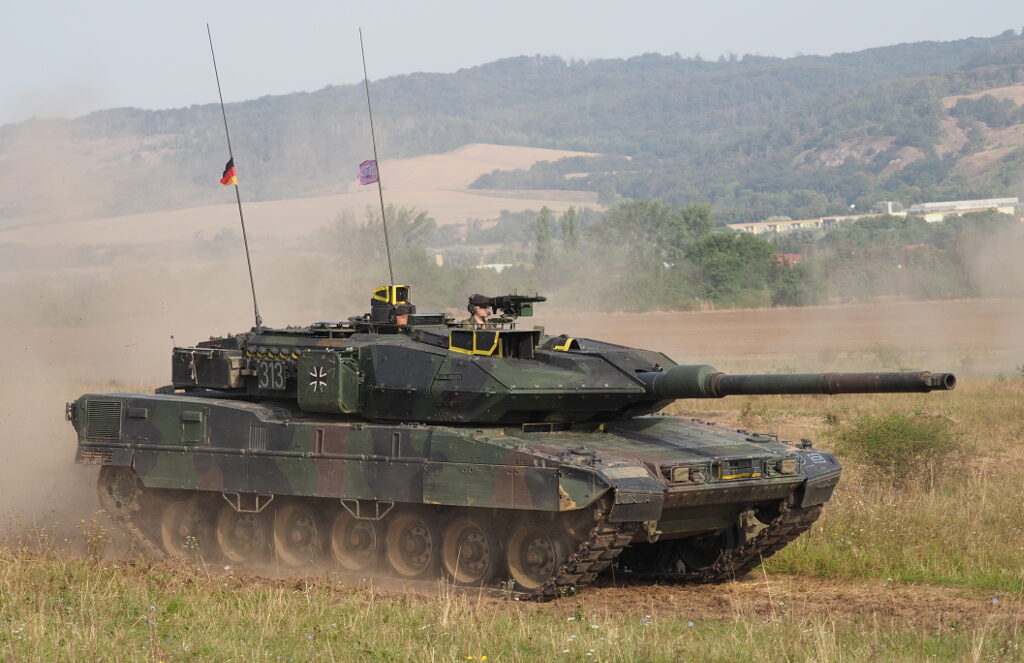
Germany is increasing military expenditures after historically low baselines, stepping into a more proactive European defense role. Its financial center (Frankfurt) is one of the EU’s top hubs, especially post-Brexit. In the reserve-currency sense, Germany participates through the euro: The euro’s share of global reserves is about 20 percent. Thus, Germany is both a beneficiary and servant of Europe’s monetary architecture.
Demographics and internal constraints
Germany is among the world’s oldest societies demographically, with low birth rates and politically contentious immigration. Without a surge in productivity or a managed demographic strategy, growth will remain tepid. In Dalio’s terms, Germany risks being stuck in a “high plateau” phase rather than a continued ascent. In sum, Germany sits among the advanced powers — but the question is whether it can maintain systemic relevance in a more competitive multipolar setting.
India: A rising arc under construction
Perhaps the most significant test of Dalio’s thesis today is India: can a large, diverse, under-modernized nation ascend through compounding reforms, demographics, and systemic upgrade?
Demography and human capital tailwinds
India’s demographic profile is dramatically favorable. While many advanced nations age, India retains a youthful, growing population — the human resource for decades of growth. Unlike China, India is not yet past its demographic peak.
Innovation, scale, and reform momentum
Though India is not yet among the world’s top innovators, it is climbing fast. China, India, Turkey, and Vietnam are noted as continuing upward momentum in the Global Innovation Index 2025. The country has made strategic investments in digital infrastructure (e.g., UPI payments, Aadhaar, Startup India), logistics, and industrial clusters. Trade and output are growing in tandem: India is increasingly seen as a “China+1” destination for manufacturing diversification. In services, the surplus is robust.
Military and external positioning
India now ranks among the top global military spenders (approx. ~$86 billion), with rising procurement and modernization drives. It plays a skilled balancing act between the U.S. and China, leveraging non-alignment to extract strategic flexibility.
Internal reforms, constraints, and risks
India’s Achilles’ heel remains uneven governance, infrastructure gaps, and skill mismatches. Its fiscal prudence is far more constrained than in advanced states. Still, the reform agenda — GST, deregulation, digitalization — is potent, potentially bootstrapping productivity improvements over time. If India can hold that trajectory — maintain macro stability, deepen human capital, manage urbanization — it embodies what Dalio would consider a “rising country” built on real fundamentals, not just ascendancy by inertia.

South Africa: Possibility at the margins
South Africa is the most tentative of the five. But its position is not without interest — and Dalio’s lens helps diagnose what is required for a reversal.
Economic base and comparative constraints
South Africa is rich in resources, has industrial infrastructure (automobiles, mining), and a well-developed financial center (Johannesburg). But high unemployment (~33 percent in Q2 2025), energy constraints, and social fragility offset much of the upside. The recent end of rolling blackouts (load shedding) is a positive sign, but sustaining it is essential.
Innovation and human capital
South Africa’s human capital is uneven, with elite universities and some tech startups, but wide systemic gaps in schooling, health, and spatial inequality. Closing those will be necessary to shift the productivity curve.
Internal cycles and structural reforms
Dalio emphasized that internal order collapse often precedes external collapse. For South Africa, internal order is fragile: inequality, corruption, weak institutions, and energy insecurity undermine confidence. But if reforms persist — especially in energy, policing, and regulatory certainty — the country might inch toward a positive turning point.
External integration
South Africa’s ties to BRICS, continental trade networks, and its mineral exports give it leverage. But dependence on commodity cycles and volatility in external demand remains a constraint. In short, South Africa is not a rising power in Dalio’s sense today, but could become a marginal beneficiary if structural reforms align.
Patterns and paradoxes: What the comparative map suggests
Innovation and productivity matter more than size
Across these five nations, the strongest predictor of future success is not size but the ability to sustain continuous innovation and learning — the kind of competence Dalio calls “human productivity.” The U.S. and China lead in scale; India is climbing. Germany must avoid stagnation. South Africa must close gaps.
Internal fragility is often the silent breaker
History rarely lets external challengers push over a hegemon as long as internal collapse hasn’t already set in. Dalio emphasizes that debt, imbalance, and social erosion often do the heavy lifting before wars arrive. The U.S. is wrestling with that; China’s property and demography pose structural risks; Germany and South Africa have institutional flux; India must guard against uneven development.
Reserve money is sticky — but not invulnerable
The dollar’s dominance is deeply entrenched, partly because so many systems are built on it. But incremental diversifications (in central bank reserves, trade invoicing, local currency financing) matter cumulatively. JPMorgan sees de-dollarization as gradual, not abrupt. If China, India, or Europe builds credible alternatives, the system’s balance could erode over the course of decades.
Timing and sequencing are critical
Not every ascending state wins. The “when” matters. If China or India hits a ceiling while debt burdens rise, they may stall. If the U.S. slides too quickly, disorder might accelerate. Germany could fall behind unless it retools. South Africa could falter entirely in the absence of reforms. Dalio’s cyclical view insists that structural advantages must align with timing, not just ambition.
Toward a multipolar future: Strategies and illusions
If we believe Dalio’s framework is more than metaphor — and that big cycles indeed press upon us — then policy, investment, and strategy must adapt. For the U.S., the challenge is preserving legitimacy: controlling debt, regenerating public results, and fostering consensus. For China, the challenge is restructuring while maintaining cohesion. For India, it is scaling reforms with institutional depth, while for Germany, it involves staying relevant in the EU/Eurasia competition while pushing next-gen industrial transformation. For South Africa, the challenge is to stop the decline and sustain an incremental reversal.
In investing terms, a “core + optionality” posture makes sense: staying anchored in the U.S. dollar and developed markets, while layering optional exposure to India, selective China, and reform stories in Germany or Africa. As Dalio admonishes: “By understanding the patterns of the past, we can better prepare for the disruptions of the future.”
This is not about prophecy but probabilities. Empires don’t end overnight; they unravel. In that unraveling, new orders emerge — some peaceful, others convulsive. The shifting map of five nations shows us that the contest is not between good versus evil, but between adaptability and ossification. Suppose we accept that no empire or currency lasts forever. In that case, our task is not to pick winners but to watch the process: where is social capital unwinding, where is debt metastasizing, where is technology leapfrogging, and where is the confidence margin holding or breaking?
In that framing, the United States, China, Germany, India, and South Africa are not static entries in a list — they are points on an evolving map of power, waiting to be redrawn. And perhaps, in their comparative paths, we best see the shape of the next world order.
Follow us on X, Facebook, or Pinterest
