
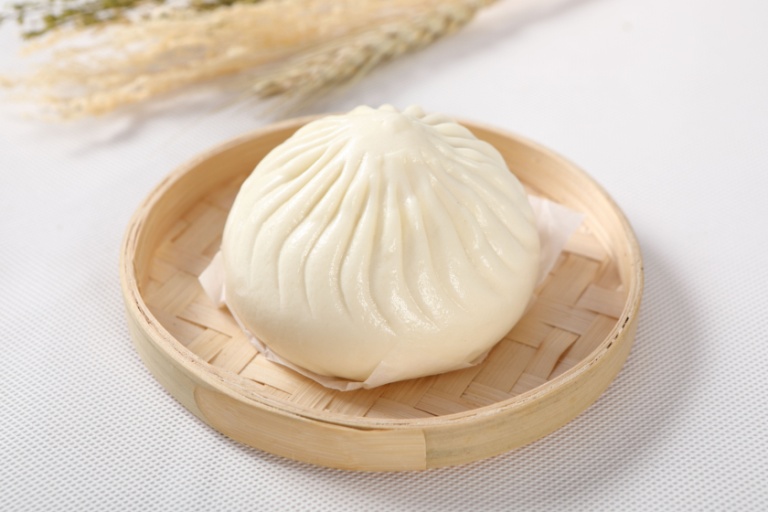
From homeless to a restaurant owner in Taiwan
Once an influential businessman, he was then in the depths of homelessness and illness, and one single steamed bun rekindled his hope for life. With a heart full of gratitude and a desire to give back, Sun Xiangtai devoted himself to this humble trade: grateful to the flour, grateful to his customers, grateful to his employees.
Renowned across Taiwan and widely imitated within the industry, the famous “Ming Jiang Steamed Buns” had no advertising. Led by Sun Xiangtai’s unwavering gratitude, a handful of employees work together with kind intentions. Their buns not only fill countless stomachs but also touch people’s hearts.
Gratitude created steamed buns that warm the heart
It was already past midnight when we arrived at Ming Jiang Steamed Buns in Taoyuan. The lights inside were bright, and two employees were already hard at work. The air was filled with the gentle fragrance of bread dough in proofing, and the faint, tangy aroma of fermentation — distinct and vital. Over the years, Ming Jiang’s reputation had spread. Media outlets vied for interviews, and competitors rushed to imitate its unique sales model.
Sun Xiangtai is broad-shouldered, with an honest face perpetually lit by a warm smile. He explained: “We insist on using traditional starter dough, which takes many times longer to ferment. Most buns on the market rise quickly but lack chewiness. For our fillings, we use freshly butchered pork hind leg and scallions from Yilan, plus special seasonings — so the flavor is naturally rich and fragrant.”
His eyes shone with confidence — not arrogance, but the quiet glow of responsibility toward both product and customer. “I hope that when our buns reach customers’ hands, they feel warmth,” he said. “So even when ingredient costs rose, I refused to raise prices, yet our business flourished instead.”
Ming Jiang buns use better ingredients than most, yet are sold for less. Sun Xiangtai reflected: “If I had started this business focused only on profit, it would never have grown this way. I do this work with gratitude — grateful to the flour, grateful to customers, grateful to employees.”

A great rise and fall from executive to airport beggar
Perhaps moved by the karmic connection of our meeting, Sun Xiangtai shared his past. “I was once successful,” he said quietly. “I was a senior life insurance executive. My father-in-law was even a prominent political figure in Kaohsiung. But because of that, I failed to cherish what truly mattered. I spent more time entertaining outside than being at home. Eventually, debts piled up — and my wife left me.”
His smile faded. “When I realized I had lost everything, it was already too late. Debt crushed me. The so-called friends were only there when I had money. When I fell, there was nothing left. That’s when I truly understood the cold and warmth of human relationships.”
Misfortune came in waves. His father passed away from terminal liver cancer. Soon after, his sister in Japan was diagnosed with the same illness. Sun Xiangtai sold his father’s house, arranged the funeral, and rushed to Japan to care for her. After months of chemotherapy and dwindling savings, he accompanied his sister through her final days. Within months, he lost the two people dearest to him. Then fate struck again as doctors diagnosed him with liver cancer.
“With only a few thousand dollars left,” he said, “I wanted to go somewhere no one knew me and end my life.” He bought a one-way ticket to the Philippines, planning to die by the sea. But despair weakens even resolve. “I had the courage to decide to die, but not the courage to take action,” he admitted. With no money and no acquaintances, hunger drove him to beg for food at the airport.
One day, a Taiwanese expatriate said to him: “Two months ago, I saw you here and thought you were temporarily poor. Now I see you again, still begging. As a fellow Taiwanese, you make me feel ashamed.” Those words pierced him — the only words he truly felt in a long time. Ironically, it was that man’s report that led to Sun Xiangtai’s deportation back to Taiwan.
The bun that saved his life
Like Han Xin, who once survived on a bowl of rice given by a washerwoman, Sun Xiangtai returned to Taiwan still living as a vagrant. One day, a woman selling buns gave him one. “That bun,” Sun said, “was the most delicious food I had ever tasted.” Starving for days, he followed her instinctively and blurted out a sentence he never imagined he’d say: “Could you let me sell the buns you make?” She studied him — ragged but sincere — and told him where the buns came from.
When Sun Xiangtai first approached the shop owner, the man asked skeptically: “Looking like this, how can you sell buns for me?” He handed Sun Xiangtai a few buns and dismissed him. But Sun Xiangtai said: “That bun awakened my desire to live and work. No matter how the boss scolded me, I decided to clean myself up and come back.”
The next day, neatly groomed, he returned. Moved by his sincerity, the owner agreed to let him try selling buns. Sun Xiangtai had nothing — no money, no vehicle, and no experience. When asked how many boxes he could sell, he boldly replied: “Thirty boxes.”
The best salesperson sold only 10 boxes a day. Yet the owner did the unthinkable — he gave Sun Xiangtai 30 boxes and even lent him a motorcycle, expecting him to fail and quit. By evening, Sun Xiangtai had sold less than a tenth. But unwilling to betray the trust he’d been given, he sold until midnight with every last bun gone.
That night, Sun Xiangtai couldn’t sleep. He lay awake thinking. By dawn, he had conceived a unique approach to selling — drawing on his past experience in insurance sales. The next day, he happily paid for the buns in full. His sincerity won the owner’s trust, and he was accepted as the shop’s salesperson. Without advertising, he applied his former insurance sales skills to bun-selling.
Pushing a cart into the crowd and applying reverse thinking skills, sales soared. His kindness, integrity, and product quality turned strangers into loyal customers. Soon, Sun Xiangtai became the shop’s top salesperson. He shared his methods freely, enabling the sales staff to work just three hours a day and earn substantial monthly income. The owner grew to trust him deeply, provided him with a home, and taught him the secrets of making great buns.
Years later, the owner passed the store and his knowledge to Sun Xiangtai, who accepted not only the business but also the responsibility to continue using traditional fermentation.

The transformative power of a second chance
Despite his success, Sun Xiangtai continued to battle illness. His face grew pale; his strength waned. One day, employees suggested he try a cultivation practice. Knowing his cancer was hereditary and likely advanced, he agreed — seeking a different way of living.
That was Falun Gong, a spiritual discipline now practiced worldwide by people of all ages. “After just a few days,” Sun Xiangtai said, “my body changed dramatically. My complexion improved. My strength returned. It was such a lovely feeling. I was stunned.” He expressed heartfelt gratitude to the Falun Gong founder, Mr. Li Hongzhi, for freely sharing this wonderful practice that not only restored his health but also taught him to be a better person.
“I have too many people to thank,” Sun Xiangtai said. “So I give back by helping others however I can. We produce over a thousand buns a day. I share profits with employees and teach every salesperson this unique sales technique. They are seeds, and one day, I hope they too will pass on this gratitude through the simplest, most affordable buns, one at a time.”
Translated by Kary Liu and edited by Helen London
Follow us on X, Facebook, or Pinterest
