
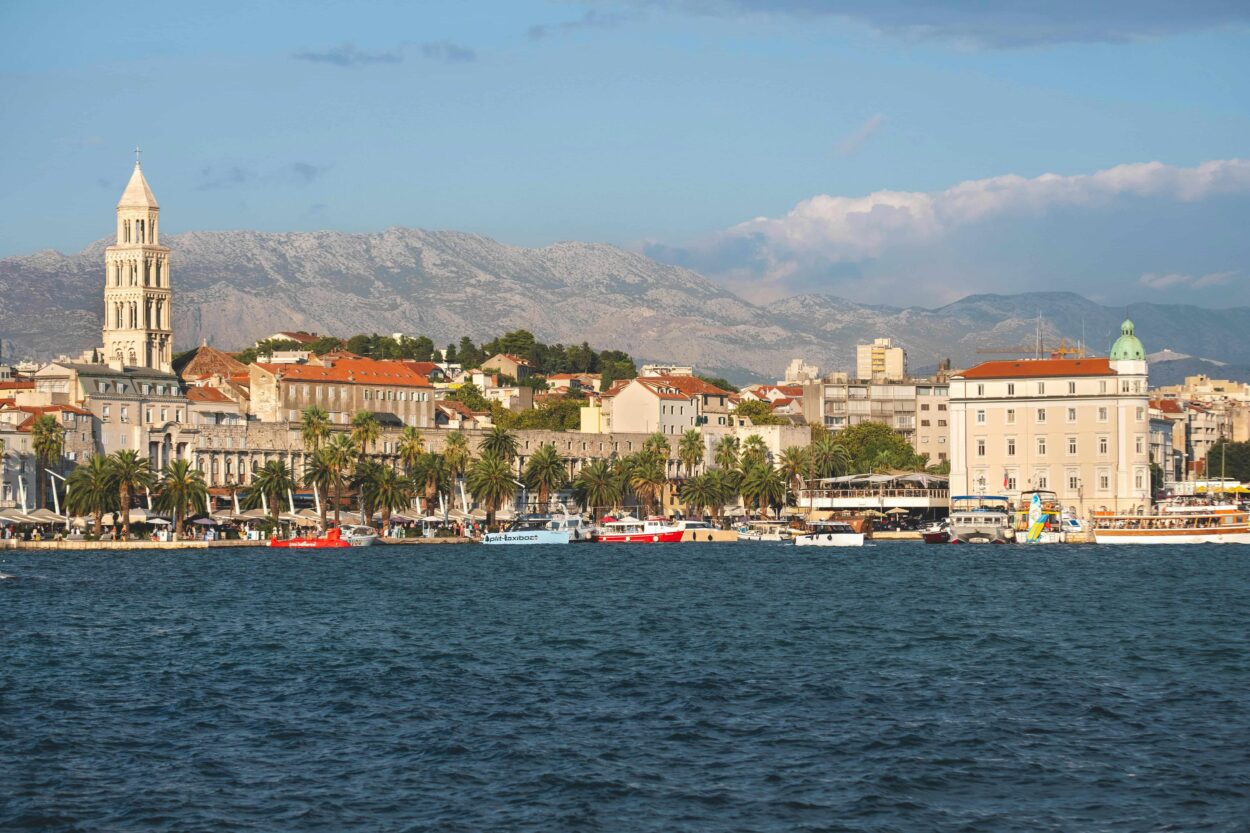
Croatia is finally mine-free, and most people who have vacationed on its Adriatic coast will hear that sentence with a mild, vaguely confused sort of surprise. Mines? In Croatia? The country with the crystal water, the medieval walls, and the Game of Thrones filming locations? Yes. That one. The same country that has welcomed millions of tourists to Dubrovnik, Split, and Hvar every summer for the last three decades was simultaneously conducting one of the largest and most expensive humanitarian demining operations in European history — just a few dozen kilometers inland, where the pine forests go quiet and the road signs used to carry a very different kind of warning.
In February 2026, the Croatian government formally declared the country free of landmine hazard, completing a 30-year effort that cost approximately €1.2 billion, involved the removal of over 107,000 mines and 470,000 pieces of unexploded ordnance, and claimed the lives of more than 200 civilians and 60 professional deminers. It is a story about the mechanics of modern warfare, the geography of a particular conflict, and the long, deliberate, unglamorous work of undoing what war leaves behind. It deserves to be told in full.
Why Croatia is finally mine-free — where did the mines come from in the first place?
To understand why landmines ended up blanketing the Croatian interior, you have to go back to 1990 — to the implosion of Yugoslavia and the particular way that implosion arrived in Croatia.
When Croatia declared independence from the Socialist Federal Republic of Yugoslavia on June 25, 1991, ethnic tensions between Croats and the country’s significant Serb minority had already been building for over a year. The Yugoslav People’s Army (JNA), which was predominantly staffed by Serbs and Montenegrins in its officer corps, had already moved to confiscate Croatia’s Territorial Defense weapons — a pre-emptive disarmament designed to minimize resistance. What followed was not a clean separation. Serb-populated municipalities in the regions of Dalmatian hinterland, the Lika, Kordun, and Banovina, as well as eastern Croatian settlements, declared their own autonomous territories and ultimately proclaimed the Republic of Serbian Krajina (RSK), a breakaway state that covered over 13,900 square kilometers — roughly a quarter of Croatia’s territory.
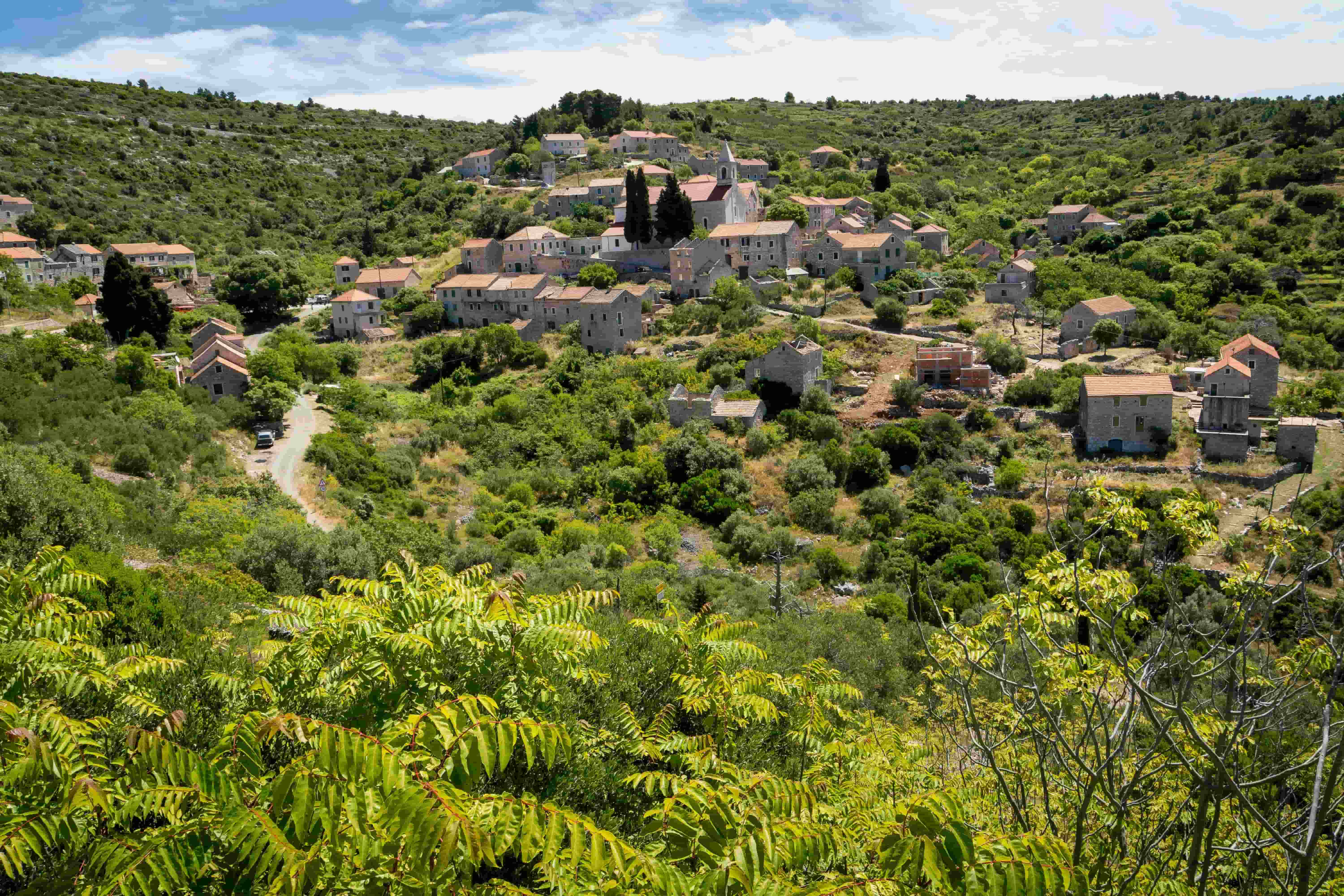
The RSK’s military arm, the Army of the Republic of Serbian Krajina (ARSK), faced a structural problem from the beginning. It held a large, geographically complex frontline against an enemy — the Croatian Army (HV) — that was growing in strength and capability. What the ARSK lacked in reserves, mobility, and manpower, it compensated for with mines. An estimated 1.5 million landmines were laid during the conflict, used primarily to strengthen defensive positions, slow Croatian advances, and render territory costly to retake. The logic was straightforward and ancient: if you cannot hold a line with soldiers, you can make the ground itself lethal.
An estimated 1.5 million landmines were laid during the conflict — to hold, with metal buried in mud, what could not be held with men.
The approach had a tactical limitation that became a humanitarian catastrophe. Minefields were often poorly documented. When the war ended — with Operation Storm in August 1995 recapturing most of the RSK, and the peaceful reintegration of Eastern Slavonia completing the picture in January 1998 — the mines did not leave with the army that laid them. They stayed. In soil, in forest floors, in overgrown meadows, in the fields that returning families tried to farm. The war was over. The geography was not.
Which areas were contaminated, and why the coast stayed clean
If you traveled to Croatia for its beaches and came back with no sense that any of this had happened, you were not confused — you were simply in the right geography. The mines were concentrated in the interior regions that followed the front line of the 1991–1995 conflict: the Lika region, Kordun, Banovina (also known as Banija), parts of Slavonia, and the Dalmatian hinterland around Knin. These were the areas where the RSK held territory, where the front line was entrenched, and where defensive mining was most systematically deployed.
The Adriatic coast, by contrast, was largely under Croatian government control throughout the war. Dubrovnik was shelled, famously, but the Dalmatian coastline was never occupied by RSK forces and was never systematically mined. The tourist infrastructure — the ferry terminals, the promenades, the old towns that draw millions of visitors annually — operated in a different theatre of this war entirely. Croatia made a deliberate policy choice early in the demining process to prioritize areas with tourist exposure precisely because of the economic stakes: the country’s coastline is one of its primary economic assets, and any mine incident near a tourist destination would have been ruinous.
At the end of the war, approximately 13,000 square kilometers of Croatian territory were initially suspected of containing mines. After physical inspection and non-technical surveys reduced those estimates, the confirmed contaminated area settled at around 1,174 square kilometers — concentrated entirely in those inland counties that sat along the former front. Counties like Karlovac, Sisak-Moslavina, Lika-Senj, and parts of Split-Dalmatia’s interior carried the vast majority of the hazard. As of 2008, an estimated 920,000 people — nearly 21 percent of Croatia’s population — were judged to be living in proximity to mined areas.
The coastal tourist economy, in other words, was separated from this reality by a mountain range and a historical accident of front-line geography. Tourists walked along the walls of Dubrovnik while deminers worked the forests of Lika. Both were happening in the same country at the same time.
The human cost: recorded cases and the lives the mines took
The aggregate statistics are already heavy enough. As of 2013, 509 people had been killed and 1,466 injured by landmines in Croatia since the war, across 1,352 documented incidents. That figure includes 60 deminers and seven Croatian Army engineers killed during clearance operations. But statistics compress the particular, and the particular is where the reality of landmines lives.
The Pievac family lived near the central town of Karlovac, in the farming village of Brodjani. Their family had fled when Serbian forces seized the area in 1991. Months after the fighting ended, they returned — and were walking along a familiar path when a falling branch triggered a mine. The blast killed Juraj Pievac’s brother, fatally wounded his wife, and disabled him for life. His daughter, standing just meters away, was unharmed. This is how mines work after wars: not in battle, but in the ordinary motion of return — the family walking home, the farmer checking a fence line, the child cutting through a field.
Davorin Cetin was cleaning a yard in a Croatian village when a mine exploded metres from where he stood, killing a close friend instantly and leaving Cetin severely injured. It took him two decades and more than a dozen surgeries before he could walk on grass again without fear of what might lie beneath it.
Mirsad Tokic chose the job knowingly. He worked as a professional deminer for years, surviving several close calls through discipline and focus. In 2007, working in a remote village near the coast, his concentration drifted for a moment — toward an upcoming birthday party, toward the ordinary thought that anyone might have on an ordinary day. He stepped on a mine. The blast took his leg.
His thoughts had drifted to his upcoming birthday party. Then he stepped on the mine. That is the particular arithmetic of this work.
In the Sisak region alone, a documented retrospective analysis covering the period from August 1995 to March 2000 — the immediate post-war years — recorded consistent patterns of injury that appear in academic literature: blast injuries to the lower extremities, amputations, and secondary shrapnel wounds. The peak mortality period was between 1996 and 1998, with approximately 100 civilian mine casualties per year. By 2010, sustained demining and education efforts had reduced that number to fewer than 10 per year. Zero mine accidents were recorded in 2024, the year before final clearance was completed.
The mines also killed without the drama of an explosion. By occupying land, they suppressed agriculture, forestry, and development across regions that were already economically depleted by the war itself. The estimated economic cost of mine-suspected areas to Croatia’s economy was approximately €47.3 million per year, with effects cascading from agricultural losses to drainage maintenance failures that caused intermittent flooding in areas bordering Hungary.
How Croatia rid itself of its mines: The full arc of the demining process
The Croatian demining effort did not begin the day after the war ended. It began during the war, with military engineers clearing routes in support of operations. It became a formal, national, institutionally structured program in 1996, when the Croatian Parliament passed the Demining Act. The Act assigned organizational responsibility to the police and tasked the government-owned AKD Mungos company with carrying out the execution. It was the beginning of a 30-year process that would unfold through multiple phases, institutional evolutions, and funding architectures before culminating in early 2026.
The first phase — roughly 1996 to 2005 — focused on the most urgent clearance priorities: inhabited areas, infrastructure, housing, and agricultural land needed for the return of displaced Croats. By 1998, the UNHCR had established coordinating structures for planned demining. By 2003, a full territorial review had reduced the initial 13,000-square-kilometer suspected area to 1,174 square kilometers of confirmed hazard. The Croatian Mine Action Center (CROMAC), established as the coordinating governmental body, hired private demining companies and maintained the systematic database that tracked progress across every county.
The second phase, running through the 2010s and into the early 2020s, took on the more technically difficult terrain: mountainous regions, dense forest, areas that had been left last because they were least accessible and least economically urgent. These were also the areas where decades of soil movement, erosion, and the passage of wildlife had rendered mines less stable and more dangerous. Deminers working these zones operated under heightened protocols, with emergency medical support pre-positioned along designated approach roads.
The CROSS and CROSS II projects, funded through the European Union’s Competitiveness and Cohesion Program 2021–2027, with 62 percent of costs covered by the European Regional Development Fund, addressed the final 48.5 square kilometers of forested terrain across Karlovac, Lika-Senj, Sisak-Moslavina, and Split-Dalmatia counties. The CROSS II project alone was valued at over €77 million. EU funding accounted for approximately 25 percent of total demining expenditure across the program’s lifetime.
In April 2025, Split-Dalmatia County was declared mine-free. By the end of 2025, only the forests of Lika-Senj County remained. In February 2026, the final mine was removed. The government formally declared Croatia free of mine hazards, fulfilling its obligations under the Ottawa Convention — the international treaty banning anti-personnel mines — which Croatia had signed and ratified.
In total, nearly 107,000 mines and 470,000 pieces of unexploded ordnance were removed. The final cost: €1.2 billion. The timeline: 30 years. The country is clean.
The scale of what was accomplished is difficult to fully register. More than 570,000 explosive devices neutralized. Eleven thousand warning signs that no longer need to stand. A country whose tourist economy had been quietly insulated from this reality can now say, without qualification, that the insulation extends everywhere.
Croatia has announced that even as the domestic mission ends, it intends to continue contributing to global mine action, sharing its institutional knowledge and the expertise of its demining workforce with countries currently facing the same challenge. Ukraine is the most immediate and most urgent of those conversations.
Why you never heard about it — and what that silence cost
There is a particular kind of news that never quite makes the international cycle: the ongoing, grinding, technical, successful public safety work happening in a country that has also successfully rebranded itself as a destination. Croatia did not want its tourism industry entangled with the mine story. That is a rational economic decision. It is also a form of truth suppression by omission that allowed millions of people to enjoy a coastline while an entirely separate population, 20 kilometers inland, navigated a genuinely life-threatening landscape.
The mines were not the coast’s problem. They were the interior’s problem — carried by the people who returned to farm their land, rebuild their villages, and live in proximity to something that had been buried without a map. The asymmetry between Croatia’s tourist image and its post-war internal reality is not exactly a scandal. It is simply the way geography and economics can divide the experience of a country into two, with one half entirely visible and the other almost entirely invisible.
That invisibility is ending. When Croatia says, in February 2026, that it is mine-free, it means the country’s geography and official image have finally caught up with each other. The cleaned land matches the postcard. The people who live inland from the coast can now walk on it with the same casualness that tourists walked the seafront.
Thirty years. A billion euros. Two hundred dead civilians. Sixty deminers who did not come home. The final mine was removed in a forest in Lika-Senj, and a sign was taken down. Croatia’s beautiful beaches have always been real. Now, the rest of the country finally is too.
Follow us on X, Facebook, or Pinterest
