
Building on the stories of Wu Zixu and Zhu Yuanzhang, we now turn to another extraordinary figure in Chinese history — Wu Xun, who devoted his entire life to a single, unwavering goal formed during his years of poverty: to create free education for the poor. From beggar to reformer, his life reveals how endurance and conviction can reshape even the most destitute existence into a lifelong mission.
Beggar saint Wu Xun
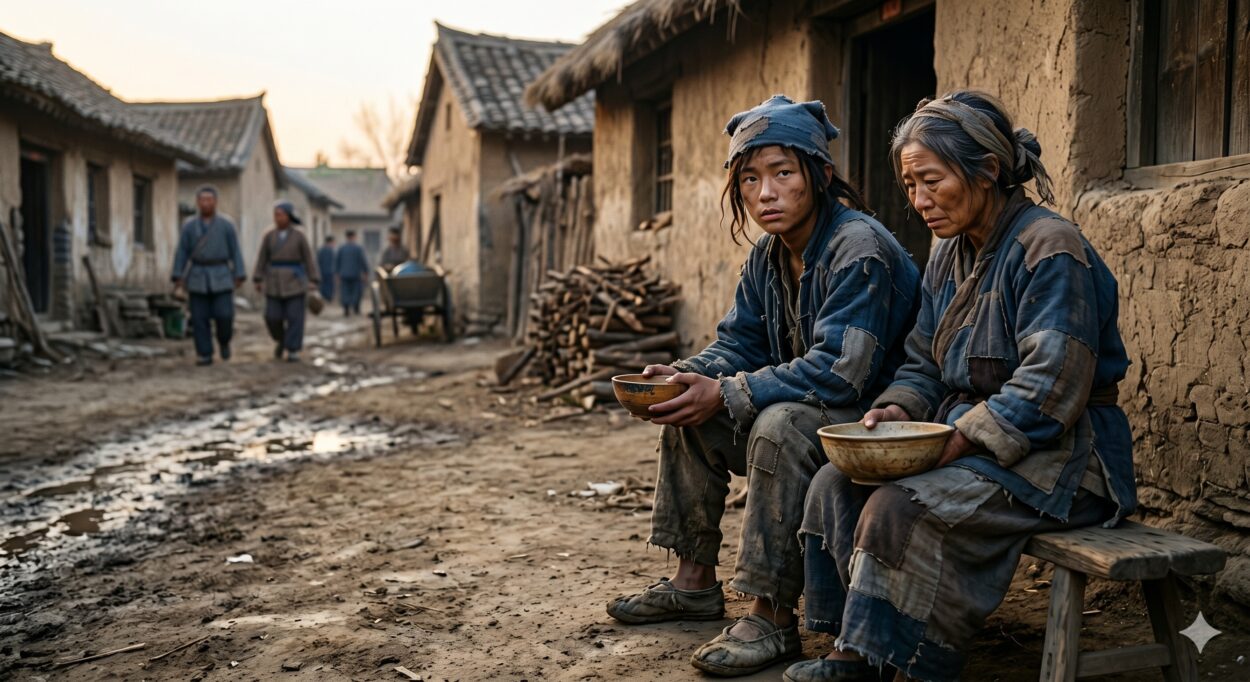
Among the many stories of beggars, the one I admire most is that of the so-called “Saint Beggar,” Wu Xun. Wu Xun was born into a poor family in Tangyi County (modern-day Guancheng), Shandong. He lost his father at the age of seven and was left to survive by begging alongside his mother.
Of course, “Wu Xun” was a name he adopted later in life. As the seventh child in his family, he was originally called Wu Qi. Because he suffered from epilepsy, which often caused him to collapse to the ground with foaming at the mouth, people also referred to him as Wu Doumo.
From an early age, Wu Xun was known for his filial devotion. Whenever he managed to beg for food that he considered especially good, he would first offer it to his mother before eating any himself. Despite his poverty, he deeply longed for education. On one occasion, while passing by a private school, he entered in hopes of auditing the lessons. However, because he was dressed in tattered clothes, the teacher drove him away.
A purpose formed in hardship
At the age of 15, Wu Xun went to work as a servant for a distant relative, Zhang Bianzheng, in Xuedian, Guantao County. He was assigned the most difficult and labor-intensive work, where he labored from dawn until dusk without complaint. However, after several years of work, he was never paid a single coin. His employer had fabricated false account records to deceive him, leaving Wu Xun to realize he had been exploited.
This blow was deeply painful. In despair and exhaustion, he collapsed in a temple, where he slept for three days and nights. Upon waking, he ran continuously for another three days, as if trying to escape the weight of his experience. From that moment on, he developed a new, determined ambition: to establish free schools so that children from poor families could receive an education.
Afterward, he began begging to raise funds, often murmuring to himself as he went. His words sounded like repetitive chants: “Carrying burdens and being bullied is not as good as begging freely. Don’t look down on me for begging — sooner or later, I will establish a free school. Whether it is carrying manure, weeding, or hauling stones, I do not care about the work or the pay.”
To many who heard him, a man with no formal education suddenly speaking in rhythmic phrases and declaring such an ambitious goal must have seemed as though he had lost his mind under the weight of hardship and frustration. Wu Xun begged across vast regions, traveling through Shandong, Hebei, Henan, Jiangsu, and other provinces. The phrase “free school” was constantly on his lips.
Many people mocked him, saying he suffered from “free school syndrome.” In response, Wu Xun said: “Free school syndrome? It is not aggressive. When I meet people, I show respect, accept what they give, and live on. I will establish a free school that lasts for ten thousand years without change.” Setting a goal is easy; the real challenge lies in sustaining it over a lifetime. Wu Xun’s value lies precisely in this persistence.
Thinking of others
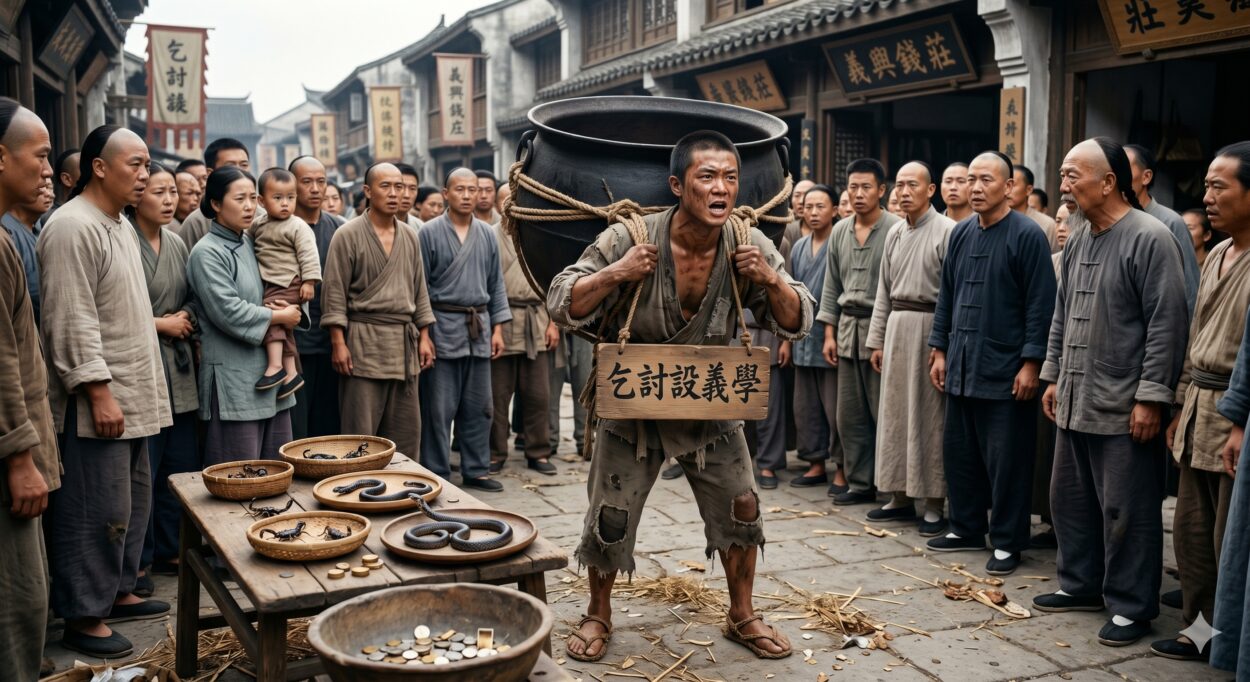
To establish a school, Wu Xun not only begged for money but also took on the most grueling and exhausting forms of labor. At times, he performed extreme street acts such as piercing his body, enduring blows to the head, carrying heavy cauldrons, and even swallowing snakes and scorpions, or performing tricks like breaking tiles for tips. Such acts of endurance are difficult for most people to comprehend. Yet one point is clear: Wu Xun’s abandonment of personal dignity was never for himself.
He once said: “I will not marry or have children. Establishing a free school is an entirely selfless undertaking.” Wu Xun’s selflessness was not only reflected in his hardships in pursuit of education; his kindness also came from a deep and sincere place.
In his village, a mother-in-law and daughter-in-law were struggling to make ends meet. Wu Xun gave them ten acres of land and said: “This person is good — truly good; even giving her ten acres is not enough. This person is filial — so filial; these ten acres are to support her in old age.”
At the age of 38, Shandong was struck by a severe drought, leading to widespread famine and many deaths. Wu Xun used the money he had begged to purchase forty bags of sorghum to help feed the starving people. His actions were often compared to those of the legendary “divine beggar” Li Ah.
The level of endurance and willingness to suffer that Wu demonstrated was far beyond what most ordinary ascetics could achieve. Yet he himself did not appear to feel the hardship. He often murmured to himself with contentment, seemingly able to find joy even in suffering. Day after day of persistence eventually led to Wu Xun’s so-called “free school madness” being accepted, understood, and gradually supported by others.
A dream realized
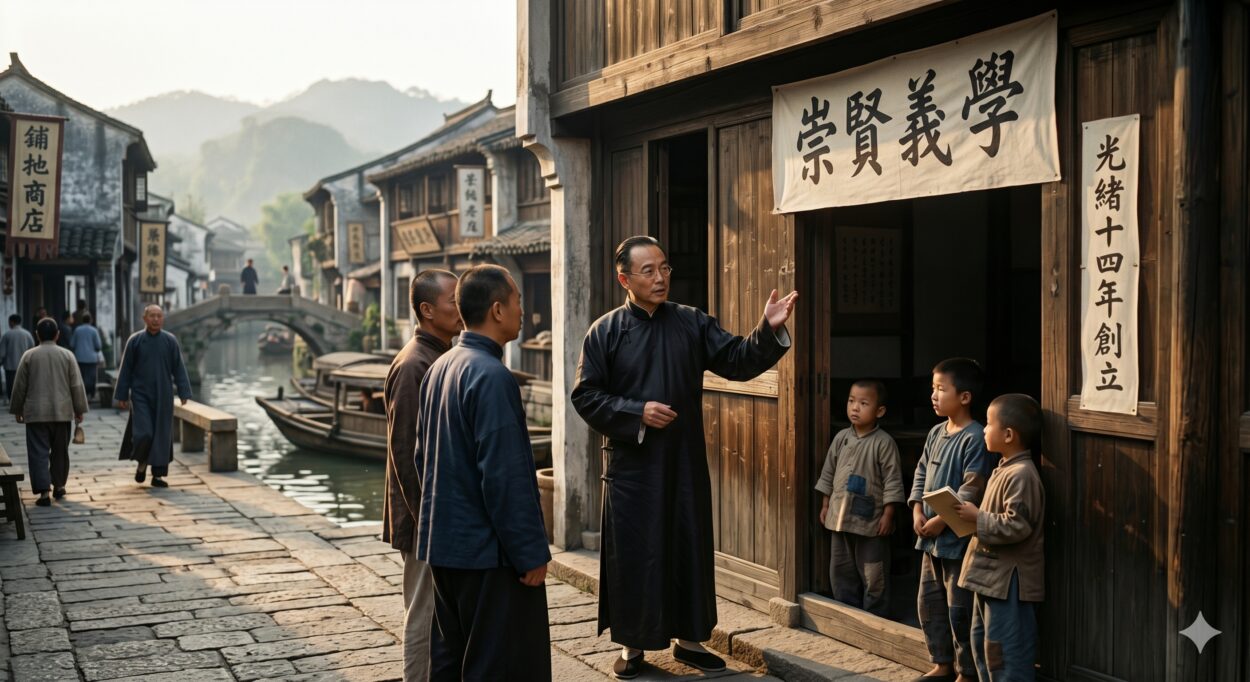
Many years later, in 1888, Wu Xun, together with Yang Shuyuan and Lou Chongshan, founded the first free school, Chongxian Academy. The following year, he co-founded a second academy with Zen Master Zheng. In 1896, he and Shi Shanzheng established a third academy at Yushi Alley.
Together, these three free schools covered nearly 300 mu of land. In total, Wu Xun spent more than 10,000 taels of silver on their establishment. Wu Xun spent his entire life begging for funds to support education and, by most accounts, never truly enjoyed a single comfortable day. He eventually fell ill and passed away at the age of fifty-nine.
On the day of his funeral, officials, scholars, and commoners from Tangyi, Guantao, and Linqing counties came to pay their respects. The mourning was so widespread that the streets were filled with people, creating an overwhelming scene of grief that is difficult to fully describe. After Wu Xun’s death, the Qing government published a biography of him, and during the Republic of China period, he was included in school textbooks, becoming widely known across society.
However, his reputation later became the subject of intense political reinterpretation. In the early years of the People’s Republic of China, he was harshly criticized and falsely labeled as a “great rogue,” “great debtor,” and “great landlord,” as well as a “traitor to the working people.”
During the Cultural Revolution, his grave was reportedly excavated, his coffin paraded, and his remains destroyed. As a result, many people in China today are no longer familiar with Wu Xun’s life story — some have never even heard his name. For a figure once widely known as the “Beggar Saint,” this fading of memory is, for many, deeply regrettable.
Conclusion
Chinese people often say that one should not judge a person by their appearance, and this saying proves true. Among the most destitute, lowly, and despised group of beggars, there are hidden scholars, emperors, enlightened sages, and saints who embody selflessness and virtue. Yet in society, how many true gems are mistaken for mere stones, their brilliance overlooked simply because of the form in which they appear?
See Part 1 here
Translated by Joseph Wu and edited by Tatiana Denning
Follow us on X, Facebook, or Pinterest
